
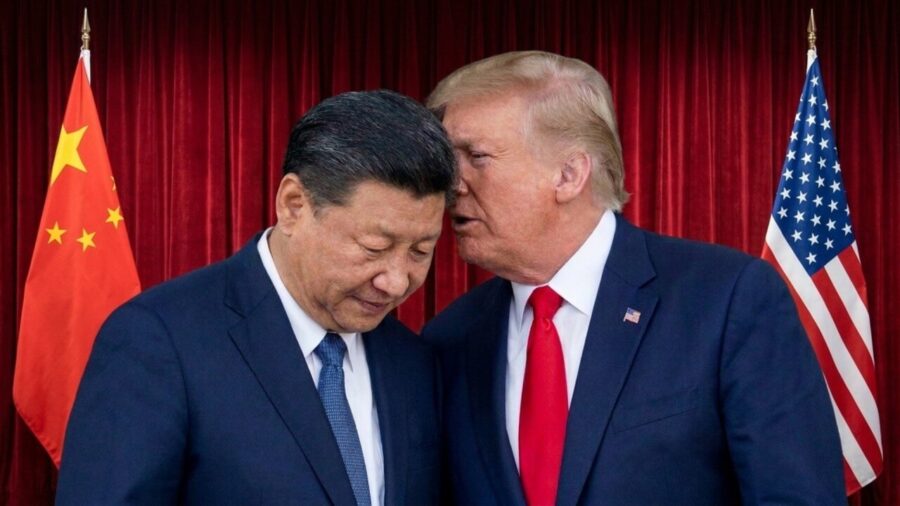

U.S. President Donald Trump asked Chinese President Xi Jinping whether China wanted to buy American weapons, according to U.S. Ambassador to China David Perdue, an account that prompted Washington to clarify that no arms sale to Beijing is planned.
Perdue disclosed the exchange during a September 27 appearance on “Fox News Sunday,” days after Xi completed a state visit to Washington. He did not specify exactly when Trump raised the idea, what weapons were discussed, or how Xi responded, according to a Times of Israel report.
The episode matters because China is subject to longstanding U.S. restrictions on transfers of military equipment, while American arms sales to Taiwan remain one of the most sensitive disputes between Washington and Beijing.
Table of Contents
TogglePerdue Says Trump Raised Arms Sales With Xi
Perdue was responding to questions about U.S. military support for Taiwan when he described Trump’s conversation with Xi.
“President Trump continues to say, ‘Hey, we sell arms to other people around the world,’” Perdue said. He added that Trump had asked Xi whether he would like to buy some weapons. Perdue also said Trump and Xi continue to discuss U.S. arms sales to Taiwan when they meet, according to Associated Press reporting.
There has been no public confirmation from Trump of the specific exchange. Perdue also provided no indication that the remark developed into negotiations or a formal proposal.
The State Department subsequently said U.S. law prohibits arms sales to China and that there was “no offer or plan” to sell weapons to Beijing. Current International Traffic in Arms Regulations list China among countries subject to a U.S. policy of denial for exports, retransfers and sales of defense articles and services, as South China Morning Post reported.
Beijing Does Not Confirm Perdue’s Account
China’s Foreign Ministry did not confirm the reported conversation when spokesperson Guo Jiakun was questioned about it on Monday, September 28. Guo said China develops its national defense capabilities according to its own requirements and reiterated Beijing’s stated commitment to international peace and stability.
In its official September 28 account of Xi’s September 23-25 visit, China’s Foreign Ministry called the trip successful and said Trump and Xi had reached several understandings concerning the broader U.S.-China relationship. The ministry’s published summary emphasized continued dialogue and management of bilateral differences.
The White House has separately described Xi’s visit as a major state visit and said the two presidents discussed a range of bilateral and international issues. Its post-visit summary did not announce any Chinese purchase of U.S. weapons.
Taiwan Arms Sales Remain at the Center of the Dispute
Perdue’s remarks came against a larger argument over American weapons supplied to Taiwan, the self-governed democracy that Beijing claims as Chinese territory.
The Taiwan Relations Act states that the United States will make defense articles and services available to Taiwan in quantities necessary for it to maintain a sufficient self-defense capability.
In December 2025, the State Department approved a group of potential weapons sales to Taiwan totaling about $11.1 billion. The package included HIMARS rocket systems, M109A7 self-propelled howitzers, unmanned systems, missile equipment and other military support, according to Defense Security Cooperation Agency records.
A separate package valued at roughly $14 billion has remained delayed after Trump discussed Taiwan arms sales with Xi during a May 2026 meeting in Beijing. Trump later described the issue as a negotiating tool in relations with China, according to Reuters reporting.
Beijing consistently opposes U.S. arms transfers to Taiwan. During Xi’s Washington visit last week, the Chinese leader again pressed Trump on Taiwan and urged the United States to oppose Taiwanese independence.
Why a U.S. Arms Sale to China Would Mark a Major Shift
Washington once maintained limited military cooperation with Beijing during the later years of the Cold War. That relationship changed after China’s 1989 Tiananmen Square crackdown.
The Government Accountability Office reported that sanctions imposed in 1989 halted military assistance programs and that no new government-to-government Foreign Military Sales agreements with China were opened after 1990. Some equipment associated with previously approved programs was later delivered under waivers.
As of September 28, there is no verified evidence that Trump’s question to Xi resulted in an arms-sales process or any change to U.S. export policy. The immediate official U.S. position remains that weapons will not be sold to China, while Taiwan arms transfers continue to feature prominently in Washington’s negotiations with Beijing.
Related Posts:
- Rivals Trump and Xi Set for Crucial Beijing Talks…
- Best Places to Retire Abroad in 2026: An Honest…
- What Is the Most Dangerous Country in the World in 2025
- Maria Bartiromo Out at Fox News After 12½ Years as…
- The 100 Most Dangerous Cities in America (2026):…
- Capital Gains Tax in the U.S. vs Canada: Inclusion…