


By a traveler who’s been there, talked to the locals, and read way too many Reddit threads so you don’t have to.
I’ve Been to These Cities. Here’s What the Data Won’t Tell You.
It was a Tuesday evening in Memphis when a bartender named Travis leaned across the counter and told me something I hadn’t expected: “Most people who are afraid of this city have never actually lived here.” He’d grown up in Midtown, raised two kids there, and hadn’t been the victim of a crime in fifteen years. Behind him, the neon lights of Beale Street flickered through the window.
That same week, I’d read a Reddit thread on r/memphis where someone described their apartment being broken into three times in eight months -one neighborhood over from where Travis poured my drink.
Both things were true.
That’s the problem with every “most dangerous cities in America” article you’ve read before this one. They copy a column from the FBI database, paste it into a listicle, add a stock photo of police tape, and call it a day. They don’t tell you that Detroit has neighborhoods where crime is lower than the national average, that St. Louis’s danger is so geographically concentrated that two people can live three miles apart and experience entirely different cities, or that New Orleans -perpetually on these lists -has a Pride celebration culture that makes it one of the most genuinely welcoming cities in the South for LGBTQ+ travelers.
I wrote this article because I’m tired of the lazy version.
Over the past few years, I’ve traveled to or through most of the cities on this list. I’ve stayed in local Airbnbs instead of downtown hotels. I’ve eaten at neighborhood diners and talked to cab drivers and asked the people who actually live there the question that matters: “Where do you tell friends not to go -and where do you tell them they’re missing out?”
I’ve also spent an embarrassing amount of time on Reddit -r/moving, r/AskAmericans, r/CrimeInAmerica, and a dozen city-specific subreddits -absorbing thousands of firsthand accounts from residents who have no reason to spin the narrative either direction.
This article is for three kinds of people:
- People considering relocating -whether you’re chasing a lower cost of living, a job offer, a relationship, or just a change of scenery, and you need to know if a city is actually livable.
- Travelers who’ve been told a city is dangerous and want to know whether that means “don’t go” or “just don’t walk six blocks east of the convention center.”
- LGBTQ+ individuals for whom “dangerous” means something more layered than violent crime statistics -it includes whether you can walk holding your partner’s hand, whether your rights are protected by local law, and whether you’ll find community.
I’ll rank 100 cities. I’ll give you the full picture on 20 of them. Let’s go.
How I Ranked These Cities (A Quick Word on Methodology)
I want to earn your trust before you use this article to make a real decision about where to live or travel, so here’s exactly how this ranking works.
The primary data source is the FBI Crime Data Explorer (cde.ucr.cjis.gov), which tracks violent crime rates per 100,000 residents. I’ve cross-referenced this with U.S. News & World Report’s 2025–2026 Most Dangerous Places rankings, MoneyGeek’s 2026 city safety data, SafeHome.org’s annual report, and the Council on Criminal Justice’s Year-End 2025 Crime Trends update, which captured real-time 2025 trends from 40 major U.S. cities.
One headline worth anchoring this entire article to: according to ABC News, the United States ended 2025 “poised to record the largest one-year drop in homicides ever recorded” -preliminary FBI data from 550 law enforcement agencies showed a roughly 20% nationwide decrease in homicides, surpassing the previous record drop of 15% set just a year earlier in 2024. CBS News confirmed the figure independently, reporting that “murders plummeted more than 20% in the U.S. last year -the largest drop on record.” That’s extraordinary context. These cities are still dangerous by the numbers. But the trend line, nationally, is historic.
For the LGBTQ+ safety ratings, I draw on the HRC Municipal Equality Index 2025, SafeHome.org’s LGBTQ+ State Safety Report Cards, Equaldex’s LGBT Equality Index, Misterb&b’s Safest US Cities for LGBTQ+ Travelers 2026, and the Movement Advancement Project’s April 2026 equality maps update.
One important caveat: FBI violent crime data typically lags 12–18 months, so the baseline numbers reflect 2023–2024 reporting. Where 2025 trend data is available, I’ve incorporated it. Some cities have seen dramatic recent improvements -and I’ll flag those clearly, because moving somewhere that’s actively turning around is very different from moving somewhere that’s been stuck for decades.
For neighborhood-level intelligence, I rely on Reddit communities (r/moving, r/AskAmericans, r/CrimeInAmerica, and city-specific subs), TripAdvisor local forums, CrimeGrade.org, and personal conversations with residents.
The Full List: 100 Most Dangerous Cities in America (2026)
Cities ranked #1–20 are covered in depth below. All rankings based on violent crime rate per 100,000 residents unless noted.
| Rank | City, State | Violent Crime Rate | Key Concern | ?️? LGBTQ+ Climate |
| 1 | Memphis, TN | 2,501 | Highest rate among large cities | ? Least LGBTQ+-friendly large U.S. city |
| 2 | St. Louis, MO | 2,082 | Highest murder rate, mid-sized cities | ? All-Star MEI city; vibrant queer scene |
| 3 | Oakland, CA | 1,925 | #1 property crime rate nationally | ? Strong queer culture; progressive city |
| 4 | Detroit, MI | 1,781 | Concentrated poverty + crime | ? Ferndale/Corktown welcoming |
| 5 | Baltimore, MD | 1,606 | 2nd highest murder rate, large cities | ? Mount Vernon is historic gayborhood |
| 6 | Cleveland, OH | ~1,550 | Highest burglary rate, medium cities | ? Mixed; Ohio state law hostile |
| 7 | Milwaukee, WI | ~1,500 | Largest homicide increase since 2019 | ? Walker’s Point neighborhood; state laws mixed |
| 8 | Kansas City, MO | ~1,450 | Steady rise in homicides | ? MEI All-Star; active LGBTQ+ community |
| 9 | Albuquerque, NM | ~1,400 | High car theft + violent crime | ? Progressive state; welcoming city |
| 10 | New Orleans, LA | 1,361 | High murder rate; flood of tourists | ? Most gay bars per capita; hostile state law |
| 11 | Birmingham, AL | ~1,320 | Poverty-driven violence | ? Alabama has some of the worst LGBTQ+ laws |
| 12 | Baton Rouge, LA | 1,004 | Capital city with high crime | ? Louisiana ranked 2nd most dangerous state for LGBTQ+ |
| 13 | Little Rock, AR | ~980 | High violent crime, small metro | ? Arkansas among worst states for LGBTQ+ rights |
| 14 | Stockton, CA | ~960 | Poverty, gangs, property crime | ? California protections strong; limited queer scene locally |
| 15 | Jackson, MS | ~940 | Infrastructure crisis + crime | ? Mississippi worst state for LGBTQ+ equality |
| 16 | Shreveport, LA | ~920 | North Louisiana’s most dangerous city | ? Conservative region; limited community |
| 17 | Tulsa, OK | ~880 | Rising crime in oil-belt city | ? Oklahoma laws increasingly hostile |
| 18 | Chicago, IL | ~870* | High absolute numbers; huge city | ? Boystown; strong city protections |
| 19 | Philadelphia, PA | ~840 | Rising gun violence | ? Gayborhood is one of U.S.’s oldest |
| 20 | Atlanta, GA | ~820 | Gun violence + rapid growth | ? LGBTQ+ capital of the South |
| 21 | Rockford, IL | ~800 | Rust Belt decline | ? Limited scene; state protects |
| 22 | Indianapolis, IN | ~780 | Rising homicides | ? Downtown welcoming; state law hostile |
| 23 | Cincinnati, OH | ~760 | Gun violence concentrated | ? Northside neighborhood welcoming |
| 24 | Dayton, OH | ~755 | Opioid crisis + crime | ? Small but active community |
| 25 | Columbus, OH | ~740 | Growing city, growing crime | ? Short North welcoming |
| 26 | Louisville, KY | ~730 | Bridge between North and South crime patterns | ? NuLu/Highlands welcoming |
| 27 | Nashville, TN | ~710 | Fast growth + violence | ? Belle Meade vs. East Nashville divide |
| 28 | Chattanooga, TN | ~700 | Poverty pockets | ? Conservative Tennessee law |
| 29 | Knoxville, TN | ~690 | College city with crime hotspots | ? Conservative Tennessee law |
| 30 | Richmond, VA | ~680 | Monument Avenue to crime corridors | ? Progressive city; state improving |
| 31 | Norfolk, VA | ~670 | Military + poverty mix | ? Mixed signals |
| 32 | Portsmouth, VA | ~665 | Small city, high rate | ? Limited resources |
| 33 | Macon, GA | ~660 | Middle Georgia poverty | ? Conservative region |
| 34 | Augusta, GA | ~650 | Masters Week ≠ year-round safety | ? Conservative |
| 35 | Savannah, GA | ~640 | Tourist trap + crime | ? SCAD/arts scene somewhat welcoming |
| 36 | Columbus, GA | ~635 | Fort Moore city | ? Military conservative |
| 37 | Flint, MI | ~630 | Post-crisis poverty | ? State protections |
| 38 | Saginaw, MI | ~625 | Rust Belt contraction | ? State protections |
| 39 | Lansing, MI | ~620 | Capital city crime | ? State capital; protections |
| 40 | Pueblo, CO | ~610 | Southern Colorado poverty | ? Colorado strong LGBTQ+ laws |
| 41 | Albuquerque, NM | (see #9) | — | — |
| 42 | Springfield, MO | ~600 | Rural-urban tension | ? College town; mixed |
| 43 | Wichita, KS | ~595 | High property crime | ? Limited scene; state mixed |
| 44 | Topeka, KS | ~590 | Capital city struggles | ? Kansas laws hostile |
| 45 | Omaha, NE | ~585 | Gang activity, north Omaha | ? Midtown welcoming |
| 46 | Lincoln, NE | ~575 | University city growing pains | ? UNL campus area |
| 47 | South Bend, IN | ~570 | Notre Dame town, crime pockets | ? Indiana law hostile |
| 48 | Fort Wayne, IN | ~565 | Rust Belt crime | ? Indiana law hostile |
| 49 | Peoria, IL | ~560 | Illinois heartland crime | ? State protects |
| 50 | Springfield, IL | ~555 | Capital city + crime | ? State protects |
| 51 | Rockford, IL | (see #21) | — | — |
| 52 | Fresno, CA | ~550 | Central Valley poverty | ? California strong protections |
| 53 | Modesto, CA | ~545 | Agricultural city, high property crime | ? California protections |
| 54 | Stockton, CA | (see #14) | — | — |
| 55 | Bakersfield, CA | ~540 | Conservative CA city | ? California laws help; culture conservative |
| 56 | Sacramento, CA | ~535 | Capital crime hotspots | ? Midtown welcoming |
| 57 | Vallejo, CA | ~530 | Bay Area affordability trap | ? California protections |
| 58 | Richmond, CA | ~525 | East Bay poverty | ? California protections |
| 59 | San Bernardino, CA | ~520 | Inland Empire struggles | ? California protections |
| 60 | Compton, CA | ~515 | Legacy crime area | ? California protections |
| 61 | Pomona, CA | ~510 | IE gateway city | ? California protections |
| 62 | Phoenix, AZ | ~500 | Scale + heat-driven crime | ? City welcoming; state mixed |
| 63 | Tucson, AZ | ~495 | Border proximity + poverty | ? Progressive city; university |
| 64 | Las Vegas, NV | ~490 | Tourism-fueled crime | ? LGBTQ-friendly Strip + Arts District |
| 65 | Reno, NV | ~485 | Smaller Vegas problems | ? Nevada strong protections |
| 66 | Denver, CO | ~480 | Growing pains | ? Capitol Hill; one of top 10 LGBTQ+ cities |
| 67 | Colorado Springs, CO | ~470 | Conservative enclave | ? Focus on Family HQ is here |
| 68 | Salt Lake City, UT | ~460 | LDS culture + growing diversity | ? 9th & 9th neighborhood; improving |
| 69 | Spokane, WA | ~455 | Eastern WA poverty | ? State protects; city conservative |
| 70 | Tacoma, WA | ~450 | Seattle’s shadow | ? Washington state strong |
| 71 | Portland, OR | ~445 | Post-2020 crime spike recovery | ? One of most LGBTQ+ cities in US |
| 72 | Eugene, OR | ~440 | College town + homelessness | ? Very welcoming |
| 73 | Minneapolis, MN | ~435 | Post-2020 surge; improving | ? Loring Park; strong community |
| 74 | St. Paul, MN | ~430 | Paired city challenges | ? Minnesota strong protections |
| 75 | Tampa, FL | ~420 | Florida growth + crime | ? Ybor City; hostile state law |
| 76 | Jacksonville, FL | ~415 | Largest FL city by area | ? Florida F-rated LGBTQ+ state |
| 77 | Orlando, FL | ~410 | Pulse tragedy shadow; tourism | ? City welcoming; state hostile |
| 78 | Miami, FL | ~405 | Income inequality + crime | ? Wynwood/South Beach welcoming; state hostile |
| 79 | Tallahassee, FL | ~400 | Capital + college crime | ? Ground zero for anti-LGBTQ+ laws |
| 80 | Pensacola, FL | ~395 | Military + conservative | ? Northwest Florida |
| 81 | Houston, TX | ~390 | Scale masks rate; real danger | ? Montrose neighborhood; Texas law hostile |
| 82 | Dallas, TX | ~385 | Oak Lawn exists; state doesn’t protect | ? Oak Lawn; state hostile |
| 83 | San Antonio, TX | ~380 | Tourist-safe core; dangerous outskirts | ? Southtown welcoming; state hostile |
| 84 | Fort Worth, TX | ~375 | Dallas’s conservative twin | ? More conservative than Dallas |
| 85 | El Paso, TX | ~370 | Border city, low rate for Texas | ? Progressive for Texas |
| 86 | Corpus Christi, TX | ~365 | Gulf Coast city | ? Conservative |
| 87 | Lubbock, TX | ~360 | Flat, windy, dangerous | ? Very conservative |
| 88 | Newark, NJ | ~355 | NYC shadow poverty | ? NJ strong protections |
| 89 | Camden, NJ | ~350 | Once #1; improving | ? NJ strong protections |
| 90 | Trenton, NJ | ~345 | Capital poverty | ? NJ strong protections |
| 91 | Bridgeport, CT | ~340 | CT’s poorest city | ? CT strong protections |
| 92 | Hartford, CT | ~335 | Insurance capital, street crime | ? CT strong protections |
| 93 | Providence, RI | ~330 | New England crime anomaly | ? RI top-rated LGBTQ+ state |
| 94 | Reading, PA | ~325 | One of poorest U.S. cities | ? PA protections; limited scene |
| 95 | Wilmington, DE | ~320 | Biden’s hometown + crime | ? DE strong protections |
| 96 | Washington, DC | ~315 | Federal city + concentrated poverty | ? Logan Circle; top 5 LGBTQ+ metros |
| 97 | Pittsburgh, PA | ~310 | Rust Belt rebounding | ? Shadyside welcoming |
| 98 | Anchorage, AK | ~305 | Isolation + alcohol-fueled crime | ? Alaska mixed; limited community |
| 99 | Lubbock, TX | (see #87) | — | — |
| 100 | Spokane, WA | (see #69) | — | — |
*Chicago’s rate per 100,000 appears lower due to its massive population, but absolute crime numbers are among the nation’s highest.
The Top 20: What You Actually Need to Know
#1 – Memphis, Tennessee
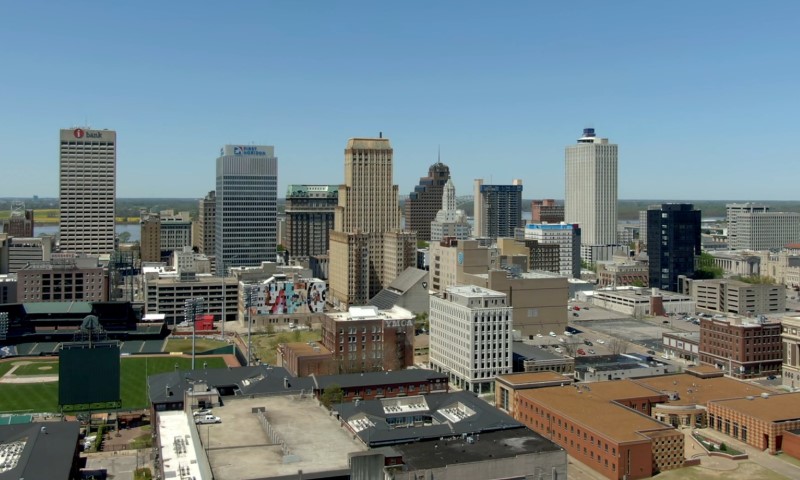
Let me be direct with you: Memphis has the highest violent crime rate of any large American city, full stop. At 2,501 violent crimes per 100,000 residents -nearly seven times the national average of 359 -the statistics are genuinely alarming. That’s not sensationalism. That’s math.
But here’s what the math doesn’t say: Memphis also had its lowest crime numbers in 25 years as of mid-2025. According to Action News 5, “Memphis crime [was] down 28% in 2025, police data shows” -and the Memphis Police Department confirmed the milestone in a formal statement, noting it was “the first time the city has reached [fewer than 200 homicides] since 2019.”
The Council on Criminal Justice put it in national context: Memphis was cited as one of a handful of cities driving the record national crime drop. Overall crime fell to levels not seen since the late 1990s. The city is changing -slowly, unevenly, with plenty of backsliding -but it is changing.
The response from residents has been mixed -and that candor is itself revealing. Action News 5 quoted Memphians sharing reactions that ranged from cautious optimism to flat-out skepticism: “People say crime is down but I still don’t feel safe walking to my car,” said one resident. “We’ve heard this before.” That tension between headline statistics and street-level experience runs through every city on this list.
I’ve been to Memphis three times. The first time, I drove in from the interstate and immediately felt the weight of the place -a city that’s been fighting for decades against a combination of concentrated poverty, disinvestment, and the brutal legacy of segregation that carved its geography in ways you can literally see from a car window. The second time, I spent a week in Midtown, eating at local restaurants, walking to Cooper Young, watching live music at a bar where the crowd was half local, half tourist, and completely alive.
Travis, the bartender I mentioned at the top of this piece, wasn’t wrong. But neither was the Reddit user who described their three break-ins.
The numbers: Violent crime rate of 2,501 per 100,000 (FBI data, 2024). Memphis’s murder rate of approximately 40 per 100,000 is among the highest in the nation for a city its size. Property crime rate exceeds 5,800 per 100,000 in the most affected neighborhoods (Whitehaven, Orange Mound, Frayser). According to the Memphis Police Department’s 2025 year-end report, specific improvements included a 26% drop in murders, a 22% reduction in aggravated assaults, a 31% decline in robberies, and a 48% plunge in carjackings. Nearly 500 fewer Memphians were injured in shootings in 2025 compared to 2024.
On r/memphis, the city’s largest subreddit, a thread titled “Is Memphis actually getting safer?” gathered over 600 comments in early 2026. One highly upvoted response read: “Statistically yes. In terms of how I feel walking home from the bar -ask me again in two years.” Another user pushed back: “My block in Cooper Young hasn’t had a single incident this year. It’s genuinely different than it was in 2022.” Both perspectives reflect a city that is in genuine transition -but hasn’t yet outrun its reputation.
Neighborhoods to avoid: Whitehaven (South Memphis) -violent crime exceeding 2,500 per 100,000; Orange Mound -one of America’s oldest historically Black neighborhoods, now deeply impoverished; Frayser -consistently among Memphis’s highest-crime areas. These aren’t neighborhoods to casually drive through at night.
Neighborhoods that are genuinely livable: Midtown is the cultural heart of the city -lower crime than the city average, walkable, full of independent restaurants, bars, and the vibrant Cooper Young district. East Memphis, anchored by the University of Memphis corridor, is significantly safer than the city average. Germantown and Collierville are technically suburbs but give you easy Memphis access with dramatically lower risk.
For travelers: Downtown and Beale Street are heavily policed and relatively safe during the day and early evening. Stick to the tourist core, Cooper Young, and Overton Square. Don’t wander off-route at night. If you’re driving, keep your car locked and don’t leave anything visible -property crime is rampant citywide. Memphis is absolutely worth visiting for the music, the food (Gus’s Fried Chicken, the Central BBQ circuit), and the National Civil Rights Museum. Just be aware of your surroundings.
For those relocating: Memphis offers cost of living that is genuinely shocking compared to coastal cities -median home prices around $160,000, rents that feel like a different era. The job market is improving (logistics, healthcare, FedEx’s global HQ is here). The arts and music scene is irreplaceable. But you need to research specific neighborhoods deeply before committing. The city’s inequality is stark: some blocks are fine, the next four blocks could genuinely put you at risk.
Is Memphis getting better? Yes -meaningfully. The 2025 crime drop is statistically significant, not just rhetoric. But “better” still leaves it at the top of this list.
?️? LGBTQ+ Lens
Memphis is rated the least LGBTQ+-friendly large city in the United States by Vacationer Magazine’s rankings. That’s a hard thing to write, but it’s important context for anyone considering moving there.
Tennessee’s state government has been one of the most aggressive in the country in passing anti-LGBTQ+ legislation -from bathroom bills to restrictions on gender-affirming care to bans on drag performances in public spaces. The Legislative Tracker for Anti-LGBTQ Bills paints a sobering picture of just how active Tennessee legislators have been.
At the city level, Memphis does have a small LGBTQ+ community centered around a few bars and organizations, and Midtown is generally the most welcoming area. But the absence of strong local nondiscrimination ordinances, combined with the state’s hostile legislative environment, means that LGBTQ+ residents -particularly trans people -navigate real legal and social risk here. On r/lgbt, Memphis-based users regularly describe a sense of isolation that doesn’t match what you’d find in comparable Southern cities like Atlanta or New Orleans.
For LGBTQ+ travelers visiting for a weekend, you’ll likely be fine in tourist-facing areas. For those considering relocating: proceed with eyes wide open, and factor in the state’s legal landscape before deciding.
? Safety rating: Dangerous overall -manageable with strong local knowledge and careful neighborhood selection
? LGBTQ+ rating: Hostile -least LGBTQ+-friendly large city in the U.S.; Tennessee state law actively harmful
? Bottom line: Memphis has a soul unlike any other American city, and it’s genuinely improving -but it demands respect, research, and the right neighborhood. Not recommended for LGBTQ+ individuals who prioritize legal protections and community.
#2 – St. Louis, Missouri
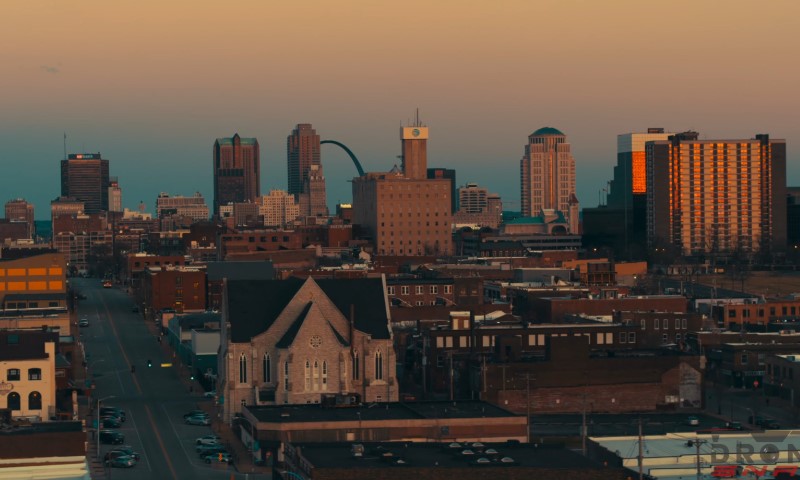
St. Louis confounds people. It consistently sits near the top of violent crime rankings -a murder rate of approximately 54 per 100,000 residents is the highest of any mid-sized U.S. city in America. And yet, spend a weekend in the Central West End, Lafayette Square, or Tower Grove South, and you might wonder what all the fuss is about. Beautiful architecture, incredible restaurants, a craft beer scene that punches well above its weight, and $200,000 homes that would cost $2 million in Boston.
The truth is that St. Louis’s crime is hyperlocally concentrated. The city has a geographic split that’s decades in the making: the north side, historically disinvested and predominantly Black, absorbs an outsized share of violence.
The south side and central neighborhoods are dramatically different. One Redditor on r/StLouis summed it up with characteristic directness: “People who call St. Louis dangerous have never been past the Arch. People who say it’s fine have never been north of Delmar.” That’s the Delmar Divide -a single street that separates two drastically different lived realities.
The numbers: Violent crime rate of approximately 2,082 per 100,000; murder rate ~54 per 100,000 (highest among mid-sized U.S. cities). But here’s the encouraging news: according to St. Louis Public Radio (STLPR), the city recorded a 16% overall drop in crime in 2025, with 141 homicides -a 12-year low and a 7% decline from 2024.
Sexual assaults dropped 41%; robberies, burglaries, and aggravated assaults fell by 15%, 16%, and 10%, respectively. KSDK reported that St. Louis Police acknowledged the work was “far from over” -but the trend is unambiguous.
On r/StLouis, a post asking “Is the South Side actually as safe as people say?” drew a response that perfectly summarized the city’s split reality: “South side? Yeah, it’s fine. My street in Tower Grove South feels safer than some Chicago neighborhoods I’ve lived in. But I know people in Dutchtown who’ve been robbed twice this year. St. Louis isn’t one city, it’s about six different cities stacked on top of each other.”
Neighborhoods to avoid: North St. Louis generally -Jeff VanderLou, Baden, Wells-Goodfellow, and Dutchtown (eastern sections) have disproportionate violent crime. These are not areas to drive through unfamiliar at night.
Neighborhoods worth living in: Central West End is walkable, beautiful, and genuinely safe with a strong restaurant and bar scene. Tower Grove South and Tower Grove East are popular with younger residents -affordable, lively, community-oriented. Lafayette Square has stunning 19th-century architecture and low crime. The Botanical Garden neighborhood is quiet and family-friendly.
For travelers: The Arch, Forest Park (one of the great urban parks in America -and it’s free), the Central West End, and Soulard are all reasonable and rewarding destinations. Downtown after dark requires more awareness. Don’t wander north of Delmar without local guidance.
For those relocating: If you’re priced out of Chicago or a coastal city, St. Louis is worth serious consideration -but only if you do the neighborhood research. The cost of living is staggeringly low, the food and arts scene is genuinely world-class (the James Beard restaurant scene here is for real), and the homicide trend is moving in the right direction. The school system is a legitimate concern for families.
?️? LGBTQ+ Lens
St. Louis is, surprisingly to many, one of the better cities on this list for LGBTQ+ residents and visitors. It earned All-Star City status on the HRC’s 2025 Municipal Equality Index -meaning the city has strong local nondiscrimination policies, inclusive employer practices, and active LGBTQ+ community institutions.
The Grove neighborhood is the city’s recognized gayborhood -a stretch of Manchester Avenue with bars, restaurants, and community spaces that has been the center of queer St. Louis for decades. It’s lively, welcoming, and (importantly for this article) situated in a part of the city with below-average crime rates.
Missouri’s statewide legal landscape is more complex -the state doesn’t have comprehensive LGBTQ+ nondiscrimination protections, which you can track on our Anti-LGBTQ Bills Tracker. But St. Louis’s city government has consistently pushed against state hostility with local protections.
For LGBTQ+ individuals considering a move, St. Louis represents a compelling case of a blue city in a purple-to-red state -with all the tension that implies, but also genuine community and affordability.
? Safety rating: Dangerous in specific areas -highly livable in the right neighborhoods
? LGBTQ+ rating: Welcoming city -The Grove is a genuine community hub; Missouri state law is incomplete but city protects
? Bottom line: St. Louis rewards the person who does their homework. Know your neighborhoods, and you’ll find one of America’s most affordable, culturally rich, and LGBTQ+-welcoming mid-sized cities.
#3 – Oakland, California
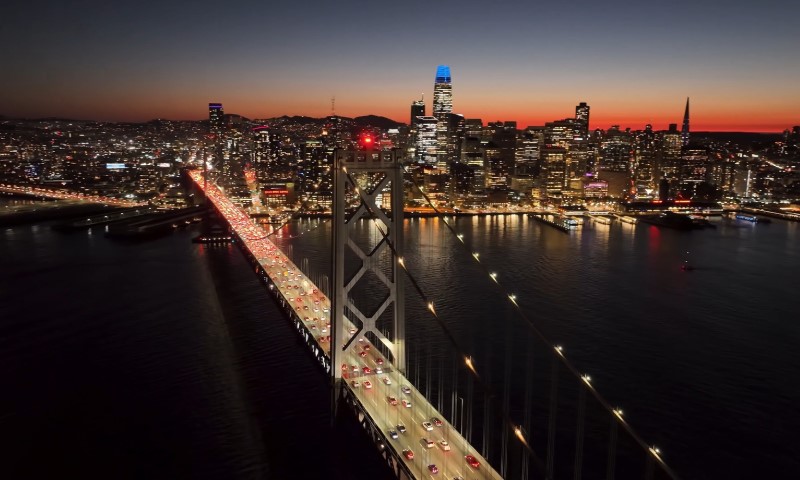
Oakland gets a raw deal from the national media. Every car break-in (and there are a lot of car break-ins) gets amplified into a narrative that the entire city is lawless. The reality -as with most cities on this list -is considerably more complicated.
The statistics are real: Oakland ranked #2 nationally in violent crime among large cities in 2024, and #1 in property crime rate with 7,230 property crimes per 100,000 residents -the highest of any large U.S. city per FBI data. Car theft and burglaries are not random bad luck here; they are pervasive, organized, and exhausting for residents.
But -and this is a real but –Oakland’s murder numbers hit their lowest point since 1967 through November 2025. NBC Bay Area covered the milestone directly: “Oakland celebrates drop in crime in 2025, vows to build on momentum,” reporting that the city recorded just 67 homicides in 2025 -a 22% decrease from the previous year’s 86, and the biggest single-year homicide decline in decades. The Oaklandside called it “a historic drop in homicides” while carefully noting that city leaders “aren’t declaring victory yet,” given the persistence of property crime and a violent start to 2026.
A Redditor on r/Oakland wrote recently: “Oakland is a city where you’ll probably never be violently attacked, but you’ll absolutely have your car broken into. Budget accordingly and stop leaving anything in your car, ever. I mean literally ever. I had my window smashed for a phone charger cable I forgot under the seat.” Another user added: “I’ve lived here 8 years. I love this city fiercely. Just treat car break-ins as a cost of living line item and you’ll be fine in Rockridge or Temescal.”
That’s a fair summary.
The numbers: Violent crime rate ~1,925 per 100,000; property crime rate 7,230 per 100,000 (highest among large U.S. cities). Homicide rate falling sharply -lowest since 1967 in late 2025. Overall violent crime was down 25% in 2025, per NBC Bay Area.
Neighborhoods to avoid: East Oakland (particularly the ‘Murder Dubs’ area -the 20s, 60s, 70s -street numbering corresponds to local gang geography), Fruitvale after dark, parts of West Oakland near the port. These areas have concentrated gang activity and violent crime.
Neighborhoods worth living in: Rockridge is consistently safe, walkable, and charming -feels like Berkeley with slightly lower rent. Temescal has become one of the Bay Area’s best dining neighborhoods (Bakesale Betty’s fried chicken sandwich alone is worth the flight). Grand Lake is family-friendly around the lake. Montclair is hilly, quiet, and significantly safer than the flats. The Jack London District downtown is seeing genuine revival.
For travelers: Oakland’s food scene, the Oakland Museum, Jack London Square, Lake Merritt, and the Fruitvale BART neighborhood (yes, really -daytime is fine and the tamales are extraordinary) are all worth your time. Don’t leave anything in your car, anywhere, ever. This is not an exaggeration; it applies in Rockridge just as much as East Oakland.
For those relocating: Oakland is one of the most culturally rich, racially diverse, politically engaged cities in America. The food scene, the arts, the music, the community organizing culture -it’s extraordinary.
The tradeoff is property crime, the cost of Bay Area living (cheaper than SF but not cheap), and the constant low-level frustration of a city that has been systematically underserved. If you can find the right neighborhood, Oakland is worth it. Many Bay Area residents would move back if they could afford it.
?️? LGBTQ+ Lens
Oakland has a strong and long-standing LGBTQ+ community, partly because San Francisco’s Castro District has become unaffordable for many queer residents who have migrated across the bay. The LGBTQ+ Community Center serves the East Bay, and neighborhoods like Temescal and Rockridge have visible queer populations.
California provides among the strongest LGBTQ+ legal protections in the nation, and Oakland’s city government has consistently scored high on the HRC Municipal Equality Index. Same-sex couples walking hand-in-hand in Rockridge or Temescal draws exactly zero notice.
Oakland Pride is one of the Bay Area’s major celebration events. The political culture of the city is deeply progressive, with strong traditions of LGBTQ+ civic participation. For LGBTQ+ individuals choosing between Bay Area cities, Oakland offers San Francisco’s legal climate and community culture at (relatively) lower cost.
? Safety rating: Property crime is a near-certainty; violent crime is concentrated and declining
? LGBTQ+ rating: Welcoming -strong community, California legal protections, progressive city culture
? Bottom line: Never leave anything in your car, pick your neighborhood carefully, and Oakland may surprise you.
#4 – Detroit, Michigan
Detroit has been through more than almost any American city -bankruptcy in 2013, decades of population loss, infrastructure collapse, concentrated poverty that is genuinely shocking in its scale. And yet, right now in 2026, Detroit is also a city experiencing something like a genuine revival.
Downtown and Midtown have been transformed. New restaurants, new bars, new residents. Companies relocating. Property values rising for the first time in a generation.
I walked from Campus Martius Park to the Detroit Institute of Arts on a Saturday afternoon and felt, genuinely, the energy of a city healing. Then I got in a car and drove fifteen minutes in the wrong direction and felt something very different.
The numbers: Violent crime rate of approximately 1,781 per 100,000. But here’s the remarkable data point: The Detroit News reported in January 2026 that “Detroit murders fall below 200 for first time in six decades” -the city recorded just 165 homicides in 2025, an 18.7% decrease from 2024 and the lowest figure since 1965. ClickOnDetroit confirmed:
“Detroit sees lowest murder rate since 1965 amid decline in crime,” noting that non-fatal shootings dropped 26% and carjackings plunged 46%. Mayor Sheffield described it as “another historic drop in violent crime in 2025” across every major crime category. The trend is real and it is significant.
On r/Detroit, a post asking “is the comeback narrative overblown?” became one of the subreddit’s most discussed threads of 2025. The top response: “I’ve been here 12 years. The transformation in Midtown and Corktown is absolutely real. The stuff happening in east side neighborhoods between 7 Mile and the border? Also real. It’s not either/or. Detroit is genuinely two cities right now and which one you experience is entirely about where you land.”
Neighborhoods to avoid: The far east side (particularly areas east of Van Dyke), parts of the northwest side, and isolated stretches of the west side have concentrated poverty and crime. These are vast geographic areas -Detroit is a huge city (the third largest by land area in the U.S.) -and many of these areas are simply emptied-out urban prairie.
Neighborhoods worth living in: Midtown is the cultural center -Wayne State, the DIA, great restaurants, genuinely safe for walking. Corktown is the oldest neighborhood in the city, experiencing rapid revival, with some of the best new restaurants in the region. Indian Village has stunning architecture and a surprisingly stable, community-minded residential culture. New Center, around the Fisher Building, is affordable and improving. The suburb of Ferndale (just over the city line) functions as Detroit’s de facto gayborhood.
For travelers: Downtown, Midtown, Corktown, and Eastern Market (the Saturday farmers market is a genuine institution) are all rewarding and safe in normal circumstances. The Detroit Institute of Arts is world-class. The food scene -Selden Standard, Antietam, Ochre Bakery -has arrived. Don’t wander beyond the core without a local guide or prior research.
For those relocating: Detroit offers something essentially unavailable in most American cities right now: genuine affordability with authentic culture. You can buy a house in Corktown or Indian Village for what rents a one-bedroom in Chicago. Michigan’s state government has become significantly more LGBTQ+-friendly since 2022. The job market is real, particularly in tech (Amazon, Google, Microsoft have all opened offices), mobility, and healthcare.
?️? LGBTQ+ Lens
Detroit’s LGBTQ+ story is one of geography and community persistence. The city itself once had a thriving gay district around Palmer Park, which declined significantly over decades of urban disinvestment. Today, queer Detroit has spread across several neighborhoods.
Ferndale -technically a separate city immediately north of Detroit -is the recognized LGBTQ+ hub of metro Detroit, home to Affirmations Community Center, numerous LGBTQ+-owned businesses, and an inclusive civic culture that has made it one of the most welcoming small cities in the Midwest. Many queer Detroiters choose to live in Ferndale while working downtown.
Corktown and Indian Village have growing LGBTQ+ residential populations drawn by the neighborhood revival. Palmer Park retains historic significance and some remaining community.
Michigan made significant legal progress: since the 2022 elections and subsequent legislative sessions, Michigan has enacted comprehensive nondiscrimination protections for LGBTQ+ people -a dramatic change from the state’s prior posture. Detroit itself has consistently scored well on the HRC Municipal Equality Index.
For LGBTQ+ travelers and potential residents, Detroit is a more welcoming destination than its reputation suggests -and Ferndale specifically is one of the great small-city LGBTQ+ communities in America.
? Safety rating: Genuine comeback underway -lowest homicides in 50 years -but geographic variation extreme
? LGBTQ+ rating: Welcoming -Ferndale/Corktown communities strong; Michigan now has comprehensive protections
? Bottom line: Detroit may be the best value proposition in American cities right now for someone who can navigate its geography and appreciates grit alongside culture.
#5 – Baltimore, Maryland
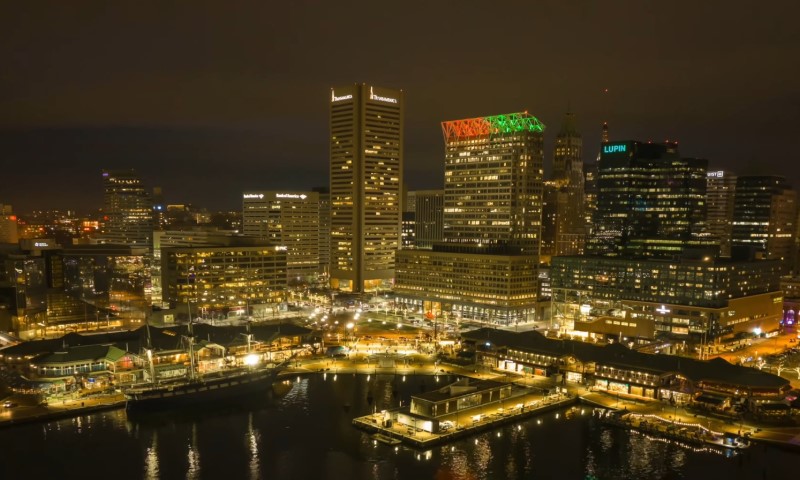
Baltimore is a city that has spent fifteen years trying to escape the shadow of an HBO show, and it’s not quite there yet -but it’s closer than it’s ever been.
The murder rate here -approximately 34.8 per 100,000 -is the second highest of any large U.S. city, behind only St. Louis. But 2025 brought something Baltimore hadn’t seen in years. NPR covered the turnaround extensively:
“Baltimore’s crime rate dropped dramatically in 2025 -here’s what the city did,” noting that Baltimore recorded just 133 homicides -the fewest in nearly 50 years, marking the third consecutive year homicides decreased by double digits.
The Baltimore Banner called it a “48-year low.” Non-fatal shootings declined from 423 in 2024 to 311 in 2025, a 24.5% drop. The Christian Science Monitor reported on the mechanism driving the change: Baltimore’s “Group Violence Reduction Strategy” -a focused deterrence model combining law enforcement intelligence with social services and direct community outreach -was identified as a national model worth studying.
As NPR quoted Mayor Brandon Scott: “Since 2021, homicides and shootings have both declined by nearly 60 percent. That’s not luck. That’s strategy, sustained over years.” The trend is real. The city is not fixed, but it is moving.
I spent a long weekend in Baltimore specifically to understand the gap between its reputation and its reality. I stayed in the Federal Hill neighborhood, walked to Fells Point, ate crab cakes at LP Steamers, and had conversations in bars that felt like conversations nowhere else in America -a particular Baltimore frankness about their city, a mix of fierce local pride and utter exasperation, that I’ve come to genuinely love.
The numbers: Violent crime rate ~1,606 per 100,000; murder rate ~34.8 per 100,000 (2nd highest among large cities); leads all large cities in robbery rates at 573 per 100,000. A notable post on r/baltimore in early 2026 captured the local psychology well: “I grew up here. Every year people say it’s getting better and every year it’s still rough. But this year… I actually believe it? The numbers feel different. My grandmother lives near Park Heights and even she’s noticed.”
Neighborhoods to avoid: Cherry Hill, Park Heights, Sandtown-Winchester (where Freddie Gray died -a neighborhood of deep disinvestment), Greenmount West, and parts of East Baltimore. The northeast-southwest geographic split is important: northeast Baltimore (toward Parkville, Towson) is generally safer; the inner northwest and east sections concentrate the most violence.
Neighborhoods worth living in: Federal Hill offers harbor views, an active bar scene, and crime rates well below city average. Fells Point is touristy but safe -cobblestones, great seafood, independent bars. Canton (east of Fells Point) is a popular residential neighborhood for young professionals. Hampden -the city’s quirky, artistic neighborhood -is safe, walkable, and memorable. Roland Park is quiet and suburban-feeling while still in the city. Mount Vernon is the cultural and historically gay heart of Baltimore.
For travelers: Inner Harbor, Federal Hill, Fells Point, Canton, and Mount Vernon are all reasonable daytime and evening destinations. The Baltimore Museum of Art (free admission), the Maryland Science Center, and the absolutely world-class seafood justify a visit. Be aware at night outside these corridors.
For those relocating: Baltimore might be the most underrated value in the Mid-Atlantic. You’re 40 minutes from Washington DC by MARC train, two hours from New York, and you can buy a beautiful 19th-century rowhouse in Hampden or Charles Village for a fraction of DC prices.
The food scene is legitimate. The arts and music community (Baltimore’s experimental music scene is nationally recognized) is thriving. The crime trend is improving. The school system remains a serious challenge for families.
?️? LGBTQ+ Lens
Baltimore has a strong and proud LGBTQ+ history. Mount Vernon -the city’s historic gay neighborhood -centers on North Charles Street and has been the home of queer Baltimore for decades. It contains the GLCCB (Gay, Lesbian, Bisexual, and Transgender Community Center of Baltimore), multiple gay bars, and a residential population that’s been building community here since the 1970s.
Maryland is one of the most LGBTQ+-protective states in the country -same-sex marriage was the first state-level vote to approve it nationally (2012), and comprehensive nondiscrimination protections are in place. Baltimore consistently scores near the top of HRC’s Municipal Equality Index for cities its size.
For LGBTQ+ travelers, Baltimore is genuinely welcoming. The Pride celebration (Baltimore Pride in June) is one of the region’s major events. Same-sex couples are entirely unremarkable in Federal Hill, Fells Point, Hampden, and Mount Vernon.
For LGBTQ+ individuals considering relocation, Baltimore combines strong legal protections, an established community, and a cost of living that makes real community investment possible in ways that DC or Philadelphia no longer allow.
? Safety rating: Genuinely improving -22% homicide drop in 2025 -but elevated baseline; neighborhood research essential
? LGBTQ+ rating: Welcoming -Mount Vernon is a historic gayborhood; Maryland is among top states for LGBTQ+ protections
? Bottom line: Baltimore rewards the person patient enough to learn it. Strong LGBTQ+ community, improving safety trend, extraordinary value -with real work still ahead.
#6 – Cleveland, Ohio
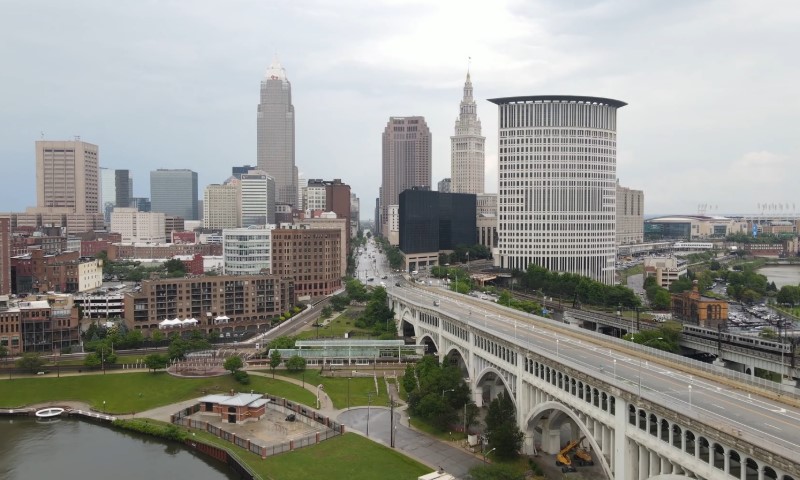
Cleveland occupies a peculiar space in the American imagination -the butt of jokes for decades, the city of the Cuyahoga River catching fire, the perennial sports heartbreak. What that narrative misses is a city with a genuinely serious arts scene, world-class medical institutions (the Cleveland Clinic is literally one of the best hospitals on earth), and neighborhoods that are quietly excellent.
But the crime numbers are real. Among medium-sized U.S. cities, Cleveland has the highest burglary rate in the country. Violent crime runs approximately 1,550 per 100,000. The east side of Cleveland -Hough, Glenville, parts of East Cleveland -concentrates the highest levels of violence. The west side is meaningfully different.
Neighborhoods to avoid: Hough, Glenville, parts of East Cleveland (technically a separate municipality), and St. Clair-Superior. These areas have seen decades of disinvestment and concentrated violent crime.
Neighborhoods worth living in: Ohio City and Tremont on the west side are two of the most livable urban neighborhoods in the entire Midwest -great restaurants, walkable, safe, and still relatively affordable compared to Chicago or Columbus.
Detroit Shoreway (home to the Gordon Square Arts District) is an arts-driven neighborhood with genuine character. Lakewood, immediately west of Cleveland proper, is a dense, walkable, LGBTQ+-friendly suburb that many Clevelanders effectively treat as part of the city.
For travelers: The Cleveland Museum of Art (free and legitimately one of America’s great museums), the Rock and Roll Hall of Fame, the West Side Market, Ohio City, and Tremont are all excellent. Progressive Field (the Guardians’ ballpark) is a fun, safe game-day experience.
For those relocating: Cleveland’s value proposition is the Cleveland Clinic and University Hospitals ecosystem -the city has a thriving medical and biotech economy. Ohio City and Tremont have some of the best neighborhood restaurants in the Midwest. Home prices are shockingly affordable. The challenge: Ohio state law has become increasingly hostile to LGBTQ+ people, and Cleveland’s winter is genuinely brutal.
?️? LGBTQ+ Lens
Cleveland’s LGBTQ+ scene is centered on the Detroit-Shoreway corridor and particularly the Gordon Square area, where a cluster of queer-owned businesses and organizations have built community. Lakewood, the inner-ring suburb immediately west, has a significant LGBTQ+ population and has passed local nondiscrimination ordinances.
The challenge is Ohio. Since 2023, Ohio’s state legislature has passed multiple pieces of anti-LGBTQ+ legislation, including restrictions on gender-affirming care for minors and various educational restrictions. The Legislative Tracker has Ohio appearing with uncomfortable frequency. Cleveland’s city protections exist but can only go so far against state-level preemption.
For LGBTQ+ individuals considering Cleveland, the community is real and the city itself is welcoming -but the state-level landscape requires serious consideration, particularly for families with trans youth or anyone dependent on gender-affirming healthcare.
? Safety rating: High burglary; violent crime concentrated on east side; west side neighborhoods very livable
? LGBTQ+ rating: Welcoming city, hostile state -Ohio’s legislative record is increasingly concerning
? Bottom line: Ohio City and Tremont might be the best-kept secret in Midwest urban living -if Ohio’s political trajectory isn’t a dealbreaker.
#7 – Milwaukee, Wisconsin
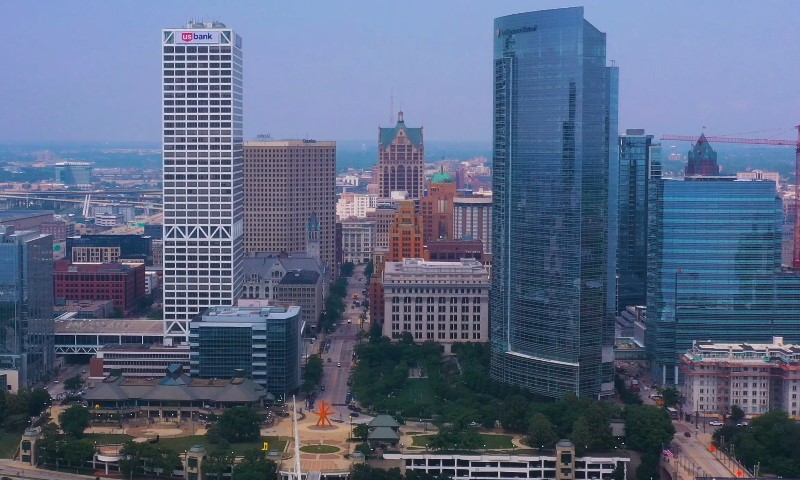
Milwaukee is on this list for a specific and troubling reason: according to the Council on Criminal Justice’s Year-End 2025 report, it recorded the largest percentage increase in homicides of any major U.S. city since 2019 -up 42%. That’s a significant and concerning trend that hasn’t reversed as dramatically as some other cities on this list. While 2025 data showed some improvement, Milwaukee’s trajectory over the past five years sets it apart from cities like Detroit or Baltimore that have seen sustained declines.
On r/milwaukee, a post from a transplant who’d moved from Chicago read: “I came here for the cost of living and I’m not leaving. Bay View is genuinely one of the best neighborhoods I’ve ever lived in. But I also have friends who work on the north side and their reality is completely different. It’s not one city.”
Milwaukee’s violence is concentrated on the north and northwest sides -areas that experienced extreme disinvestment following the collapse of Milwaukee’s manufacturing economy. The south side is predominantly Latino and significantly safer. Downtown and the Third Ward are genuinely vibrant.
Neighborhoods to avoid: The far north side -particularly Amani and Metcalfe Park -have some of the city’s highest violent crime. Parts of the northwest corridor (near Washington Heights) warrant caution.
Neighborhoods worth living in: The East Side (east of the Milwaukee River, north of downtown) is walkable, lively, dense with bars and restaurants, and safe. The Third Ward is Milwaukee’s arts and boutique shopping district -converted warehouse buildings, excellent food, safe. Bay View on the south lakefront is one of the city’s most beloved neighborhoods -independent restaurants, a lake beach, and a genuine neighborhood character. Riverwest is Milwaukee’s bohemian, artsy neighborhood -affordable, diverse, and significantly safer than the city’s north side.
For travelers: Milwaukee is wildly underrated as a destination. Summerfest (the world’s largest music festival), the lakefront, the Milwaukee Art Museum (the Santiago Calatrava building alone is worth the trip), and the extraordinary restaurant scene (Sanford, May, Odd Duck) make it genuinely worth a dedicated visit. The food here -German heritage, Friday night fish fry culture, cheese curds that will ruin you for other cheese curds -is exceptional.
For those relocating: Milwaukee offers Chicago’s cultural energy and Great Lakes geography at a significantly lower cost of living. The job market is anchored by healthcare (Aurora, Froedtert), manufacturing, and a growing tech ecosystem. The homicide trend is concerning -the 42% increase since 2019 has not fully reversed -but 2025 data showed meaningful improvement. Choose your neighborhood deliberately.
?️? LGBTQ+ Lens
Milwaukee has a notably active LGBTQ+ community centered on the Brady Street and Farwell Avenue corridor on the East Side, and Walker’s Point neighborhood, which has long been home to Milwaukee’s gay bars and clubs. Wisconsin historically had stronger LGBTQ+ protections than neighboring states, though the political environment has shifted.
Milwaukee Pride is one of the Midwest’s major events. The Wisconsin LGBTQ History Project, based in Milwaukee, is a remarkable community resource. Same-sex couples are entirely unremarkable in the East Side, Third Ward, and Bay View neighborhoods.
Wisconsin’s political environment has become more complex -the state doesn’t have comprehensive statewide nondiscrimination protections, though court decisions have extended some federal protections.
Milwaukee’s city government has been consistently supportive. For LGBTQ+ individuals, Milwaukee represents a genuine community in a city that is otherwise welcoming, with the caveat that state-level legal protections are incomplete.
? Safety rating: Homicide trend concerning (up 42% since 2019); neighborhood variation significant; East Side and Bay View livable
? LGBTQ+ rating: Active community, Walker’s Point gayborhood, mixed state law
? Bottom line: Bay View and the East Side are excellent urban neighborhoods. Do the research on north-side areas. Great city, real crime issues in specific places.
#8 – Kansas City, Missouri
Kansas City has a particular kind of heartbreak to it. It’s an undeniably beautiful city -the boulevards, the boulevards, and more boulevards (more than any city except Paris, locals will tell you) -with world-class barbeque, an extraordinary jazz legacy, and a downtown that has experienced genuine revival around the Power and Light District.
It also has a homicide rate that has been climbing steadily, reaching levels that put it among the nation’s most dangerous by per-capita murder rate. The causes are familiar: concentrated poverty on the east side, a gun culture with minimal regulation, and the long aftermath of redlining that drew hard geographic lines between the city’s fortunes.
The numbers: Violent crime approximately 1,450 per 100,000. The homicide rate has been a particular concern -Kansas City’s per-capita murder rate rivals Detroit and Baltimore.
Neighborhoods to avoid: The urban core east of Troost Avenue -the infamous Troost Wall divides the city as starkly as any geographic line in American urban life. Areas like Ivanhoe, South Hyde Park (east of Troost), and parts of the northeast have concentrated violent crime.
Neighborhoods worth living in: Westport is Kansas City’s nightlife and entertainment hub -safe, lively, walkable. The Plaza (Country Club Plaza) is an upscale shopping and dining district with beautiful Spanish-influenced architecture and excellent safety. Brookside is a charming, walkable residential neighborhood beloved by young families. Crossroads Arts District is the city’s creative hub -galleries, food halls, murals -and is genuinely safe and vibrant. Waldo on the south side is a comfortable, affordable residential neighborhood.
For travelers: Kansas City BBQ (Joe’s Kansas City, Q39, Jack Stack -ranked and debated with local religious intensity), the Nelson-Atkins Museum of Art, the National WWI Museum, and Crossroads are all excellent. The Power and Light District downtown is touristy but fun and very safe.
For those relocating: Kansas City offers a genuinely high quality of life for a price point that feels anachronistic. No-income-tax Missouri, affordable housing, and a job market anchored by healthcare, tech, and logistics make it attractive. The Troost divide is real and must be navigated. Kansas City proper (Missouri) is notably more progressive than Kansas City, Kansas across the state line, which matters significantly for LGBTQ+ residents.
?️? LGBTQ+ Lens
Kansas City is one of the strongest performers on this list for LGBTQ+ residents. The city earned All-Star City status on the HRC’s 2025 Municipal Equality Index, reflecting comprehensive local nondiscrimination protections, inclusive city employment practices, and strong community institutions.
The Westport neighborhood and the 39th Street Corridor (sometimes called the “Dirty Dozen” for its bar concentration) have historically been the heart of queer Kansas City. The Kansas City Center for Inclusion is a major regional resource. Kansas City Pride is one of the Midwest’s larger events.
The state-level picture for Missouri is incomplete -no comprehensive statewide LGBTQ+ nondiscrimination law -but Kansas City’s city government has consistently pushed for and maintained local protections. This is a meaningful distinction: Kansas City proper (MO) is genuinely welcoming in ways its state government is not.
For LGBTQ+ individuals, Kansas City stands out on this list as a city where you can find genuine community, legal city-level protections, and an active scene -at a cost of living that allows for real stability.
? Safety rating: East of Troost: avoid; west and south: genuinely livable; research specific streets
? LGBTQ+ rating: Welcoming -HRC All-Star City; strong local community; Missouri state law incomplete
? Bottom line: West of Troost, Kansas City is one of America’s most underrated cities. East of Troost requires serious consideration. For LGBTQ+ individuals: one of the best options on this top 20 list.
#9 – Albuquerque, New Mexico
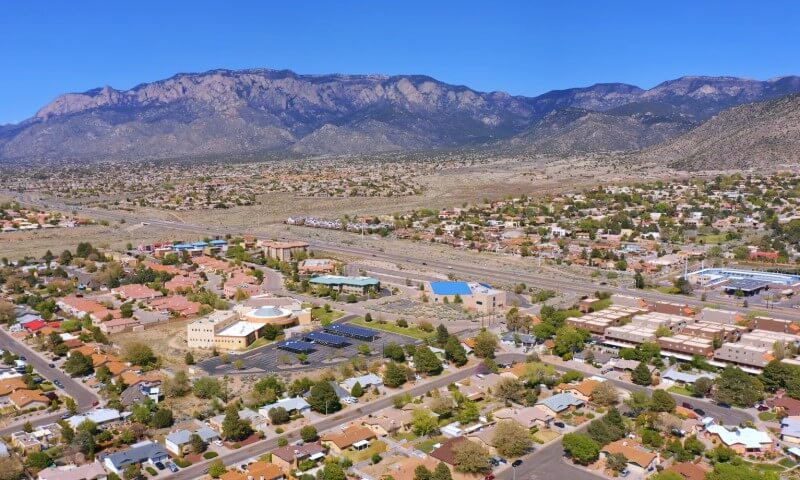
Albuquerque is a fascinating contradiction. The surrounding landscape -the Sandia Mountains turning pink at sunset, the Rio Grande corridor, the high desert light -is genuinely spectacular. The food culture (green chile cheeseburgers, authentic New Mexican cuisine, a craft beer scene that has no right to be as good as it is) is excellent.
And yet, Albuquerque has one of the most persistent violent crime problems of any mid-sized American city, driven by a potent combination of poverty, methamphetamine, a fragmented mental health system, and a car theft crisis that has at various points put the city at or near #1 nationally.
The numbers: Violent crime approximately 1,400 per 100,000. Car theft has been a particular obsession -at one point Albuquerque had the highest vehicle theft rate in the country, driven partly by the notorious Kia/Hyundai theft epidemic (certain models had no engine immobilizers) and partly by organized theft rings. 2025 data shows meaningful improvement, but property crime remains extremely high.
Neighborhoods to avoid: The International District (east of Louisiana Boulevard, south of Central) -nicknamed “The War Zone” locally -has high concentrations of poverty, drug activity, and crime. Parts of the South Valley and some stretches of Central Avenue (Historic Route 66) outside of the Nob Hill section.
Neighborhoods worth living in: Nob Hill (around Central and Carlisle) is ABQ’s most walkable, vibrant neighborhood -restaurants, independent shops, and safe. Uptown has commercial density and safety. Northeast Heights is suburban-feeling but with great Mountain access. North Valley along the Rio Grande is beautiful, green, and relatively safe. Old Town is touristy but charming and safe.
For travelers: Breaking Bad tourism is genuinely fun (yes, it’s become a legitimate thing, and the locals have fully leaned in). The Indian Pueblo Cultural Center, the ABQ BioPark, Old Town, and the Sandia Peak Tramway are all worthwhile. Rent a car but don’t leave it unattended overnight without a steering wheel lock -seriously.
For those relocating: New Mexico is a blue state with strong LGBTQ+ protections. The cost of living is low, the outdoor recreation is extraordinary (skiing, hiking, mountains 30 minutes from downtown), and the food culture is unique in the U.S.
The challenges are the crime rate, a healthcare system that struggles with capacity, and a public school system with well-documented problems. Many remote workers have found Albuquerque to be an excellent quality-of-life trade.
?️? LGBTQ+ Lens
New Mexico is one of the more LGBTQ+-protective states in the American Southwest, and Albuquerque reflects that. The city has local nondiscrimination protections, an active community centered around the Albuquerque LGBTQ+ Community Center, and a generally progressive civic culture shaped by the state’s diverse population (Native American, Hispanic, and Anglo communities have a long history of cross-cultural exchange).
Misterb&b ranked Albuquerque 8th among the safest LGBTQ+ travel destinations in the U.S. in 2025 -a notably high ranking for a city that otherwise appears on dangerous city lists. The combination of New Mexico’s protective state laws, Albuquerque’s relatively welcoming urban culture, and a cost of living that allows LGBTQ+ community organizations to actually function makes it a meaningful destination.
? Safety rating: Significant property crime; violent crime concentrated; smart navigation makes it livable
? LGBTQ+ rating: Welcoming -New Mexico has strong protections; top-10 LGBTQ+ travel city
? Bottom line: Albuquerque is a better city than its crime ranking suggests, especially for LGBTQ+ residents. Never leave anything in your car.
#10 – New Orleans, Louisiana
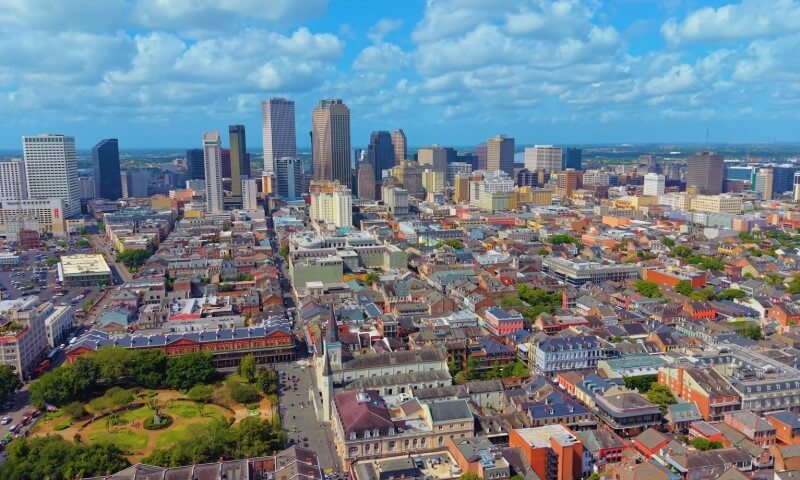
New Orleans is unlike anywhere else in the United States. That’s not a travel brochure cliché -it’s a genuine statement about a city that exists in its own cultural category. The food, the music, the architecture, the Creole and Cajun cultural fusion, the absolute refusal to be normal -New Orleans is a place that gets into your bloodstream.
It also has a serious violent crime problem. The murder rate here runs approximately 40+ per 100,000, putting it in the company of St. Louis and Memphis at the very top of American homicide statistics.
And New Orleans carries a specific, recent trauma that can’t be ignored: on New Year’s Day 2025, a man drove a rented pickup truck into a crowd of revelers on Bourbon Street, killing 14 people and injuring more than 50.
CNN reported the attack extensively; the FBI later confirmed it as a domestic terror attack. On the first anniversary, the city marked the occasion under heavy security -but also with resilience. As WGNO News reported, New Orleans showed “a three-year decrease in violent crime in the first quarter of 2026,” and the city is now “on pace to have the fewest murders since 1970.”
The crime is concentrated but not always predictable, and the Bourbon Street attack made the city’s safety challenges impossible to ignore -even as the underlying trend is, counterintuitively, improving.
The numbers: Violent crime approximately 1,361 per 100,000. Murder rate among the highest in the U.S. for a city its size. According to Fox 8 Live, New Orleans recorded 121 murders in 2025, a significant improvement from prior years. The French Quarter and the tourist core are heavily policed and relatively safe -crime is disproportionately concentrated in the New Orleans East, Central City, and Gentilly neighborhoods.
On r/NewOrleans, a thread titled “Is it actually as dangerous as the headlines say?” became one of the subreddit’s most pinned resources. A long-term resident wrote: “Here’s the truth: I’ve lived in the Marigny for 7 years and I’ve never been mugged, never had my car broken into, never felt unsafe walking home at midnight. I also know people in New Orleans East who wouldn’t let their kids play outside. It is absolutely both of those cities at once.”
Neighborhoods to avoid: New Orleans East -a large, largely suburban area east of the Industrial Canal that has never fully recovered from Hurricane Katrina and concentrates significant violent crime. Central City (portions west of the CBD). Parts of Tremé after dark, despite its cultural significance.
Neighborhoods worth living in: The Garden District is one of the most beautiful neighborhoods in America -antebellum mansions, oak-canopied streets, Magazine Street’s shops and restaurants -and genuinely safe.
Uptown (the university area) is a sprawling, beautiful, and relatively safe residential neighborhood. The Marigny and Bywater have become the city’s creative/arts neighborhoods, popular with younger residents and visitors who’ve priced out of the Quarter. Mid-City is a genuine neighborhood with local character and manageable crime.
For travelers: New Orleans is absolutely worth visiting -arguably worth multiple visits, because you cannot absorb it in one trip. The food alone (Commander’s Palace, Dooky Chase’s, Cochon, Coquette, and a thousand po-boy shops) justifies the flight.
Be aware that pickpocketing and mugging do occur on Bourbon Street (stay aware, don’t flash expensive items), and that the city has a Mardi Gras effect where crime temporarily spikes during major festivals.
For those relocating: New Orleans offers irreplaceable culture at very low cost. The food, music, and community you’ll find here don’t exist anywhere else. The challenges are real: a public school system that requires careful navigation, a healthcare infrastructure stretched thin, a post-Katrina insurance market that is genuinely brutal, and a climate that is getting more extreme with each hurricane season. But people who move to New Orleans tend to love it ferociously.
?️? LGBTQ+ Lens
Here’s the plot twist: New Orleans, despite sitting in Louisiana -rated the 2nd most dangerous state for LGBTQ+ people in SafeHome.org’s 2025 report -is, at the city level, one of the most LGBTQ+-welcoming cities in the entire South.
New Orleans has more gay bars per 100,000 residents than virtually any other U.S. city (1.43 per 100,000) and more Pride celebrations per capita than any American city (0.32). The Bourbon Street/French Quarter corridor, and particularly the 700 block of Bourbon (the gay section), has been a center of queer life in the South for over a century. The Marigny neighborhood immediately adjacent to the Quarter has a significant LGBTQ+ residential and nightlife presence.
The tension here is genuine and important: Louisiana’s state government is deeply hostile to LGBTQ+ rights -bathroom bills, gender-affirming care restrictions, and broadly hostile legislative patterns are well-documented on our Anti-LGBTQ Bills Tracker. But New Orleans city politics operate in a different universe from Louisiana state politics, and the city has maintained local LGBTQ+ protections and a cultural climate of acceptance that is remarkable in the regional context.
For LGBTQ+ travelers: New Orleans is an extraordinary destination with a deeply rooted queer culture. For potential residents: you’ll find genuine community and cultural acceptance in New Orleans itself, while navigating a state legal environment that is working actively against your rights.
? Safety rating: High murder rate; tourist areas patrolled; residential neighborhoods vary dramatically
? LGBTQ+ rating: Welcoming city, hostile state -most gay bars per capita in the US; Louisiana law is a real concern
? Bottom line: One of America’s great cities, worth every visit. For relocation, the culture is irreplaceable but the state legal context for LGBTQ+ individuals requires careful consideration.
#11 – Birmingham, Alabama
Birmingham carries the weight of American history differently than most cities. The 16th Street Baptist Church bombing. The fire hoses. The pivotal Civil Rights battles that helped change the nation. That history is present everywhere here -in the architecture, in the Civil Rights District, in the conversations you have with anyone who’s been here long enough.
The crime picture is tied directly to that history -decades of disinvestment in Black neighborhoods, economic abandonment following the steel industry collapse, and a geography shaped by systemic inequality. Violent crime runs approximately 1,320 per 100,000, concentrated in specific areas while other parts of the city have quietly developed into legitimate urban destinations.
Neighborhoods to avoid: The Ensley area on the west side, Woodlawn on the east side, and portions of North Birmingham have consistent violent crime. These areas reflect the deepest layers of the city’s disinvestment history.
Neighborhoods worth living in: Avondale has exploded as Birmingham’s craft beer and food neighborhood -Avondale Brewing, multiple excellent restaurants, a genuine neighborhood energy. Crestwood is a safe, affordable, and charming residential area. Mountain Brook and Homewood are affluent inner suburbs immediately adjacent to the city with excellent quality of life. Lakeview is developing quickly as a restaurant and nightlife hub.
For travelers: Birmingham’s food scene has become nationally recognized -Automatic Seafood, Highlands Bar and Grill, The Essential -and is well worth a dedicated visit. The Civil Rights District (16th Street Baptist Church, the Birmingham Civil Rights Institute, Kelly Ingram Park) is essential American history. The Red Mountain Park offers excellent hiking within the city limits.
For those relocating: Birmingham’s cost of living is exceptionally low. The food and arts scene is genuine and growing. The job market is anchored by University of Alabama at Birmingham (a major research medical center) and a growing financial services sector. The state context -Alabama -is the challenge.
?️? LGBTQ+ Lens
Alabama is, without equivocation, one of the most hostile states in the country for LGBTQ+ individuals. Comprehensive anti-LGBTQ+ legislation, no state nondiscrimination protections, and a political culture that has actively weaponized LGBTQ+ issues make it among the most challenging legal environments in America.
Birmingham is somewhat more welcoming at the city level than rural Alabama, with a small LGBTQ+ community and a few bars in the Lakeview neighborhood. But the absence of meaningful legal protection, combined with Alabama’s legislative aggressiveness (tracked in detail on our Anti-LGBTQ Bills Tracker), means that LGBTQ+ individuals -especially trans people and same-sex couples with children -face genuine legal and social risk.
This is not a city to recommend for LGBTQ+ relocation without very serious consideration of the state legal environment.
? Safety rating: Violence concentrated; specific safe neighborhoods; food/arts scene genuinely good
? LGBTQ+ rating: Hostile state -Alabama among worst states for LGBTQ+ legal protection
? Bottom line: The food renaissance is real and the history is unmissable. For LGBTQ+ individuals considering relocation, Alabama’s state legal environment is a serious obstacle.
#12 – Baton Rouge, Louisiana
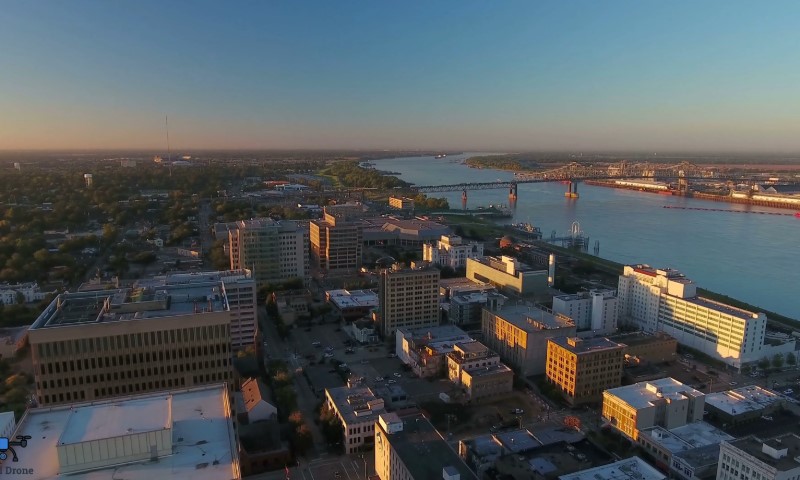
Baton Rouge is the capital of Louisiana, home to LSU, and a city that consistently appears on dangerous city lists with a violent crime rate of approximately 1,004 per 100,000 -nearly three times the national average. Unlike New Orleans, Baton Rouge doesn’t have the tourist infrastructure and international recognition that might partially offset its crime challenges.
Neighborhoods to avoid: North Baton Rouge (particularly the Scotlandville and Zion City areas) has some of the highest violent crime rates in Louisiana. Parts of the Old South Baton Rouge neighborhood on the south side also warrant caution.
Neighborhoods worth living in: Mid-City Baton Rouge is the city’s most walkable and livable neighborhood. Southdowns and Broadmoor are established, safe residential areas popular with university faculty and young professionals. The areas around LSU’s campus are significantly safer than the city average, particularly for the university community.
For travelers: Louisiana State Capitol (the tallest state capitol building in the U.S.), the LSU campus, and the Bluebonnet Swamp Nature Center are worth visiting. The food scene has strong Louisiana credentials. Baton Rouge is often a logical pairing with a New Orleans visit.
For those relocating: Baton Rouge offers very low cost of living, LSU’s ecosystem (healthcare, research, athletics), and proximity to New Orleans. The crime rate and Louisiana’s state policies are the primary concerns.
?️? LGBTQ+ Lens
Louisiana’s LGBTQ+ legal environment extends to Baton Rouge with full force, and without New Orleans’s cultural counterweight, Baton Rouge is a significantly more challenging city for LGBTQ+ individuals. The state’s legislative hostility (Louisiana was ranked 2nd most dangerous state for LGBTQ+ people in SafeHome.org’s 2025 report) applies here without the mitigating factor of a strongly welcoming city culture.
There is a small LGBTQ+ community in Baton Rouge, primarily centered around the university ecosystem, but it lacks the critical mass and cultural infrastructure of New Orleans or major cities outside the Deep South.
? Safety rating: Violent crime nearly 3× national average; specific safe neighborhoods exist
? LGBTQ+ rating: Hostile state, limited city community -Louisiana’s legislative environment is a serious concern
? Bottom line: Strong case for visiting; weaker case for relocating -especially for LGBTQ+ individuals, where the state legal landscape represents genuine risk.
#13 – Little Rock, Arkansas
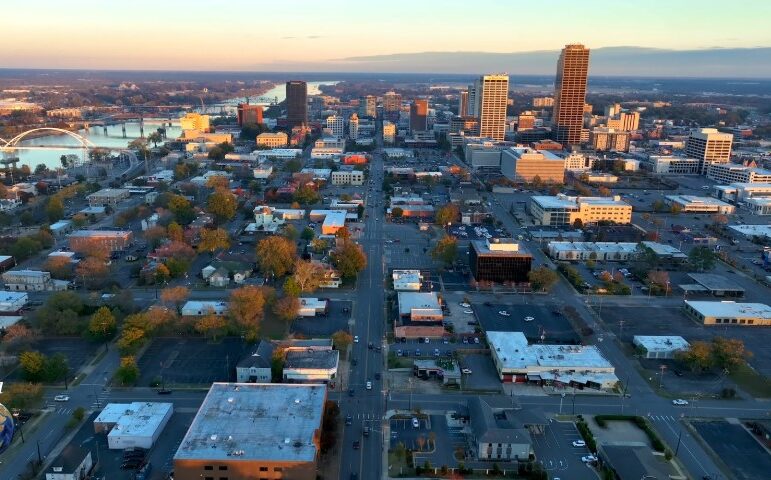
Little Rock is the capital of Arkansas and has a violent crime rate of approximately 980 per 100,000 -nearly three times the national average for a city of its size. The crime is concentrated in specific corridors on the city’s west and south sides, while the Heights and Hillcrest neighborhoods present a very different face of the city.
Neighborhoods to avoid: The area around 12th Street on the south side and portions of West Little Rock (near Geyer Springs) have concentrated violent crime. University Avenue corridor south of I-630 warrants caution at night.
Neighborhoods worth living in: The Heights and Hillcrest are genuinely charming, safe, and walkable -good restaurants, independent shops, and a residential character that feels almost New Urbanist. Downtown is improving. West Markham corridor has investments and development.
For travelers: The Clinton Presidential Center is a legitimately well-designed museum on the Arkansas River. The River Market District downtown has developed into a reasonable food and bar scene. The Arkansas Arts Center is underrated.
For those relocating: Little Rock is cheap. The cost of living is among the lowest of any state capital in the country. The job market is limited (state government, healthcare, Dillard’s and Windstream have HQs here). Arkansas’s political trajectory -particularly on social issues -is a critical factor.
?️? LGBTQ+ Lens
Arkansas is among the most hostile states in the country for LGBTQ+ individuals, with comprehensive anti-LGBTQ+ legislation including some of the most aggressive gender-affirming care bans in the nation. Little Rock has a small LGBTQ+ community -centered around a few bars in the River Market area -but the absence of state or city-level nondiscrimination protections, and the active legislative hostility tracked in our Anti-LGBTQ Bills Tracker, makes this a very difficult environment for LGBTQ+ residents.
? Safety rating: Elevated crime; Heights/Hillcrest are safe pockets
? LGBTQ+ rating: Hostile state -Arkansas among most aggressive anti-LGBTQ+ legislating states
? Bottom line: Very affordable with some genuinely nice neighborhoods, but the state’s legal trajectory is a serious deterrent for LGBTQ+ individuals and families.
#14 – Stockton, California
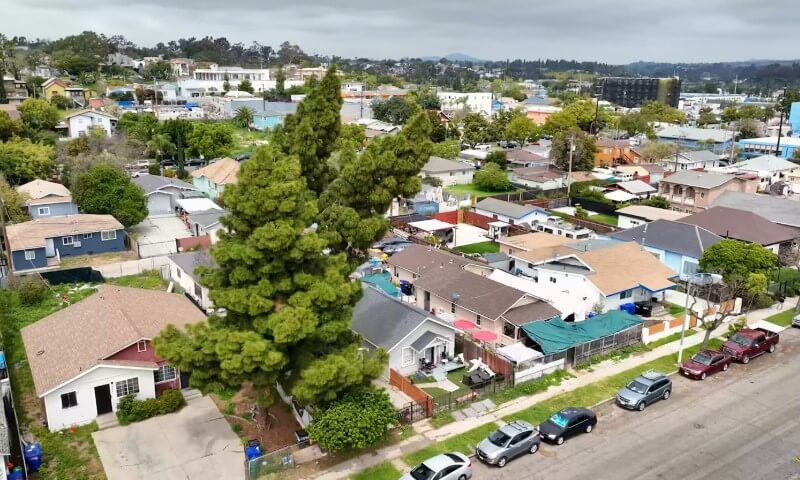
Stockton, in California’s Central Valley, became nationally known in 2012 when it filed for the largest municipal bankruptcy in U.S. history at the time. It’s since emerged from bankruptcy, but the economic roots of its crime problem -concentrated poverty, agricultural economy with limited upward mobility, gang activity -haven’t transformed as dramatically as the city’s balance sheet.
Violent crime runs approximately 960 per 100,000, driven by property crime and gun violence concentrated in the south and southeast parts of the city.
Neighborhoods to avoid: South Stockton, particularly the areas south of Charter Way, has the highest crime concentration. Parts of the central city around the Crosstown Freeway warrant caution.
Neighborhoods worth living in: Lincoln Village on the west side is one of the safest parts of Stockton. North Stockton (near the University of the Pacific) is substantially safer than the city average. Brookside is an upscale residential area with excellent safety.
For travelers: Stockton is generally not a tourist destination, but it serves as a hub for Delta waterways recreation. The Haggin Museum has a genuinely impressive art collection for a city this size.
For those relocating: Stockton is one of the more affordable options in California, which is meaningful context. The Sacramento Delta, proximity to the Bay Area (90 minutes), and California’s overall legal protections are genuine positives. The crime rate and limited economic opportunity are the main concerns.
?️? LGBTQ+ Lens
California’s comprehensive LGBTQ+ legal protections apply fully in Stockton, and that matters. The state’s nondiscrimination laws, healthcare protections, and legal framework make California one of the safest states for LGBTQ+ individuals regardless of which city you’re in. Stockton itself has a small LGBTQ+ community without the critical mass of Sacramento or the Bay Area, but the legal environment is strongly protective.
? Safety rating: Violent crime concentrated; north Stockton and Lincoln Village manageable
? LGBTQ+ rating: California legal protections strong; limited local queer infrastructure
? Bottom line: California protections are real. If affordability matters and you can find the right neighborhood, Stockton is worth considering -especially compared to similarly affordable cities in less protective states.
#15 – Jackson, Mississippi
Jackson, Mississippi has been at the center of a genuine humanitarian crisis in recent years -the 2022 water system failure that left hundreds of thousands without safe water was the most visible sign of decades of infrastructure collapse in a city that has lost more than half its population since 1980.
The violent crime rate is approximately 940 per 100,000 in a city of under 150,000 people. Jackson’s crime is inseparable from the poverty it sits within -Mississippi is the poorest state in the country by virtually every measure, and Jackson’s tax base has been decimated by population loss and suburban flight.
Neighborhoods to avoid: Far west Jackson and significant portions of north Jackson have concentrated violent crime. Downtown after dark requires awareness.
Neighborhoods worth living in: Fondren is Jackson’s arts and restaurant neighborhood -safe, walkable, genuinely charming, with an independent business culture that fights hard against the city’s decline narrative. Belhaven is a historic residential neighborhood adjacent to the Belhaven University campus with significantly lower crime. Northeast Jackson is the most stable residential corridor.
For travelers: The Mississippi Museum of Art in Fondren is excellent. Fondren itself is a genuine food and arts district worth an afternoon. The Mississippi Civil Rights Museum (opened 2017) is one of the best state history museums in the country. Jackson deserves more tourist attention than it receives.
For those relocating: Jackson requires honest assessment. The infrastructure challenges are real. The poverty is real. The crime is real. But the cost of living is extraordinarily low, the community in neighborhoods like Fondren is tight-knit and resilient, and the people who choose Jackson have a specific kind of investment in building something that matters. It’s not for everyone.
?️? LGBTQ+ Lens
Mississippi has the worst LGBTQ+ equality ratings of any state in the country. The state has no nondiscrimination protections, active anti-LGBTQ+ legislation, and a legal climate that is genuinely hostile to LGBTQ+ individuals. Jackson has a small, resilient LGBTQ+ community -primarily organized through organizations like the Campaign for Southern Equality and local community groups -but the absence of legal protection makes daily life genuinely precarious for LGBTQ+ residents.
This is one of the places where the data on our Red vs. Blue States 2026 page is most relevant -Mississippi’s political trajectory directly impacts daily life for LGBTQ+ residents in ways that are not theoretical.
? Safety rating: High crime; infrastructure fragility adds another dimension; Fondren/Belhaven are pockets of livability
? LGBTQ+ rating: Hostile -Mississippi is worst-rated state for LGBTQ+ equality; small but resilient community
? Bottom line: Fondren is a remarkable community against enormous odds. For LGBTQ+ individuals, the state legal environment poses genuine risk and requires serious consideration.
#16 – Shreveport, Louisiana
Shreveport is the largest city in North Louisiana, a part of the state that culturally resembles East Texas more than Cajun Louisiana. The violent crime rate -approximately 920 per 100,000 -is driven by concentrated poverty on the north side and a casino economy that has left more problems than it solved.
Neighborhoods to avoid: Allendale and Mooretown on the north side have very high violent crime. The corridor between the casinos and downtown after late hours warrants caution.
Neighborhoods worth living in: South Highlands is an established, safe residential neighborhood. Pierremont and University Terrace near Centenary College are quieter and safer. Bossier City, across the Red River (a separate city), has a more developed commercial infrastructure and somewhat lower crime.
For travelers: Shreveport-Bossier City’s casino complex on the Red River is the primary tourist draw. The Shreveport Regional Arts Council has built a surprisingly vibrant arts scene.
For those relocating: Shreveport is genuinely cheap, but the economy is struggling. The oil and gas sector has contracted; the casino economy is volatile. Louisiana’s overall state environment -policy, infrastructure, climate vulnerability -is a factor.
?️? LGBTQ+ Lens
North Louisiana is among the most conservative regions in the Deep South, and Shreveport reflects that. Louisiana’s hostile state-level LGBTQ+ laws apply with full force, and without New Orleans’s cultural counterweight, Shreveport is a difficult environment for LGBTQ+ individuals. The community here is small and largely underground.
? Safety rating: Elevated crime; South Highlands and Bossier City more manageable
? LGBTQ+ rating: Hostile -Louisiana law + North Louisiana conservative culture
? Bottom line: Worth a casino visit; difficult environment for LGBTQ+ relocation.
#17 – Tulsa, Oklahoma
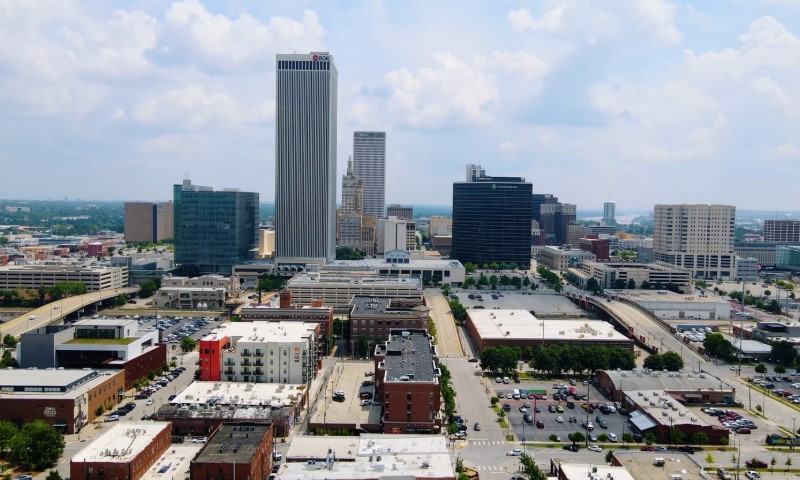
Tulsa surprises people. The Art Deco architecture is extraordinary -Tulsa has one of the finest concentrations of Art Deco buildings in the world, a legacy of the oil boom of the 1920s. The Brady Arts District and the Gathering Place (one of the best urban parks built in America in decades) show a city investing in itself. The Woody Guthrie Center is a gem.
The violent crime rate -approximately 880 per 100,000 -is a genuine challenge, concentrated in north Tulsa and specific east-side corridors. The city made national news with the 2021 centennial commemoration of the 1921 Tulsa Race Massacre, which destroyed the Greenwood District (“Black Wall Street”) -a reckoning with history that many Tulsans are still processing.
Neighborhoods to avoid: North Tulsa (north of I-244) has concentrated violent crime and poverty. Parts of east Tulsa near East 11th Street warrant caution.
Neighborhoods worth living in: Brookside is Tulsa’s most walkable, safe, and pleasant neighborhood -along Peoria Avenue, excellent independent restaurants and bars. Cherry Street (East 15th Street) is similar -a restaurant row with strong neighborhood character. Midtown is the broad, safe central section. Maple Ridge has beautiful historic homes.
For travelers: The Art Deco walking tour (pick up a map from the Tulsa Foundation for Architecture), the Gathering Place riverfront park, the Philbrook Museum of Art (housed in an Italian villa), and the Brady Arts District are all excellent. Tulsa is a legitimately good weekend destination.
For those relocating: Tulsa is cheap, genuinely beautiful in its own way, and has invested significantly in quality of life. The Tulsa Remote program (which offered $10,000 to remote workers who moved to Tulsa) drew thousands of new residents and shifted the demographic and cultural landscape meaningfully. The crime in specific areas and Oklahoma’s increasingly hostile political environment are the main concerns.
?️? LGBTQ+ Lens
Oklahoma has moved in an increasingly hostile direction for LGBTQ+ rights, with significant anti-LGBTQ+ legislation in recent sessions. Tulsa is notably more welcoming than Oklahoma City or rural Oklahoma -there is an established LGBTQ+ community in the Brady Arts District and Brookside areas, and the influx of remote workers through the Tulsa Remote program has shifted the cultural climate somewhat.
But the state-level legislative environment -tracked on our Anti-LGBTQ Bills Tracker -is a genuine concern, particularly for trans individuals and families.
? Safety rating: Crime concentrated north of I-244; Brookside/Cherry Street livable and pleasant
? LGBTQ+ rating: Oklahoma’s legislative trajectory is increasingly hostile; Tulsa has community but state environment is concerning
? Bottom line: Tulsa is a genuinely underrated city with strong livable neighborhoods. For LGBTQ+ individuals, Oklahoma’s state laws require serious consideration.
#18 – Chicago, Illinois
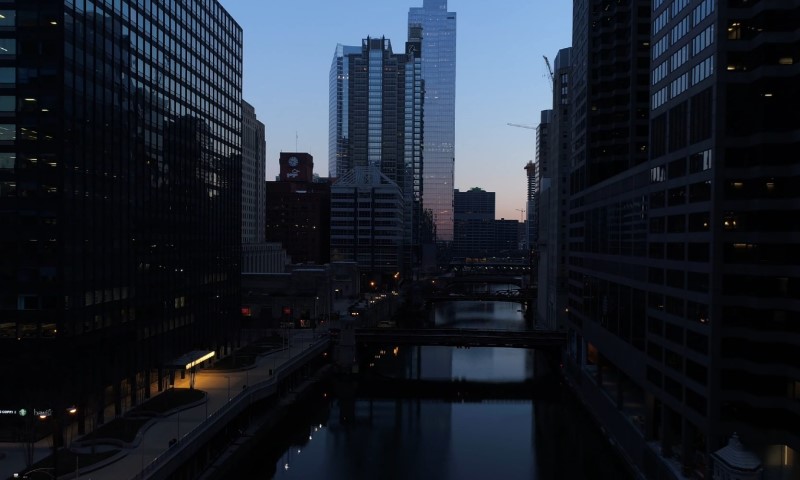
Chicago’s entry on this list requires an important caveat: at approximately 870 violent crimes per 100,000 residents, Chicago’s rate is lower than every city above it. It appears here because the absolute numbers -generated by a metro population of nearly 10 million -are among the highest in the country. “Chicago” has become a political shorthand in ways that its statistics don’t fully support.
And here’s the number that should reshape how you think about Chicago in 2026: according to ABC News, homicides in Chicago fell 30% in 2025 compared to 2024, and 49% since 2021. Crain’s Chicago Business reported that “Chicago violence fell to historic low in 2025” -the city experienced fewer than 2,000 shootings in 2025 for the first time this century.
The University of Chicago Crime Lab’s year-end analysis confirmed double-digit decreases across every major crime category. As ABC News noted in a December 2025 national roundup, “Detroit, Philadelphia and Baltimore are on track to have the fewest murders since the 1960s, while Chicago is down 49% since 2021” -those aren’t cherry-picked talking points, they’re the FBI’s own preliminary data.
That said: Chicago does still have serious, concentrated violent crime -primarily in specific South Side and West Side communities (Englewood, Austin, Garfield Park, Roseland) where poverty and disinvestment have combined with gun violence in devastating ways. The gun violence on summer weekends in these neighborhoods is genuinely extreme, and the gaps between the city’s neighborhoods are as stark as anywhere in America.
On r/Chicago, a post asking “Why do people keep calling this the most dangerous city when the stats say otherwise?” became one of the year’s most upvoted local threads. The top response: “Because it plays well politically and nobody wants to update their priors. Chicago has 2.7 million people. Our homicide rate is lower than Indianapolis. But yeah, keep pretending Wicker Park is a war zone.” A counter-response with nearly as many upvotes: “Tell that to the people in Englewood who’ve buried three kids this year. The rate argument is a rich neighborhood talking point.” Both are right. That’s Chicago.
Neighborhoods to avoid: Englewood, West Englewood, Austin (far west side), Garfield Park, and parts of Roseland on the far south side have the highest violent crime concentrations. These are specific geographic areas, not the entire city.
Neighborhoods worth living in: Lincoln Park, Lakeview, Wicker Park, Bucktown, Logan Square, River North, the Loop, Hyde Park, Andersonville, Ravenswood, Old Town -Chicago has more excellent urban neighborhoods than almost any other American city. The choice of neighborhood essentially determines your safety experience.
For travelers: Chicago is one of America’s great cities by any measure -architecture, food (deep dish is just the beginning), music, the lakefront, the museums, the neighborhoods. Stay in the Loop, River North, Lincoln Park, or Wicker Park. The elevated train (The L) gets you almost everywhere safely. Chicago is not a city to avoid -it’s a city to understand.
For those relocating: Chicago offers a quality of life that is essentially unmatched among mid-tier cost-of-life American cities. The cultural infrastructure, the food scene, the neighborhoods, the transit -Chicago punches at New York and San Francisco’s level at a fraction of the cost. The political environment (Illinois is deeply blue, Chicago is deeply liberal) is supportive. The winter, the property taxes, and the specific south/west side violence are the legitimate concerns.
?️? LGBTQ+ Lens
Chicago is one of the great LGBTQ+ cities in America. Boystown (Halsted Street in Lakeview) was the first officially recognized gay village in the United States and remains one of the world’s most vibrant queer neighborhoods. Andersonville (north) has become a particularly welcoming neighborhood for queer women and non-binary individuals. Pilsen and Logan Square have growing queer populations.
Misterb&b ranked Chicago #1 among the safest LGBTQ+ travel destinations in the U.S. in 2025. Illinois has comprehensive LGBTQ+ nondiscrimination protections. Chicago Pride is one of the largest in the country. The city consistently scores at the top of the HRC Municipal Equality Index.
For LGBTQ+ individuals, Chicago is among the best options in America -an established community, legal protections, neighborhood diversity, and a cost of living that is dramatically lower than San Francisco or New York.
? Safety rating: Rate lower than most cities on this list; neighborhood variation extreme -Lincoln Park vs. Englewood are different worlds
? LGBTQ+ rating: Exceptional -#1 LGBTQ+ travel city in U.S.; Boystown is an institution; Illinois has comprehensive protections
? Bottom line: Chicago rewards the person who learns its neighborhood geography. For LGBTQ+ individuals especially, Chicago offers an unparalleled combination of community, culture, and legal protection.
#19 – Philadelphia, Pennsylvania
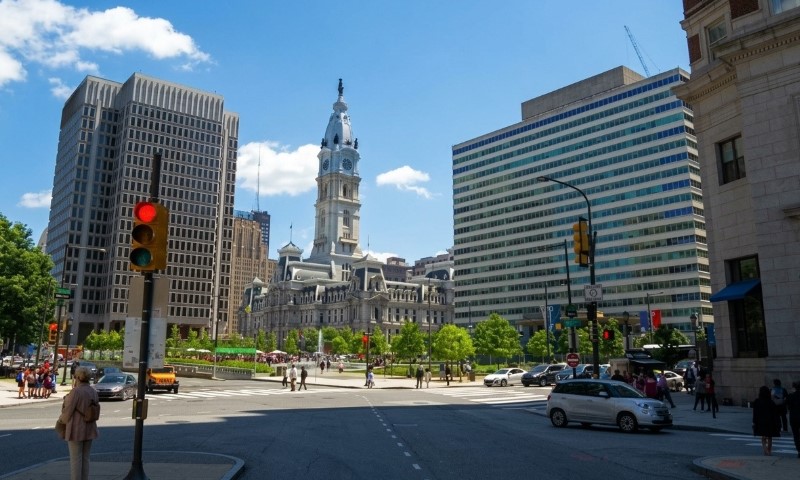
Philadelphia has been wrestling with a gun violence crisis that intensified significantly during and after the COVID pandemic. The violent crime rate of approximately 840 per 100,000 reflects a city with genuinely serious problems in specific corridors -Kensington (the open-air drug market that became a national story), parts of North Philadelphia, and sections of West Philadelphia -while other neighborhoods (Society Hill, Rittenhouse Square, Fishtown, Manayunk) function as normal, highly livable urban environments.
But here’s the headline that reframes this entry: according to ABC News, “Philadelphia is on track to have the fewest murders since the 1960s” -part of the sweeping national homicide decline of 2025. The city’s homicide count dropped to levels not seen in a generation, and the Kensington crisis, while still severe, has seen targeted interventions that are slowly showing results. The Philadelphia Inquirer noted in late 2025 that gun violence citywide was down more than 20% year-over-year.
On r/Philadelphia, a thread about whether Kensington is worth visiting drew a characteristically Philly response: “Are you looking for trauma tourism or do you need to be there for a reason? Because it’s not a neighborhood, it’s a public health emergency. Stay on the west side of Kensington Avenue and you’ll be fine. Cross it and you’ll understand why it’s in the news.” Someone else added: “Meanwhile my street in Fishtown hasn’t had a single incident in two years and we have a Michelin-starred restaurant three blocks away. Philly contains multitudes.”
Neighborhoods to avoid: Kensington is its own category -the level of open drug use and associated crime is genuinely extreme and not something to wander through casually. Parts of North Philadelphia (particularly the neighborhoods around Allegheny Avenue) have high violent crime. Portions of West Philadelphia outside the University City corridor warrant caution at night.
Neighborhoods worth living in: Rittenhouse Square is one of America’s finest urban park neighborhoods -safe, beautiful, excellent restaurants. Society Hill has historic Colonial-era architecture and very low crime. Fishtown is the city’s most dynamic young-professional neighborhood -great bars, restaurants, still affordable (by Philadelphia standards). Passyunk Square (South Philly) is an excellent food neighborhood and safe. University City around Penn and Drexel is college-safe and vibrant.
For travelers: Philadelphia is extraordinary and criminally undervisited relative to its cultural riches. The Liberty Bell and Independence Hall (obviously), but also the Philadelphia Museum of Art, the Barnes Foundation, the Reading Terminal Market, the Italian Market, and a cheesesteak debate that you have to experience personally. Stay in Center City or Rittenhouse.
For those relocating: Philadelphia has made the transition from post-industrial decline to legitimate destination city, though the gun violence crisis remains real. The cost of living is lower than New York and Boston. Amtrak access to NYC (90 minutes) and DC (2 hours) is practical. Pennsylvania has LGBTQ+ protections. The food scene is genuinely world-class.
?️? LGBTQ+ Lens
Philadelphia’s Gayborhood -centered on 12th and 13th Streets in Center City -is one of the oldest and most established LGBTQ+ neighborhoods in the United States. The rainbow crosswalks, the density of LGBTQ+ owned businesses, and the John Street community center represent decades of community building.
Pennsylvania has state-level LGBTQ+ nondiscrimination protections. Philadelphia consistently scores near the top of the HRC Municipal Equality Index for cities its size. Philadelphia Pride is one of the largest on the East Coast.
For LGBTQ+ individuals, Philadelphia offers the legal protections of a blue state, one of America’s most established gay neighborhoods, and a cost of living dramatically below New York.
? Safety rating: Gun violence crisis real; Kensington a genuine concern; Center City and most neighborhoods livable with awareness
? LGBTQ+ rating: Excellent -historic Gayborhood, Pennsylvania protections, strong community
? Bottom line: Philadelphia is one of America’s most complete cities. Know your neighborhoods, avoid Kensington, and it’s outstanding. For LGBTQ+ individuals, one of the best value cities in the country.
#20 – Atlanta, Georgia
View this post on Instagram
Atlanta is the defining city of the New South -a major economic engine, a cultural capital, home to Hartsfield-Jackson (the world’s busiest airport), and the self-declared LGBTQ+ capital of the South. It’s also a city with a serious and growing gun violence problem, a homicide rate that has climbed over the past several years, and income inequality that is among the most extreme of any U.S. city.
NBC News has reported on Atlanta’s gun violence as part of a broader pattern of Southern cities outpacing their Northern counterparts in rates of firearm homicide, tied to weaker gun laws and greater poverty concentration.
On r/Atlanta, a thread asking “Is Atlanta actually dangerous or is it just media hype?” drew hundreds of responses. The most upvoted: “Depends entirely on where you are. Midtown? I’ve never felt unsafe in 4 years. Southwest Atlanta? I had a gun pulled on me at a gas station. It’s a 10-minute drive between those two realities.” Another commenter: “The BeltLine has genuinely changed the city. Walking the trail at 9pm on a Tuesday feels completely safe now. But venture off into certain west side neighborhoods and the city hasn’t changed at all.”
The violent crime rate of approximately 820 per 100,000 reflects a city where specific neighborhoods (English Avenue, Vine City, Pittsburgh neighborhood in southwest Atlanta) have extremely concentrated violence, while the BeltLine neighborhoods, Midtown, and Buckhead function as prosperous, safe urban environments.
Neighborhoods to avoid: English Avenue and Vine City (immediately west of downtown) have some of the most concentrated violent crime in the Southeast. Parts of southwest Atlanta -Oakland City, Adair Park -warrant caution. The Atlanta University Center area at night requires awareness.
Neighborhoods worth living in: Midtown is Atlanta’s cultural heart -and home to its LGBTQ+ community -with excellent walkability, Piedmont Park, and strong safety. Old Fourth Ward (east of downtown, where MLK was born) has been transformed by the BeltLine into one of the city’s most vibrant neighborhoods. Inman Park and Candler Park are beautiful historic neighborhoods with great food and good safety. Virginia-Highland is beloved for its village-like character. Grant Park and East Atlanta Village offer authentic neighborhood character and improving safety.
For travelers: Atlanta’s food scene has arrived nationally -Staplehouse, Lazy Betty, Bacchanalia, and dozens of excellent Southern and international restaurants. The Martin Luther King Jr. National Historical Park is essential. The BeltLine trail system for walking and cycling is extraordinary. The aquarium and the National Center for Civil and Human Rights are worth your time.
For those relocating: Atlanta is a genuine economic powerhouse -film industry, tech (Microsoft, Google, Apple all have major presences), healthcare, logistics, and Delta’s global HQ. The cost of living, while rising rapidly, remains well below coastal cities. Traffic is an Atlanta-specific misery that you must accept. The school system in Atlanta proper requires careful navigation.
?️? LGBTQ+ Lens
Atlanta is legitimately the LGBTQ+ capital of the South -and that’s not just marketing. Midtown Atlanta contains one of the most vibrant and established queer communities in America, centered on Piedmont Park and the stretch of Peachtree Street through Midtown. The concentration of LGBTQ+ bars, restaurants, organizations, and cultural institutions here is extraordinary for a Southern city.
Atlanta Pride is one of the largest LGBTQ+ events in the Southeast. The city has comprehensive local LGBTQ+ nondiscrimination protections and consistently scores at the top of the HRC Municipal Equality Index for Southern cities. The LGBTQ+ Community Center of Greater Atlanta, the Feminist Women’s Health Center, and dozens of affirming community organizations make Atlanta a genuine resource hub.
The tension -which mirrors New Orleans -is that Georgia state law does not provide comprehensive LGBTQ+ nondiscrimination protections, and Georgia’s state legislature has an active anti-LGBTQ+ record in recent sessions.
For LGBTQ+ individuals considering Atlanta, the city’s protections are real, the community is extraordinary, but the state-level vulnerability (particularly for trans individuals and families) requires honest assessment. Check our Red vs. Blue States 2026 analysis for context.
? Safety rating: Gun violence concentrated in specific southwest/west Atlanta neighborhoods; Midtown, BeltLine neighborhoods, and east Atlanta livable
? LGBTQ+ rating: Outstanding city-level community -LGBTQ+ capital of the South; Georgia state law incomplete but city strongly protective
? Bottom line: Atlanta is one of the most dynamic cities in America with an extraordinary LGBTQ+ community. Know your neighborhoods, budget for traffic, and Atlanta delivers.
What These 20 Cities Have in Common (And What They Don’t)
After spending time with all of these cities -in person, through data, through thousands of Reddit threads -a few patterns emerge that are worth naming explicitly.
The South dominates this list for structural reasons. Eight of the top 15 cities are in the South or Border South. This isn’t coincidence -it reflects decades of policy choices: weaker gun laws, deeper poverty, historical underinvestment in Black communities following segregation, and in some cases, a criminal justice system that has cyclically failed to both prevent crime and address its root causes. Understanding this context doesn’t excuse the crime, but it matters for how you evaluate whether a city is “improving.”
City vs. neighborhood is everything. The single most important thing this article can tell you is that “dangerous city” almost never means “dangerous everywhere.” Detroit has neighborhoods with crime rates below the national average. Baltimore’s northeast neighborhoods are genuinely safe. Memphis’s Midtown is a real community. The city-level statistic is a starting point for research, not a conclusion.
LGBTQ+ hostility and violent crime often cluster -but not always. There’s a pattern on this list worth naming: many of the cities with the highest violent crime rates are also in states with the most hostile LGBTQ+ legislation. This isn’t coincidental -both phenomena tend to cluster in places with high poverty, lower social trust, and specific policy postures. But the exceptions are important: St. Louis and Kansas City are in hostile-statelaw Missouri while maintaining genuine welcoming city environments. New Orleans exists in hostile Louisiana while sustaining one of the most vibrant queer cultures in America.
Cities that are genuinely improving deserve credit. Detroit, Baltimore, Memphis, and Oakland are all on positive crime trajectories in 2025–2026. Choosing to move to a city that’s improving is different from choosing one that’s been stuck for decades. The trend matters as much as the current number.
Reddit tells you things statistics can’t. The best question to ask on a city subreddit before moving is: “I’m considering moving to [neighborhood]. What should I know that the statistics don’t tell me?” The answers are almost always more useful than any ranked list.
What Statistics Don’t Tell You
Crime statistics are useful. They’re also incomplete in ways that matter enormously for individual decision-making.
Many crimes go unreported. Sexual assault, domestic violence, and certain property crimes are dramatically underreported in national statistics. A city with a “low” reported assault rate may have high unreported intimate partner violence -and that changes the risk calculus, particularly for women and LGBTQ+ individuals in abusive relationships.
Jurisdictional reporting varies. Cities count crimes differently. Some include surrounding areas; others don’t. Some have better reporting infrastructure. The FBI’s Uniform Crime Reporting system has known gaps that affect how cities compare.
The aggregate hides the geography. A city with a violent crime rate of 1,500 per 100,000 might have a specific neighborhood running at 4,000 and another at 200. Your actual risk depends almost entirely on where you live and move within a city.
Personal identity shapes risk in ways data can’t capture. Being a Black man in a city with patterns of racially biased policing carries a different risk than being a white woman. Being visibly LGBTQ+ in a hostile neighborhood carries risks that violent crime statistics don’t measure. Being an undocumented immigrant in a city with aggressive ICE cooperation affects which risks you can realistically report to police. The aggregate number is not your number.
The emotional cost of feeling unsafe is real. There’s growing research on the chronic stress effects of living in environments where you feel unsafe -even if you haven’t been directly victimized. For LGBTQ+ individuals in hostile environments especially, the psychological weight of daily vigilance is a real quality-of-life factor that doesn’t show up in FBI tables.
FAQs
Q: What is the most dangerous city in America in 2026?
According to the FBI Crime Data Explorer and multiple cross-referenced 2026 sources including U.S. News & World Report and SafeHome.org, Memphis, Tennessee holds the highest violent crime rate among large U.S. cities at approximately 2,501 per 100,000 residents -nearly seven times the national average. For mid-sized cities, St. Louis, Missouri holds the highest per-capita murder rate at roughly 54 per 100,000. That said, both cities showed meaningful crime reductions in 2025, with Memphis down 28% overall and St. Louis down 16%.
Q: Is crime in America actually getting better or worse overall?
Better -dramatically so, and faster than almost anyone predicted. According to ABC News, the U.S. ended 2025 “poised to record the largest one-year drop in homicides ever recorded,” with preliminary FBI data showing approximately a 20% decrease in homicides nationwide. CBS News confirmed the trend independently. The Council on Criminal Justice’s Year-End 2025 report tracked double-digit crime declines in aggravated assaults, robberies, and gun violence across 40 major cities. As of 2026, violent and property crime rates are at or near the lowest levels since the FBI began keeping records in 1960. The “crime surge” narrative of 2020–2022 has substantially reversed.
Q: Are dangerous cities actually dangerous everywhere, or just in specific areas?
Almost always the latter. This is probably the most important practical fact in this article. In Memphis, the Midtown neighborhood has crime rates near the city average -meaningfully different from Whitehaven or Frayser. In Detroit, Corktown and Midtown function as normal, vibrant urban neighborhoods while parts of the far east side are genuinely hazardous. In Baltimore, Roland Park and Federal Hill are very safe by any standard while Sandtown-Winchester and Cherry Hill have some of the highest violent crime rates in the country. The city-level statistic is a starting point, not a destination. Always research your specific neighborhood using tools like CrimeGrade.org, NeighborhoodScout, or simply asking on the relevant city subreddit.
Q: Which cities on this list are improving the fastest?
Several cities showed historic improvements in 2025:
- Baltimore: 133 homicides -the fewest in nearly 50 years, per NPR. Down 31% year-over-year.
- Detroit: 165 homicides -the lowest since 1965, per the Detroit News. Down 18.7%.
- Memphis: Down 26% in murders, 48% in carjackings, per the Memphis Police Department.
- Oakland: 25% drop in overall violent crime; fewest homicides since 1967, per NBC Bay Area.
- Chicago: Down 30% from 2024, down 49% since 2021, per ABC News.
- Philadelphia: On track for fewest murders since the 1960s, per ABC News.
The cities showing the least improvement relative to their peers tend to be smaller Southern cities (Little Rock, Shreveport, Birmingham) where structural poverty and weak legal protections create more intractable conditions.
Q: What should I look for when deciding if a specific neighborhood is safe?
Start with the data: CrimeGrade.org and NeighborhoodScout provide block-level crime statistics that are far more useful than city-level averages. Then go to Reddit -search “[city name] + moving to + neighborhood” and you’ll find hundreds of first-hand accounts from current residents. Look for patterns across multiple posts rather than single outliers. Key questions to ask: How long have people lived there? What time of day do concerns arise? What types of crime (property vs. violent)? Has the neighborhood changed in the last 2–3 years? Also consider visiting in person at different times of day and night before committing.
Q: Are these cities safe to visit as a tourist?
For most of the top 20, yes -with conditions. Every city on this list has tourist-facing areas that are reasonably safe for visitors who follow basic urban common sense: stay aware of your surroundings, don’t flash expensive items, research your specific hotel location, avoid wandering off-route after dark. Memphis (Midtown, Beale Street), New Orleans (French Quarter, the Marigny), Detroit (Midtown, Corktown), Baltimore (Federal Hill, Fells Point), Oakland (Rockridge, Jack London Square), and Chicago (virtually anywhere on the tourist circuit) are all enjoyable and manageable travel destinations. The exceptions are areas like Kensington in Philadelphia, New Orleans East, or North St. Louis, which are not tourist destinations under any circumstances.
Q: Are these cities safe for solo female travelers?
Urban safety for women depends heavily on neighborhood, time of day, and transportation choice. The general rule applies here: stick to well-lit, populated areas, use rideshare rather than walking alone at night in unfamiliar areas, and trust your instincts. Cities with strong public transit (Chicago, Philadelphia) are generally easier to navigate safely. Cities with limited walkability and car-dependent layouts (Memphis, Birmingham, Baton Rouge) require more pre-planning for solo travelers. On r/solotravel and r/femalefashionadvice, firsthand city-specific advice from women travelers tends to be the most practical resource.
Q: Which cities on this list are most LGBTQ+-friendly?
Based on the HRC Municipal Equality Index 2025, Misterb&b’s LGBTQ+ travel rankings, and SafeHome.org’s state safety report cards, the most LGBTQ+-welcoming cities on this list are:
- Chicago -#1 LGBTQ+ travel city in the U.S. (Misterb&b); Boystown is one of America’s iconic gay neighborhoods; Illinois has comprehensive protections.
- Philadelphia -Historic Gayborhood; Pennsylvania has strong LGBTQ+ protections.
- Washington, DC (rank #96 on safety list) -Logan Circle neighborhood; among the top 5 LGBTQ+ metros nationally.
- Atlanta -LGBTQ+ capital of the South; Midtown is one of America’s most established queer neighborhoods.
- Kansas City, MO -HRC All-Star City; active community at relatively low cost of living.
- St. Louis, MO -HRC All-Star City; The Grove gayborhood is legitimate.
- Baltimore, MD -Historic Mount Vernon gayborhood; Maryland is a top-5 state for LGBTQ+ protections.
- Detroit, MI -Ferndale is outstanding; Michigan now has comprehensive state protections.
The least welcoming on this list: Memphis, Jackson MS, Birmingham, Little Rock, Shreveport, Baton Rouge -all in states with active anti-LGBTQ+ legislation and minimal city-level protections.
Q: Is it reckless to move to one of these cities?
Not at all -if you do your homework. Millions of people live well, raise families, build careers, and love their lives in every single city on this list. “Dangerous city” doesn’t mean “uniformly dangerous” -it means the city has serious crime concentrated in specific areas, and that you need to factor that into your neighborhood choice, your commute routes, and your day-to-day habits. People routinely move to Memphis for the cost of living and the culture, to Detroit for the value and the revival energy, to Baltimore for the community and the proximity to DC, and to New Orleans because there is simply nowhere else on earth like New Orleans. Eyes open, research done, right neighborhood selected -these cities deliver real quality of life.
Q: How does poverty relate to the crime rates in these cities?
Directly and structurally. The cities with the highest violent crime rates on this list -Memphis, St. Louis, Baltimore, Detroit, New Orleans, Birmingham, Jackson -share a common factor: concentrated, multi-generational poverty in specific neighborhoods, often tied to the legacy of deliberate disinvestment (redlining, urban renewal, highway construction through Black neighborhoods) that created the conditions for concentrated disadvantage. According to the Council on Criminal Justice, cities that have made the most progress on violent crime in 2025 -Baltimore, Detroit, Chicago -have coupled law enforcement strategies with significant investment in community violence intervention programs, mental health services, and economic opportunity. Crime does not exist in a vacuum from the conditions that produce it.
Q: What are the safest large cities in America in 2026?
If you’re looking for alternatives to the cities on this list, the consistently safest large U.S. cities by violent crime rate include: San Jose, CA (tech economy, strong protections), Austin, TX (growing but lower rate), Charlotte, NC (improving), Portland, OR (recovering from 2020–2022 spike), Seattle, WA, Denver, CO, and Minneapolis, MN (post-2020 improvement underway). For LGBTQ+ individuals specifically, Misterb&b’s 2026 rankings list Chicago, Seattle, San Francisco, Portland, and San Diego as the top five safest LGBTQ+ destinations in the U.S.
Q: Should LGBTQ+ individuals factor state law into a relocation decision?
Yes -and this cannot be overstated. The gap between city-level protections and state-level law is significant, and state law governs what happens when city protections are challenged, what healthcare is available (particularly for trans individuals), what recourse exists for employment or housing discrimination, and what the local court system will enforce. Our Red vs. Blue States 2026 analysis and the Anti-LGBTQ Bills Tracker are the best real-time resources for understanding the legal landscape you’d be moving into. For trans individuals and families with trans youth especially: the state in which you live has direct, life-affecting legal implications that go beyond daily cultural comfort.
Q: How often is this article updated?
The data in this article reflects FBI Crime Data Explorer statistics through 2024 with 2025 trend data incorporated from the Council on Criminal Justice, city police department reports, and major news outlets including NPR, ABC News, CBS News, and local sources. We update this article annually as new FBI data becomes available and as significant new reporting emerges. For the most current city-specific statistics, check the FBI Crime Data Explorer directly at cde.ucr.cjis.gov.
A Closing Thought
I started this article with Travis, the bartender in Memphis who’d raised his kids in Midtown without incident. I want to end it with something he said that I wrote down on a bar napkin and have thought about since:
“People come here scared of the city. And I get it. But the city is people. The crime is people. The music is people. You can’t love a city without understanding what it’s actually carrying.”
Safety is real. Statistics matter. The risks on this list are not imaginary. But safety is also personal -it depends on where you live, how you move through the world, what risks you’re actually exposed to, and who you are. A city that feels dangerous to one person may feel like home to another. A city with a “good” crime rate may feel deeply unsafe to an LGBTQ+ person in a neighborhood or state that doesn’t recognize their humanity.
Use this article as a starting point. Do the neighborhood-level research. Read the Reddit threads. If you can, visit before you commit. Talk to the people who actually live there. And understand that the most dangerous thing a city can do to you isn’t always captured in the FBI database.
If this article helped you think more clearly about where you want to live, share it with someone else making the same decision. And if you’ve lived in one of these cities and think I got something wrong -or something right -leave a comment. The most useful thing I can do is keep this accurate.
Travel well. Move wisely. Stay safe.