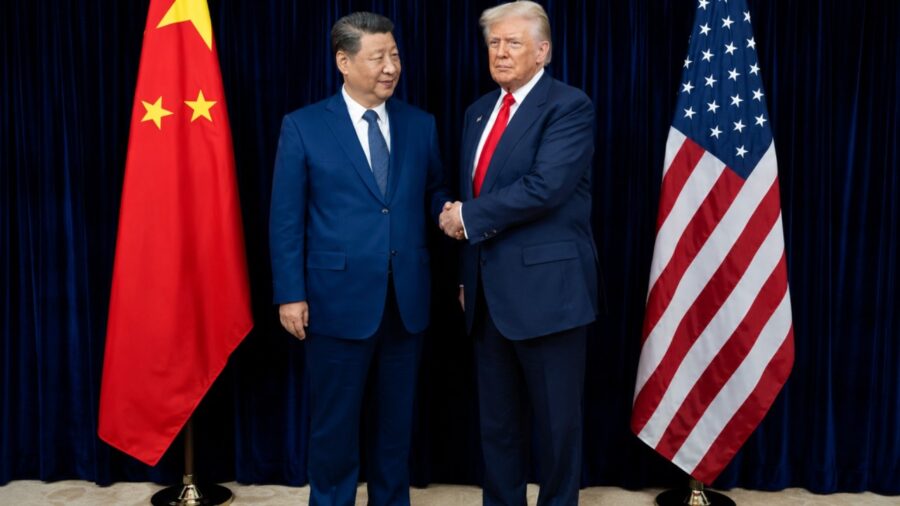

President Donald Trump arrived in Beijing for one of the most consequential meetings of his second term, a state visit hosted by Chinese President Xi Jinping from May 13 to 15.
China’s Foreign Ministry confirmed the visit at Xi’s invitation, giving both governments a formal stage for talks that reach far beyond the usual language of diplomacy.
The stakes are unusually broad. Trade, Taiwan, Iran, artificial intelligence, rare earth minerals, nuclear risk and American business access are all circling the same table.
Few officials in either capital expect a grand reset. The more realistic goal is to keep the world’s most powerful rivalry from sliding into another open crisis.
Table of Contents
ToggleTrump Needs Visible Wins
Trump enters the summit under pressure to produce results that can be understood at home. Reuters reported that agriculture is central to the trip, with Trump expected to press China for more purchases of U.S. soybeans, meat and grains.
The symbolism is hard to miss: one planned setting is Beijing’s Temple of Heaven, where Chinese emperors once prayed for good harvests.
The economic wish list is wider than farm exports. Washington is also looking for progress on aircraft sales, energy, investment channels and access for U.S. companies.
Nvidia CEO Jensen Huang joined the China mission, according to Reuters, as American tech firms look for a path through export controls, Chinese restrictions and the growing contest over advanced chips.
The Iran war adds another burden. Trump said before departure that he did not need Xi’s help on Iran, but he also acknowledged the issue would come up. AP reported that the war and inflation are weighing on his presidency, giving the Beijing visit a sharper domestic edge.
Xi Has Leverage And A Home-Court Stage
Xi’s position is different. He is hosting, setting the atmosphere and using ceremony to project China’s confidence. The Temple of Heaven setting gives Beijing a carefully chosen backdrop: ancient authority, national continuity and a reminder that Xi is receiving Trump on Chinese terms.
China also holds practical leverage. Rare earths remain a critical pressure point because they are essential for defense, electric vehicles, electronics and clean-energy technologies.
Reuters reported that a rare earths deal between the two countries is still in effect, but the issue remains one of the summit’s most sensitive economic flashpoints.
Taiwan Is The Hardest Line
No issue carries more danger than Taiwan. Ahead of the meeting, Beijing warned again against U.S. arms sales to the island and said it was ready to crush any move toward formal independence.
Reuters reported that a recent $11 billion U.S. arms package for Taiwan is likely to be discussed, with another $14 billion deal reportedly under consideration.
For Washington, Taiwan is a credibility test. For Beijing, it is a core sovereignty claim. That makes the subject combustible, especially if China tries to frame U.S. military support as negotiable in exchange for concessions elsewhere.
The Real Test Is Crisis Control
The summit may deliver purchases, statements and working groups. But the larger test is whether Trump and Xi can build enough discipline into the relationship to prevent trade fights, military tensions and proxy conflicts from colliding.
A breakthrough is unlikely. A breakdown would be costly. For a world already strained by war, inflation and strategic uncertainty, even a limited cooling of U.S.-China tensions would matter.
Related Posts:
- Trump Asked Xi About Buying U.S. Weapons, Ambassador…
- Best Places to Retire Abroad in 2026: An Honest…
- The 100 Most Dangerous Cities in America (2026):…
- 25 Most Dangerous Cities in US - Updated Statistics for 2026
- Safest Countries in the World in 2025 - GPI…
- Capital Cities in Europe: Top Destinations For You…