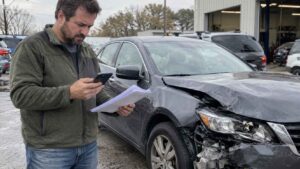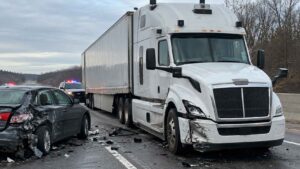


A driver runs a red light and hits your car. The police report supports your account, the other driver accepts responsibility, and their insurance company agrees to pay for the repairs. A few months later, your own insurer sends a renewal notice showing a higher premium.
Can an insurance company really charge you more for an accident you did not cause?
Yes, in some states. But other states restrict or prohibit premium increases based on accidents where you were not at fault. Your insurance company may also raise its general rates, remove a discount, or change your premium for reasons unrelated to the collision.
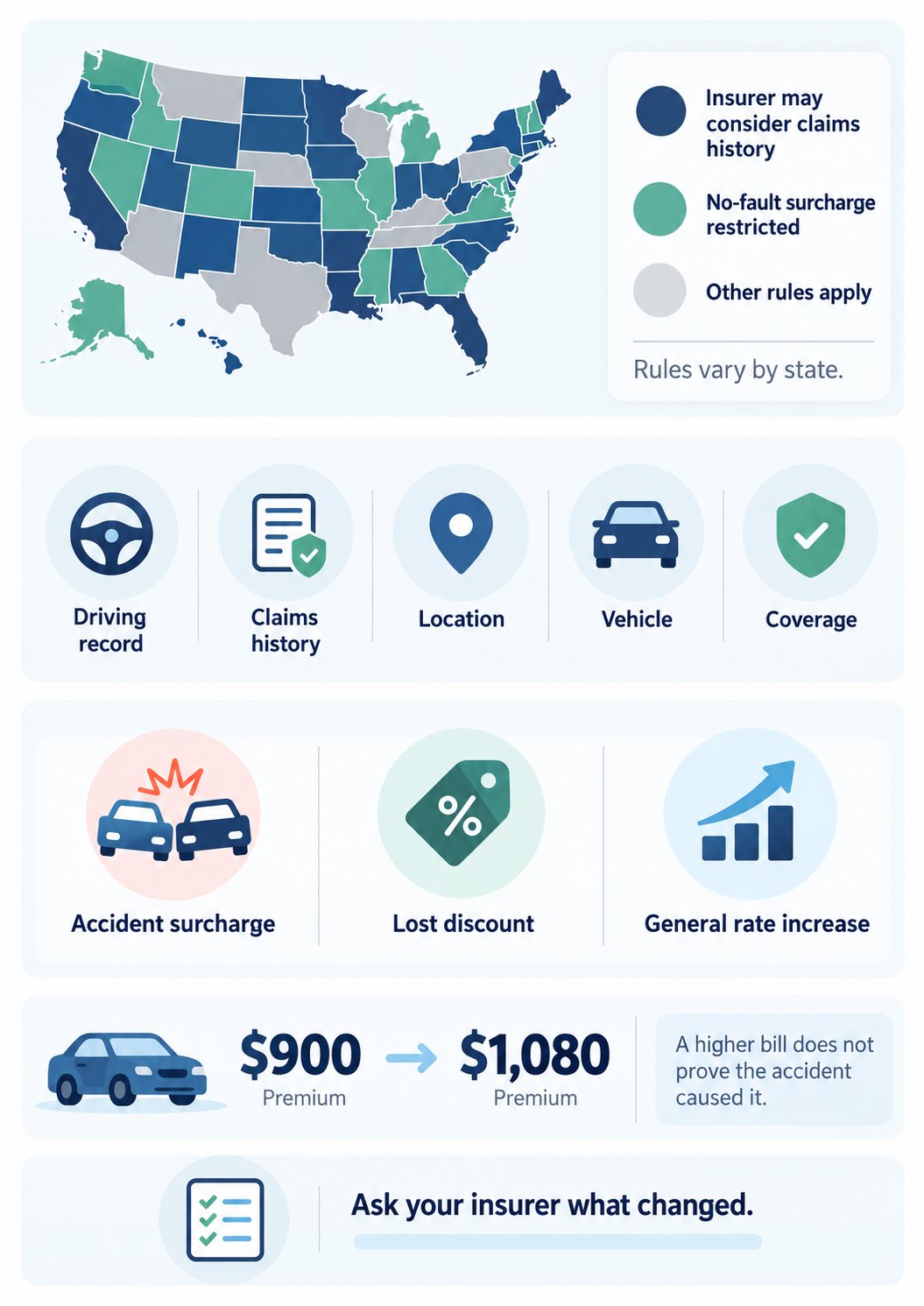
The first thing to establish is why your bill increased. An accident surcharge, a lost discount, and a company-wide rate increase are three separate issues, and state insurance laws do not always treat them the same way.
Can Your Insurance Go Up After A No-Fault Accident?
In the United States, auto insurance rules are primarily established at the state level. There is no single nationwide rule protecting every driver from higher premiums after an accident caused by somebody else.
Some states prevent insurers from imposing accident-related surcharges unless the policyholder was responsible for the collision. Others allow insurers to consider claims history when calculating premiums, subject to state regulations. For Arlington injury claims, a trusted law firm can help you understand your state’s requirements.
According to the National Association of Insurance Commissioners, insurers consider driving records, claims history, location, vehicle type, coverage choices, and other permitted factors when calculating auto insurance premiums.
An important detail is that insurance companies assess the risk of future claims. Your insurer does not necessarily base your renewal price on the amount it paid for one particular accident.
Three Reasons Your Premium Might Increase
| Reason | What Happened | What To Check |
| Accident surcharge | The insurer added a charge related to a recorded accident | Fault determination and state surcharge rules |
| Lost discount | A claims-free or accident-free discount disappeared | Discount eligibility and state consumer protections |
| General rate increase | The insurer raised rates for a larger group of policyholders | The company’s explanation and renewal documents |
Imagine your six-month premium rises from $900 to $1,080. The $180 increase could be tied to your accident, but the new price alone doesn’t prove that connection.
You need the insurer to identify the reason for the adjustment before deciding if it was permitted.
Some States Protect Drivers From No-Fault Accident Surcharges
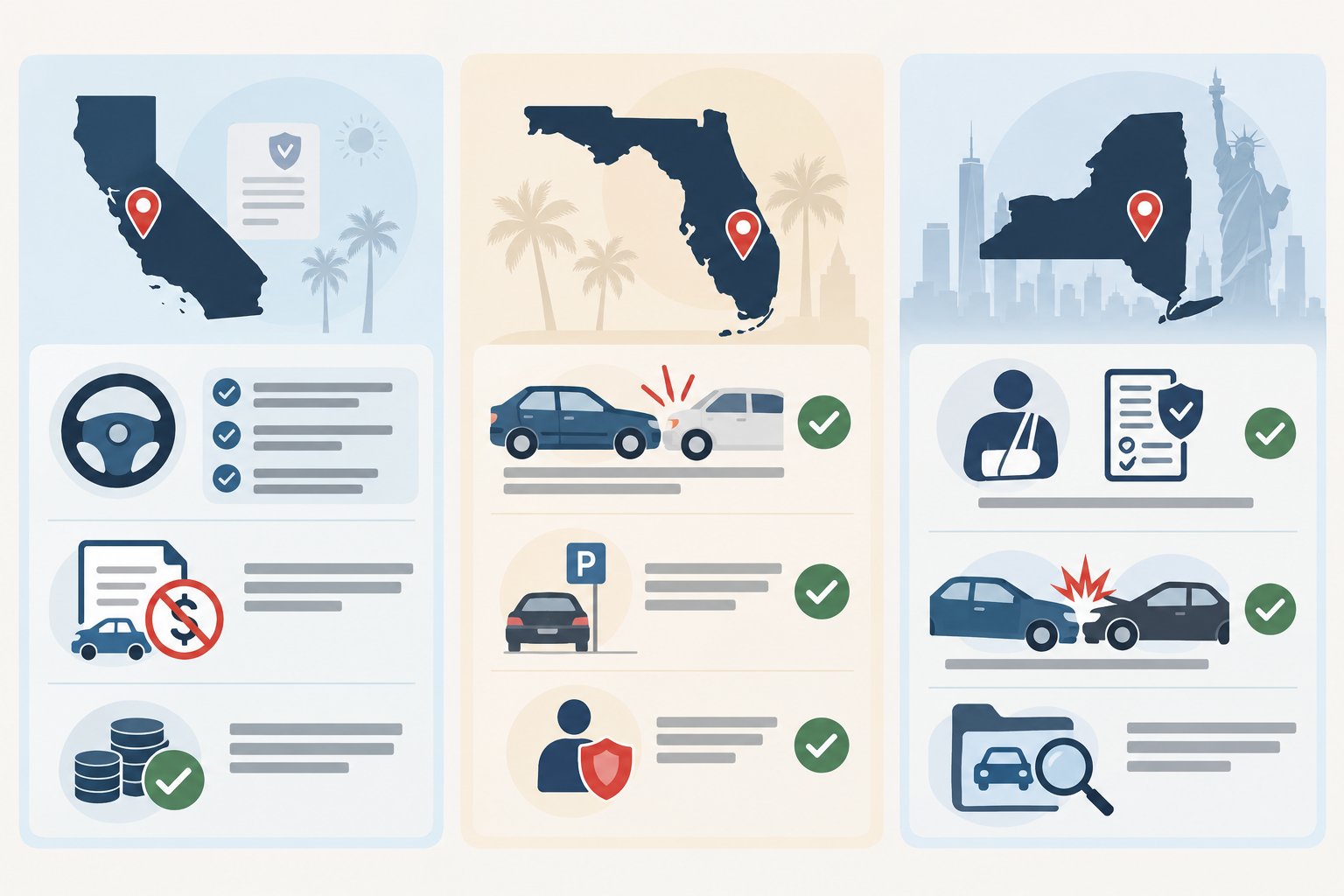
Drivers in California, Florida, and New York have specific legal protections concerning accident-related premium increases. The exact protection depends on state law, fault findings, and the type of insurance charge.
California
California’s Proposition 103 requires insurers to weigh driving safety records, annual mileage, and years of driving experience most heavily when setting private passenger auto insurance rates.
The California Department of Insurance explains the consumer protections established under Proposition 103.
Under California’s rating framework, accidents where the driver was principally not at fault generally cannot be treated as chargeable at-fault accidents. Insurers must follow the state’s rules for classifying accident responsibility.
However, an insurer can still adjust its approved rates for reasons the law permits. Protection against a no-fault accident surcharge does not guarantee that every renewal premium will remain unchanged.
Florida
Florida law expressly restricts accident-related premium increases when the insured driver was not substantially at fault.
Under Florida Statutes Section 626.9541, an insurer generally cannot impose an additional premium or refuse renewal solely because of an accident unless its records support a good-faith determination that the insured was substantially at fault.
The statute also identifies circumstances that can establish a driver’s lack of responsibility, including certain rear-end collisions, accidents involving a lawfully parked vehicle, and situations where another person was responsible for the loss.
Suppose someone hit your parked car while you were shopping. Florida’s statutory protections provide grounds to challenge an accident surcharge imposed solely because of the collision.
New York
New York also regulates when insurers can impose accident surcharges.
The New York Department of Financial Services explains that accident surcharges generally apply to accidents involving bodily injury or qualifying property damage when the insured driver was at fault.
New York also has rules concerning minor accidents, damage thresholds, and the use of driving records in insurance pricing.
Drivers who believe an insurer has incorrectly classified a collision should ask for the accident information used to calculate their renewal premium.
What Happens When The Insurance Companies Disagree About Fault?
The other driver apologizing at the scene does not necessarily settle responsibility for the accident. Insurance adjusters review statements, vehicle damage, photographs, available video, and other evidence before making their own decisions.
Consider a crash at an intersection. One driver says the traffic light was green. The other makes the same claim, and no independent witness saw the collision.
An insurer may dispute responsibility because the available evidence does not establish which driver violated the signal.
Shared responsibility can also complicate matters. In states using comparative fault rules, each driver may be assigned a percentage of responsibility, which can affect an injury claim and potentially the insurer’s accident classification.
For example, Texas uses a modified comparative responsibility system for many personal injury claims.
Under Chapter 33 of the Texas Civil Practice and Remedies Code, a claimant who is more than 50% responsible generally cannot recover damages under that framework.
That legal test concerns compensation for injuries or losses. It is not automatically the same test an insurance company uses to calculate a policy premium.
For drivers injured in a disputed collision, professionals at The Texas Law Dog can handle personal injury cases involving disputed responsibility and compensation claims. Legal representation can help with the injury claim, although a separate review of the insurance policy and applicable rating rules may be needed to challenge a premium increase.
Can Filing A Claim With Your Own Insurance Company Raise Your Rates?
After an accident caused by another driver, you may have two ways to arrange payment for vehicle repairs.
You can submit a claim to the other driver’s liability insurer, or you may use your own collision coverage if you purchased it.
Your own collision insurance can be useful when the other company has not accepted responsibility or is taking too long to investigate.
However, collision coverage usually involves a deductible. Your insurer may later attempt to recover the money it paid from the responsible driver’s insurer, a process known as subrogation.
The Texas Department of Insurance explains that drivers can use their own collision coverage when another insurer disputes responsibility. If their company recovers payment from the responsible insurer, they may also recover their deductible.
Example Of A Claim After A No-Fault Accident
- Your collision deductible is $500.
- Your insurer pays $5,500 toward covered repairs.
- You initially pay the $500 deductible.
- Your insurer pursues reimbursement from the responsible driver’s insurer.
- If reimbursement succeeds, you may receive some or all of your deductible back.
The claim may appear in your insurance history even though another driver caused the collision. The effect on your premium depends on applicable state rules and your insurer’s approved rating practices.
Using your own insurance does not automatically mean you have accepted responsibility for the accident.
Texas Drivers Should Check Their Claims History And Renewal Details

Texas allows insurers to consider claims history and other approved rating factors when setting auto insurance premiums.
In guidance revised on February 26, 2026, the Texas Department of Insurance explains that auto insurance premiums can rise after claims and accidents. Insurers may also remove certain claims-free discounts.
However, Texas insurers cannot charge more because of a claim they didn’t pay, and simply calling an insurance company to ask about coverage or claims procedures doesn’t justify a premium increase.
The department also recommends reviewing your claims history because insurers use reports that record previous insurance claims.
- Did the insurance company record the accident as at fault or not at fault?
- Was an accident surcharge added to the policy?
- Did the insurer remove a claims-free discount?
- Did its general rates increase at the same renewal?
- Is the claim information accurate?
A written explanation allows you to identify the exact issue rather than arguing about the entire renewal bill.
Your Insurance Can Increase Even When No Accident Surcharge Was Added

Suppose your insurer raises premiums across your ZIP code because its repair costs or expected claims have increased. Your own premium may rise at renewal even if your driving record is spotless.
Repair expenses have become an important factor in auto insurance pricing. Modern vehicles can contain cameras, sensors, and other components that require specialized repairs and calibration after a collision.
According to the NAIC’s February 2026 auto insurance report, the national combined average premium per insured vehicle reached $1,438 in 2023, up 14.42% from 2022.
The report also found that the average incurred loss per collision claim increased from $6,113 in 2021 to $7,191 in 2022.
Those figures describe past nationwide insurance costs, not a prediction of how much an individual driver’s premium will increase in 2026.
A Renewal Increase Is Not Proof That The Accident Caused It
Imagine your six-month premium increases from $850 to $950 after a no-fault collision.
Your insurer may have raised its base rates for comparable customers in your area. The accident may not have directly affected your price.
On the other hand, an accident-related surcharge or lost discount could account for part of the increase.
Ask the insurer for a breakdown and compare it with your previous policy. The key question is how much of the change, if any, is due to the accident itself.
How To Challenge An Insurance Increase After A No-Fault Accident
If your renewal premium has increased and you believe the insurer unfairly counted an accident against you, you can challenge the information used to calculate the rate.
1. Request A Written Explanation
Contact your insurer and ask for the specific reason your premium increased.
Don’t settle for a general statement about rising insurance costs if the company also changed your accident classification or removed a discount.
Ask the insurer to identify any surcharge associated with the collision and the rule it relied on.
2. Obtain The Accident Records
Collect the police report, photographs, available video, witness information, claim correspondence, and documents showing the outcome of the liability investigation.
If the other insurer accepted responsibility and paid for your repairs, obtain written confirmation.
Remember that a police report can support your account but does not always establish civil or insurance responsibility on its own.
3. Review Your CLUE Report
Insurance companies use claims-history reports when evaluating applicants and existing policyholders.
You can request your consumer disclosure from LexisNexis Risk Solutions, which maintains the Comprehensive Loss Underwriting Exchange, commonly known as CLUE.
Review the accident date, claim information, and any responsibility indicators provided in the report. If you find inaccurate information, use the reporting company’s dispute process.
An incorrect record can keep affecting insurance applications even after the insurer settles the original claim.
4. Request A Correction Or Refund
If the insurer recorded your accident incorrectly, request a corrected rating calculation.
Where state law prohibits the surcharge, ask the company to refund any overpayment resulting from the error.
Keep copies of your written requests and responses, including the dates and names of representatives you contacted.
5. File A Complaint With Your State Insurance Department
State insurance departments review consumer complaints about insurance companies, including disputes over rating practices and policy administration.
The NAIC’s consumer resources can help you locate the insurance regulator responsible for your state.
Provide your policy information, renewal notice, claim documents, and your insurer’s written response.
A complaint doesn’t guarantee a refund, but the regulator can review whether the company’s conduct complied with applicable state rules.
How Much Could A No-Fault Accident Increase Your Insurance?
No reliable nationwide percentage applies to every driver after a no-fault accident.
Some drivers see no accident-related premium increase because state law prevents it or their insurer doesn’t surcharge those claims.
Other drivers may lose a discount or encounter an allowed rating adjustment.
Consider the following hypothetical changes to a six-month policy.
| Situation | Previous Premium | New Premium | Increase |
| No accident-related adjustment | $900 | $900 | $0 |
| Claims-free discount removed | $900 | $945 | 5% |
| Hypothetical accident surcharge | $900 | $1,035 | 15% |
| General rate increase unrelated to the accident | $900 | $990 | 10% |
The percentages are illustrative calculations, not reported national surcharge averages. They show why a higher premium cannot be explained without knowing the insurer’s rating decision.
Will Switching Insurance Companies Remove The Increase?
Switching insurers can reduce your bill, but it doesn’t erase an accident from your claims history.
Insurance companies may review previous claims and driving records when preparing a quote. Each company uses its own approved rating method, which means two insurers can offer significantly different prices to the same driver.
When comparing quotes, make sure they match the same coverage limits, deductibles, and policy details.
A policy that costs $300 less per year may provide less protection if it has lower liability limits or a much higher collision deductible.

What To Compare Before Changing Insurers
- Liability limits: Check the amount available for injuries and property damage you cause to others.
- Collision deductible: Compare the amount you would pay toward covered repairs.
- Uninsured and underinsured motorist coverage: Review the protection available when the responsible driver has insufficient insurance, subject to state rules.
- Discounts: Ask about multi-car, bundled-policy, low-mileage, and other discounts.
- Accident classification: Confirm the new insurer has accurate information about the collision.
Arrange the new policy to begin before canceling the old one. A gap in coverage can create legal and financial problems and may affect future insurance costs.
How Long Does An Accident Stay On Your Insurance Record?
An accident may influence insurance pricing for several years, depending on state law and the insurer’s rating plan.
However, the length of time an insurer uses an accident for rating is not necessarily the same as the length of time claim information remains in a consumer report.
A claims-history report may retain information after an insurer stops applying an accident-related surcharge.
If an insurer tells you that a collision will affect your premium for a particular period, request confirmation of the applicable rating rules and when the adjustment will expire.
Don’t assume the accident will automatically disappear from every record after three years.
Can Your Insurance Company Cancel Your Policy After A No-Fault Accident?
View this post on Instagram
Cancellation and nonrenewal are separate actions with separate rules.
Cancellation ends an insurance policy before its scheduled expiration date. Nonrenewal means the insurer declines to issue another policy when the existing term ends.
State laws limit when insurers can take either action, and some states provide special protections for drivers who were not responsible for an accident.
Florida, for example, restricts refusal to renew solely because of certain accidents, with additional provisions governing the number of accidents and other permitted reasons for nonrenewal.
If you receive a cancellation or nonrenewal notice following a no-fault collision, examine the stated reason and the effective date immediately. Contact your state insurance department if the explanation appears inconsistent with applicable law.
Never assume an insurer will automatically extend coverage while you dispute the decision.
What Should You Do If Your Insurance Goes Up After Someone Else Hits You?
Start with the renewal notice and ask your insurer exactly what changed. If the increase came from a general rate adjustment, compare quotes from other companies.
If the insurer recorded the accident incorrectly, collect the evidence supporting your lack of responsibility and request a correction.
A claim that was incorrectly classified as an at-fault accident can have consequences for your insurance costs. Correcting the record may help prevent the same error from appearing in future quotes.
Drivers in states with specific no-fault accident protections should also examine the relevant consumer regulations. You can challenge a prohibited surcharge, and an insurer may owe a refund if it charged a premium that state law did not permit.
Before accepting a higher bill, establish which part of the increase actually came from the collision. The accident not appearing in your driving violations doesn’t guarantee every insurer will calculate your premium the same way, but it gives you a clear reason to question any charge based on an incorrect finding of fault.