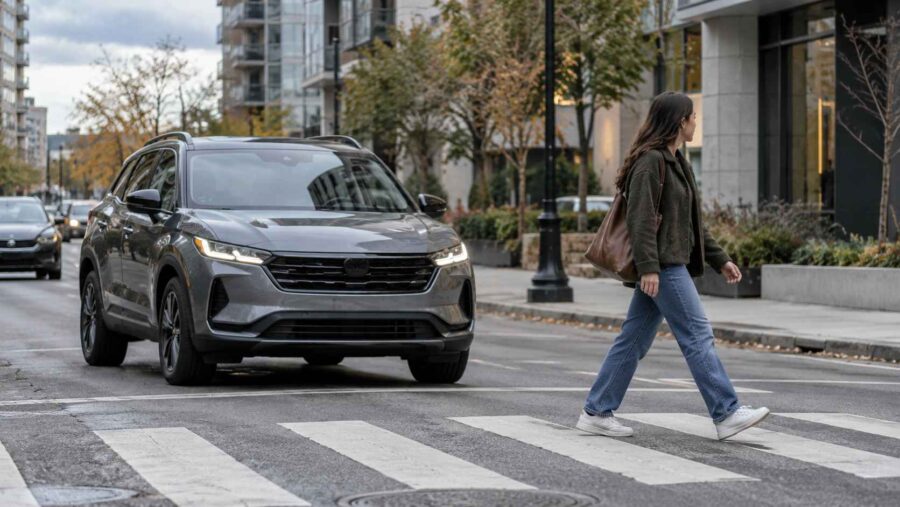

The National Highway Traffic Safety Administration has released its first pedestrian protection results for model-year 2027 vehicles, adding a new layer of information to the federal 5-Star Safety Ratings program.
NHTSA announced on September 18 that 102 vehicle models from 10 manufacturers met its new pedestrian protection performance criteria. The assessments look at what happens to a pedestrian when the front of a vehicle strikes the head, hips, legs and knees.
The change gives car buyers information that traditional crash ratings have largely left out. Federal safety ratings have long concentrated on people inside vehicles. The new assessment also looks directly at the injuries a vehicle could cause to someone outside it.
NHTSA Is Now Testing How Vehicles Protect Pedestrians in a Crash
The new results are part of NHTSA’s New Car Assessment Program, better known as the 5-Star Safety Ratings. NHTSA said 102 model-year 2027 vehicles met the pedestrian protection criteria in the first group of published results.
The assessment matters because the shape and construction of a vehicle’s front end can affect the injuries suffered by a pedestrian during an impact. Hood design, bumper structure and the areas around the windshield all become part of the safety picture.
For people dealing with the consequences of an actual collision, vehicle design is only one part of a much larger legal and factual record. A Syracuse car accident lawyer, for example, may deal with questions involving driver conduct, injuries, insurance coverage and evidence from the crash itself. NHTSA’s new ratings serve a different purpose. They give consumers information about vehicle performance before a crash happens.
NHTSA described the September release as its first pedestrian protection assessment for 2027 vehicles. The agency has been developing the program for several years, and pedestrian crashworthiness became part of a wider update to NCAP announced in 2024.
What the New Pedestrian Tests Actually Measure?
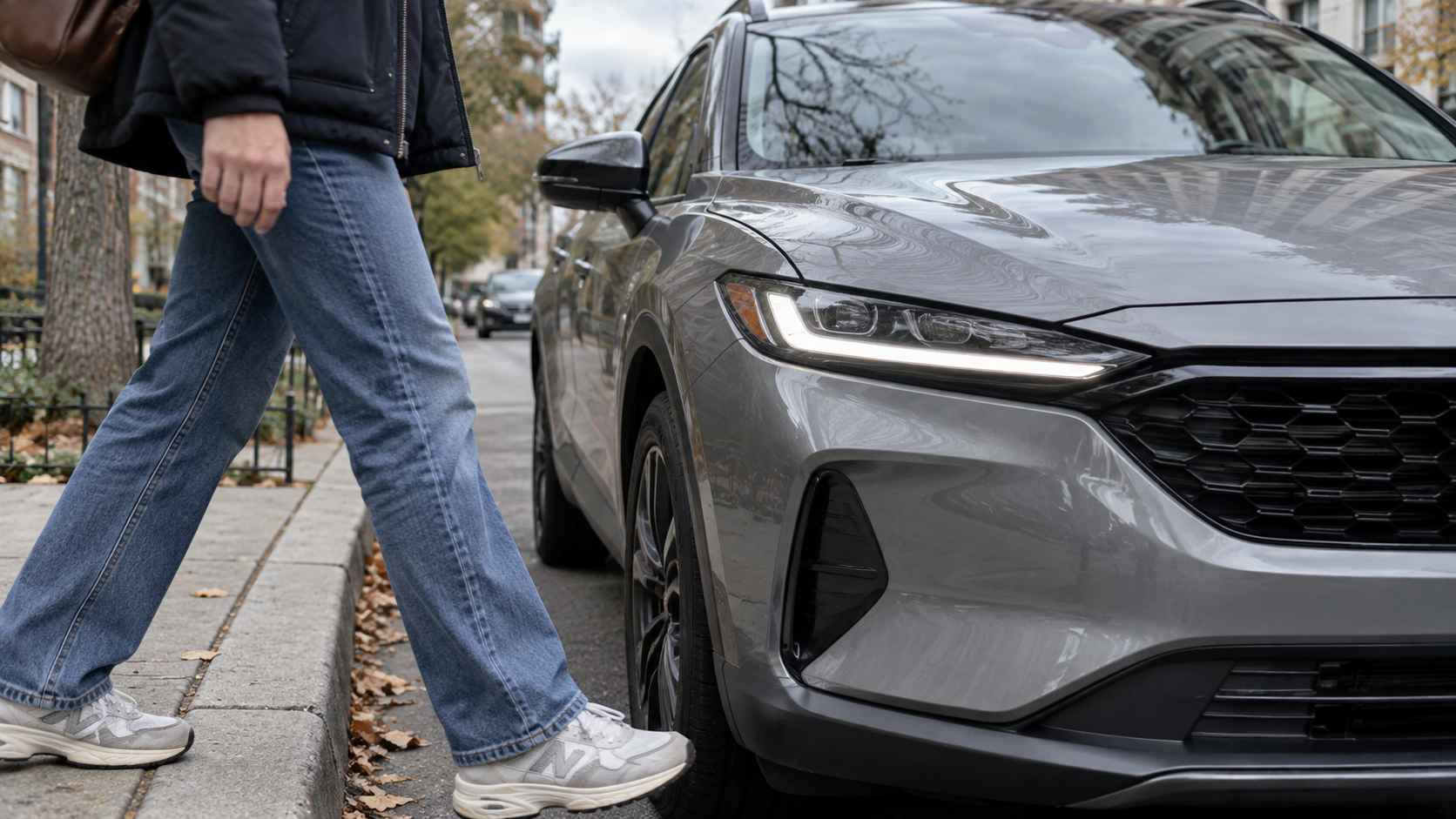
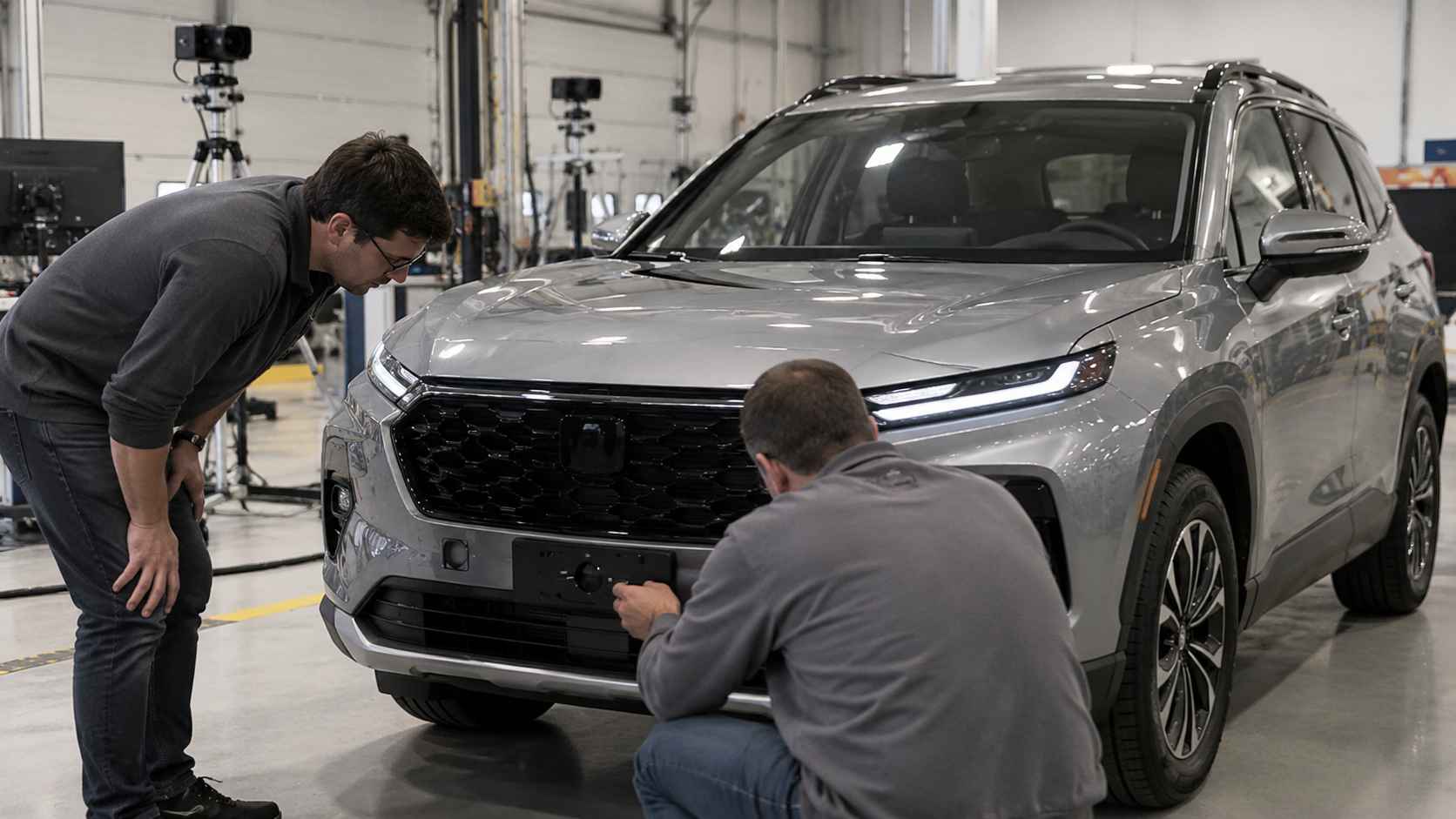
NHTSA uses several impact devices designed to represent parts of the human body. Instead of placing a full pedestrian dummy in front of a moving vehicle, the tests examine specific areas where serious injuries occur during vehicle-to-pedestrian crashes.
The agency’s September 2026 announcement identifies three main impact scenarios:
- Child and adult headform impacts against the hood and windshield area
- Upper-leg impacts against the leading edge of the hood
- Full lower-leg impacts against the bumper
Sensors in the testing equipment measure forces associated with injuries to the head, hips, legs and knees. The results give NHTSA a way to evaluate how the exterior structure of a vehicle performs when it strikes a person.
A hood with enough space and controlled deformation beneath it, for example, can affect the force transmitted during a head impact. Bumper and front-end structures also influence forces placed on the legs and knees.
NHTSA’s program therefore adds crashworthiness for pedestrians to the safety information already collected for occupants. The agency still evaluates frontal crashes, side impacts and rollover risk, along with several crash-avoidance technologies.
A Yellow Box Will Show the Pedestrian Protection Result
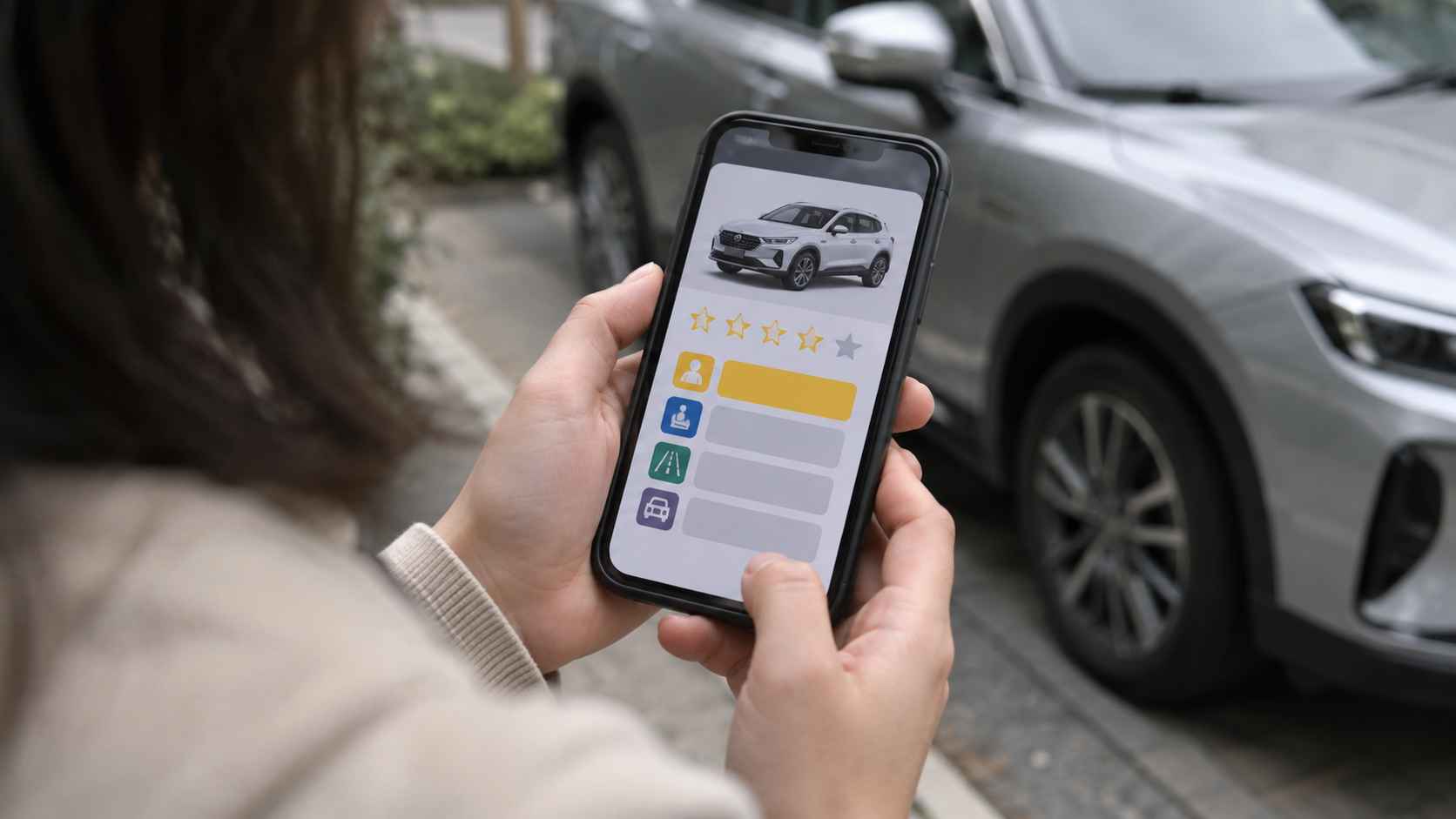
Consumers looking at a vehicle on NHTSA’s ratings website will see the pedestrian assessment presented separately from the traditional star rating.
NHTSA says a yellow box on the vehicle’s ratings page will indicate its pedestrian protection status. Depending on the vehicle and the stage of the assessment, the result can show that the model met the performance criteria, did not meet them, has a result pending or was not submitted.
That distinction is important when looking through 2027 models. A vehicle without a passing result should not automatically be described as having failed the test. Some vehicles still have pending results, and NHTSA continues to receive and review information.
The first release therefore represents the opening group of assessments rather than a final list covering every 2027 vehicle available in the United States.
The 102 Vehicles Do Not Represent the Entire 2027 Market
The agency said 102 models from 10 manufacturers met the new criteria. But, that doesn’t mean that every other model failed.
Testing and data reviews continue as additional model information becomes available. Individual versions of the same vehicle can also have different results because front-end designs, ride height, trim packages or other equipment can vary.
That means buyers should look up the exact model and version they are considering rather than relying only on a manufacturer’s overall presence among the initial qualifying vehicles.
NHTSA’s ratings database is designed for that type of model-specific search. As additional assessments are completed, the agency can update individual vehicle records.
Pedestrian Protection Is Separate From Automatic Emergency Braking
Two different pedestrian safety systems now appear within the federal vehicle assessment process, and they address different stages of a potential crash.
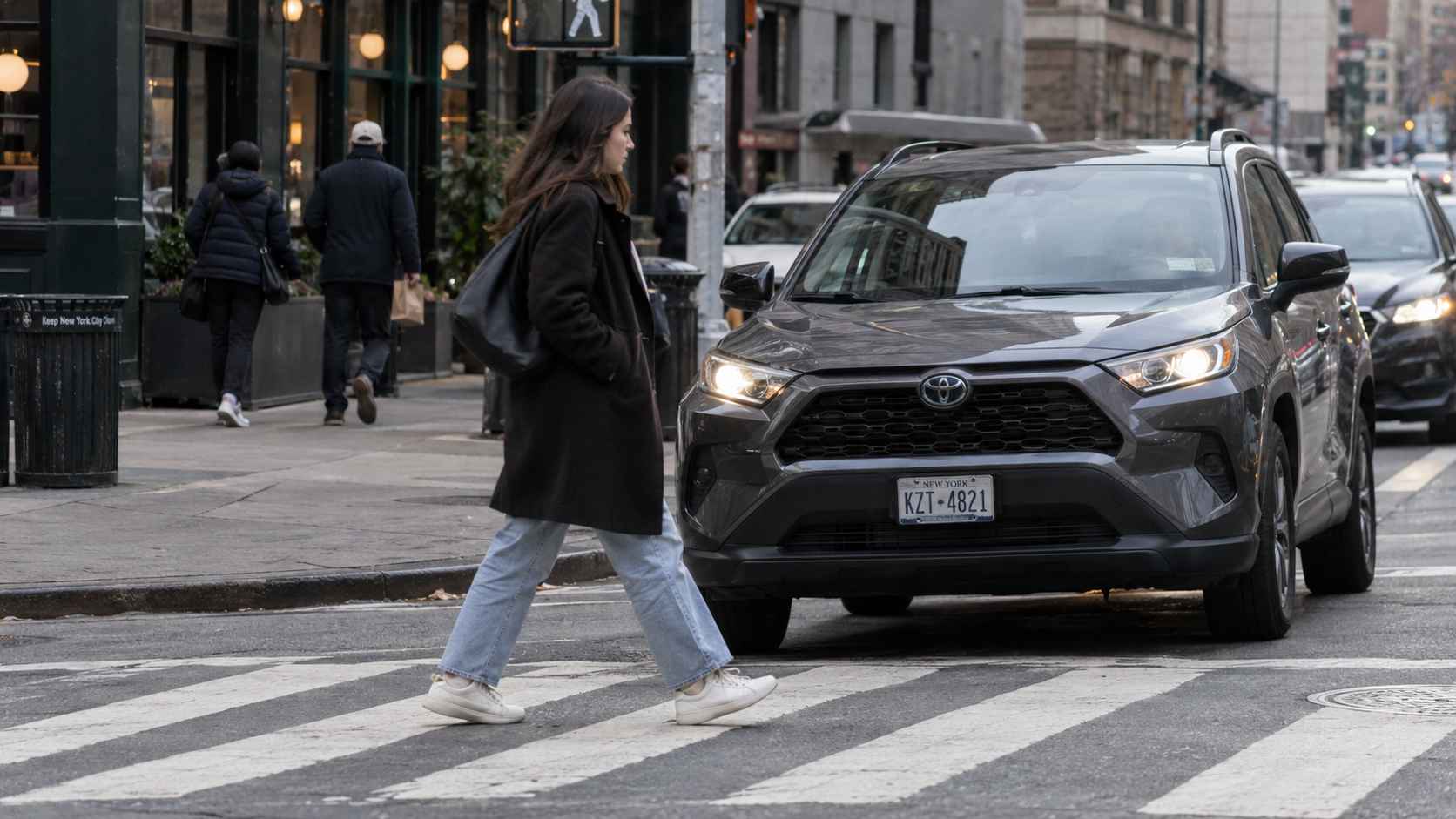
Pedestrian automatic emergency braking, commonly shortened to PAEB, attempts to detect a person in the vehicle’s path and apply the brakes when necessary. The new pedestrian crashworthiness assessment examines the physical consequences when an impact still occurs.
A vehicle could therefore have technology designed to avoid a pedestrian crash and structural features designed to reduce injury if avoidance fails.
NHTSA has also expanded its evaluation of other driver-assistance technologies. Current assessments include automatic emergency braking, pedestrian automatic emergency braking, lane keeping assistance, blind spot warning and blind spot intervention.
The distinction also connects with the wider road-safety picture. Our earlier report on distracted driving and traffic deaths looked at risks created before a collision occurs. Vehicle design becomes another part of the safety system when prevention fails.
Pedestrian Safety Is Getting More Attention
The number of pedestrians killed on U.S. roads remains high even after recent improvements in overall traffic fatalities.
According to NHTSA pedestrian safety data, 7,080 pedestrians were killed in traffic crashes during 2024. More than 71,000 were injured. The agency calculated that one pedestrian died in a traffic crash every 74 minutes during the year.
Pedestrians have little physical protection when struck by a passenger vehicle. Changes to the hood, bumper, grille and surrounding structures can therefore have consequences that would barely register in an occupant-focused crash test.
The issue has also become more visible as the U.S. vehicle fleet has shifted toward pickups, SUVs and crossovers. Vehicle size alone does not determine the outcome of a pedestrian crash, but front-end height, geometry, speed and the point of impact all influence injury risk.
National figures also hide large differences among states. Our review of traffic accident and fatality data across U.S. states found that population, miles traveled and local road conditions need to be considered when comparing raw crash numbers.
The New Assessment Is Part of a Larger NCAP Overhaul
NHTSA formally announced major changes to its New Car Assessment Program in November 2024. The update added pedestrian crashworthiness and expanded testing of advanced driver-assistance systems.
NCAP began as a way to give consumers information beyond basic federal vehicle requirements. Manufacturers have a strong incentive to perform well because safety results are public and buyers can compare vehicles before making a purchase.
The pedestrian assessment follows the same general idea. NHTSA is publishing performance information that can influence consumer decisions and encourage manufacturers to improve vehicle design.
There is also an important legal distinction. An NCAP result is not the same as compliance with a Federal Motor Vehicle Safety Standard. NCAP is primarily a consumer information and vehicle-evaluation program. Federal Motor Vehicle Safety Standards establish mandatory requirements that vehicles must satisfy for sale in the United States.
NHTSA has separately worked on federal pedestrian protection requirements, including proposals dealing with head injury protection. The new 2027 results announced in September come through NCAP.
Passing the Pedestrian Test Does Not Make a Vehicle Crash-Proof
A passing result means the vehicle met NHTSA’s defined pedestrian protection performance criteria under the assessment conditions. It does not mean a pedestrian will avoid serious injury in every collision.
Real crashes involve different vehicle speeds, impact angles, pedestrian heights, body positions, road surfaces and braking conditions. A collision at a higher speed can produce far more severe forces than one occurring after a driver has already reduced speed.
The rating should therefore be read as another measurable safety characteristic rather than a guarantee of a particular outcome.
The same limitation applies to other safety ratings. A five-star occupant rating does not eliminate crash risk, and an advanced braking system does not replace an attentive driver. Each feature covers one part of a much larger chain of events.
Vehicle Buyers Will Have More Safety Information to Compare
The practical change for consumers is straightforward. Someone comparing 2027 vehicles can now look at occupant crash ratings, crash-avoidance technology and pedestrian crashworthiness in the same federal safety database.
Pedestrian protection may carry particular weight for families and drivers who spend much of their time in cities, residential neighborhoods, school zones and other areas with heavy foot traffic.
Buyers should also pay attention to the status shown for the exact vehicle under consideration. A pending result is different from a failed assessment, and a result for one trim does not necessarily describe every configuration carrying the same model name.
Our previous look at the safest U.S. states for drivers also illustrates why vehicle technology is only one piece of road safety. Road design, traffic speeds, enforcement, driver behavior and local conditions continue to affect crash outcomes regardless of the vehicle involved.
More Results Are Expected as Reviews Continue
The September 18 release establishes pedestrian crashworthiness as a visible part of NHTSA’s consumer safety information for new vehicles.
More model-year 2027 results are expected as NHTSA reviews additional manufacturer data and completes its own verification work. The agency has already indicated that individual ratings pages will show when information is pending or has not been submitted.
For consumers, the biggest change is that pedestrian safety is no longer limited to collision-avoidance technology in the federal ratings system. NHTSA is now also examining what the front of the vehicle does to the human body when a collision occurs.
The first 102 qualifying models mark the beginning of that system. As the 2027 model year develops and more results appear in the federal database, shoppers will have a clearer way to compare how different vehicles address safety for people both inside and outside the vehicle.