
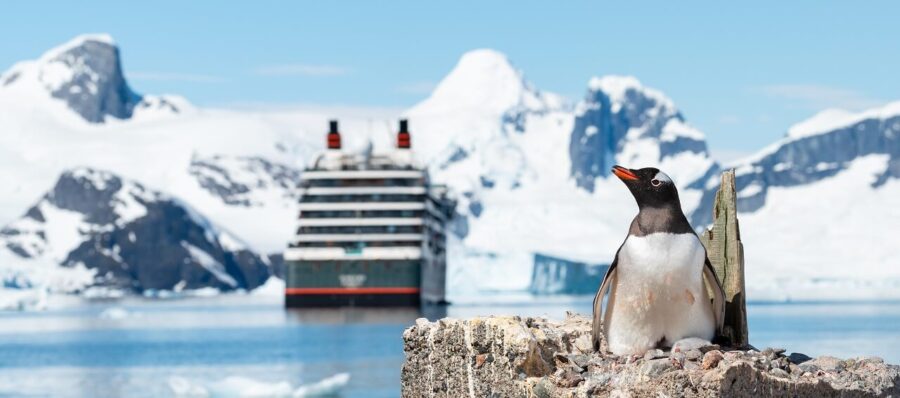

Antarctica tourism is no longer a tiny corner of global travel. Latest official reporting from IAATO put total 2024-25 visitation at 118,491, after 122,072 in 2023-24, so traffic remains well above the 100,000 mark even after a modest pullback.
At the same time, operators and treaty bodies are tightening site guidance, biosecurity practice, and wildlife protection around a continent already under heavier ecological pressure.
What the Latest Numbers Say
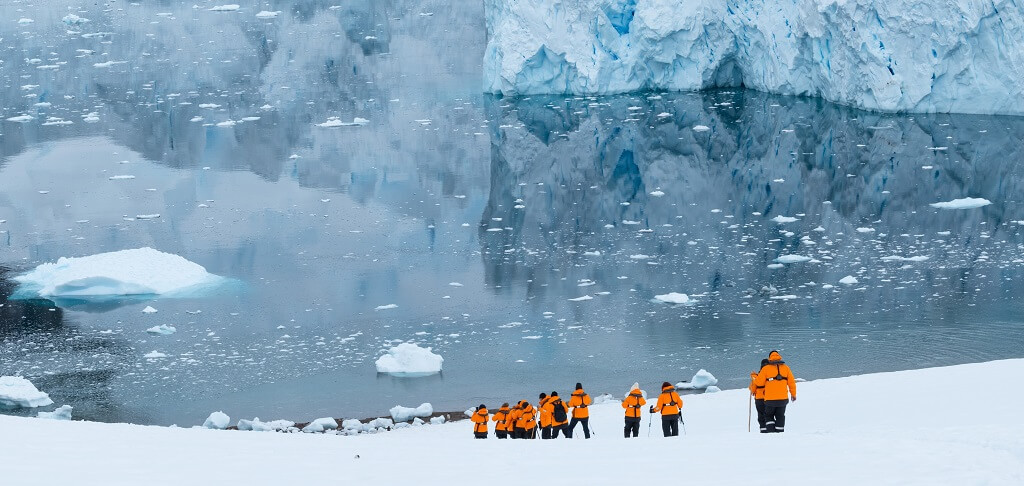
The broad pattern is clear. The Antarctic Treaty Secretariat says annual tourism has now risen to more than 100,000 passengers, and most visitors reach the continent by ship via the Antarctic Peninsula.
IAATO adds that 98% of tourism voyages operate in the Peninsula region during the austral summer.
Latest official tallies from IAATO are below.
| Season | Official visitors | What stands out |
| 2023-24 | 122,072 | Higher cruise-only occupancy helped push totals up |
| 2024-25 | 118,491 | About 5% lower, while landed passenger levels stayed nearly unchanged |
IAATO says the 2024-25 dip mainly reflected one cruise-only operator sitting out the season, not a collapse in demand.
In other words, Antarctica is still attracting numbers that would have looked extraordinary only a few years ago.
Why the Peninsula Carries Most of the Load
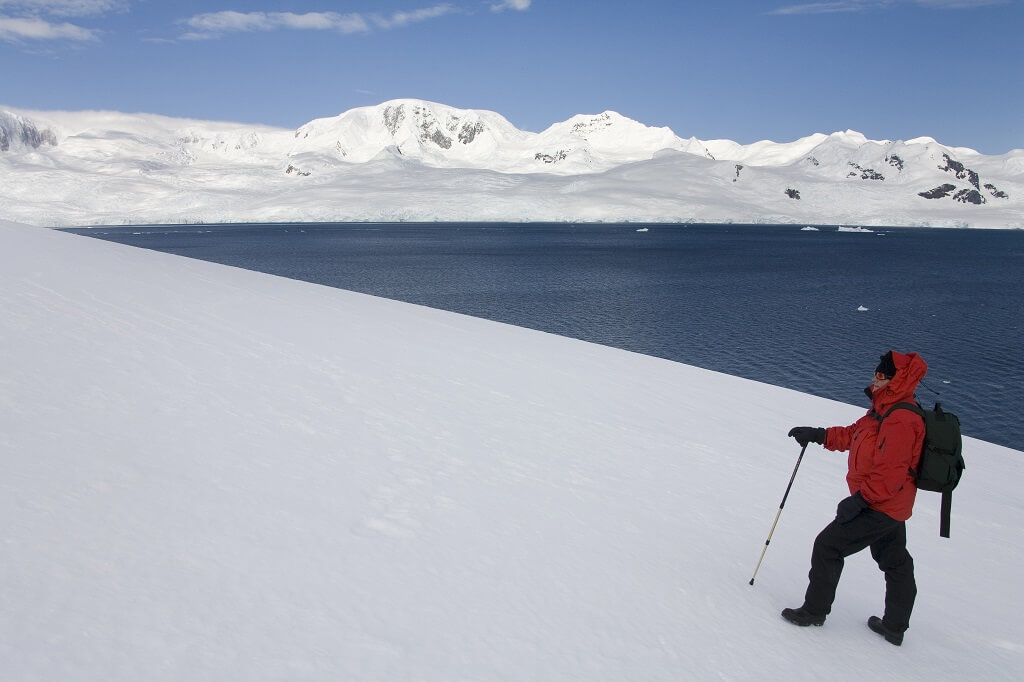
Geography drives a lot of the story. The Peninsula is the easiest part of Antarctica to reach from South America, so it absorbs most ship-based tourism, including expedition-style voyages marketed through operators such as swanhellenic.com.
IAATO reports that traditional commercial seaborne tourism in the Peninsula accounts for more than 95% of all landed activity, which helps explain why debates over crowding, wildlife disturbance, and site protection keep circling back to one relatively small region.
Traffic is also concentrated inside that region. IAATO says all top 20 landed sites on the Peninsula are managed through ATCM or IAATO visitor site guidelines, or through national program management rules.
In 2024-25, Neko Harbor logged 220 landing calls, Whalers Bay 194, Portal Point 184, and Danco Island 173. Even without thousands of people standing in one place at once, repeated calls at a short list of photogenic, accessible stops create a steady pressure pattern.
What Tighter Environmental Rules Look Like on the Ground
A lot of public discussion around Antarctica tourism still treats regulation as vague or optional. Reality is more structured than that.
The Antarctic Treaty Secretariat says the main regulations and guidelines for tourism are compiled in a formal manual tied to the treaty system and the Protocol on Environmental Protection, and the ATCM updated the General Guidelines for Visitors in 2025.
Longstanding operating limits remain central. Only one ship may visit a site at a time. Vessels with more than 500 passengers are not allowed to land passengers in Antarctica.
A maximum of 100 people may be ashore from a vessel at one time, and ship landings are expected to maintain a 1:20 guide-to-passenger ratio. IAATO bylaws add that vessels carrying 201 to 500 passengers must follow stricter place and timing restrictions for landings.
Rules also kept evolving in 2025. IAATO reported that its annual meeting approved 19 new or updated visitor site guidelines and formally adopted a 20:1 guest-to-actively-guiding-field-staff ratio in its bylaws.
That matters because growth in Antarctica is no longer only about more passengers, it is also about more diversified activity, more detailed site management, and less room for sloppy field practice.
Avian Flu Changed the Mood of the Season
High Pathogenicity Avian Influenza, HPAI, pushed caution higher. IAATO says the spread of HPAI in Antarctica remained a major concern during 2024-25, with 92 reports of potential suspected cases.
Operators were told to assess wildlife colonies for at least 30 minutes before any landing, cancel or leave a site if warning signs appeared, keep at least 5 meters from wildlife, and carry out full decontamination of guests, staff, gear, and small craft between regions.
For any mass mortality event, IAATO says a site is closed immediately for at least 1 month until expert assessment can occur.
That caution was not theoretical. IAATO site-use reporting says Brown Bluff was closed from December 12, 2024 to February 26, 2025, and Cuverville Island from December 11, 2024 to January 22, 2025, both because of HPAI precautions.
Why Scientists and Policymakers Worry
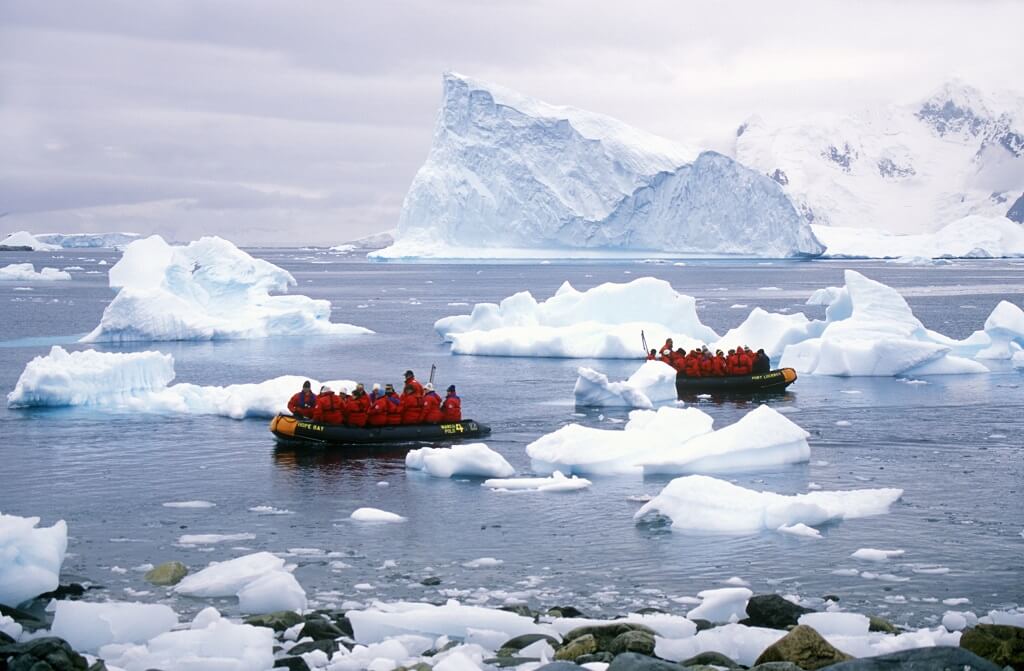
Visitor numbers alone do not explain the concern. Scientific literature on Antarctic tourism points to a set of very specific risks.
A meta-analysis in Environment International reviewed 233 publications on Antarctic tourism, then examined a more focused subset of 75 impact studies, highlighting problems such as soil compaction, vegetation disruption, introduction of non-native soils, microbes and plants, wildlife disturbance, disease transfer, collecting pressure, and damage to heritage sites.
A 2025 tourism management paper summarizes a similar list of concerns.
Biosecurity is one major fault line. British Antarctic Survey and University of Cambridge researchers found 1,581 ports linked to Antarctica, creating an enormous pathway for non-native species arriving on ship hulls through biofouling. Mussels, barnacles, crabs, and algae are among the organisms flagged by researchers.
Climate change makes that problem sharper. A 2024 Nature Geoscience paper found vegetation cover on the Antarctic Peninsula rose from 0.863 km² in 1986 to 11.947 km² in 2021.
The authors warned that warming and expanding ice-free ground can make biosecurity more critical, especially as tourism and research increase the flow of seeds and other biological material into the region.
Emissions add another layer. A Nature Communications study on black carbon found snow near research facilities and popular tourist landing sites carried much higher black carbon levels than background areas.
The paper concluded that black carbon in affected Peninsula areas can accelerate snowmelt and shrink the snowpack by up to 23 mm water equivalent each summer. Researchers linked that burden to ships, aircraft, generators, helicopters, and other fuel-powered operations.
Can Management Keep Pace With Growth?
Current governance is layered rather than simple. Treaty rules and national approvals establish the legal frame, while IAATO operating rules manage much of day-to-day expedition behavior.
That framework has helped organize site visits and reduce obvious crowding at individual landing beaches. IAATO also reported no major environmental or safety incidents in the Antarctic Treaty area during 2024-25.
Even so, pressure for tougher forward planning is growing. A 2025 paper in the Journal of Sustainable Tourism modeled a scenario in which visitor numbers keep rising along historic trends and found totals could approach 452,000 by 2033-34.
The authors argue that visitor caps, targeted tourism taxes, nudges, and tighter certification rules deserve serious debate, especially in sensitive areas. That projection is a scenario, not a destiny, but it shows how quickly Antarctica policy could move from managing growth to trying to catch up with it.
Summary
Antarctica tourism has crossed into a new era where more than 100,000 annual visitors is normal, not exceptional.
Rules are getting tighter because the pressure is easier to see now: repeated use of a small number of Peninsula sites, higher disease risk, more invasive-species pathways, and a larger emissions footprint.
Next policy fight will likely center on one question, whether current safeguards can still hold the line, or whether Antarctica will need harder caps and stronger binding controls.