
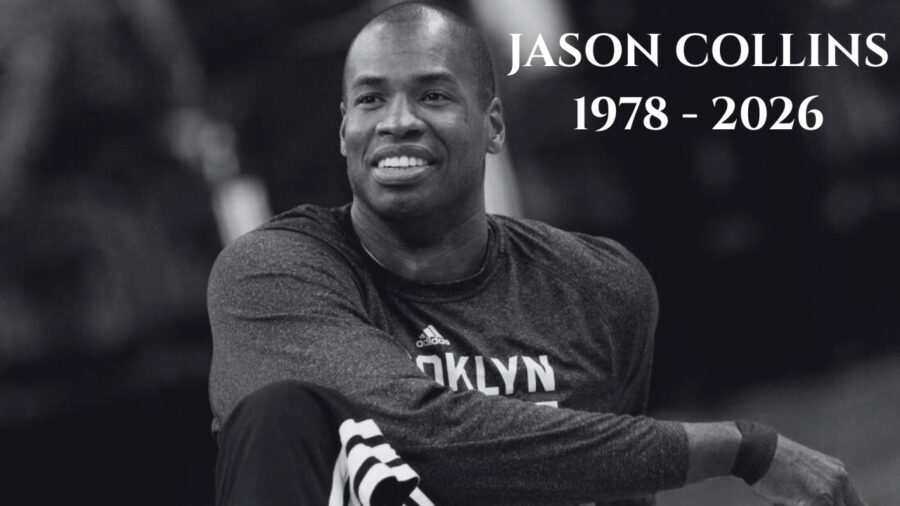

Jason Collins, the 7-foot NBA center who became the first openly gay active player in league history, has died at 47 after a battle with Stage 4 glioblastoma, an aggressive brain cancer.
His family announced his death Tuesday, saying Collins died after a “valiant fight” and describing him as a husband, son, brother and uncle whose life reached far beyond basketball.
Collins’ death lands with unusual weight because his place in American sports was never measured only by box scores. He played 13 NBA seasons, helped the New Jersey Nets reach back-to-back NBA Finals in 2002 and 2003, and built a reputation as a defensive-minded center trusted to do difficult, physical work.
Yet his defining public act came in 2013, when he stepped forward in a Sports Illustrated essay and changed the conversation around sexuality in men’s professional sports.
Table of Contents
ToggleThe Sentence That Changed His Life
In April 2013, Collins opened his first-person essay with the stark declaration: “I’m a 34-year-old NBA center. I’m black. And I’m gay.” He wrote that he had not planned to be the first openly gay athlete still playing in a major American team sport, but accepted the responsibility because no one else had yet done it.
At the time, the announcement was a rupture in a sports culture that often spoke in broad language about toughness while avoiding honest discussion of identity.
The response was immediate. Support came from inside and outside basketball, including major athletes, civil-rights groups and national political figures. AP reported that praise came from figures including Kobe Bryant, former President Bill Clinton and the Human Rights Campaign.
A Career Built On Unseen Work
Collins was drafted in 2001, selected 18th by Houston before being traded to the Nets. He went on to play for New Jersey, Memphis, Minnesota, Atlanta, Boston, Washington and Brooklyn.
His career averages, 3.6 points and 3.7 rebounds, never suggested stardom, but teammates and coaches valued his screens, positioning, defensive discipline and willingness to take on bruising assignments.
In 2014, after coming out publicly, Collins returned to the court with the Brooklyn Nets. That appearance made him the first publicly gay athlete to play in one of the four major North American men’s professional leagues. He appeared in 22 games for Brooklyn that season before retiring.
A Public Life After Basketball
After leaving the court, Collins remained connected to the league through advocacy and outreach, including work as an NBA Cares Ambassador. NBA Commissioner Adam Silver said Collins helped make the NBA, WNBA and broader sports community “more inclusive and welcoming,” while praising his leadership, professionalism and humanity.
His illness became public in 2025, when Collins revealed he was being treated for a brain tumor. Reports later identified the diagnosis as Stage 4 glioblastoma. AP said his death followed an eight-month battle with the disease.
A Legacy Larger Than The Game
Collins’ legacy sits at the intersection of courage and restraint. He did not seek fame through controversy. He told the truth about his life at a moment when that truth carried professional and personal risk.
For younger athletes, his visibility mattered because it made a future seem less lonely. For the NBA, it marked a point where inclusion moved from slogan to lived test. For American sports, Collins leaves behind a simple but durable lesson: sometimes history is made by a player known for doing the hard work nobody sees.
Related Posts:
- Armed Forces Organizations, 500+ Veterans Announce…
- The 100 Most Dangerous Cities in America (2026):…
- Safest Cities in California in 2026: An Honest,…
- What Is A Protected Veteran? Meaning, Rights, and Examples
- Best Places to Retire Abroad in 2026: An Honest…
- Most Expensive States to Live in the US in 2026…