
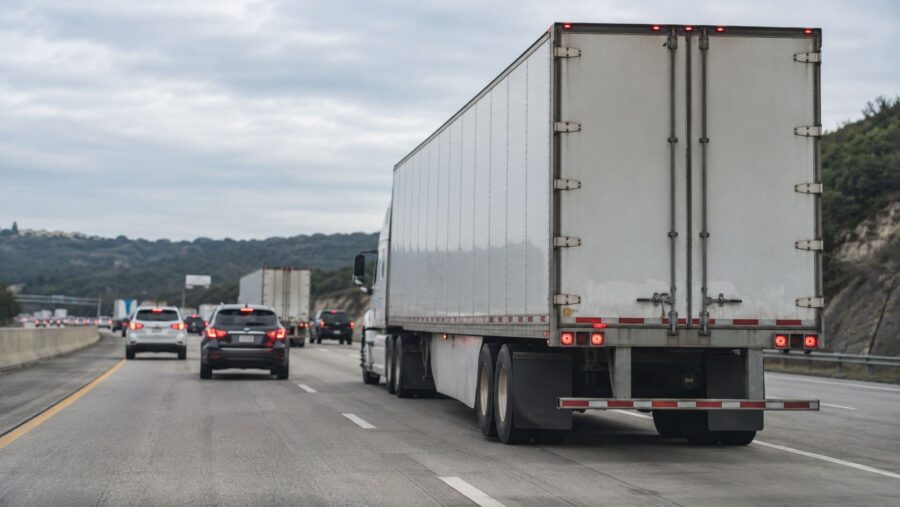

Automatic emergency braking is already becoming standard in passenger cars. Heavy trucks are next in line, but the federal rule that would require the technology on large commercial vehicles is still unfinished.
NHTSA and the Federal Motor Carrier Safety Administration proposed a national heavy-vehicle automatic emergency braking rule in 2023. The proposal covers trucks and buses weighing more than 10,000 pounds and would require systems capable of detecting an imminent rear-end crash and applying the brakes when the driver does not react quickly enough.
Three years later, there is still no final rule.
The Heavy-Truck AEB Rule Is Still Not Final
The current proposal dates to June 2023, when NHTSA and FMCSA jointly announced plans for a new Federal Motor Vehicle Safety Standard covering vehicles with a gross vehicle weight rating above 10,000 pounds.
The agencies estimated that heavy vehicles are the striking vehicle in around 60,000 rear-end crashes each year. Their original analysis projected that the combined AEB and electronic stability control proposal could prevent 19,118 crashes, 8,814 injuries and 155 deaths annually.
Those figures come from the 2023 NHTSA heavy-vehicle proposal. They are regulatory estimates rather than a count of crashes already prevented by the technology.
The legal status in September 2026 is more important for drivers and fleets. The proposal has not become a Federal Motor Vehicle Safety Standard yet.
FMCSA’s latest statutory-rulemaking report says NHTSA and FMCSA are planning a joint supplemental notice of proposed rulemaking following the 2023 proposal. No publication date is listed.
That also means there is no current federal compliance date for manufacturers.
For people dealing with the aftermath of a serious commercial-vehicle collision, braking systems are only one part of the investigation. Driver conduct, maintenance records, carrier policies and vehicle data can also become relevant. Information from truck accident lawyers at Charlie Therman explains how those issues can enter a truck-crash claim.
What Automatic Emergency Braking Actually Does
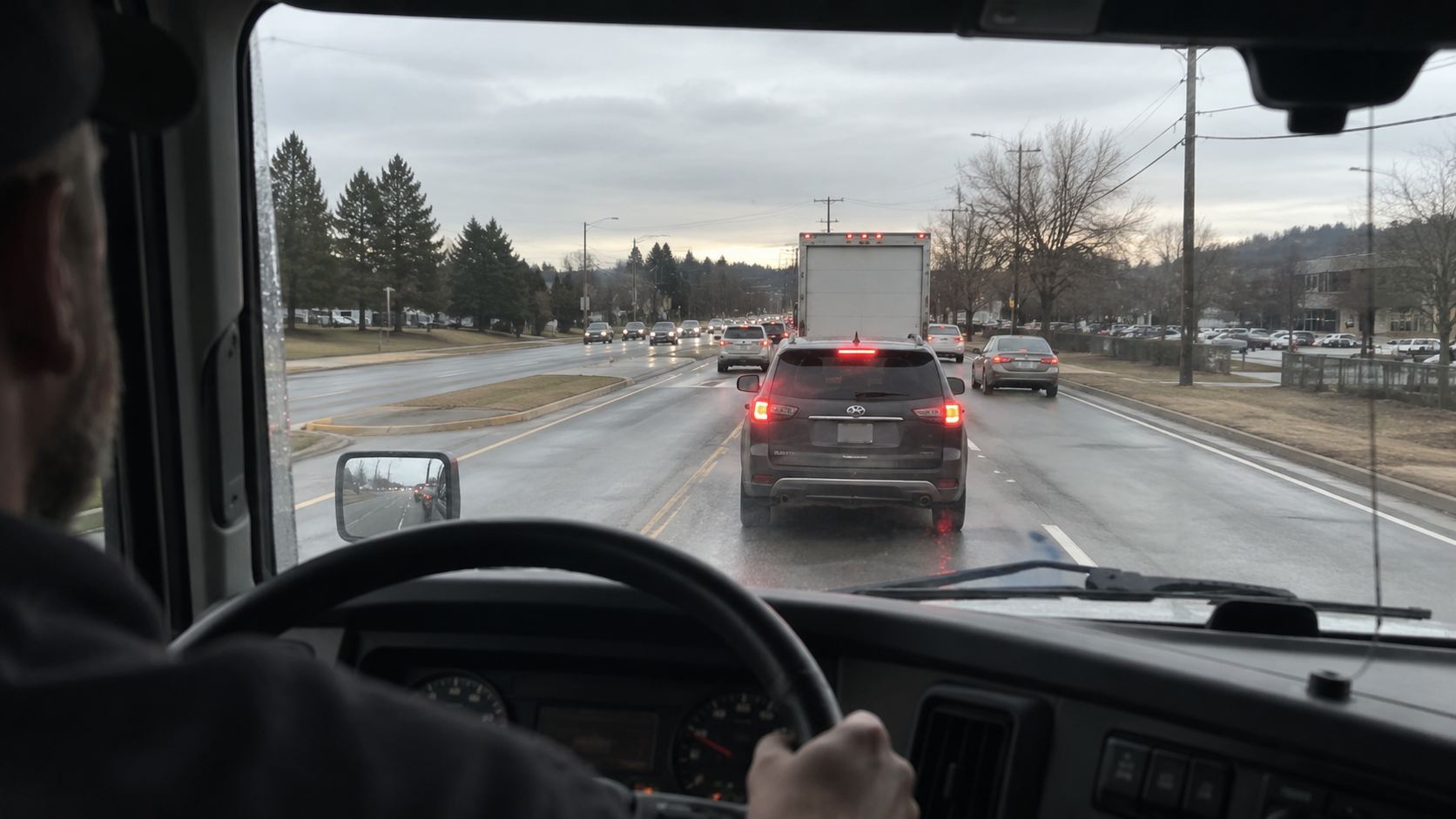
AEB is designed for the moment when a driver has not started braking soon enough.
The system uses sensors such as radar and cameras to monitor the road ahead. If it detects that a crash with another vehicle is becoming imminent, it can warn the driver and automatically apply the brakes.
It can also add braking force when the driver has already pressed the brake pedal but has not applied enough pressure to avoid or reduce the collision.
NHTSA classifies AEB as a driver-assistance technology, not automated driving. The agency’s technology guide places automatic emergency braking at Level 0, meaning the driver remains responsible for steering, braking and monitoring the road.
AEB Does Not Drive the Truck
A truck equipped with AEB still requires the driver to maintain a safe following distance, watch traffic and brake normally. The system is designed to intervene when a collision is developing, not to replace normal driving.
Weather, road conditions, sensor obstruction and unusual traffic situations can also affect driver-assistance systems.
AEB therefore adds another layer of protection. It does not remove the driver’s responsibility for the vehicle.
Which Trucks Would Be Covered?
The 2023 proposal uses a clear weight threshold.
Vehicles with a gross vehicle weight rating above 10,000 pounds would fall within the heavy-vehicle rule. NHTSA described that as covering trucks from Class 3 through Class 8.
| Vehicle Group | Approximate Federal Class | Covered By Proposal? |
| Heavy pickup and commercial van | Class 3 | Yes, if GVWR exceeds 10,000 pounds |
| Delivery and utility trucks | Classes 4-6 | Generally yes |
| Large straight trucks | Classes 7-8 | Yes |
| Truck tractors and tractor-trailers | Class 8 | Yes |
| Many heavy buses | Heavy vehicle category | Yes under the proposal |
| Passenger cars and light trucks | 10,000 pounds or less | Covered by a separate AEB rule |
The proposal would also expand electronic stability control requirements to nearly all heavy vehicles covered by the new rule.
That part is important because regulators are trying to address more than rear-end crashes. Stability control targets rollover and loss-of-control crashes, while AEB concentrates primarily on forward collisions.
View this post on Instagram
The Performance Standard Would Go Far Beyond Adding a Warning Light
The federal proposal does not simply tell manufacturers to install a system called AEB.
Vehicles would have to meet performance tests.
NHTSA said the proposed systems would need to function from low speeds of around 6 mph into highway-speed situations. In its 2023 explanation of the rule, the agency described complete collision avoidance in testing at speeds reaching as high as 62 mph in certain scenarios.
The exact test requirements differ according to the scenario and vehicle configuration, which is one reason the final standard is technically difficult.
The Rule Targets Rear-End Crashes
A heavy truck is approaching another vehicle. The system detects that the distance is closing too quickly. If the driver does not respond, AEB applies the brakes.
At some speeds, the goal is to prevent contact completely. At higher speeds or in more difficult situations, reducing impact speed can still lower the severity of the crash.
That matters more with a heavy truck because mass changes the consequences of a collision. A fully loaded tractor-trailer striking stopped traffic presents a very different risk from a low-speed passenger-car impact.
The Federal Estimate Is 19,118 Fewer Crashes Each Year
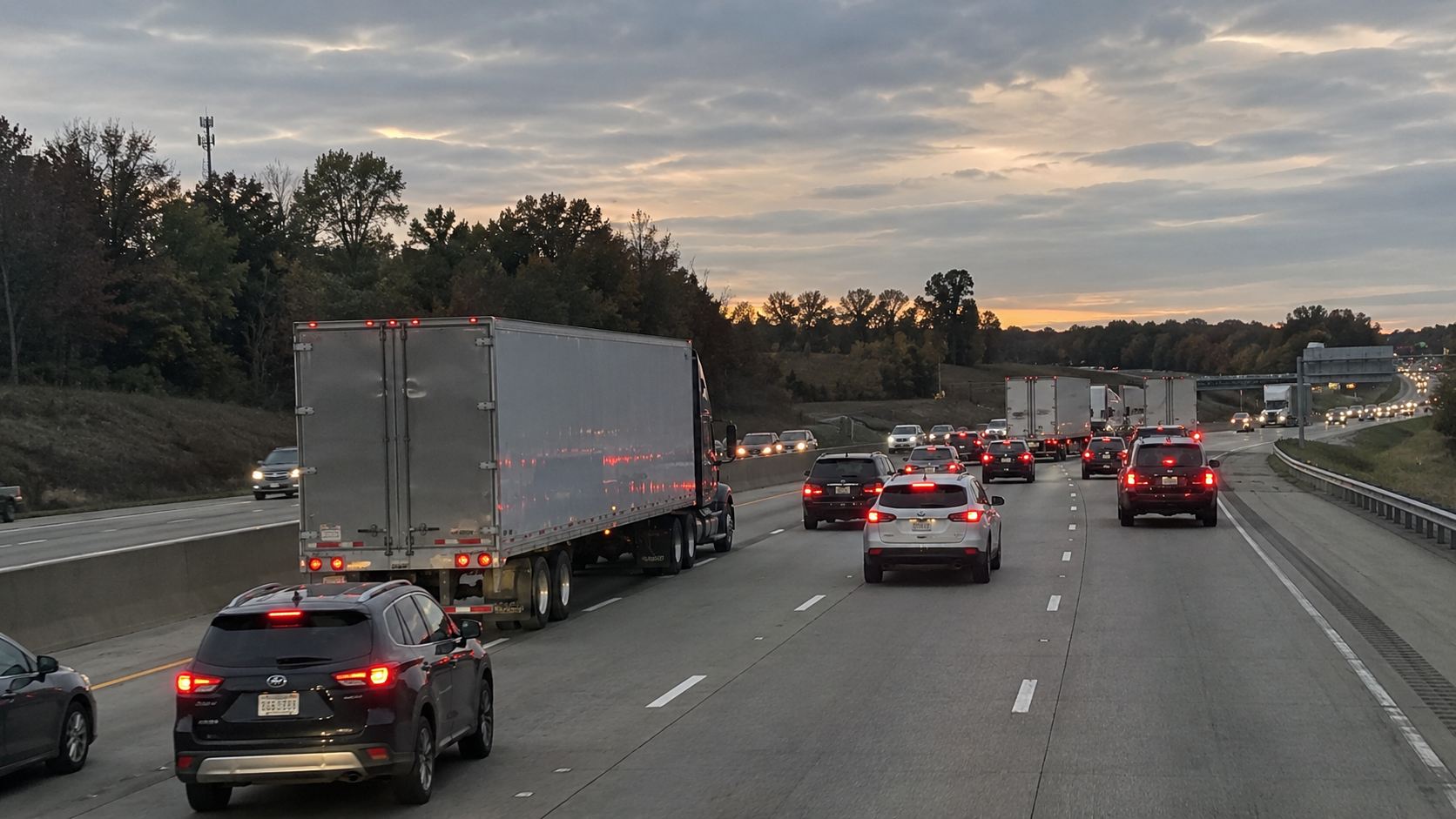
NHTSA’s detailed proposal separates the estimated benefits by vehicle class.
| Vehicle Class | Crashes Prevented | Lives Saved | Injuries Prevented |
| Classes 7-8 | 5,691 | 40 | 2,822 |
| Classes 3-6 | 13,427 | 115 | 5,992 |
| Total | 19,118 | 155 | 8,814 |
The numbers include benefits from AEB and the proposed expansion of electronic stability control.
NHTSA attributed 16,224 prevented crashes and 106 saved lives specifically to AEB. The remainder comes from expanded stability-control requirements.
The full heavy-vehicle AEB proposal also estimated 24,828 fewer property-damage-only vehicles involved in crashes each year.
How Much Would the Technology Cost?
Federal regulators also estimated the hardware cost when they developed the proposal.
NHTSA put the additional AEB system cost at about $396 per affected vehicle. The figure included components, system tuning, customer training and an AEB malfunction warning.
For vehicles that would also need electronic stability control, the agency estimated an additional ESC cost of $320 to $687.
That produces a combined estimated equipment cost between $716 and $1,083 for vehicles needing both systems.
Those are regulatory estimates built from earlier component-cost studies, not 2026 retail prices. Actual fleet costs depend on the truck, existing equipment, manufacturer and maintenance requirements.
The Passenger-Car Rule Is Already Further Ahead

The heavy-truck proposal is easier to understand when compared with what happened to lighter vehicles.
NHTSA finalized FMVSS No. 127 in April 2024. The rule requires automatic emergency braking, including pedestrian AEB, on nearly all new passenger cars and light trucks.
The light-vehicle AEB standard takes effect for manufacturers by September 2029.
NHTSA estimates that rule will save at least 360 lives and prevent at least 24,000 injuries every year.
Heavy vehicles remain on a separate regulatory track.
That distinction also connects with other federal vehicle-safety changes. We recently covered the first pedestrian safety test results for 2027 models, another example of NHTSA placing more emphasis on crash prevention and reducing injuries outside the vehicle.
Why Has the Heavy-Truck Rule Taken Longer?
A passenger car is relatively standardized compared with the commercial-vehicle market.
Heavy trucks include delivery vehicles, dump trucks, buses, utility trucks, concrete vehicles, tractors and specialized work vehicles. Their wheelbases, braking systems, loads and front-mounted equipment vary substantially.
NHTSA identified that problem in the original proposal.
The agency specifically requested information about Classes 3 through 6 single-unit trucks with equipment mounted on or extending beyond the front of the vehicle. Bucket trucks, auger trucks and some car carriers can place equipment in areas where AEB sensors would otherwise be installed.
Regulators therefore have to write a performance standard that works across a much less uniform vehicle fleet.
A Supplemental Proposal Means Some Details May Change
FMCSA’s March 2026 report confirms that the agencies intend to issue another proposed document before a final rule.
The 2026 rulemaking report lists the heavy-vehicle AEB project as a supplemental NPRM with the next action date still undetermined.
A supplemental proposal gives regulators another opportunity to change technical requirements and collect public comments before issuing a final standard.
Any compliance dates discussed in the 2023 proposal therefore remain proposed dates, not current legal deadlines.
Manufacturers Would Get Several Years to Comply
The original proposal did not call for every newly built truck to change immediately after publication of a final rule.
For heavy vehicles already covered by federal electronic stability control requirements, NHTSA proposed compliance beginning on the first September 1 occurring three years after publication of the final rule.
Heavy vehicles that would newly need both ESC and AEB would receive four years.
Small-volume manufacturers, final-stage manufacturers and vehicle alterers would receive an additional year.
| Vehicle Situation | Proposed Lead Time |
| Heavy vehicle already subject to ESC requirements | About 3 years after final rule |
| Heavy vehicle newly requiring ESC and AEB | About 4 years after final rule |
| Small-volume and final-stage manufacturers | One additional year |
Because the final rule has not been published, none of those clocks has started.
AEB Does Not Eliminate Other Truck-Safety Problems
Automatic braking addresses one important crash mechanism, but large-truck safety involves several separate risks.
Driver distraction remains one of them. Our report on distracted driving and traffic deaths explains why technology cannot replace driver attention.
Truck design also matters after an impact has already become unavoidable. Recent crash testing has renewed debate around tractor-trailer side underride guards, which address a completely different type of collision from the rear-end crashes targeted by AEB.
AEB works before or during braking. Underride protection, seat belts, vehicle structure and emergency response deal with other parts of the same safety problem.
When Could the New Heavy-Truck Rule Actually Take Effect?
There is no reliable calendar date yet.
- the original heavy-vehicle AEB proposal was published in 2023
- the rule is not final
- NHTSA and FMCSA are preparing a supplemental proposal
- FMCSA lists the next publication date as TBD
- no federal compliance deadline has started
If regulators eventually keep the three- and four-year lead times proposed in 2023, mandatory AEB would not appear on every covered new heavy vehicle immediately after the final rule.
A final rule published in a future year would start the compliance clock from that publication date.
Existing trucks would also not automatically receive new AEB hardware under the 2023 proposal. The rule focuses on newly manufactured vehicles rather than requiring every truck already operating on US roads to be retrofitted.
@carls_garage Federally mandated safety features making vehicles less safe? This happens when the technology that’s implemented fails. So whose fault is that? Do we have the technology to create safety features that don’t malfunction? Or are auto manufacturers skimping on integrity to save a buck? What happens when you don’t have the financial security to fix these failed safety features? Most people just keep on driving. Here’s some more info. federal rules are moving toward requiring more crash-avoidance technology—most notably automatic emergency braking (AEB) on new passenger vehicles. Sounds like a really good idea, but I can think of 1000 ways that could be a bad idea if the automatic braking malfunctions. #carmechanictiktokcontest ♬ original sound – Carl’s Garage
Final Thoughts
The federal government is still moving toward mandatory automatic emergency braking on heavy trucks, but the rule is not in force yet.
The 2023 proposal would cover vehicles above 10,000 pounds and require AEB capable of detecting imminent forward crashes and automatically applying the brakes. Federal estimates say the combined AEB and stability-control requirements could prevent more than 19,000 crashes, nearly 9,000 injuries and 155 deaths each year.
For now, automatic braking on heavy commercial vehicles remains a technology already available on parts of the truck market and a federal mandate still moving through the rulemaking process.