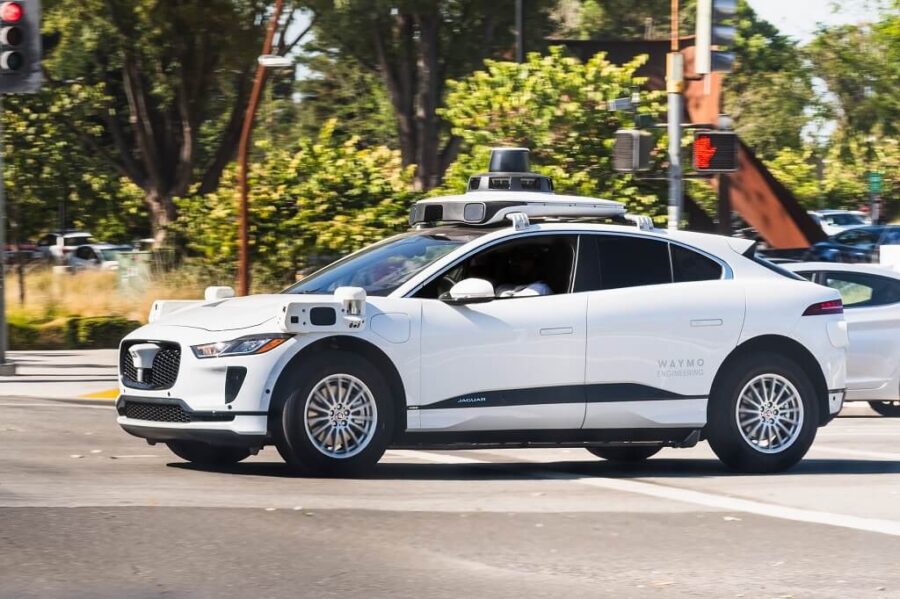

Los Angeles police gained a new power on July 1, 2026: officers could finally issue enforcement notices when a fully autonomous vehicle allegedly violated traffic laws, even with nobody sitting behind the wheel.
During the first four weeks, Waymo received zero such notices from the Los Angeles Police Department, according to records reported in August. The reported count also stood at zero for other robotaxi operators in Los Angeles.
The quiet opening month of New Robotaxi Enforcement raises an interesting question. Are driverless cars behaving exceptionally well, or has California created an enforcement system that police departments are still learning how to use?
Available evidence cannot settle that question yet. A month of zero notices tells us what officers issued. It provides far less information about what they observed on the road.
California Finally Gave Police a Way to Cite Driverless Cars

Traffic enforcement traditionally assumes there is somebody in the driver’s seat.
An officer sees an illegal U-turn, pulls the car over, identifies the driver and issues a citation connected to that person. A vehicle controlled entirely by software breaks the sequence.
California experienced the awkwardness firsthand in September 2025. Police in San Bruno stopped a Waymo after officers saw the vehicle make an illegal U-turn. With no human driver available to receive a ticket, officers lacked the conventional mechanism for issuing a moving violation.
The incident became a memorable preview of the legal gap California had already begun addressing.
Assembly Bill 1777, signed by Gov. Gavin Newsom in September 2024, established a framework allowing officers to issue a Notice of Autonomous Vehicle Noncompliance to the manufacturer responsible for the automated driving system.
California DMV regulations implementing the process became operative in 2026, with the enforcement mechanism available beginning July 1.
A California DMV enforcement memo explains how the process works. An officer who observes an alleged traffic violation can issue the notice to the manufacturer.
During a traffic stop, the document can be placed where vehicle registration and insurance information is stored or handed to a company representative arriving at the scene.
When no traffic stop occurs, officers can send the notice through the procedure described in the manufacturer’s first responder plan.
Manufacturers generally have 72 hours to submit a received notice to the DMV. Incidents marked for priority review carry a 24-hour deadline.
What Does Zero LAPD Citations Really Tell Us?
The most accurate answer is fairly narrow: LAPD reportedly issued no autonomous-vehicle noncompliance notices during the first four weeks of the new system.
A zero count does not reveal how many potential violations officers witnessed, how often autonomous vehicles were stopped, or whether officers encountered situations that might have qualified for a notice.
LAPD had not publicly provided a detailed explanation for the zero total when the figure was reported.
Implementation could matter. California’s system requires officers to document information such as the alleged violation, time, location, vehicle license plate and confirmation that autonomous technology was engaged. The DMV has published law-enforcement resources explaining the process and how agencies obtain the required OL 325 forms.
Training and familiarity may therefore influence early numbers.
Language matters as well. Calling the notices “tickets” or “citations” makes the system easier to describe, although the legal mechanism differs from the familiar ticket handed to a human driver.
The manufacturer becomes the accountable party for autonomous driving behavior. The DMV receives the notice and can investigate the underlying event.
Waymo’s Safety Data Adds Important Context
Raw collision totals can make autonomous vehicles look unusually crash-prone because reporting rules for commercial AV operators differ substantially from ordinary driver reporting.
Independent research offers a better comparison.
Crash statistics also have a human side, since people injured in California traffic incidents may still need to determine who is legally responsible and what compensation may be available. Resources from firms such as Sweet James illustrate the kinds of personal injury issues that can follow a serious road accident.
A July 2026 study from the Insurance Institute for Highway Safety examined Waymo Level 4 vehicles alongside human drivers operating in comparable places and periods.
Researchers estimated that Waymo’s driverless vehicles had a 68% lower rate of police-reportable crash involvement per mile than human drivers.
For Los Angeles specifically, the estimated rate was 71% lower.
The IIHS analysis of Waymo crashes also found substantially lower rates of several crash types, including rear-end collisions caused by the Waymo vehicle.
Researchers added an important caveat. Comparing autonomous and human driving remains difficult because the reporting systems differ. Companies operating automated vehicles have historically reported incidents that an ordinary motorist might never report to police, including relatively minor events.
In the IIHS dataset, only about 22% of 736 public-road crashes involving engaged automation were judged likely or potentially likely to be police-reportable under a comparable human-driver standard.
So a large number of reported AV collisions and a comparatively low crash rate per mile can exist at the same time.
Emergency Scenes Remain a Major Enforcement Concern
Traffic tickets represent one part of California’s evolving autonomous-vehicle rules.
Interactions with police officers, firefighters and paramedics have become another focus.
On July 8, the National Highway Traffic Safety Administration warned autonomous-vehicle developers about driverless vehicles interfering with emergency responders.
The agency described incidents involving vehicles entering active emergency areas, obstructing emergency vehicles or reacting poorly to signals such as lights, flares and traffic cones.
NHTSA did not single out one operator in its directive, although previous reporting has documented Waymo vehicles requiring intervention around emergency scenes. Reporting on federal first-responder concerns arrived only a week after California’s new enforcement framework began.
California’s broader 2026 regulations address the problem directly.
According to the DMV’s updated AV rules, manufacturers must support two-way first responder communication with response times of 30 seconds. Local emergency officials can also establish temporary electronic geofenced areas that autonomous fleets must avoid during public-safety incidents.
Vehicles already inside such a restricted zone are expected to leave.
The rules give regulators several options beyond a conventional traffic stop, including operational restrictions and potential permit action.
New Robotaxi Enforcement Arrives as Waymo Rapidly Expands
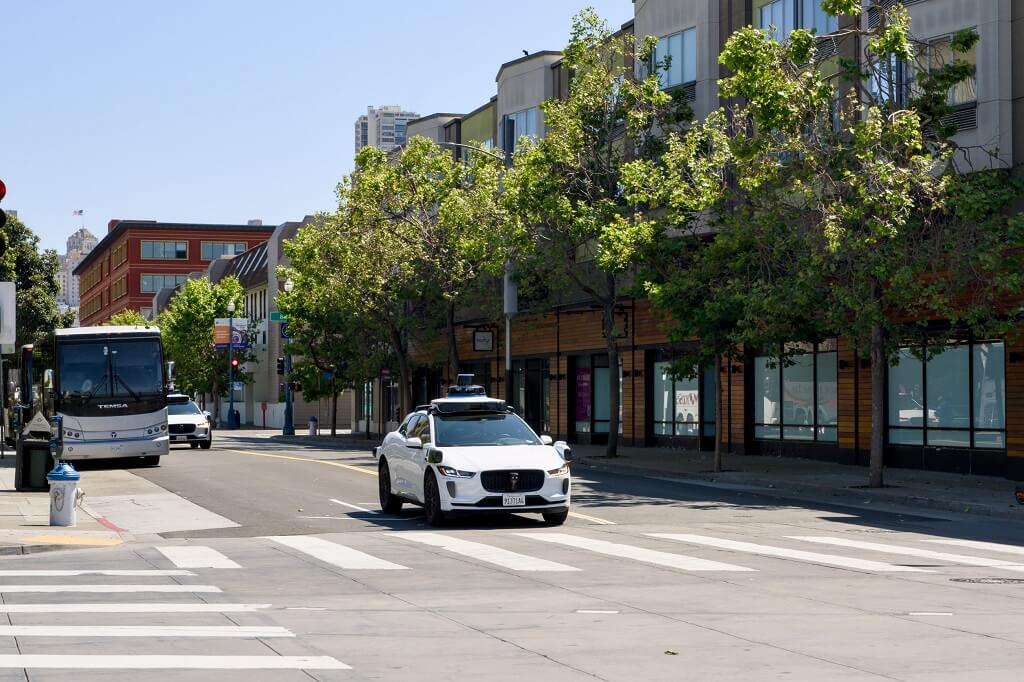
California’s experiment with autonomous traffic enforcement comes during a period of rapid industry growth.
Waymo already operates public autonomous ride-hailing service across Los Angeles, including areas stretching from Santa Monica through central neighborhoods and south toward Inglewood. Its vehicles have collectively accumulated hundreds of millions of fully autonomous miles.
Expansion has accelerated well beyond Southern California.
On September 1, 2026, Waymo announced additional operations in Denver, Tampa and San Diego, taking its active footprint to 14 cities, according to Reuters’ expansion report.
Scale changes the regulatory equation.
A handful of experimental vehicles can often be handled through direct communication between companies and local officials. Thousands of autonomous vehicles taking everyday passenger trips require predictable procedures for illegal turns, blocked streets, emergency scenes and unusual road conditions.
California’s Notice of Autonomous Vehicle Noncompliance creates a record that can eventually reveal recurring behavior across vehicles from the same manufacturer.
DMV officials have said repeated noncompliance can lead to administrative action, potentially including restrictions or suspension of an autonomous-vehicle operating permit.
A Quiet First Month Leaves the Bigger Question Open
Zero LAPD notices during the first month of New Robotaxi Enforcement makes for an eye-catching number. Its meaning will become clearer as California accumulates several months of data.
Waymo enters that period with encouraging independent safety findings. IIHS research indicates its driverless vehicles are involved in police-reportable crashes at substantially lower rates per mile than comparable human drivers.
At the same time, autonomous vehicles create enforcement situations human-driving laws were never written to handle. A police officer cannot ask an algorithm for its license. California now has a formal process for reaching the company behind it.
July 2026 supplied the first real-world test of that process in Los Angeles, and the scoreboard remained at zero.
The more revealing figure will be what happens after officers, regulators and robotaxi companies have had enough time to make the new system routine.