
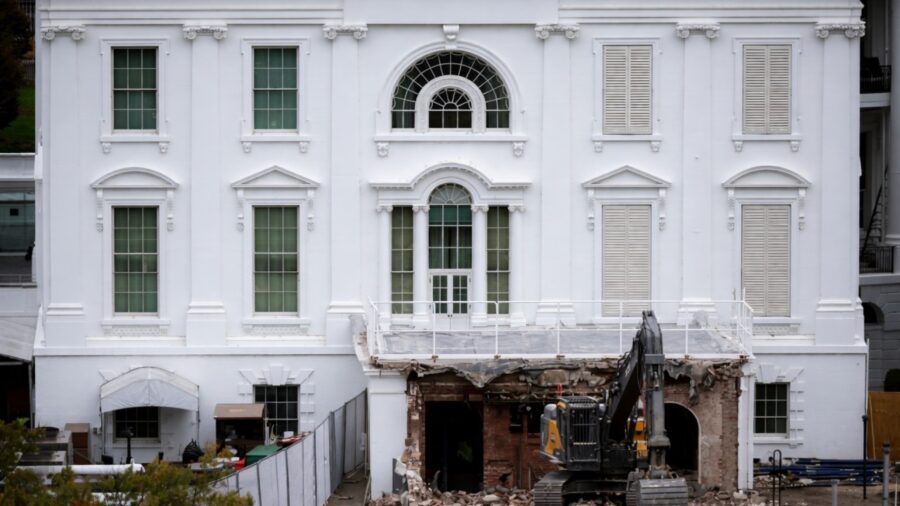

A federal judge sharply narrowed what can continue at the White House construction site tied to President Donald Trump’s proposed $400 million ballroom, ruling that only underground work tied to national security may move forward for now, while the visible above-ground ballroom remains blocked.
The decision, issued Thursday by U.S. District Judge Richard Leon, is the latest setback for a project that has already triggered a legal fight over presidential power, historic preservation, and the limits of executive authority.
Leon’s message was unusually direct. He said the administration had stretched his earlier order beyond recognition by arguing that the ballroom’s security features, including hardened materials and anti-drone protections, justified letting the full project continue.
In the judge’s words, national security does not give the government a free pass to carry out “otherwise unlawful activity.” He clarified that his injunction stops above-ground construction of the planned 90,000-square-foot addition unless Congress authorizes it.
Table of Contents
ToggleWhat the Court Is Allowing
Leon did not impose a total freeze. He left room for below-ground excavation and construction related to security facilities, as well as protective steps needed to stabilize and shield the site.
Associated Press reported that the administration may continue work on excavations, bunkers, military installations, and medical facilities below the ballroom footprint, along with measures necessary to cover or secure the area.
That distinction is central to the ruling: subterranean security work may proceed, but the ballroom itself may not rise above ground while the case continues.
The judge also made clear that he was rejecting a newer administration argument that the ballroom and the underground security complex are one inseparable project.
That position cut against earlier representations to the court, where government lawyers had treated the above-ground and below-ground portions as independent. Leon cited that inconsistency in dismissing the administration’s broader reading of his earlier order.
Why the Project Is in Court
The legal challenge was brought by the National Trust for Historic Preservation, which argues the administration moved ahead unlawfully after demolishing the East Wing and starting work on the ballroom without the required approvals and review processes.
The Trust says the government must comply with the legally mandated procedures, including public review, before pushing ahead with such a major alteration to the White House grounds. Reuters and the Trust both describe the lawsuit as a direct challenge to whether Trump can carry out the project without congressional authorization.
The broader fight has been shaped by appeals-court intervention. Last week, the D.C. Circuit asked Leon to clarify how much construction could be halted without risking presidential security.
Thursday’s ruling was his answer: protect the site and continue the underground security work if necessary, but stop treating the ballroom itself as an urgent national-security exception. Leon also extended the stay of his order briefly, giving the administration time to pursue further appeals.
What Comes Next
Trump has blasted the ruling publicly and signaled that the fight is far from over. The administration has already said it will keep appealing, and multiple reports indicate it may seek Supreme Court review.
For now, though, the court has drawn a bright legal line: the security argument may preserve limited underground work, but it does not rescue the ballroom from the requirement that the law, and Congress, still matter.
Related Posts:
- Armed Forces Organizations, 500+ Veterans Announce…
- Can You File a Lawsuit Against an ICE Officer for…
- The 100 Most Dangerous Cities in America (2026):…
- Could Mass Deportation Slow Construction Projects in the USA
- Best Places to Retire Abroad in 2026: An Honest…
- The Decline in U.S. Traffic Fatalities - What 2024…