

The U.S. Supreme Court has ruled that police conduct a Fourth Amendment search when they obtain detailed Google Location History records, rejecting the argument that people automatically lose constitutional privacy protections when location data is held by a technology company.
The 6-3 decision in Chatrie v. United States, issued June 29, 2026, arose from a geofence warrant used to identify suspects after a 2019 credit union robbery in Midlothian, Virginia. Police did not begin with the name of a suspect. Instead, they asked Google for information about devices found within a defined geographic area around the crime scene.
Justice Elena Kagan, writing for the Court, concluded that a person has a reasonable expectation of privacy in detailed records showing the location of a cell phone. The Court vacated the judgment of the U.S. Court of Appeals for the Fourth Circuit and returned the case for additional review.
The ruling does not outlaw geofence warrants. It establishes that obtaining the type of detailed location information involved in the case counts as a search under the Fourth Amendment. Courts must still examine if a particular warrant satisfies separate requirements for probable cause and particularity.
What the Supreme Court Ruled in Chatrie v. United States
The central issue before the justices was narrower than a general decision on the legality of every geofence warrant. The Court had to decide if police performed a Fourth Amendment search when they obtained Okello Chatrie’s Google Location History.
The majority said they did.
According to the Rock Hill Criminal Defense Attorney, criminal defense work can include reviewing police search procedures and digital evidence to determine if law enforcement violated a defendant’s rights. The Supreme Court decision gives courts and defense attorneys a clearer constitutional rule for one increasingly important category of digital evidence.
In its official opinion, the Supreme Court held that police access to Chatrie’s location records interfered with a constitutionally protected privacy interest even though Google possessed the information and the request covered a limited period.
The Court stopped short of deciding if the warrant itself was constitutionally reasonable. That issue is now back before the Fourth Circuit.
The Case Began With a $195,000 Credit Union Robbery
The investigation began on May 20, 2019, after a man robbed a credit union in Midlothian at about 4:50 p.m.
According to the Supreme Court record, the robber gave a teller a handwritten note demanding $100,000 and threatened her and her family. He later displayed a firearm and forced the manager to open a safe. He left on foot with about $195,000.
Witness interviews and surveillance footage showed that the robber had approached from the corner of a nearby church and appeared to be talking on a cell phone. Investigators were unable to identify him through their initial work.
On June 14, 2019, police applied for a geofence warrant requiring Google to provide Location History information for devices recorded near the credit union.
Police Started With 19 Anonymous Google Users

The warrant authorized a three-stage process.
During the first stage, Google provided anonymized location records for devices inside the 150-meter geofence between 4:20 p.m. and 5:20 p.m., covering 30 minutes before and 30 minutes after the robbery.
Google returned information associated with 19 users.
Police then reduced that group to nine devices. Under the second stage of the warrant, Google supplied additional location information for those nine users over a longer period, from 3:50 p.m. until 5:50 p.m. Unlike the first set of records, the additional data showed movements both inside and outside the original geofence.
Investigators narrowed the group again, this time to three users. Google then provided identifying information, including names and phone numbers.
Chatrie was one of the three.
His location records showed his device entering the geofenced area about 10 minutes before the robbery and moving toward a residential area after leaving the vicinity of the bank. Further police investigation followed, and a federal grand jury later charged him with robbery and related firearm offenses.
Why Google Location History Received Constitutional Protection
The Supreme Court relied heavily on its 2018 decision in Carpenter v. United States, which dealt with historical cell-site location information held by wireless carriers.
In Carpenter, the Court recognized that detailed location records can reveal a significant amount about a person’s movements and private life. The majority found Google Location History even more precise than the cell-site records involved in the earlier case.
According to the 2026 opinion, the version of Google Location History at issue could record a device location roughly every two minutes, producing an average of about 720 location points per day. The system could place a device within roughly 20 meters and could also estimate elevation, potentially identifying the floor of a building where a phone was located.
Such information can expose visits to homes, workplaces, hospitals, religious institutions and other sensitive locations. The Court rejected the idea that constitutional protection should depend simply on the number of hours police request.
The Court Rejected a Broad Third-Party Doctrine Argument
View this post on Instagram
The federal government argued that Chatrie had allowed Google to collect and use his location information and therefore could not claim the same expectation of privacy that would apply to information kept entirely private.
The majority disagreed.
Traditional third-party doctrine has allowed the government to obtain certain records held by businesses without treating every request as a search of the customer. The Supreme Court had already limited that principle for detailed digital location information in Carpenter.
Kagan wrote that Location History was highly revealing and was not shared with Google in the ordinary sense of deliberately communicating private movements to another person. Using smartphone services, the Court reasoned, should not automatically expose sensitive personal information to unrestricted government access.
The ruling therefore closes an important path for arguments that location information loses Fourth Amendment protection solely because a technology company stores it.
The 6-3 Vote Crossed the Court’s Usual Ideological Lines
Kagan was joined in the main opinion by Chief Justice John Roberts and Justices Sonia Sotomayor, Brett Kavanaugh and Ketanji Brown Jackson.
Justice Neil Gorsuch agreed with the judgment, giving Chatrie six votes, but wrote separately. Gorsuch agreed that government examination of the Location History data amounted to a search, although he favored an analysis grounded more directly in property rights protected by the text of the Fourth Amendment.
Justice Samuel Alito dissented. Justice Clarence Thomas joined part of the Alito opinion, and Justice Amy Coney Barrett joined other sections before filing a separate dissent.
Jackson also wrote separately, joined by Sotomayor. She would have gone further than the main opinion and concluded that at least the second and third stages of the geofence process failed the constitutional requirements governing warrants.
The Supreme Court Did Not Ban Geofence Warrants
The practical limit of the ruling is important.
The Court decided that acquiring the Location History information was a search. It did not decide that every geofence warrant is unconstitutional, and it did not finally decide that the warrant used against Chatrie violated the Fourth Amendment.
Once government conduct qualifies as a search, a separate question follows. A warrant generally must rest on probable cause and describe the authorized search with sufficient particularity.
The Fourth Circuit had not resolved those questions under the constitutional framework adopted by the Supreme Court. The justices therefore returned the case to that court rather than deciding the issues themselves.
The Case Is Already Back Before the Fourth Circuit
The litigation did not end with the June decision.
On September 4, 2026, the Center for Democracy and Technology filed an amicus brief on remand urging the Fourth Circuit to find that the warrant failed constitutional requirements. The group argues that the later stages expanded the search beyond the original geographic boundary and collected information about people who had not been identified as suspects.
The Fourth Circuit must now analyze the warrant stage by stage under the Supreme Court ruling. The outcome will determine what the decision means for Chatrie himself and may provide more specific rules for future geofence investigations.
Google Has Since Changed How Location History Is Stored
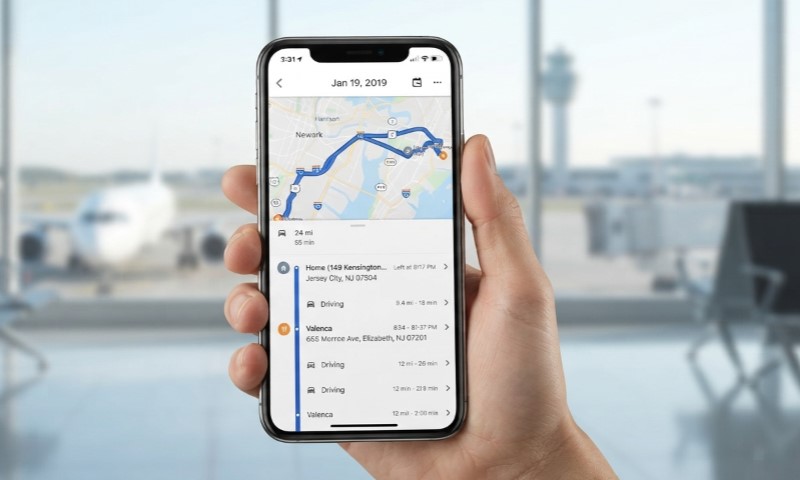
The exact Google system examined by the Supreme Court no longer operates in the same way.
The Court noted that Google changed its storage system in July 2025. Location History information, now associated with Google Maps Timeline, is stored on individual devices rather than in the centralized Google database used during the Chatrie investigation.
Google told the Court that the change means it is no longer capable of responding to geofence warrants seeking Location History records in the same manner.
The constitutional ruling still reaches an important question that extends past one Google product. Other companies have received geofence requests, and smartphones continue to generate detailed records through applications, GPS systems and other services.
What the Decision Changes for Digital Privacy
Chatrie v. United States establishes one clear rule. Police access to detailed cell-phone location history can trigger the Fourth Amendment even when a private technology company holds the information.
The decision does not prevent investigators from using location evidence. It requires the government to treat access to protected location records as a constitutional search and to justify that search under Fourth Amendment standards.
Future disputes are likely to focus less on the claim that company-held location records receive no constitutional protection at all and more on probable cause, the geographic scope of warrants, the length of time covered and the amount of information collected about people who are not known suspects.
For readers following the intersection of policing, constitutional protections and individual rights, our Civil Rights & Law coverage follows new court decisions and legal disputes as they develop.
The next important ruling in the Chatrie case will come from the Fourth Circuit. Its task is now more specific than before. The Supreme Court has already answered the first question. Google Location History was constitutionally protected, and police performed a search when they obtained it.