
Federal workplace heat rules are still moving through the OSHA rulemaking process, and the proposal would create a national heat standard for millions of indoor and outdoor workers.
The draft rule would require covered employers to provide drinking water, cooler rest areas, heat safety plans, training and additional protections when workplace heat reaches defined thresholds.
OSHA published the proposal in August 2024. Public hearings and post-hearing comments continued through 2025, and OSHA still lists the heat standard as an active proposed rule in 2026.
The Proposal Uses Two Heat Triggers
OSHA built the proposed standard around two levels of heat exposure.
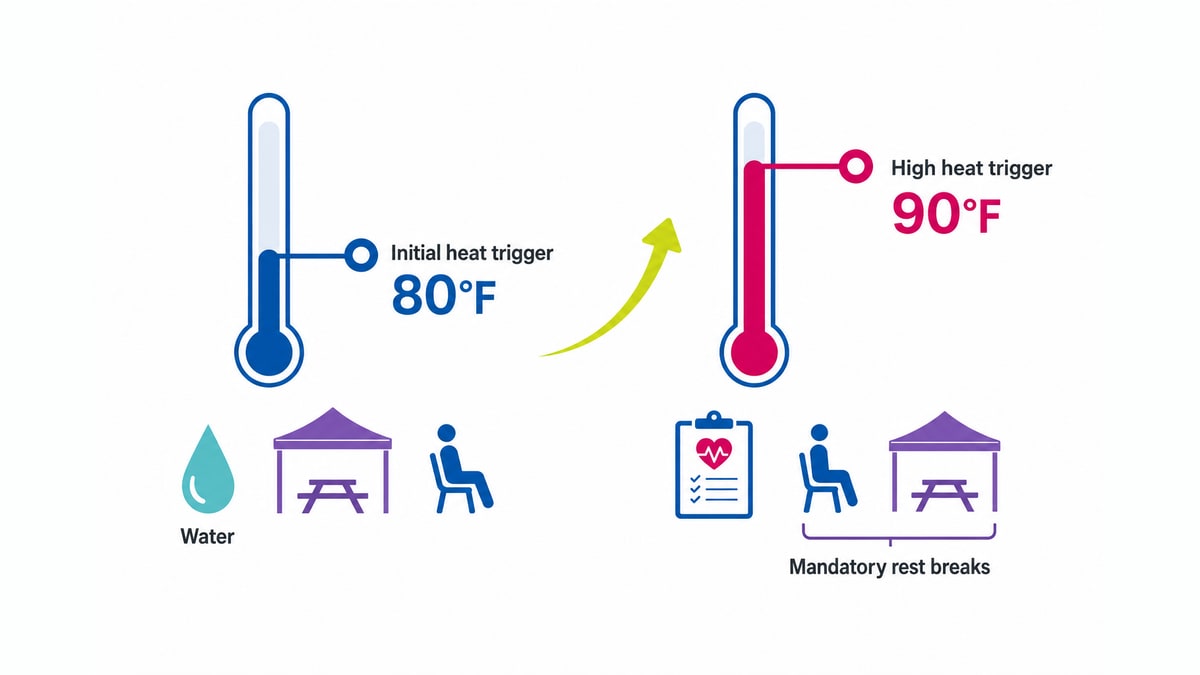
The first is an initial heat trigger at a heat index of 80°F. The second is a high heat trigger at 90°F. Employers could also use certain wet bulb globe temperature measurements under the alternative system described by OSHA.
| Proposed Trigger | Heat Index | Main Requirements |
| Initial heat trigger | 80°F | Water, break area, heat controls, acclimatization, communication and rest as needed |
| High heat trigger | 90°F | Additional monitoring, mandatory rest breaks and stronger heat protections |
OSHA chose those levels after reviewing injury, fatality and state heat-standard data. The agency found that many documented heat illnesses occurred on days when the heat index reached 80°F but never climbed to extreme triple-digit temperatures.
The full OSHA heat rule proposal explains the scientific evidence, industry coverage and employer duties behind both thresholds.
Employers Would Have to Create a Heat Safety Plan
Covered employers would need a Heat Injury and Illness Prevention Plan, which OSHA calls a HIIPP.
The plan would describe how the company identifies heat hazards, who manages the program, what controls workers receive and how the employer responds when someone shows signs of heat illness.
Employers with more than 10 workers would generally need the plan in writing. Smaller employers would still need a heat prevention plan, but OSHA proposed an exception from the written-plan requirement.
The plan would also need to identify one or more heat safety coordinators. Employers would have to review the program and update it when working conditions or heat hazards change.
Workplace heat already appears among the hazards covered in federal worker-safety training programs. We recently reported on the 2026 OSHA worker safety grants, which include funding for training on hazards such as heat, falls, confined spaces and machine safety.
Workers Would Need Access to One Quart of Water Per Hour
The proposed rule sets a specific minimum for drinking water.
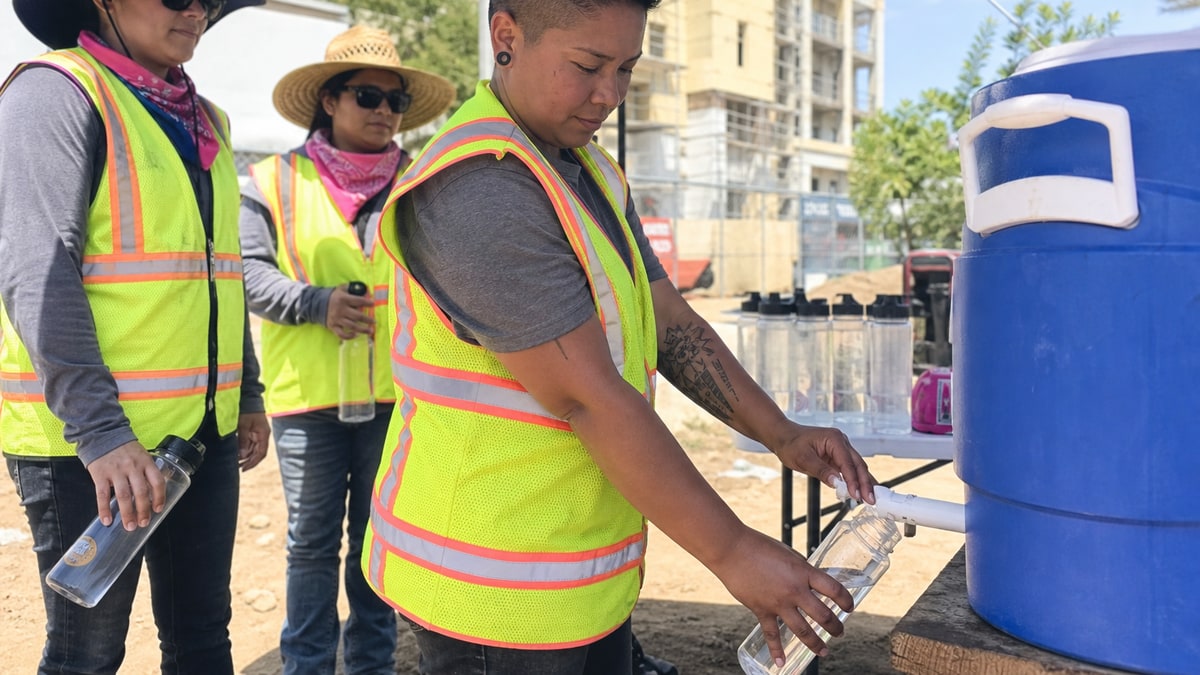
Once the initial heat trigger is reached, employers would have to provide access to at least one quart, or 32 fluid ounces, of suitably cool drinking water per worker per hour.
The water would need to remain reasonably close to the work area and easy for workers to access throughout the shift.
OSHA already advises employers to provide cool water during hot work and to encourage regular drinking rather than waiting for workers to become thirsty. The proposed standard would turn part of that guidance into a federal requirement for covered workplaces.
Rest Areas Would Have to Provide Relief From the Heat
Water alone would not satisfy the proposed standard.
Employers would also need to provide one or more break areas that give workers real relief from high temperatures.
For outdoor jobs, that could include shade, a tent, an air-conditioned vehicle or another cooler location. Indoor workplaces could use air-conditioned rooms, ventilated break spaces or areas separated from major heat sources.
OSHA already tells employers that workers need a cooler location during rest periods. The proposed rule would make access to a suitable break area part of the required heat-control program once the initial trigger is reached.
High Heat Would Trigger a 15-Minute Break Every Two Hours
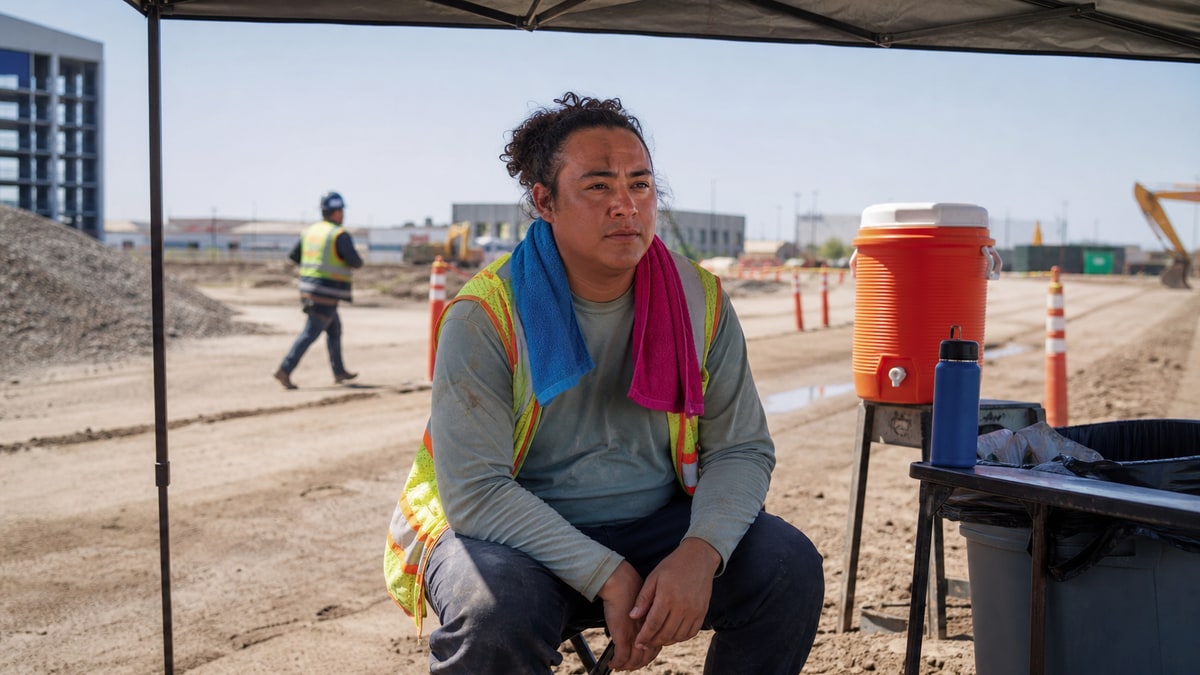
The 90°F high heat trigger would add a fixed rest-break requirement.
Under the current proposal, employers would have to provide at least 15 minutes of paid rest every two hours when the high heat trigger is reached.
Time spent walking to the rest area or removing and replacing protective equipment would not count toward the 15-minute cooling period.
Workers could also need additional breaks before the two-hour interval if they begin overheating or develop symptoms of heat illness.
OSHA considered other schedules during the rulemaking process, including shorter breaks and more frequent breaks. The current proposal uses 15 minutes every two hours at the high heat level.
New Workers Would Receive Extra Protection During Their First Week
Heat risk is higher when a worker has not yet adapted to hot conditions.
The proposed standard addresses that problem through acclimatization requirements for new employees and workers returning after an extended absence.
Employers would need procedures that gradually increase exposure during the first several days of work in the heat. The same type of protection would apply when an experienced worker returns after enough time away to lose heat tolerance.
OSHA has repeatedly identified the first days of hot work as a high-risk period because the body needs time to adjust to sustained heat exposure.
Employers Would Need to Monitor Workers More Closely at 90°F
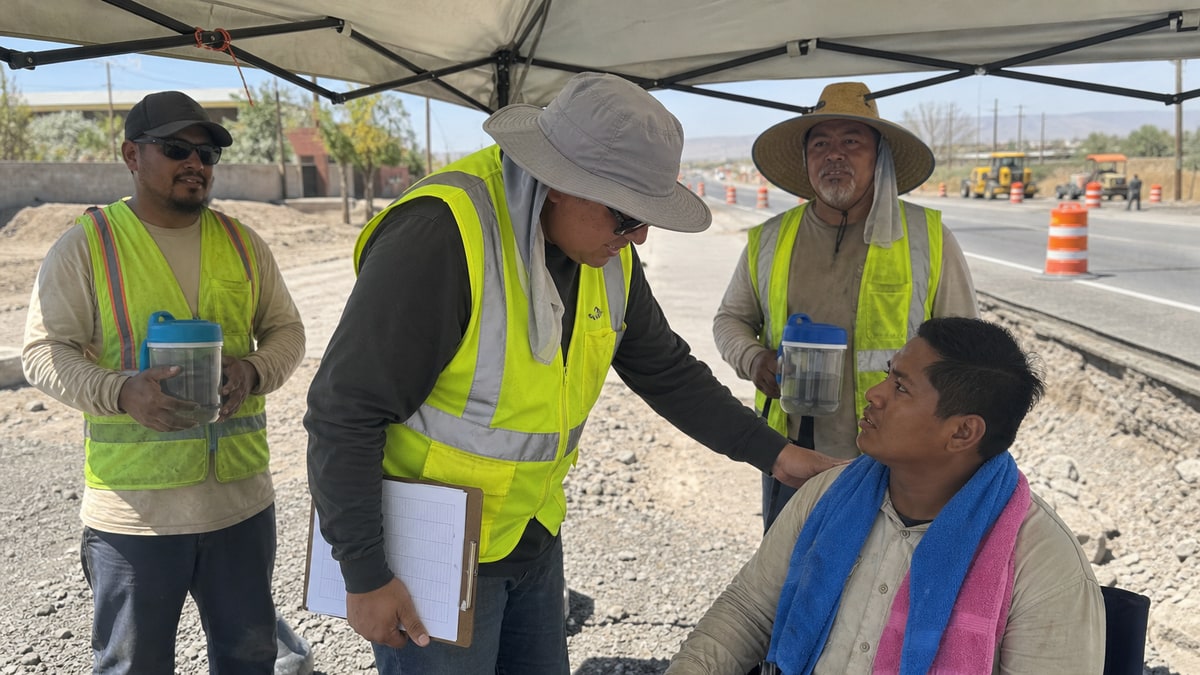
The high heat trigger adds another layer of supervision.
Employers would need a system for observing workers for signs and symptoms of heat illness. The proposal allows different approaches, including a buddy system or regular supervisor check-ins.
Workers showing signs of heat illness would need to be removed from hazardous heat conditions and monitored.
Confusion, fainting, seizures or other severe symptoms could indicate a medical emergency rather than ordinary fatigue. The proposed standard includes emergency response procedures for cases that require medical treatment.
Indoor Workplaces Are Included
The proposed rule is not limited to construction sites, farms or road crews.
OSHA included indoor workplaces because high temperatures also occur in warehouses, kitchens, manufacturing plants, laundries, bakeries and facilities with furnaces or other major heat sources.
An indoor workplace can qualify even if doors or windows remain open. OSHA defines indoor work around the structure and airflow conditions rather than assuming that an open loading-bay door removes the heat hazard.
Employers at covered indoor sites would need to identify areas where workers are exposed to the heat triggers and apply the required protections there.
Some Workplaces Would Be Exempt
The proposal contains several exclusions rather than applying every provision to every worker in the country.
Workers performing short-duration heat exposure, some emergency operations, certain telework and work in climate-controlled environments can fall outside parts of the standard.
OSHA also proposed different treatment for some sedentary work and employees whose heat exposure remains below defined duration limits.
The exact scope remains subject to change before a final rule appears. Employers would need to read the final regulatory text rather than relying only on the headline 80°F and 90°F triggers.
Heat Illness Can Lead to Workers Compensation Claims

Heat exhaustion, heat stroke and related injuries can remove a worker from the job for days or longer. A severe episode can also involve hospitalization, organ damage or complications from a fall after a worker loses consciousness.
A work-related heat illness can raise both workplace safety and workers compensation questions. OSHA enforcement deals with employer safety duties, while workers compensation systems address benefits connected with qualifying job-related injuries and illnesses.
Employees dealing with a serious work-related heat injury should speak with a local expert, for example, if you live in South Carolina, look for a North Myrtle Beach Workers Compensation Attorney. He will tell you more about the facts of an individual claim, including medical treatment and lost wages.
Those systems should not be confused. An OSHA violation does not automatically establish the outcome of a workers compensation case, and a compensation claim can exist even when OSHA never issues a citation.
Federal Data Shows Heat Has Killed More Than 1,000 Workers Since 1992
OSHA relied heavily on federal injury and fatality records when developing the proposal.
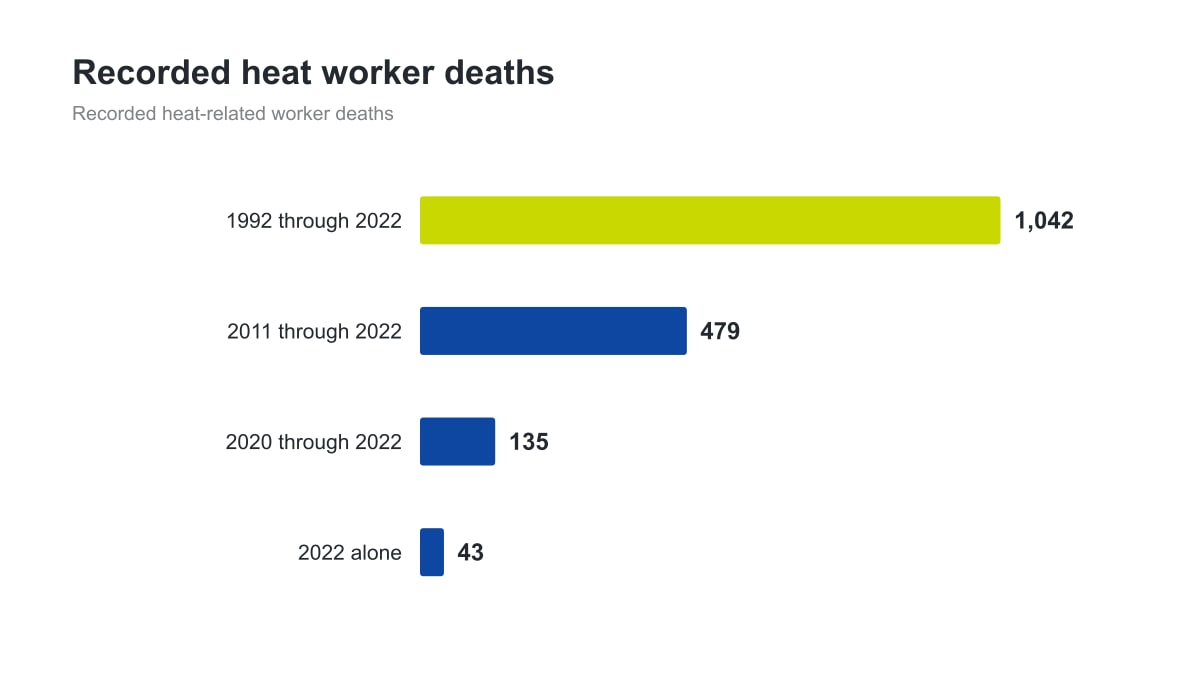
Bureau of Labor Statistics data cited in the rule identified 1,042 worker deaths caused by occupational heat exposure between 1992 and 2022. That equals an average of 34 deaths per year across the full period.
The more recent period was worse. BLS recorded 479 heat-related worker deaths from 2011 through 2022, or about 40 per year.
| Period | Recorded Heat-Related Worker Deaths | Average Per Year |
| 1992 through 2022 | 1,042 | 34 |
| 2011 through 2022 | 479 | 40 |
| 2020 through 2022 | 135 | 45 |
| 2022 alone | 43 | 43 |
OSHA also cited 33,890 heat-related injuries and illnesses involving days away from work from 2011 through 2020. That averages 3,389 cases per year.
The agency warns that official counts probably understate the real total because heat can contribute to incidents that are recorded under another cause and some injuries never enter federal reporting systems.
OSHA Investigated More Than 1,000 Serious Heat Cases From 2017 Through 2022
Another dataset in the proposal comes from OSHA investigations.
Between January 2017 and December 2022, OSHA investigated 1,054 reported heat-related injuries, illnesses and fatalities.
The total included 625 hospitalizations and 211 deaths, along with other heat-related injuries and illnesses that did not fall into those two categories.
Those investigations cover only incidents reported to and investigated by OSHA. They are not a count of every heat illness that occurred across the US workforce during the period.
Construction, Agriculture and Outdoor Services Face Obvious Exposure
Some jobs expose workers to direct sun for much of the shift.
Roofers, construction crews, agricultural workers, landscapers, delivery workers and road crews can spend hours in conditions where both air temperature and physical workload increase heat strain.
Heavy protective clothing can add another source of heat. OSHA therefore considers workload, clothing and personal protective equipment when discussing exposure controls.
Heat risk is not limited to southern states. Workers in northern states can face dangerous conditions during summer heat waves, especially when they have not had time to acclimatize.

Warehouses and Factories Can Reach the Trigger Without Outdoor Heat
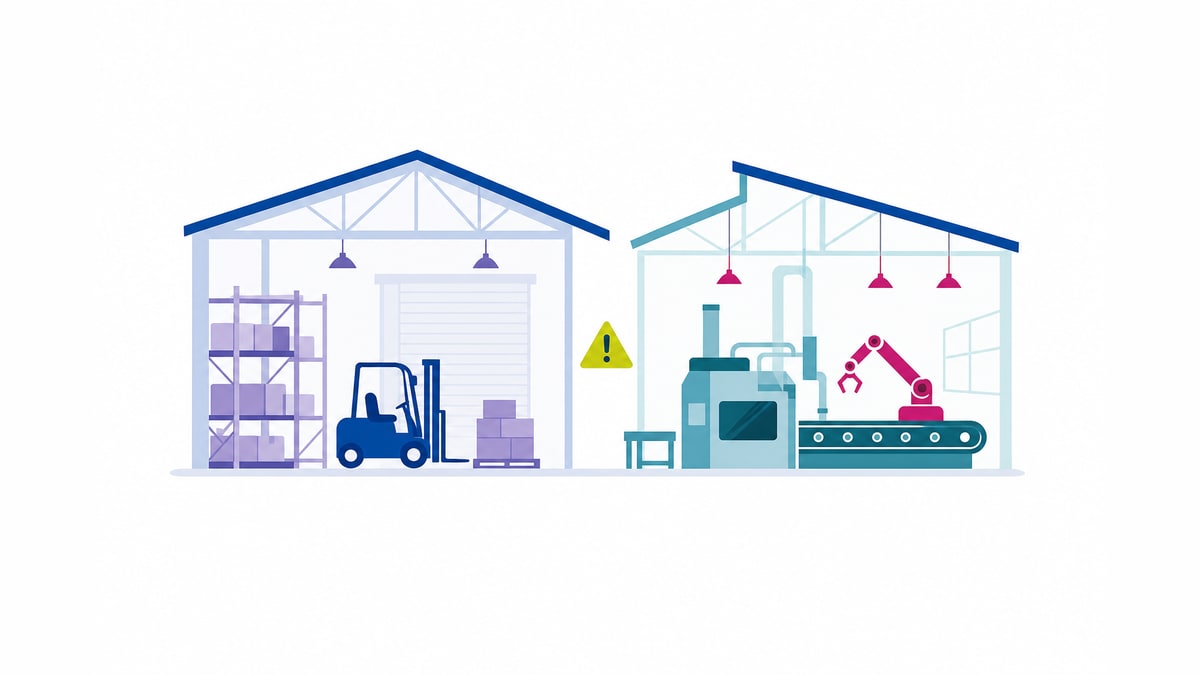
Indoor heat exposure can come from machinery, ovens, industrial processes or poor ventilation.
A warehouse roof can absorb solar heat even if employees never work outside. Commercial kitchens and manufacturing plants can remain hot after outdoor temperatures begin to fall.
The proposed rule therefore requires employers to evaluate conditions where people actually perform their jobs instead of relying only on an outdoor weather report.
Some indoor businesses already use fans, ventilation and air conditioning as heat controls. Under the proposal, employers would need to determine if those controls keep workers below the relevant exposure level or if additional measures are necessary.
Training Would Become a Formal Employer Duty
Covered employers would need to train employees and supervisors on workplace heat hazards.
Training would cover risk factors, symptoms of heat illness, employer controls, emergency procedures and employee responsibilities under the heat plan.
Workers also need to know who the designated heat safety coordinator is and how to report symptoms or unsafe conditions.
The emphasis on training matches other federal worker-safety efforts. Our report on federal workplace safety training grants explains how OSHA is funding instruction on heat and other job hazards during the 2026 grant cycle.
Workers Could Report Heat Hazards Without Losing Federal Retaliation Protection
The proposed heat standard would sit inside the existing Occupational Safety and Health Act framework.
Employees already have federal rights to raise safety concerns, request an OSHA inspection and report injuries without unlawful retaliation.
A worker who reports dangerous heat conditions therefore does not need to wait for a final heat rule before federal anti-retaliation protections become relevant.
Our recent article on job protection during medical leave also explains how workplace injuries and illnesses can intersect with separate employment protections when an employee needs time away from work.
The Proposal Would Cover Far More Than Scheduled Breaks
The phrase “water, rest and shade” captures only part of the proposed standard.
Employers would also have duties involving heat monitoring, acclimatization, emergency response, worker observation, training, indoor controls and planning.
At the initial trigger, workers would receive access to water and cooler rest areas, along with heat controls and rest as needed to prevent overheating.
At the high heat trigger, monitoring and mandatory 15-minute rest periods every two hours would add another layer of protection.
The Federal Rule Is Still Not Final
OSHA published the proposed Heat Injury and Illness Prevention standard on August 30, 2024.
The original written comment period closed in December 2024. OSHA later held an informal public hearing, followed by a post-hearing comment period that ended on September 30, 2025.
As of October 2026, OSHA still identifies Heat Injury and Illness Prevention as a proposed rule. Employers should not treat the proposed 80°F and 90°F requirements as a new nationwide final standard that has already taken effect.
Existing OSHA obligations still apply in the meantime. Employers have a general duty to protect workers from recognized serious hazards, and OSHA continues to publish heat guidance built around water, rest, cooler areas, acclimatization and emergency response.
A final federal heat standard could create far more specific duties. Until OSHA completes the rulemaking process, the exact requirements, exemptions and compliance dates remain open to change.