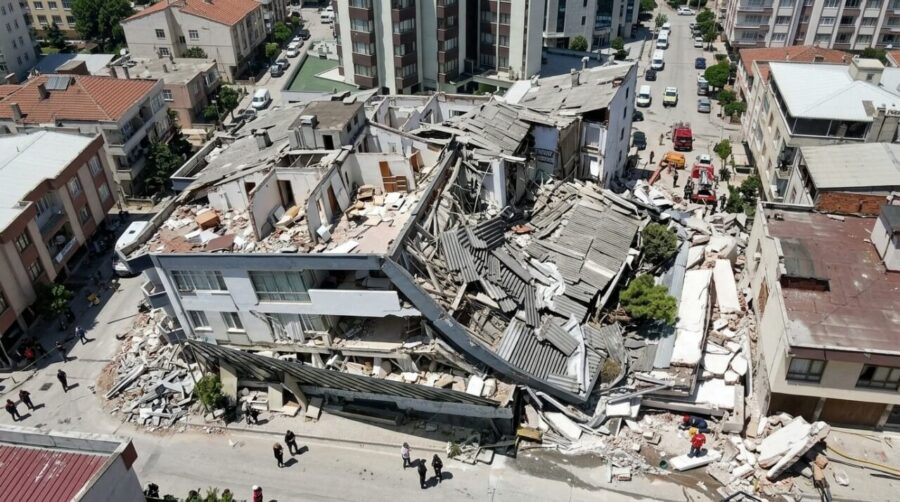

A powerful 7.4-magnitude Colombia earthquake struck the western part of the country on Monday, August 10, killing at least 132 people in the latest partial count and leaving rescue crews searching collapsed buildings from Pereira to Cali.
The earthquake hit at 7:34 a.m. local time near San José del Palmar in Colombia’s Chocó department. The U.S. Geological Survey measured its depth at 107 kilometers, while Colombia’s Geological Service placed it at about 103 kilometers. The Colombian agency described it as the country’s strongest recorded earthquake of the 21st century.
Table of Contents
ToggleWhat Happened in Western Colombia
The strongest damage was reported across western and central Colombia, including Pereira, Cali, Quibdó and Manizales. Buildings collapsed, hospitals were damaged and transport infrastructure was disrupted as emergency teams moved into affected areas, according to Associated Press reporting.
President Abelardo de la Espriella initially reported 111 deaths, 87 injuries and roughly 1,600 damaged buildings, including at least 61 that had completely collapsed. He declared a national emergency, allowing the government to mobilize resources more rapidly and placing the immediate priority on rescuing people trapped beneath debris.
Colombia’s National Unit for Disaster Risk Management, or UNGRD, said initial reports indicated possible damage in nine municipalities in Chocó, eight in Caldas, two each in Valle del Cauca and Risaralda, as well as municipalities in Quindío. Urban search-and-rescue teams from Bogotá, Envigado, Yopal and Medellín were activated.
Latest Verified Update
By early Tuesday, August 11, the Association of Colombian Capital Cities, known as Asocapitales, had raised the partial toll to at least 132 dead and more than 570 injured. Pereira accounted for the largest reported number of fatalities in that tally, with 60 deaths. The figures remained preliminary, according to updated reporting from El País.
The national and local counts have not yet been fully reconciled. Reuters reported that President de la Espriella’s earlier nationwide figure remained 111 deaths, while some later local reports placed the number higher. That difference is important because rescue crews are still reaching damaged communities and consolidating information from multiple jurisdictions.
In Cali, the president said late Monday that 188 people were reported missing, while local authorities were dealing with major damage to homes, schools and hospitals. Seven airports, including those serving Cali, Pereira, Manizales, Quibdó and Armenia, suspended operations following earthquake damage, according to the latest reporting.
Aftershocks Add to the Risk
Colombia’s Geological Service said at least 18 aftershocks had occurred by the time of its initial update and warned that additional tremors were likely. Later local reports citing seismic monitoring put the number at 21, with magnitudes ranging from 1.4 to 4.8. The agency published an official earthquake update as monitoring continued.
Officials have urged residents to rely on verified seismic and emergency information as inspections continue. Damage assessments are particularly difficult in Chocó, where some communities are remote and communications were disrupted after the earthquake.
Why the Colombia Earthquake Matters
Colombia’s Geological Service said the August 10 earthquake was the largest magnitude event recorded in the country during the 21st century. The agency noted that the same region has experienced major earthquakes before, including a magnitude 7.2 event on November 23, 1979.
Another major Colombian earthquake struck near Armenia in January 1999. That magnitude 6.2 disaster killed more than 1,100 people, making seismic resilience an enduring concern in the country’s densely populated western regions.
What Happens Next
Search-and-rescue operations remain the immediate priority. Authorities are also inspecting hospitals, schools, roads, airports and residential buildings while trying to restore access to communities near the epicenter. The government’s national crisis center remains active, with regional authorities feeding damage and casualty information into the central response.
The final scale of the disaster is therefore not yet known. With people still reported missing and assessments continuing in difficult-to-reach areas, casualty and damage figures are likely to be revised as Colombia moves from emergency rescue toward recovery.
Related Posts:
- Safest Cities in California in 2026: An Honest,…
- America’s Murder Capitals - Updated 2026 Rankings of…
- Capital Cities in Europe: Top Destinations For You…
- The 100 Most Dangerous Cities in America (2026):…
- Venezuela Earthquakes Devastate Caracas, Leaving 32…
- Best Places to Retire Abroad in 2026: An Honest…