

U.S. road deaths are moving in a better direction.
Federal data show 39,254 people died in traffic crashes in 2024, down from 41,025 in 2023, and NHTSA’s early estimate for 2025 drops further to 36,640.
Yet distracted driving still killed 3,208 people in 2024 and injured an estimated 315,167 more. A decline in overall fatalities is real progress. It is not a sign that distraction has stopped being one of the country’s most stubborn road-safety problems.
Phones get most of the attention, and distraction reaches far beyond texting. Federal health and safety agencies define it as anything that pulls a driver’s eyes, hands, or mind away from the road, including phone use, navigation, eating, and other in-car tasks.
That matters because safer roads depend on more than one trend line. They depend on daily behavior inside millions of vehicles.
Safer Roads, but Far From Safe
The broad picture is encouraging. NHTSA says the fatality rate fell to 1.19 deaths per 100 million vehicle miles traveled in 2024, and the agency’s early 2025 estimate puts the rate at 1.10, one of the lowest on record.
Still, a lower national death toll can exist at the same time as a major distraction problem. NHTSA’s 2024 research note shows distraction-affected fatalities held at 8% of all traffic deaths, the same share recorded in each year from 2020 through 2024.
Federal data look like the following:
| Metric | Latest figure | Why it matters |
| Total U.S. traffic deaths in 2024 | 39,254 | Lower than 2023, but still a huge loss of life |
| Deaths in distraction-affected crashes in 2024 | 3,208 | Roughly 8% of all traffic deaths |
| Estimated injuries in distraction-affected crashes in 2024 | 315,167 | Serious harm remains widespread even when crashes are not fatal |
| Estimated total U.S. traffic deaths in 2025 | 36,640 | Overall trend improved again, based on NHTSA early estimates |
One more detail often gets buried. Of the 3,208 people killed in distraction-affected crashes in 2024, 639 were nonoccupants, meaning pedestrians, cyclists, and others outside a vehicle.
In plain language, distraction endangers far more than the person holding the phone. It reaches far beyond the driver’s seat.
When a distracted-driving crash leaves pedestrians, cyclists, or other road users injured, names like The Wilson PC become relevant to people trying to figure out liability and next steps.
Why Official Numbers Likely Miss Part of the Problem
Distracted-driving numbers are useful, but they are also conservative. NHTSA has said distraction-related crashes and fatalities are likely underreported because drivers may not admit they were on a phone just before a crash, and police officers often cannot verify distraction after the fact.
IIHS goes further and says there are no reliable estimates for the number of crashes caused by distracted drivers, which is one reason naturalistic driving studies have become so important in road-safety research.
Federal researchers also note a much larger gap between police-reported distraction data and broader crash-causation research.
In NHTSA’s observed-device-use report, the agency notes studies indicating cellphone distraction causes about 6% of all crashes, while all forms of distraction account for about 29%.
Police reports do not fully capture behavior like looking at a screen for a second too long, fumbling with music controls, or mentally drifting while a message alert lights up the cabin.
That gap helps explain why distracted driving remains a crisis even during a period of falling traffic deaths. A problem does not need to be rising every year to remain serious. It only needs to stay common, dangerous, and hard to measure, all of which apply here.
Phones Remain a Major Part of the Risk

Cellphones remain central to modern driving risk. IIHS says research consistently links texting or otherwise manipulating a cellphone to higher crash risk, with naturalistic studies finding odds of a crash 2 to 6 times greater during phone manipulation than during attentive driving.
NHTSA’s 2024 distraction report puts hard numbers around the portion police could identify. In 2024, 404 fatal crashes were reported as involving cellphone use as a distraction, and 437 people died in crashes involving at least one driver engaged in cellphone-related activity.
Even that number should be read as a floor, not a ceiling, because only known and reported phone activity makes it into the official count.
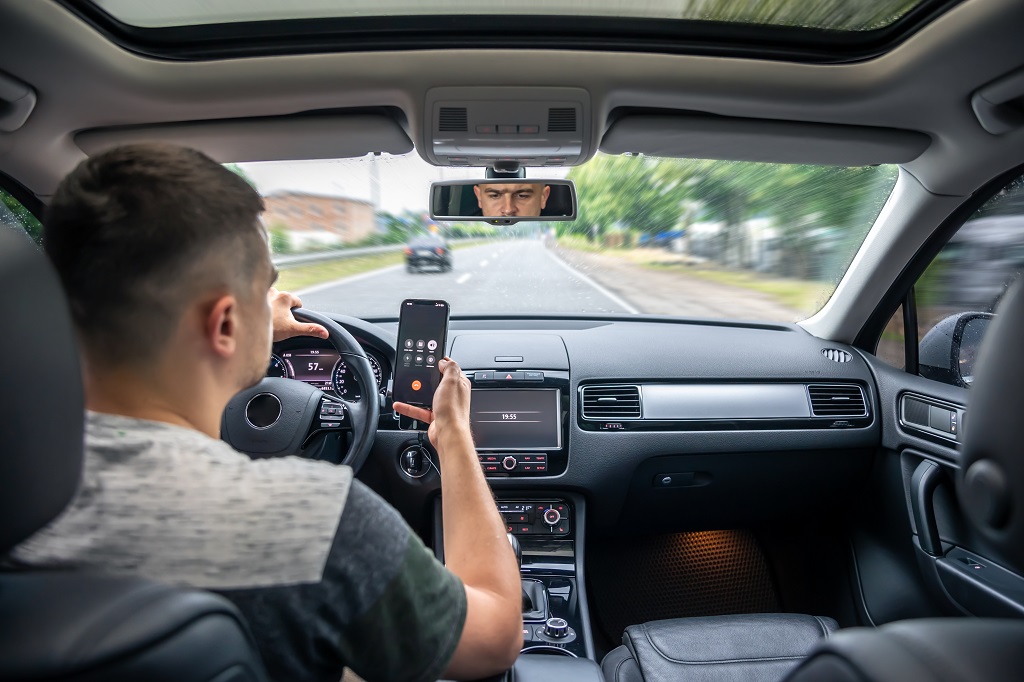
Observed roadside behavior tells a similar story. NHTSA’s National Occupant Protection Use Survey found that during a typical daylight moment in 2023, an estimated 326,170 drivers were holding phones to their ears and 463,385 were visibly manipulating handheld devices.
Measured another way, 3.0% of drivers were visibly manipulating a handheld device while driving. On a nation-sized road system, a small percentage still translates into a very large number of risky moments.
Younger Drivers Still Stand Out
Younger motorists remain a major concern. NHTSA found 16 to 24 year olds had the highest visible device-manipulation rate in 2023 at 7.7%, the highest level for that age group since the agency began collecting the data in 2005.
In the 2024 fatal-crash data, drivers ages 15 to 20, 21 to 24, 25 to 34, and 35 to 44 all registered distraction at 6% of drivers involved in fatal crashes, above the 5% average for all drivers.
CDC also warns that distraction harms all drivers but can be especially dangerous for young, inexperienced ones. That pattern fits what crash researchers and parents already suspect: phone culture formed early is carried straight into the car unless someone interrupts it.
Laws Help, but They Do Not Finish the Job
State law has moved in a stricter direction, though the map is still uneven. GHSA says 33 states and Washington, D.C., prohibit all drivers from using handheld cellphones, while 49 states and D.C. ban text messaging for all drivers. Nearly every state has some form of statewide distracted-driving law on the books.
Evidence suggests strong laws can help reduce at least some phone behavior. In NHTSA’s 2023 observed-use data, drivers in states with primary handheld-use bans showed a 1.5% handheld phone-use rate, compared with 3.2% in states without such laws.
IIHS research on Arizona’s statewide no-holding law found handheld calling declined after citations began, with telematics data showing the percentage of trip time with handheld calls down 26% by 2024.
Still, Arizona’s results also showed a harder truth. Handheld conversations dropped, but other manual phone behaviors did not show the same clean long-term decline. In other words, drivers often adapt faster than policy.
A rule against one visible behavior can push risk into a slightly different form rather than remove it outright.
Technology Can Help, if People Use It
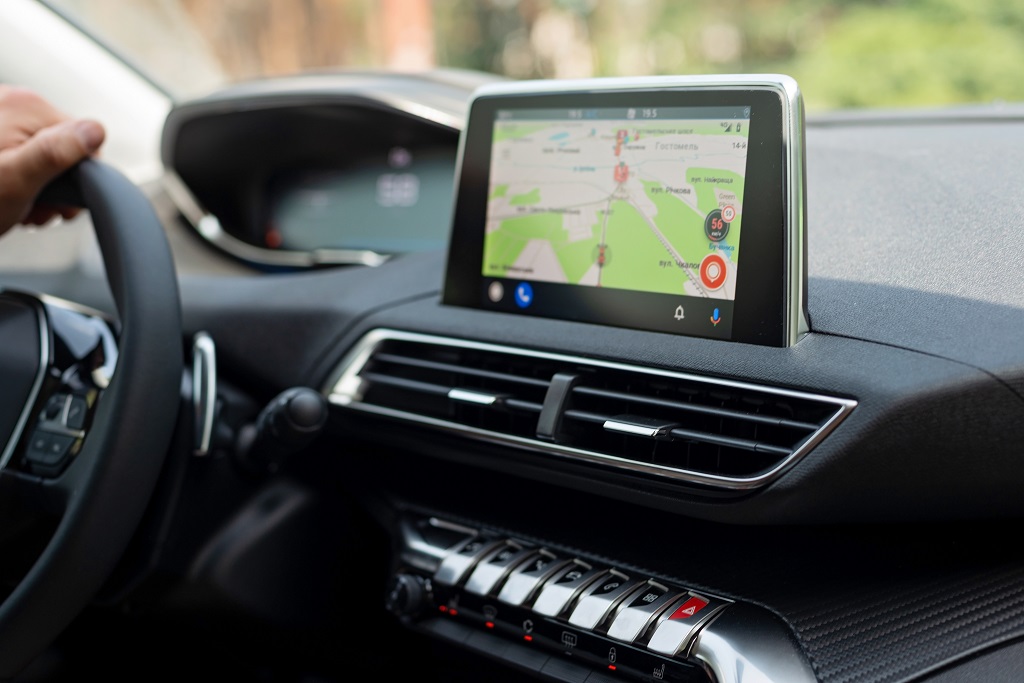
A better road-safety strategy probably needs law, enforcement, road design, employer policies, and phone settings working together.
AAA Foundation research from 2025 found many young drivers were barely familiar with smartphone “Do Not Disturb” features before training: 50% did not know the feature existed on their phone, 85% did not know how to use it, and 65% did not know it could activate automatically when driving was detected.
After training, all participants reported knowing how to use it, and the study found a 41% decrease in the odds of a smartphone task while driving; participants were also 6% less likely to pick up the phone.
Results like that show distraction is partly a design and habit problem. When safer behavior is easy, automatic, and socially normal, more drivers will choose it. When every reply, map check, playlist change, and work message feels urgent, the road loses.
What Real Progress Would Look Like
Real progress against distracted driving would have a few clear signs:
- More states adopting simple hands-free laws that are easy to explain and enforce.
- Better crash reporting and broader use of telematics or other research tools to close the gap between official counts and real behavior.
- Employers backing off any culture that rewards instant replies from people behind the wheel.
- Drivers setting navigation, music, and phone-silencing tools before moving the vehicle.
None of that is glamorous. Most of it is routine. Road safety usually improves that way, through repeated boring decisions that prevent a violent moment from ever happening.
Summary
Traffic deaths are falling, and that is welcome news. Distracted driving still kills thousands, injures hundreds of thousands, and reaches well beyond the driver causing the crash.
Any serious conversation about safer roads still has to treat distraction as a live emergency, not an old campaign slogan.