
A new Texas Supreme Court ruling has made slip-and-fall cases harder to win when a customer cannot show how long a hazard was on the floor.
In H-E-B, L.P. v. Peterson , decided on April 10, 2026, the court said evidence like earlier roof leaks in other parts of a store, general inspection policies, or guesses about where water came from do not fill the gap if nobody can prove the puddle existed long enough for store staff to discover it.
For business owners, the opinion strengthens a defense that has been part of Texas law for years. For injured customers, it raises the value of surveillance video, witness timing, and any proof tied to the exact spot and moment of the fall.
Peterson matters because slip-and-fall claims often turn on messy facts, a clear liquid, a rushed employee, a customer who falls and can only say the floor was wet.
Texas courts have now made plain that suspicion is not enough. A plaintiff still needs evidence that connects the hazard to the business owner’s opportunity to find it. Without that time link, summary judgment can end the case before a jury ever hears it.
What The Texas Supreme Court Decided
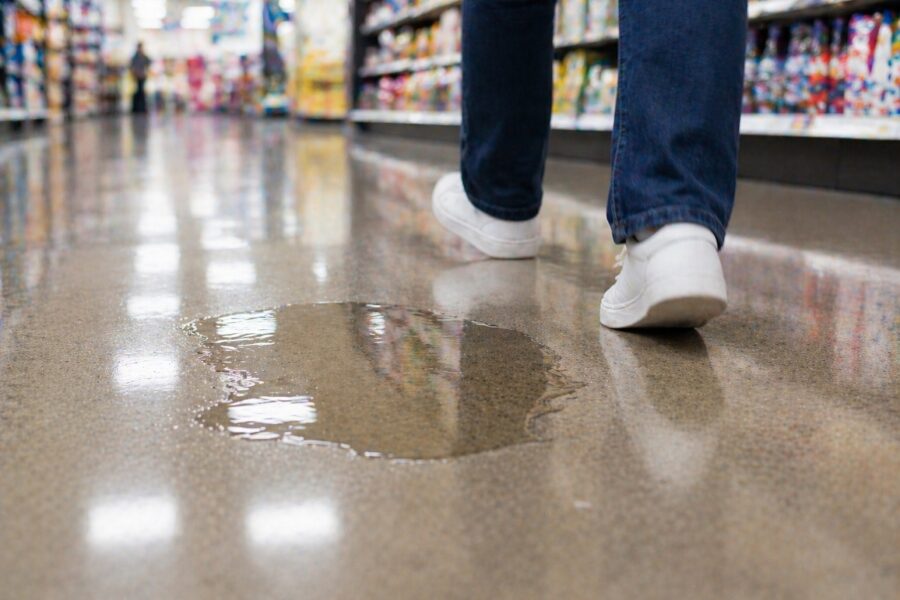
The case grew out of a fall in the toy aisle of an H-E-B store in San Antonio. Marissa Peterson said she slipped on a clear puddle, noticed water around her, and believed water was dripping from above.
H-E-B had dealt with multiple roof leaks elsewhere in the store during renovations, and Peterson argued that background, along with rain earlier that day and the lack of employee traffic in the aisle, was enough to raise a fact issue.
The trial court granted summary judgment for H-E-B, an appeals court revived the claim, and the Texas Supreme Court ultimately sided with the grocer and reinstated summary judgment.
The central point was narrow but powerful: in a slip-and-fall case based on constructive notice, a plaintiff must offer some evidence showing the dangerous condition existed long enough for a reasonable premises owner to discover it.
The court repeated that constructive knowledge depends on a mix of longevity, proximity, and conspicuity, but longevity remains essential. Peterson could not say how long the puddle had been there, and the court held that the rest of her evidence did not solve that problem.
The opinion also drew a hard line between the dangerous condition and whatever may have caused it.
Under Texas law, the relevant question is knowledge of the wet floor at the time and place of the injury, not knowledge of some earlier situation that may have produced the puddle.
That distinction did most of the work in Peterson. Roof leaks elsewhere in the building, even if real, did not prove H-E-B knew or should have known about water on the toy-aisle floor when Peterson fell.
Note: For a broader primer on how property-owner duties and injury claims intersect in Texas, Loewy Law Firm provides additional premises liability context.
Why The Ruling Feels Stricter Even Though The Rule Was Already There
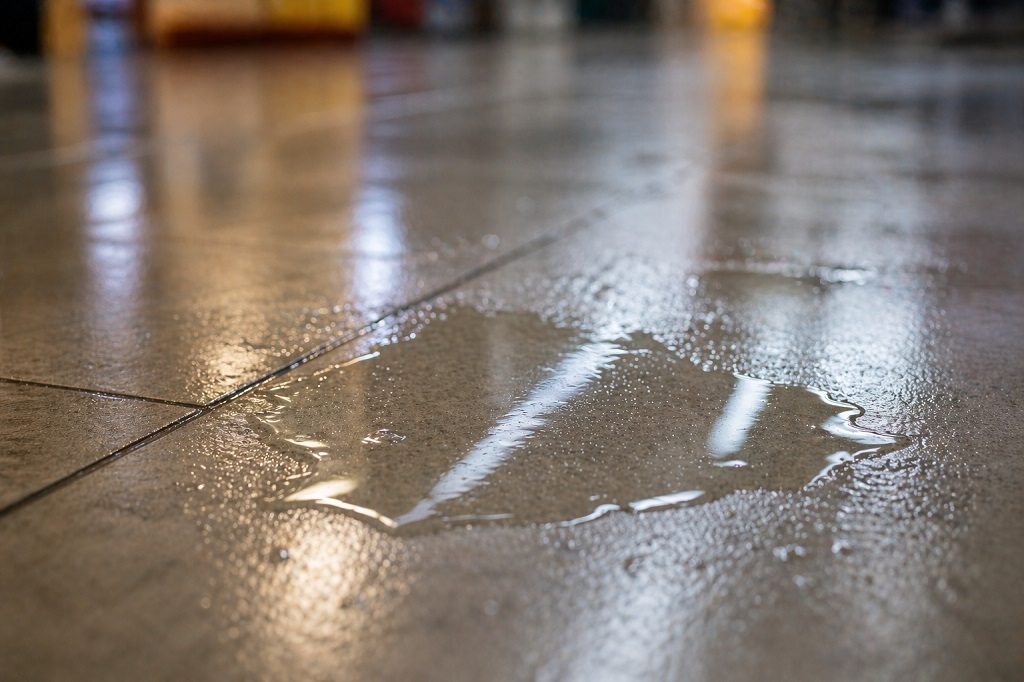
Texas did not invent a new standard in April 2026. The court said it was applying long-settled law from earlier cases such as Wal-Mart v. Reece, City of San Antonio v. Rodriguez, Brookshire Grocery v. Taylor, and Albertsons v. Mohammadi.
Still, Peterson reads like a warning shot to lower courts: do not let weak timing evidence limp past summary judgment just because a fall seems plausible.
That is why the ruling feels tighter in practice. Lawyers for injured customers often try to build a chain of inferences around weather, inspection gaps, recurring leaks, spill size, or employee presence nearby.
Peterson says a chain like that breaks if nobody can show when the hazard actually appeared. Rain that stopped 2 hours earlier may suggest a possible source. A drip from a rafter may suggest another one. Neither says whether the puddle formed 2 hours before the fall or 2 minutes before it.
What Plaintiffs Still Have To Prove
Texas slip-and-fall law still gives plaintiffs 3 basic routes on the notice issue:
| Route to notice | What it means | Typical proof |
| Business created the hazard | Store staff placed or caused the dangerous condition | Cleaning machine leak, employee spill, object left in aisle |
| Actual knowledge | Staff knew the hazard was there before the fall | Incident reports, employee testimony, direct observation |
| Constructive knowledge | Hazard was present long enough that staff should have found it | Video, witness timing, footprints, inspection logs tied to timing |
Texas courts have long treated the third route with caution. In Reece , courts emphasized that a plaintiff must show it is more likely than not that the condition existed long enough to give the premises owner a reasonable chance to discover it. Peterson leans heavily into that same requirement.
For plaintiffs, the lesson is simple and unforgiving. General proof that a store had problems before will usually not carry the day. Proof tied to the exact spill, exact aisle, and exact time window matters far more.
A witness who saw liquid on the floor 10 minutes earlier may matter. A camera showing employees walking past a large spill may matter. A record showing a store skipped a documented inspection round may matter, but only if timing can be pinned down.
A Good Example Of Evidence That Can Work
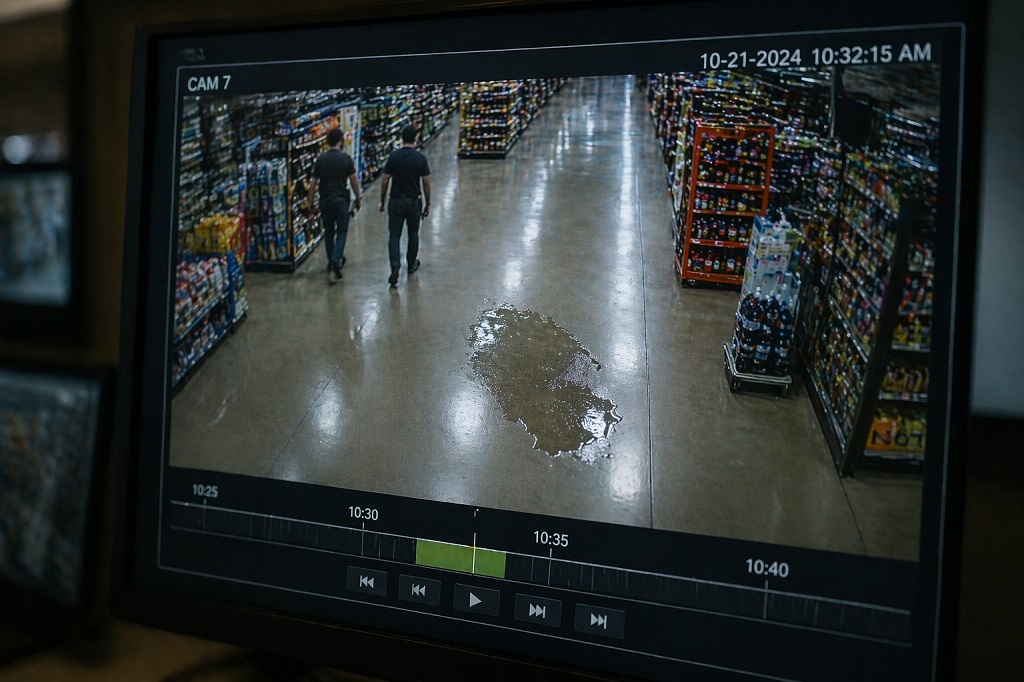
One reason Peterson stands out is that Texas courts have also shown what stronger evidence looks like.
In Brookshire Brothers v. Aldridge , video reportedly showed employees walking past the area about 3 minutes and 5 minutes before the plaintiff fell, and the footage also suggested the spill was large enough that cleanup required help. That kind of evidence gave a jury something concrete to work with on timing and discoverability.
Peterson had no equivalent proof. No one could say when the puddle appeared. No employee had walked through the aisle during the relevant period, which removed one possible route for showing proximity. The court treated the rest as speculation about cause rather than evidence of duration.
What Business Owners Gain From Peterson
For stores, restaurants, and other businesses open to the public, Peterson is a favorable opinion because it gives defense lawyers a cleaner path to summary judgment in thin cases.
A business owner still has a duty to use reasonable care, but Peterson reduces the risk that a case reaches a jury on the strength of a generalized maintenance narrative alone.
A smart business response is not to relax. Good inspection habits still matter, partly for safety and partly because documentation can decide a lawsuit. The ruling makes several practical steps more important:
- Preserve surveillance footage quickly after any fall.
- Keep inspection logs specific, timed, and easy to retrieve.
- Train managers to photograph the area and identify witnesses.
- Document weather-related patrols by location, not only by general policy.
- Track recurring leaks or hazards with exact placement and repair history.
Records like that can help a business show either that no one knew of the hazard or that the hazard likely appeared only moments before the fall.
What Injured Customers And Their Lawyers Will Need To Do Differently
Peterson does not shut the courthouse door, but it does raise the premium on immediate evidence gathering. Anyone injured in a suspected premises case now has even more reason to act fast.
Requesting incident reports, identifying witnesses, preserving video, and taking photos of the area can shape whether a claim survives. Delay can be fatal to the case because the missing piece is often a short span of time that disappears fast.
Lawyers on the plaintiff side will likely focus more on timestamped video, staff movement records, prior complaints about the same location, and evidence showing a hazard was visible enough for long enough that someone should have caught it.
Lawyers on the defense side will use Peterson to argue that broad maintenance criticism is legally irrelevant unless it ties back to the specific hazard at the specific moment.
Where Texas Slip-And-Fall Litigation Goes From Here
Peterson fits a broader pattern in Texas premises law. In Albertsons v. Mohammadi, the court said the relevant danger was the wet floor, not the leaking goods in a shopping cart that may have caused it.
Peterson carries that same logic into the constructive-notice setting and sharpens it. Going forward, more cases will likely rise or fall on one practical question: can anyone prove how long the hazard was there?
For business owners, that is good news. For plaintiffs, it is a tougher climb. For courts, the message is clear: timing is not a side issue in Texas slip-and-fall litigation. Timing is the case.
Summary
The Texas Supreme Court did not erase slip-and-fall claims against business owners, but Peterson made weak ones easier to defeat.
A wet floor, a hard fall, and a believable story no longer get much traction without proof of duration tied to the exact hazard. In Texas, that missing piece now carries even more weight than before.