
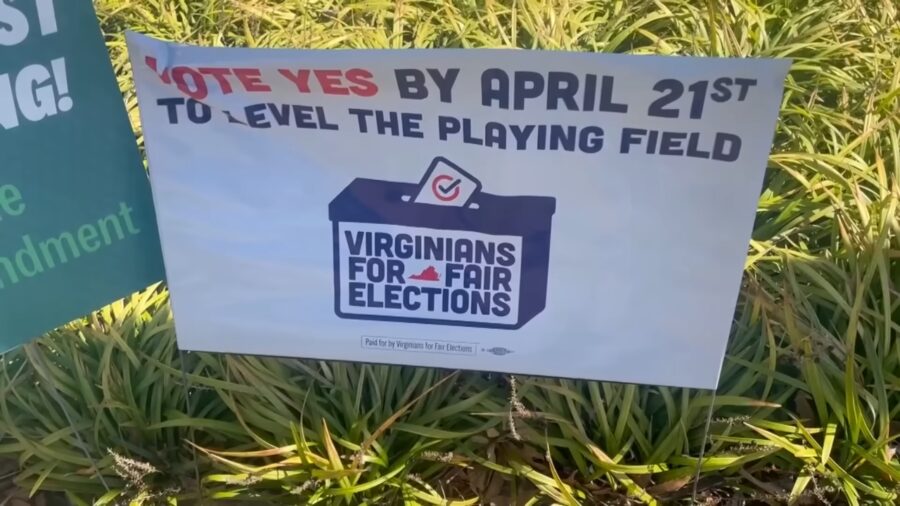

Red vs Blue battle continues. Virginia voters have approved a constitutional amendment that will allow the state’s Democratic-controlled General Assembly to redraw congressional lines ahead of the 2026 midterms, a result with consequences far beyond Richmond.
The measure passed narrowly, 51.5% to 48.6%, according to national coverage after the April 21 special election, handing Democrats a significant opening in the escalating national war over House maps.
At the center of the fight was a deceptively simple question: whether Virginia should be allowed to redraw its districts before the usual post-census cycle.
The official ballot language made clear that the authority is temporary. It lets the General Assembly act before 2031 because other states have already pursued mid-decade redistricting, and it says Virginia’s standard process, with the redistricting commission back in place, resumes after the 2030 census.
Table of Contents
ToggleA State Vote With National Stakes
In practical terms, the vote could sharply reshape Virginia’s delegation in Washington. The current congressional split is closely divided, but the newly authorized map is designed to put Democrats in position to compete for, and potentially dominate, 10 of the state’s 11 House seats.
The Washington Post reported that as many as four Republican-held districts could be transformed into Democratic-leaning terrain under the new lines.
That is why the Virginia referendum drew national money, national surrogates, and national scrutiny.
The Associated Press described the vote as part of a broader redistricting chain reaction set off by Republican mapmaking in states such as Texas, Missouri, North Carolina, and Ohio, followed by Democratic efforts to claw back ground in states where they had leverage.
Virginia was not an isolated skirmish. It was one front in a campaign to shape control of the House before a single November vote is cast.
The Fairness Argument, and the Power Argument
Supporters framed the amendment as a response to partisan mapmaking elsewhere. Critics called it exactly that: partisan mapmaking, just with a different beneficiary.
The wording approved by voters used the phrase “restore fairness,” but the political effect is not hard to read. It gives Democrats a chance to counter Republican gains produced by aggressive redistricting in other states.
The money behind the campaign underscored the stakes. The Washington Post reported that the race drew nearly $100 million, with about 95% of the money coming from nonprofit groups that do not publicly disclose their donors.
Time separately reported that the contest was flooded with dark money tied to major national interests.
The Fight Is Not Over
Virginia Election Results: Voters Pass New Redistricting Congressional Map For 2026 Midterms In Big Win For Demshttps://t.co/vb3nWhiWEk
— TIMES NOW (@TimesNow) April 22, 2026
The result was decisive enough to change the political map, but not final enough to end the legal fight.
Virginia public media reported that outstanding court challenges were left unresolved before the election and now move into a new phase, with opponents still trying to block or narrow the amendment’s effect. If the map survives, it could become one of the most consequential Democratic victories of 2026 before the general election campaign fully begins.
In that sense, Virginia delivered more than a referendum result. It delivered a blunt message about American politics in 2026: both parties now treat redistricting not as housekeeping, but as warfare by other means.