

Truck drivers participating in a new federal pilot program could pause the 14-hour work window for as long as three hours without losing that time from the period in which they are allowed to drive.
The Federal Motor Carrier Safety Administration is preparing the Split Duty Period Pilot Program for a larger 2027 rollout after completing a small pre-test during summer 2026.
The change would apply only to approved pilot participants. It does not rewrite the hours-of-service rules for every commercial driver.
The Pilot Would Pause the 14-Hour Driving Window
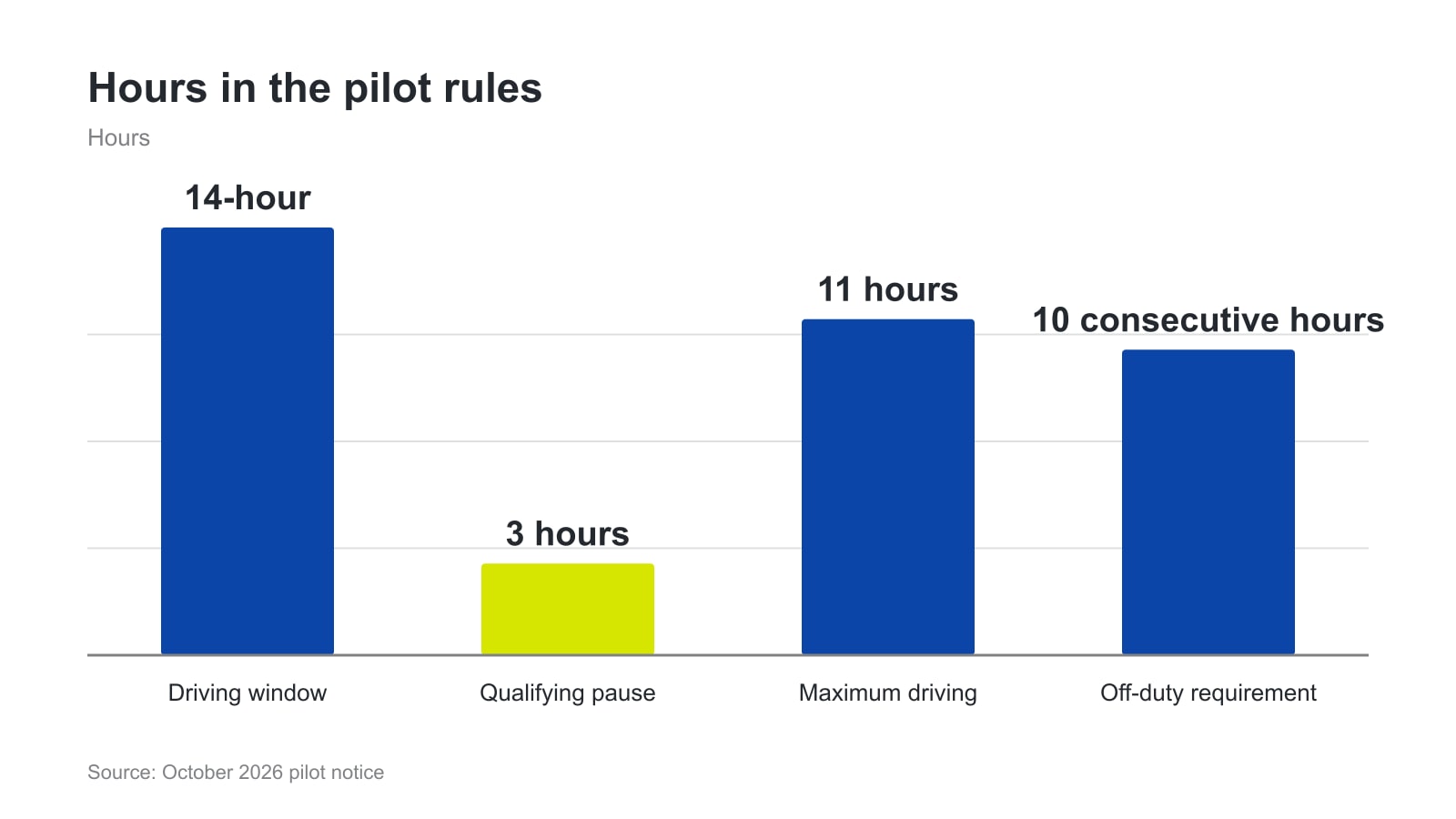
Property-carrying commercial drivers generally have a 14-consecutive-hour window after coming on duty following at least 10 consecutive hours off duty.
Once that 14-hour period ends, the driver cannot continue driving until the required off-duty period has been completed. Time spent waiting at a warehouse, sitting through congestion or taking an extra break normally continues to consume the 14-hour window.
The Split Duty Period Pilot Program changes that calculation for approved drivers. A qualifying break of between 30 minutes and three hours could be excluded from the 14-hour window.
FMCSA describes the program in its October 2026 pilot notice. The agency plans to study if the added scheduling flexibility improves driver working conditions without reducing safety.
| Current Rule | Pilot Program |
| 14-hour driving window continues running during most non-driving time | Up to 3 hours of qualifying time can pause the window |
| Maximum 11 hours of driving | Maximum 11 hours of driving remains |
| 10 consecutive hours off duty generally required before a new work period | 10-hour requirement remains |
| Applies generally to covered property-carrying drivers | Applies only to approved pilot participants |
The key point is that the pilot does not give a participating driver three additional hours behind the wheel. It extends the period in which the existing driving hours can be used.
A Driver Could Use the Pause for Several Types of Non-Driving Time
FMCSA plans to allow several types of time to qualify for the pause.
Off-duty time and sleeper berth time can qualify. On-duty time when the driver is not driving can also qualify when it occurs at a cargo pickup or delivery location.
That last category is especially relevant to detention time. A driver can arrive at a warehouse on schedule and then wait for hours while freight is loaded or unloaded.
Under the normal 14-hour rule, that delay can consume time from the driving window even though the truck is parked.
The Maximum Driving Time Would Stay at 11 Hours
A three-hour pause should not be read as permission to drive for 14 hours.
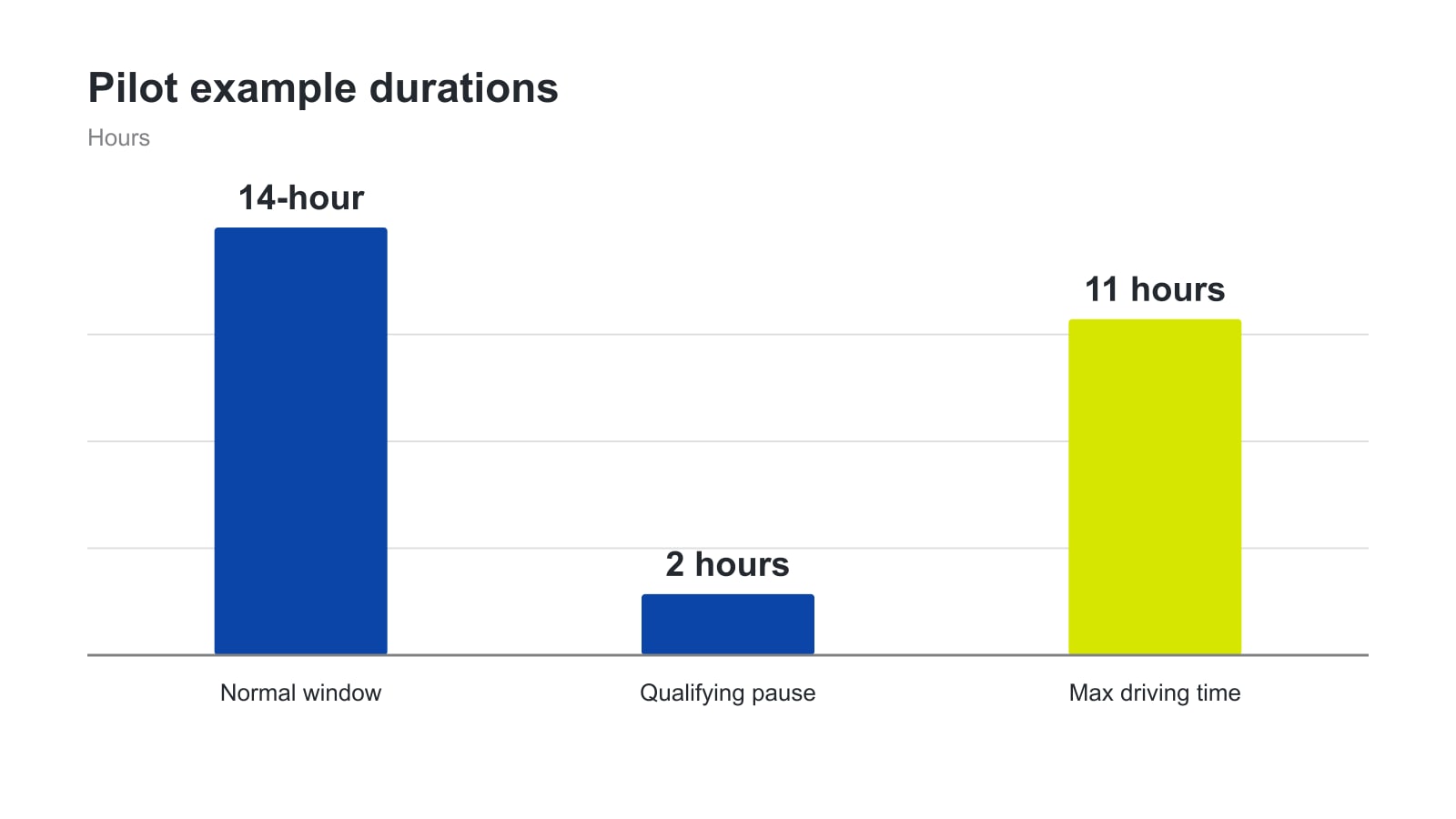
FMCSA is testing an exemption from the 14-hour window, not from the existing 11-hour driving limit. Participating property-carrying drivers would still be restricted to a maximum of 11 hours of driving after the required off-duty period.
The distinction can be shown with a simple example.
| Example | Time |
| Driver comes on duty | 6 a.m. |
| Normal 14-hour window would end | 8 p.m. |
| Qualifying pause | 2 hours |
| Pilot driving window could extend until | 10 p.m. |
| Maximum total driving time | Still 11 hours |
The pause therefore changes when the driver can use available driving hours. It does not increase the number of driving hours available during the work period.
FMCSA Wants to Study Detention Time

Long waits at loading docks are one reason the agency returned to the split-duty idea.
A driver may spend two hours waiting for cargo and then face an expiring 14-hour window later in the day. The driver loses usable road time even though those two hours were not spent driving.
The pilot would allow qualifying on-duty, non-driving time at a pickup or delivery location to pause the clock.
FMCSA also plans to monitor participating carriers, shippers and receivers for signs that the added flexibility is being used to justify longer detention rather than giving drivers more control over their schedules.
Traffic and Severe Weather Could Also Affect How Drivers Use the Pause
The agency sees other possible uses for the extra flexibility.
A driver approaching a major city during rush hour could stop rather than spending part of the remaining driving window in heavy traffic. Another driver could wait for severe weather to pass before continuing the trip.
An ordinary off-duty or sleeper berth break away from a shipper or receiver can qualify as well.
FMCSA plans to compare how drivers use each type of pause and how their fatigue and driving performance change during the study.
Nine Drivers Already Tested the Split Duty System in 2026
FMCSA completed a small pre-test before the planned larger study.
The Split Duty Period pre-test ran from May 18 through July 17, 2026. It included nine drivers from three motor carriers based in Minnesota, Wisconsin and Ohio.
Each driver participated for six weeks and received $600.
According to an August FMCSA program update, the pre-test was designed to check research procedures, data collection tools and participant requirements before the 2027 expansion.
The Full Study Is Expected to Include 256 Drivers
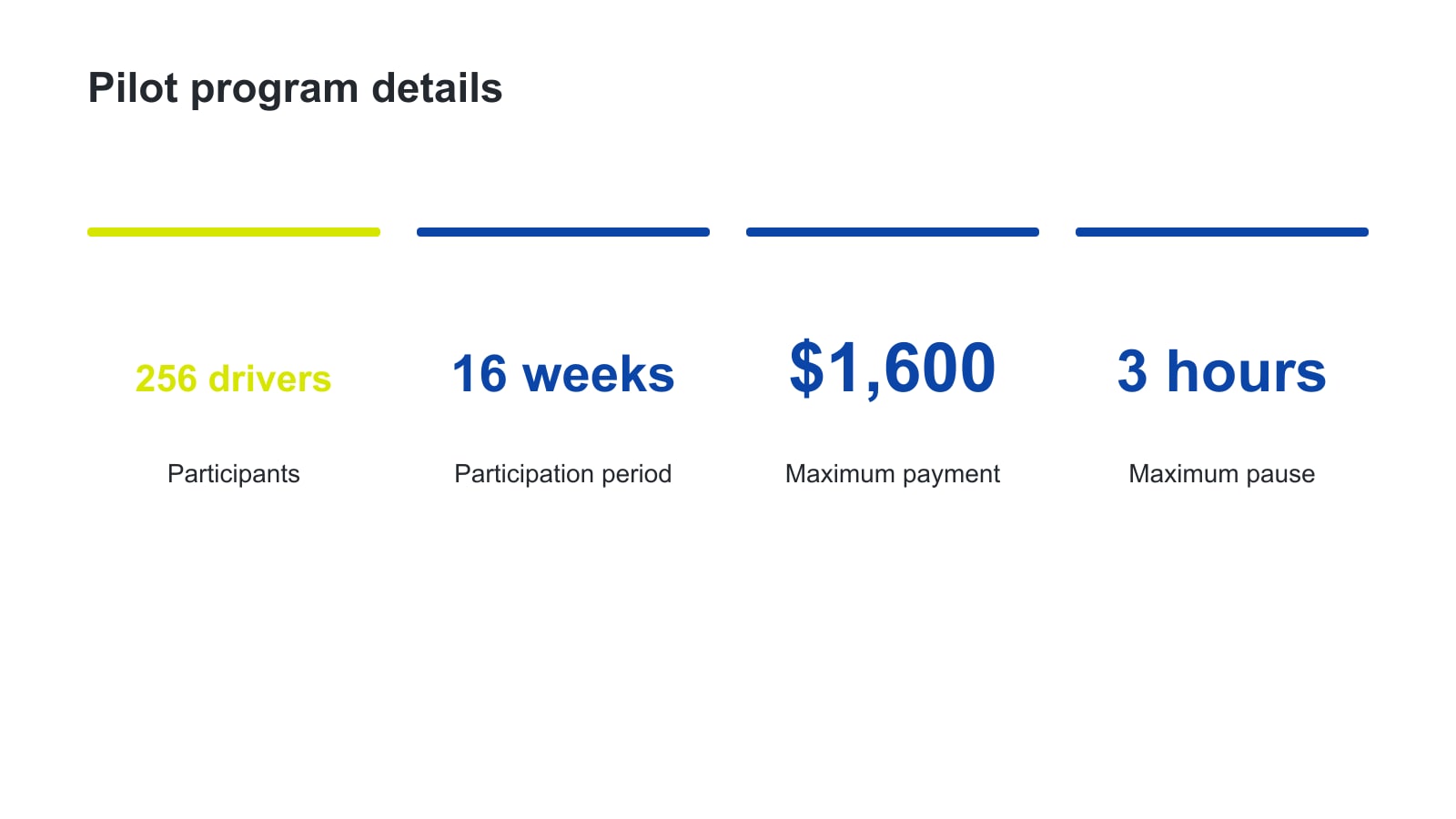
The larger Split Duty Period study is expected to involve 256 commercial motor vehicle drivers.
Each driver would participate for 16 weeks. FMCSA says participants can receive up to $1,600 for completing the required research tasks.
The agency plans to use a within-subject study design. That means researchers can compare the same driver under ordinary hours-of-service rules and under the pilot exemption rather than comparing two completely separate groups of drivers.
| Pilot Detail | Planned Study |
| Participants | 256 drivers |
| Participation period | 16 weeks |
| Maximum participant payment | $1,600 |
| Maximum qualifying pause | 3 hours |
| Current full launch target | 2027 |
Researchers Will Track Sleep, Alertness and Driving Performance
FMCSA is collecting more than electronic log data.
Participants will complete surveys and psychomotor vigilance testing, which researchers use to measure alertness and reaction performance. Drivers will also provide subjective sleepiness ratings.
A wrist actigraphy device will record information related to sleep and activity. Researchers will collect records of duty status and data from a non-intrusive telematics device as well.
The purpose is to compare fatigue, schedules and driving performance before and during use of the split-duty exemption.

Not Every Driver or Carrier Will Qualify
FMCSA has set safety criteria for companies that want to join the study.
A participating carrier must have the required interstate operating authority and applicable financial responsibility. It cannot have an unsatisfactory safety rating or be classified as a high or moderate risk carrier under the federal criteria cited by FMCSA.
The carrier also cannot have FMCSA enforcement actions within the previous three years. Driver and vehicle out-of-service rates must remain at or below the national averages specified by the agency.
- They must hold a valid commercial drivers license.
- They must maintain a valid medical certificate.
- They must work for an approved carrier or qualify as an owner-operator.
- They must agree to the study procedures and data collection.
- They cannot have a disqualifying recent driving history under the criteria set by FMCSA.
FMCSA also excludes drivers identified in the Drug and Alcohol Clearinghouse under the pilot eligibility policy described in the October notice.
Electronic Logs Will Be Central to the Study
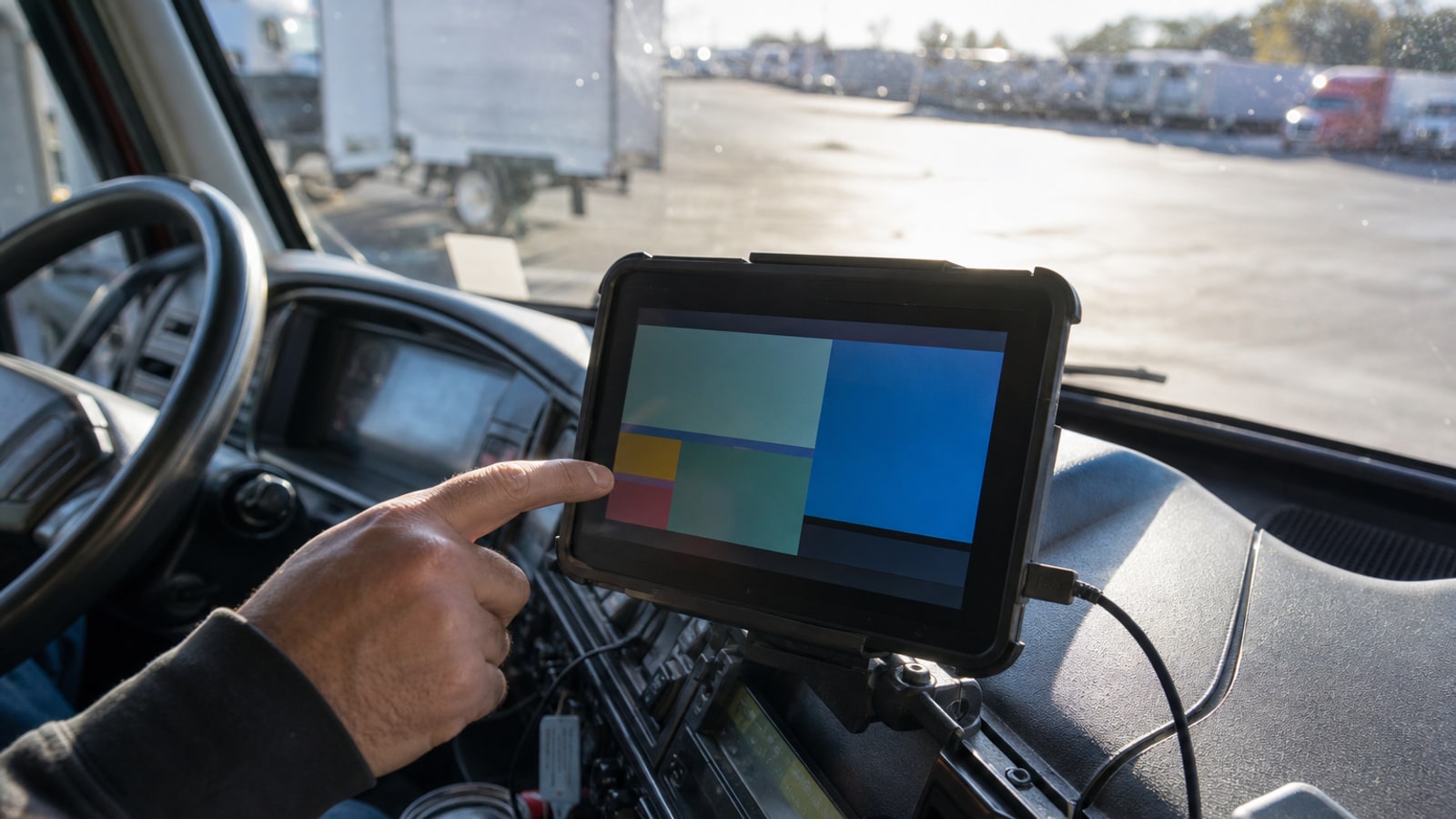
Researchers need accurate duty records to determine when a driver worked, drove, rested and used the pilot exemption.
Electronic logging devices already record hours-of-service information for most covered drivers who maintain records of duty status. The pilot adds another reason for FMCSA to examine those records closely.
Our earlier report on digital logging rules for truck drivers explains how electronic records document driving time, duty status and potential violations during roadside inspections.
Pilot participants will also carry documentation identifying them as approved drivers so federal and state enforcement officers can distinguish the exemption from an ordinary hours-of-service violation.
FMCSA Tried to Create a Similar Pause Years Ago
The idea predates the current pilot.
In 2019, FMCSA proposed allowing a single off-duty period of 30 minutes to three consecutive hours to pause the 14-hour window. The agency ultimately left that provision out of its 2020 final hours-of-service rule.
Some commenters were concerned that carriers, shippers or receivers could pressure drivers to use the pause for company scheduling needs rather than rest.
FMCSA proposed a related pilot in September 2020 but never launched it after agency priorities changed.
The current study returns to the same central question with additional monitoring of detention time and possible pressure from companies involved in loading and delivery.
Fatigue Remains the Main Safety Question

Hours-of-service rules exist to limit how long drivers can remain behind the wheel and on duty without sufficient rest.
FMCSA says fatigue is associated with greater risk of safety-critical events. The October pilot notice also cites research indicating fatigue may be involved in more than 30% of fatal commercial motor vehicle crashes, although estimates vary depending on how fatigue is identified after a collision.
The agency therefore needs evidence that pausing the 14-hour window does not simply extend the span of a workday in a way that leaves drivers more tired when they return to the road.
The pilot will compare sleepiness, reaction performance, sleep data, driving behavior and duty records before FMCSA considers any wider regulatory change.
Hours-of-Service Records Can Become Important After a Truck Crash
Driver logs can become part of a crash investigation when fatigue or excessive working time is suspected.
Investigators may review electronic log data, dispatch records, delivery times, vehicle information and communication between the carrier and driver to reconstruct the period before a collision.
People injured in a serious commercial vehicle collision may also seek an experienced truck accident attorney to review those records and determine how federal driving limits relate to the individual crash.
A violation of an hours-of-service rule does not automatically establish the cause of a collision. The records still need to be evaluated alongside vehicle evidence, road conditions, driver actions and the sequence of events.
The Pilot Arrives During Several Other Federal Trucking Changes
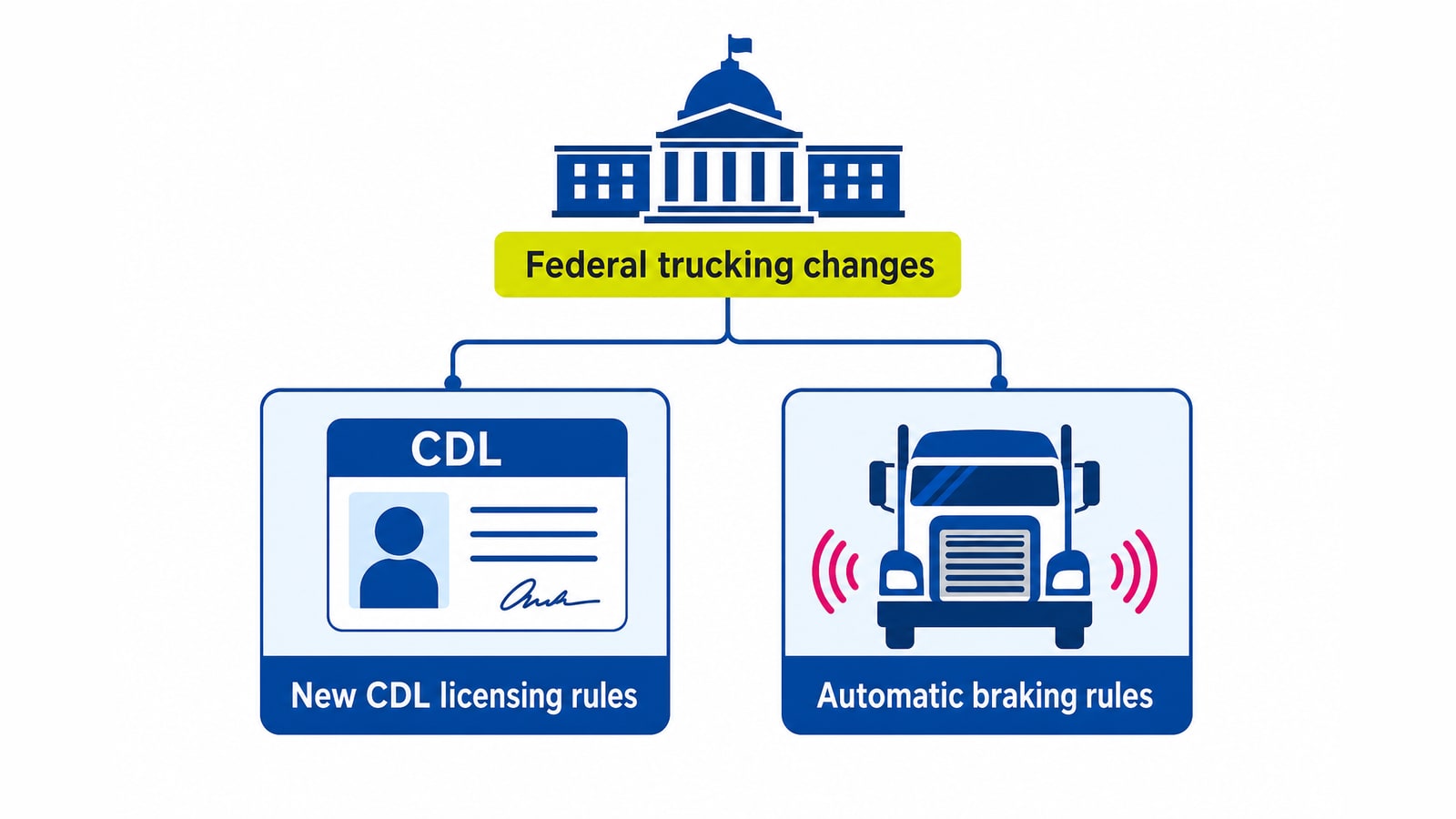
Federal regulators are reviewing several rules that affect commercial drivers and large trucks.
FMCSA has also changed licensing requirements for some non-domiciled commercial drivers. Our report on the new CDL licensing rules explains the revised federal eligibility requirements and the court challenge surrounding them.
Vehicle technology is moving through a separate rulemaking process. We recently covered the proposed automatic braking rules for heavy trucks, which focus on collision avoidance systems rather than driver schedules.
The Split Duty Period program is different from both. FMCSA is collecting data before deciding if the hours-of-service framework should change for drivers outside the study.
The 30-Minute Break Rule Would Still Apply
The pilot does not erase other parts of federal hours-of-service regulation.
Under the current property-carrying rules, a driver generally needs a break of at least 30 consecutive minutes after eight cumulative hours of driving without an interruption of at least 30 minutes.
FMCSA allows certain non-driving periods to satisfy that requirement under the current rules.
The split-duty pilot adds a separate concept. Its qualifying pause extends the 14-hour window by the length of the pause, subject to the program conditions.
Weekly Driving Limits Would Not Disappear
Drivers in the pilot would still operate within federal cumulative limits.
Property-carrying drivers generally cannot drive after 60 hours on duty in seven consecutive days or 70 hours in eight consecutive days, depending on the carrier schedule.
The FMCSA hours-of-service summary also explains the 11-hour driving limit, 14-hour window, 30-minute break rule and the conditions for restarting the weekly calculation.
A three-hour pause therefore does not create three new weekly work hours every day without restriction. The remaining hours-of-service limits continue to apply.
FMCSA Is Asking for More Public Comment Before the Larger Study

The latest step came through a Federal Register notice published on October 6, 2026.
FMCSA is seeking approval for the information collection needed to run the research study and is accepting public comments on the proposed collection.
The agency wants feedback on the need for the data, the estimated burden placed on participants and ways to improve the usefulness of the information collected.
The notice uses docket FMCSA-2026-2081. It calls for a 60-day public comment period before FMCSA moves to the next stage of the information collection approval process.
The Pilot Does Not Yet Change the Rules for Most Drivers
The most important limit on the new program is its size.
FMCSA expects 256 drivers to participate in the Split Duty Period study. Drivers outside the approved group remain subject to the normal federal hours-of-service rules.
The planned 2027 study is designed to answer a specific question. Regulators want to know if excluding as much as three hours of qualifying non-driving time from the 14-hour window gives drivers useful scheduling flexibility without producing worse fatigue or safety outcomes.
Only after collecting and analyzing that evidence could FMCSA use the findings to support a wider regulatory decision. For now, the three-hour pause remains a controlled federal pilot rather than a new nationwide workday rule for truck drivers.