
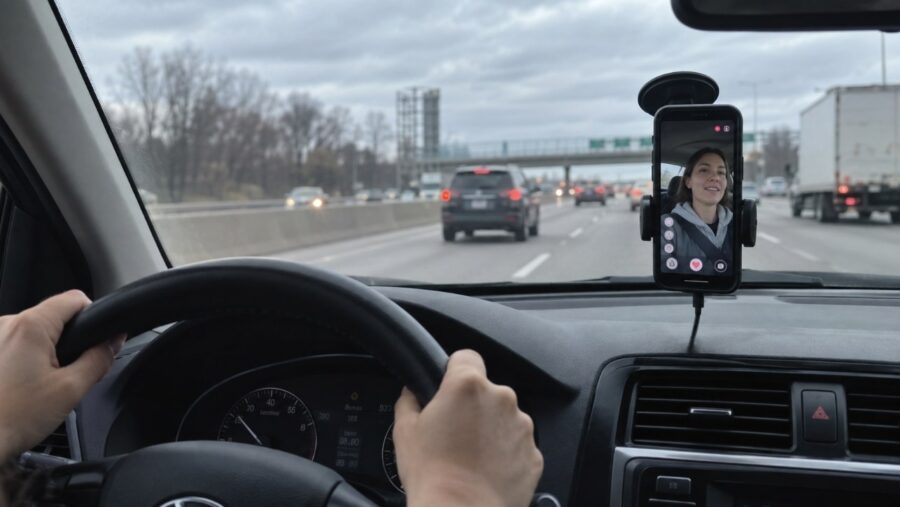

Virginia drivers now face a specific legal ban on live streaming from behind the wheel.
House Bill 320 took effect on July 1, 2026 and added a new section to the Virginia Code aimed directly at drivers who start, participate in, interact with, or keep a live stream running while driving on Commonwealth highways.
The law targets real-time audio and video shared through social media platforms. A first conviction carries a fine of up to $500. Repeat convictions can lead to temporary driver’s license suspensions, and drivers involved in a crash during a violation can face another fine of up to $500.
Virginia already restricted handheld phone use while driving. The new law addresses a different form of distraction that has grown alongside TikTok Live, Instagram Live, YouTube Live and other forms of real-time social media broadcasting.
Virginia Now Has a Specific Law for Live Streaming Behind the Wheel
The new rule appears in Virginia Code § 46.2-818.3. It makes it unlawful for a person driving a moving vehicle on Virginia highways to initiate or participate in a live stream or manipulate an electronic device in order to interact with one.
The law also prohibits manipulating a device to enable or maintain live-streaming functions while driving.
The safety concern is easy to see. Running a live broadcast can require a driver to look at a screen, adjust a camera, read comments, respond to viewers or change settings. A crash that follows can leave drivers, passengers, cyclists or pedestrians with severe injuries.
When head trauma is involved, a Traumatic Brain Injury Attorney may become part of the legal process as injured people and their families deal with questions about fault, insurance coverage and compensation.
Federal safety data already show how serious driver distraction remains. The National Highway Traffic Safety Administration reported that 3,208 people were killed and more than 315,000 were injured in crashes involving distracted drivers during 2024.
We have also looked at the wider problem in our report on distracted driving and traffic deaths. Live streaming adds another screen-based activity to a list that already includes texting, social media use, navigation and other phone interactions.
The Law Took Effect on July 1, 2026
HB 320 was introduced during the 2026 Virginia General Assembly session by Delegate Joshua Cole. The final legislation was approved on April 22, 2026 and became Chapter 1047 of the Acts of Assembly.
Virginia laws passed during a regular General Assembly session generally take effect on July 1 unless lawmakers provide another date. HB 320 contained no later effective date, so the live-streaming restriction became law on July 1, 2026.
The Virginia Division of Legislative Services included the new restriction in its 2026 summary of changes to state law.
What Counts as Live Streaming Under the New Law
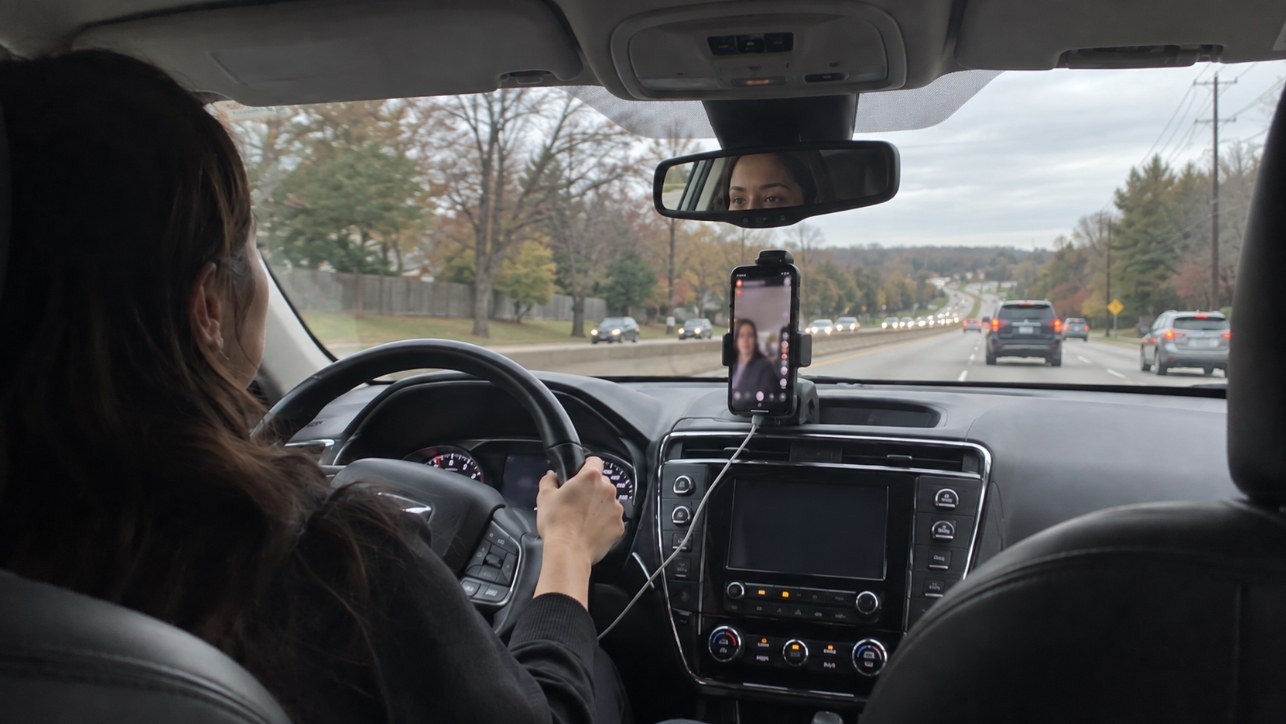
Virginia defines a live stream for this law as real-time audio or video transmission to a social media platform.
The restriction therefore focuses on real-time social broadcasting rather than every form of video or audio running inside a vehicle.
The law covers actions such as starting a live broadcast, participating in one, manipulating a device to interact with a stream, or using a device to keep a live stream functioning while driving.
A phone does not necessarily have to be held in the driver’s hand for the new rule to become relevant. A mounted phone or another electronic device can still fall under the law if the driver manipulates it to enable, maintain or interact with a live stream.
That distinction separates the new law from Virginia’s existing handheld-device rule, which has prohibited drivers from holding a phone or other handheld personal communications device while driving a moving vehicle since 2021.
Video Calls Are Treated Differently
Virginia did not define every real-time video connection as a social media live stream.
Applications, services and websites whose primary function is audio or video conferencing or calling are excluded from the definition of a social media platform under the new section.
That exclusion does not give drivers permission to handle a phone freely during a video call. Virginia’s separate handheld device law still restricts holding a personal communications device while driving.
The difference is important because the new 2026 section specifically targets social media live streaming rather than rewriting every existing rule covering phones and electronic devices in vehicles.
View this post on Instagram
Penalties Increase After Repeat Convictions
Virginia created a penalty structure that becomes more serious after repeat violations.
| Violation | Penalty Under the 2026 Law |
| First conviction | Fine of up to $500 |
| Second conviction | 30-day driver’s license suspension, in addition to other penalties provided by law |
| Third or later conviction | 90-day driver’s license suspension, in addition to other penalties provided by law |
| Violation involving a crash | Additional fine of up to $500 may be imposed |
A court can issue a restricted license during a suspension when it determines that doing so is appropriate under Virginia law.
Drivers without a Virginia license, including nonresidents, can also be ordered not to drive in the Commonwealth for a period corresponding to the applicable suspension.
Police Cannot Stop a Vehicle Solely for the Streaming Violation
One part of HB 320 significantly limits how the new offense is enforced.
The law specifically states that a law enforcement officer cannot stop a motor vehicle solely for a violation of the live-streaming section.
Evidence obtained through a stop made in violation of that restriction is not admissible in a trial, hearing or other proceeding, including evidence obtained with the driver’s consent after the improper stop.
The restriction means the live-streaming offense does not provide independent grounds for a traffic stop. A violation can still become relevant when police lawfully stop a vehicle for another reason or investigate a crash.
Emergency Reporting Is Exempt
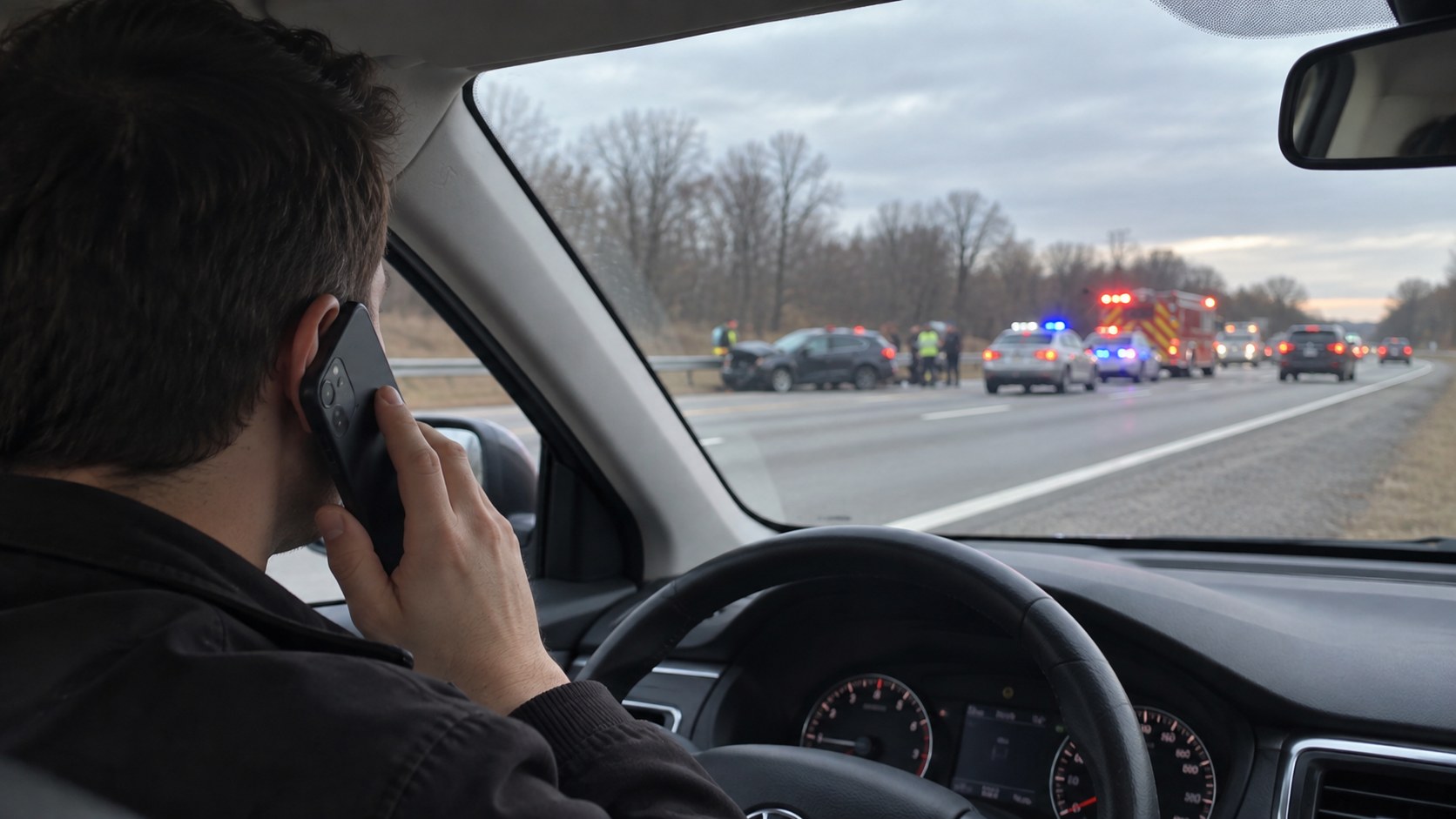
Virginia included a limited exception for drivers using live streaming to report an emergency or the commission of a crime.
The law also says it does not authorize warrantless searches of electronic devices.
Regular dashboard cameras remain permitted when they are not being used for live streaming. Manufacturer and fleet safety systems that record video without transmitting it in real time are also outside the ban.
Those exceptions keep the law focused on interactive and real-time social media broadcasting rather than ordinary vehicle recording systems.
Virginia Already Had a Broader Distracted Driving Law
The Commonwealth has restricted handheld phone use since January 1, 2021. Virginia DMV states that drivers generally cannot hold a cell phone or another wireless communications device while driving, apart from specified exceptions such as emergencies or situations in which the vehicle is lawfully parked or stopped.
Live streaming created a different issue because a device can sit in a dashboard mount and still demand considerable attention from the driver.
A person broadcasting to an audience may look at comments, watch the screen, respond to viewers or adjust the position of the device without holding it continuously. HB 320 gives Virginia a separate statute aimed directly at that behavior.
The Virginia DMV identifies visual, manual and cognitive distraction as the three main forms of distracted driving. Live streaming can involve all three when a driver looks at the screen, operates the device and divides attention between the road and an online audience.
Social Media Has Changed the Type of Distraction Drivers Face
View this post on Instagram
Phone distraction was once discussed mainly in terms of calls and text messages. Modern social platforms give drivers many more ways to interact with a screen.
Livestreaming is particularly different from playing music or leaving navigation running because the broadcast can involve continuous interaction. Viewers respond in real time. Comments appear on screen. Creators may speak directly to an audience and monitor reactions as they drive.
Virginia’s new law treats that activity as its own driving offense instead of relying entirely on older rules written around handheld phones and text messages.
Vehicle technology is also changing how road safety rules are written. Federal regulators have expanded their focus on driver-assistance systems and crash prevention, including recent changes we covered in our report on new pedestrian safety testing. State legislatures are addressing another side of the problem by updating rules around the devices drivers bring into the vehicle.
Last Words
Drivers on Virginia roads should not start, operate, participate in or interact with a social media live stream from behind the wheel.
A mounted phone does not automatically place live streaming outside the law. The new statute covers manipulation of an electronic device used to enable, maintain or interact with a stream.
Emergency reporting remains exempt, standard dashboard cameras remain legal when they are not live streaming, and ordinary video calling services are excluded from the statute’s social media definition. Separate Virginia phone-use laws can still apply to device handling during a call.
HB 320 gives Virginia a specific rule for a behavior that barely existed when many older distracted-driving laws were written. As real-time broadcasting becomes easier from almost any phone, the state’s 2026 law draws a clear legal line around using it from the driver’s seat.