
A passenger car traveling around 40 mph strikes the broad side of a tractor-trailer. With no barrier below the trailer, the car slides underneath and the trailer enters the occupant compartment. Add a properly engineered side guard and the car’s front structure absorbs the impact, allowing its airbags, seat belts, and crumple zones to perform their intended jobs.
A new crash demonstration in Raleigh, North Carolina, placed both outcomes in public view. Safety advocates say the results strengthen the case for mandatory side underride guards.
Federal regulators still face difficult questions about guard performance, trailer design, operating costs, and the number of lives a national standard could save.
What Happened During the New Crash Test?
The August 11 Raleigh crash demonstration formed part of the 2026 Southeast Commercial Motor Vehicle Safety Summit. AnnaLeah & Mary for Truck Safety arranged the tests with crash reconstruction engineer Aaron Kiefer, Collision Safety Consulting, and a volunteer crew.
One passenger car struck a guarded trailer at 39 mph. Its windshield cracked, while the trailer remained outside the occupant survival space.
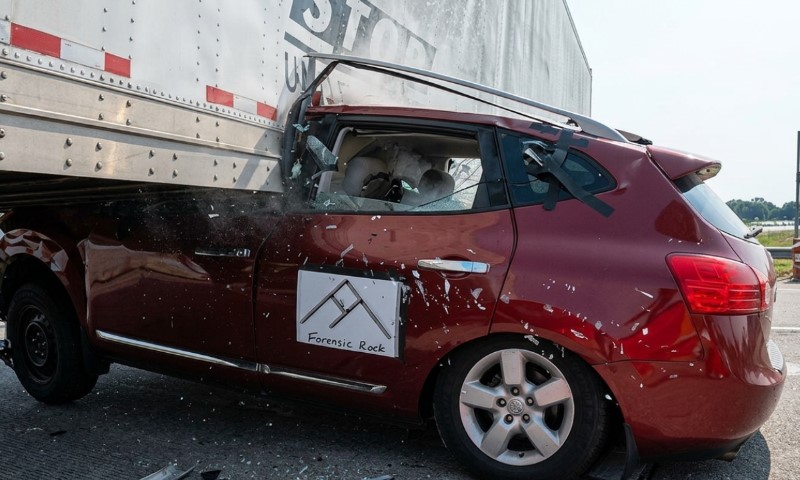
Another car hit an unguarded trailer at 40 mph and traveled beneath it. Organizers concluded that a driver and front-seat passenger would probably have died in the unguarded collision.
NHTSA Administrator Jonathan Morrison, Federal Motor Carrier Safety Administration representatives, members of Congress, highway patrol officials, and trucking industry participants attended the summit, according to the official event record.
The demonstration carried no status as a federal compliance test. One guarded impact cannot establish how a device performs at every angle, speed, trailer configuration, or loading condition. Its visual message remained difficult to overlook.
Why Side Underride Crashes Are So Dangerous
A typical semitrailer floor sits above the hood, bumper, and much of the front crash structure of a passenger car. During an underride collision, the trailer can pass over components engineered to manage impact energy. Its lower edge may then enter the windshield or roof area.
Seat belts offer limited help once the survival space collapses. Airbags may deploy, although the strongest part of the impact can occur above the sensors and crumple zone.
People injured in an Atlanta-area underride crash may also face complicated questions about evidence, insurance coverage, and legal responsibility. Visit the website today for information about truck accident claims under Georgia law.
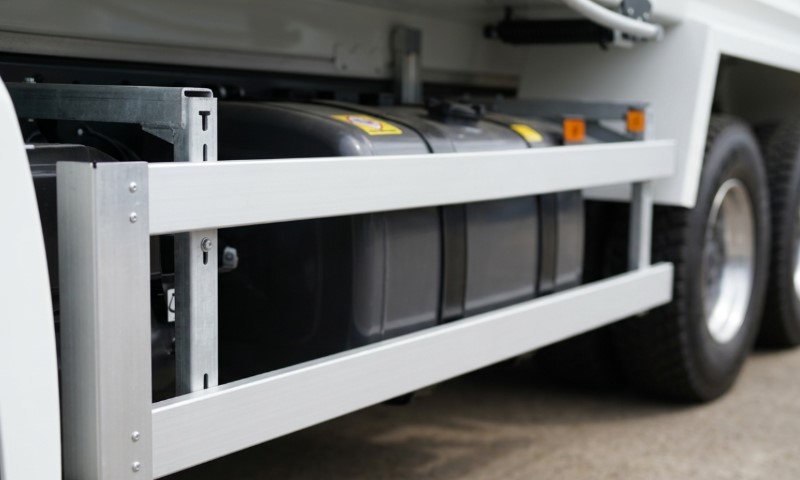
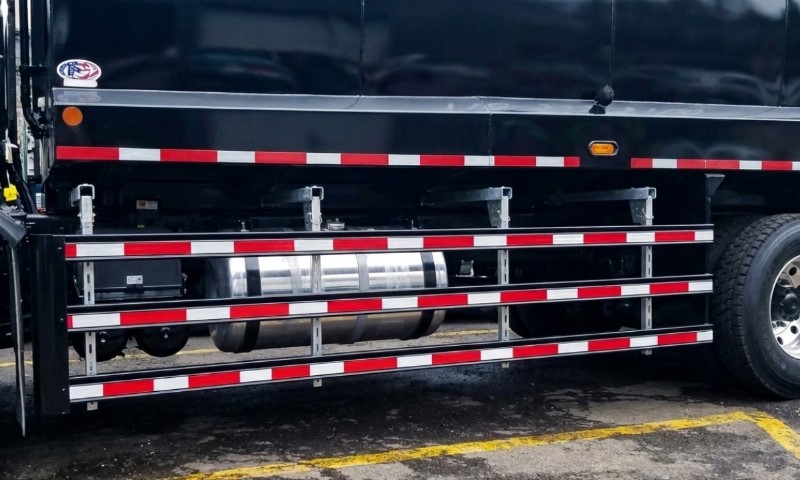
A structural side underride guard closes much of the open space between the trailer’s landing gear and rear wheels. It gives the car a lower surface to strike, helping redirect crash forces into the vehicle’s front structure.
Aerodynamic side skirts perform a different job. Their lightweight panels reduce drag and fuel use. A crash-rated guard requires enough strength, suitable attachment points, and controlled deformation to resist a car’s momentum.
Earlier Testing Already Showed Guards Can Work
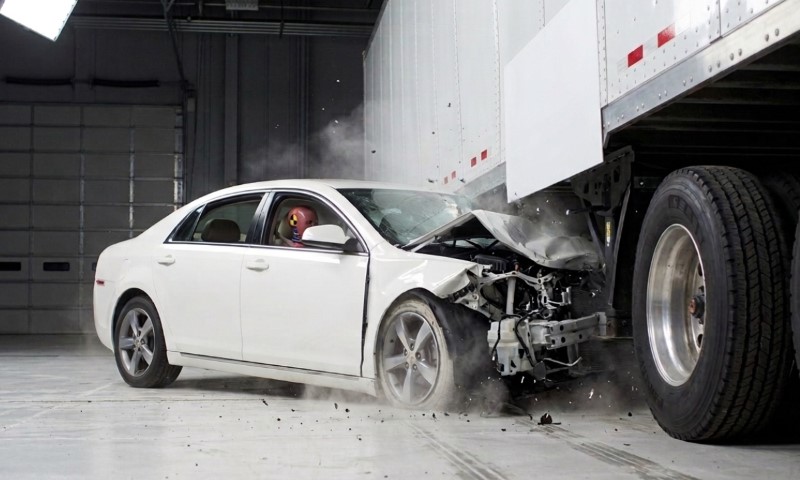
The latest demonstration repeated a lesson seen nearly a decade earlier. During IIHS’s 2017 test, a Chevrolet Malibu struck the center of a 53-foot semitrailer equipped with an AngelWing guard at 40 mph.
The guard bent and stopped the car from sliding beneath the trailer. Dummy measurements indicated a low probability of injury in a comparable collision. IIHS also noted that an impact at 40 mph carries about 30 percent more energy than one at 35 mph.
An earlier unguarded test produced a grimly different image: the Malibu became lodged beneath the trailer with part of its roof torn away.
Federal Rules Still Leave the Sides Exposed
Federal Motor Vehicle Safety Standards require rear underride protection on many trailers and semitrailers weighing more than 10,000 pounds. NHTSA’s federal rear-guard rule, issued in 2022, strengthened performance requirements for new equipment.
Side protection remains optional at the federal level.
The National Transportation Safety Board has urged NHTSA to require side underride protection on newly manufactured trailers over 10,000 pounds since 2014. In its later side-guard response, the NTSB estimated that around 89 passenger-vehicle occupants die and 409 suffer serious injuries in trailer side-underride crashes annually.
Researchers warn that the real total may be higher. Police reports frequently omit underride details, and federal databases can classify a collision by its initial impact without fully recording how far the smaller vehicle traveled beneath the truck.
Two Economic Analyses Reach Opposite Conclusions
Debate over a mandate increasingly centers on assumptions rather than the basic mechanics of a guarded crash.
NHTSA’s 2023 regulatory analysis estimated that side guards could prevent 17.2 deaths and 69 serious injuries annually. Hardware and labor were estimated at $2,990 per trailer, with each guard adding roughly 450 to 800 pounds. The agency calculated costs at six to eight times the corresponding safety benefits.
A peer-reviewed 2026 cost-benefit study by Eric Hein of the Institute for Safer Trucking reached a positive economic result under every modeled scenario.
| Factor | NHTSA analysis | 2026 independent study |
| Estimated annual deaths | About 89 | About 300 |
| Serious injuries | About 409 | About 400 |
| Modeled reductions | 17.2 deaths, 69 injuries | 50 to 150 of each |
| Economic finding | Costs exceed benefits | Net benefits of $137 million to $2.8 billion |
Several choices explain the gap. NHTSA focused heavily on passenger-car impacts at or below 40 mph and assumed no benefit beyond the tested speed.
The NTSB argued that a guard effective at 40 mph could still reduce injury severity during faster collisions. Advocates also want calculations to include pedestrians, cyclists, motorcyclists, legal costs, and fuel savings from guards integrated with aerodynamic skirts.
Why Trucking Groups Remain Concerned
Trucking and trailer-manufacturing groups raise practical objections that a final standard would need to address.
Side guards can reduce ground clearance at humped railroad crossings and steep loading docks. Added mass can reduce available payload and increase fuel consumption.
Trailer frames may require reinforcement, while intermodal chassis, tankers, flatbeds, and specialized equipment present different engineering problems.
The Truck Trailer Manufacturers Association’s formal docket comment questioned whether available designs could support a universal requirement across varied trailer operations.
Such concerns favor performance-based standards with carefully defined exemptions, durability testing, and operational trials. They also create a strong case for testing several designs across offset impacts, oblique angles, loaded trailers, poor road surfaces, and speeds above 40 mph.
Congress Has Another Side-Guard Bill
Lawmakers introduced the Stop Underrides Act 2.0 in February 2026. The proposal would direct NHTSA to complete rulemaking for side guards on new commercial vehicles, improve crash-data collection, renew the federal underride advisory committee, and commission further research.
Sponsors include Senators Kirsten Gillibrand and Ben Ray Luján, along with Representatives Steve Cohen, Mark DeSaulnier, and Deborah Ross. Ross described the proposal’s main provisions in the February announcement.
The House bill record lists H.R. 7354 as introduced and referred to the Committee on Transportation and Infrastructure. Previous versions appeared in 2017, 2019, and 2021 without producing a federal side-guard mandate.
A Powerful Test, Followed by Harder Questions
The Raleigh crashes showed how a barrier below a trailer can preserve a car’s survival space at roughly 40 mph. Earlier independent testing supports the same engineering principle.
A national mandate still requires broader performance data, workable standards for varied trailers, and credible economic assumptions. The new test gives regulators another reason to pursue those answers with urgency. For occupants facing the open side of a semitrailer, the distance between further research and federal action can be measured in inches.