
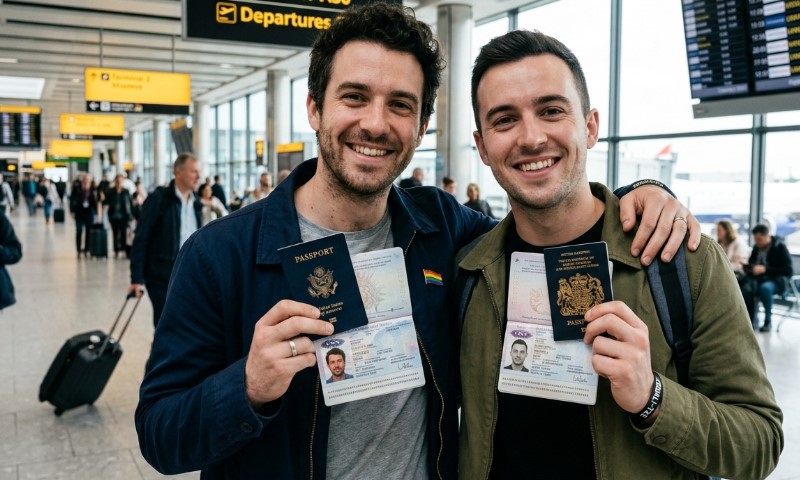

Gallup estimated that 9% of U.S. adults identified as LGBTQ+ in 2025. That matched the record recorded in 2024 and was more than double the 3.5% measured in 2012.
Combined telephone interviews with more than 13,000 U.S. adults supported the 2025 estimate.
LGBTQ+ identification remained near 7% between 2021 and 2023, then rose to 9%.
So, you can see that LGBTQ+ travel has become a major commercial category with clear demand for specialized planning, hospitality, event, and destination services.
General travel platforms provide prices and availability, but they rarely offer detailed guidance for same-sex couples, transgender travelers, LGBTQ+ families, or solo travelers.
Such gaps create opportunities for specialists who combine community knowledge with destination research, supplier screening, and dependable client support.
Let’s talk about it.
Business Opportunities in LGBTQ+ Travel
Entrepreneurs familiar with LGBTQ+ experiences can turn that knowledge into specialized travel services.
A Lower-Barrier Entry Model
A home-based travel advisory business avoids the cost of a storefront, physical inventory, hotel ownership, or independent tour operations.
New advisors who want training, supplier access, booking tools, and ongoing support can build their business through a host agency such as Yeti Travel, which offers a home-based model with self-paced training.
A host agency may provide:
- Booking technology
- Supplier relationships
- Training and mentorship
- Accreditation support
- Commission processing
- Errors-and-omissions insurance options
- Marketing resources
- Professional advisor networks
New advisors can focus on client acquisition, destination research, supplier screening, and service development.
An advisor might focus on LGBTQ+ couples planning honeymoons, solo travelers visiting Europe, or Pride groups attending major events.
Online consultations, email marketing, social platforms, partnerships, and referrals make it possible to reach clients across multiple states.
Lived Experience as a Competitive Advantage
Community familiarity can help an advisor:
- Anticipate concerns clients may hesitate to mention.
- Communicate without asking clients to explain basic identity issues.
- Judge if inclusion claims appear credible.
- Build community referral networks.
- Create credible marketing.
- Design respectful intake and communication processes.
Professional research and reliable client care are still essential. Personal experience provides a starting point, not a complete qualification.
Businesses can specialize by age, identity, relationship status, family structure, budget, destination, or travel style.
Potential Travel Business Niches

Possible specialties include:
| Niche | Focus |
| LGBTQ+ honeymoons and destination weddings | Wedding and honeymoon planning |
| Romantic and anniversary trips | Couples’ getaways |
| Solo travel | Personalized planning and safety |
| Group tours and cruises | Organized group vacations |
| Pride, nightlife, and festival trips | Event-based travel |
| Luxury and wellness vacations | Premium and wellness trips |
| Adventure travel | Active experiences |
| LGBTQ+ cultural and historical tours | Community history and culture |
| Transgender and nonbinary travel | Safety, documents, and inclusive suppliers |
| LGBTQ+ family vacations | Inclusive family trips |
| Multigenerational trips | Travel for mixed-age groups |
| Accessible travel | Mobility and accessibility needs |
| Sustainable travel | Eco-conscious trips |
| Complex destinations | Travel to restrictive locations |
| Relocation scouting and extended stays | Long stays and relocation research |
Couples represented 40.6% of global traveler-type spending, supporting wedding, honeymoon, anniversary, and romantic travel services.
Solo trips accounted for 51.8% of North American revenue by tour type, supporting personalized itineraries, safety research, accommodation screening, and transportation planning.
Adults ages 25 to 45 generated the largest North American revenue share in 2024.
Popular interests within that group include cultural tours, historical travel, adventure trips, wellness retreats, local activities, and environmentally responsible options.
Revenue Opportunities
Possible income sources include:
- Supplier commissions
- Consultation fees
- Planning fees
- Custom itinerary fees
- Group-trip management fees
- Destination wedding coordination
- Cruise and resort packages
- Safety research
- Affiliate partnerships
- Community travel events
- Workshops
- Destination resources
- Membership programs
- Subscription products
- Digital travel products
Advisors therefore need to offer value that booking platforms cannot provide, including:
- Supplier screening
- Destination-specific safety advice
- Personalized recommendations
- Complex itinerary coordination
- Support during disruptions
- Community-specific knowledge
- Supplier advocacy
- Privacy-conscious communication
Travel agencies and advisors still represent a separate booking channel.
Moderate-budget travel was the largest budget category in North America during 2024, showing that opportunity is not limited to luxury trips.
A specialist brand should solve a specific problem for a defined LGBTQ+ customer group.
Economic Weight of LGBTQ+ Tourism
View this post on Instagram
Global LGBTQ+ tourism generated an estimated $296.8 billion in 2023.
Market value is projected to reach approximately $634.9 billion by 2033, equal to a compound annual growth rate of 7.9% between 2024 and 2033.
Several segments accounted for large shares of spending in 2023:
- Couples represented 40.6% of the traveler-type segment.
- Nightlife and partying represented 38.2% of the purpose-of-travel segment.
- Hotels and resorts represented 39.2% of the accommodation segment.
Such figures support opportunities in honeymoons, destination weddings, anniversary trips, nightlife packages, event travel, hotel partnerships, and resort bookings.
North America generated an estimated $119.91 billion in LGBTQ+ tourism revenue in 2023, equal to 40.4% of the global market under one market-sizing method.
A separate estimate valued the North American market at:
- $108.33 billion in 2024
- $114.83 billion in 2025
- $170.53 billion by 2030
Projected annual growth for the region is 8.2% between 2025 and 2030.
Differences between estimates may result from varying definitions, geographic coverage, datasets, and revenue categories. Both calculations point to a large market with strong growth potential.
United States travelers accounted for 82.3% of North American LGBTQ+ tourism value in 2024.
Europe and North America together are estimated to generate approximately 65% of global LGBTQ+ tourism spending.
Why LGBTQ+ Travel Is Still Underserved

LGBTQ+ travelers often need information that standard booking platforms do not provide.
Safety Shapes Purchasing Decisions
Planning may require research into:
- Laws affecting same-sex relationships or gender expression
- Social attitudes toward LGBTQ+ visitors
- Risks linked to public affection
- Hotel treatment of same-sex couples
- Identification and documentation issues
- Access to affirming medical care
- Safe neighborhoods and nightlife districts
- Reliable guides and transportation providers
Different travelers face different risks. Same-sex couples may worry about hotel treatment or public affection.
Transgender travelers may need information about identification, airport screening, medication, restrooms, and local laws. LGBTQ+ families may seek proof that hotels, guides, and attractions will treat them respectfully.
Solo travelers may need detailed advice about neighborhoods, transportation, emergency planning, and local support.
Conditions can vary within the same country or city. A resort may provide inclusive service while nearby areas present greater risks. Accurate planning must consider neighborhoods, suppliers, local laws, and recent traveler reports.
LGBTQ-Friendly Marketing Is Not Always Enough

A rainbow logo does not prove that a hotel, cruise company, guide, or destination can meet community needs.
Travelers may want to know:
- Have staff received inclusion training?
- Will same-sex couples receive equal treatment?
- Will transgender and nonbinary guests be treated respectfully?
- Has the property hosted LGBTQ+ weddings or family trips?
- Is the surrounding area safe?
- Have local suppliers been reviewed?
Hotels and resorts account for 39.2% of the global accommodation segment, making reliable inclusion within traditional hospitality commercially important.
Inclusive branding can also disappear outside Pride season. Specialist advisors can identify suppliers that support LGBTQ+ guests throughout the year.
Trust Creates Demand for Specialists
Solo travel generated 51.8% of North American LGBTQ+ tourism revenue in 2024, making it the largest tour-type category in the region.
Around 50% of U.S. LGBTQ+ survey respondents reported traveling alone in 2022, compared with 33% who traveled with a partner.
Solo travelers may pay for:
- Personalized accommodation advice
- LGBTQ+-friendly dining and entertainment
- Custom itineraries
- Safety guidance
- Guided activities
- Local support contacts
Global data identifies couples as the largest traveler group, while North American data gives solo travel the largest revenue share by tour type. Different geographic markets and segment definitions can explain the variation.
Specialist value comes through current research, supplier screening, discretion, and community-specific advice.
FAQs
Closing Thoughts
LGBTQ+ tourism is supported by strong demographic and financial growth. U.S. identification has more than doubled since 2012, while 23% of adults under 30 identify as LGBTQ+.
Global market value is projected to increase between $296.8 billion in 2023 and $634.9 billion by 2033.
Success depends on current research, reliable supplier relationships, privacy protection, and a clearly defined customer group.
A home-based travel advisory business linked to a host agency offers a practical entry point with lower startup costs and access to established booking infrastructure.
Community knowledge can become a source of income while helping LGBTQ+ travelers make safer, more informed, and more confident decisions.