
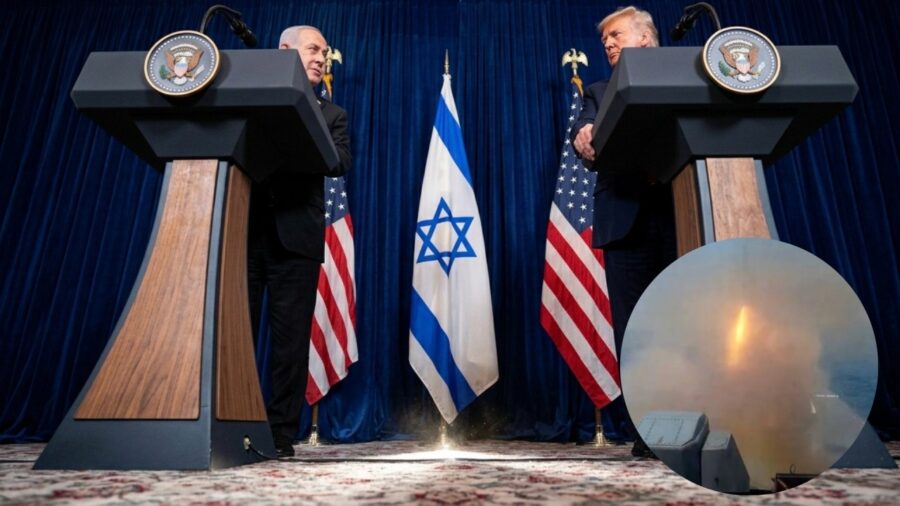

Iran launched multiple ballistic missiles towards United States forces in the Middle East late on July 28, 2026. According to Reuters reporting, Jordan said its air defences intercepted and destroyed five missiles fired from Iran, while US Central Command said every incoming missile was intercepted.
Iran’s Islamic Revolutionary Guard Corps said it had targeted a US airbase and a CENTCOM facility in Jordan. The American command did not identify the location, and the precise target has not been independently confirmed.
The attack occurred hours after US President Donald Trump met Israeli Prime Minister Benjamin Netanyahu at the White House, a meeting that Associated Press coverage said focused heavily on Iran and regional security.
Table of Contents
ToggleWhat Happened in the Missile Attack
US Central Command said the Islamic Revolutionary Guard Corps launched the missiles at 5:45pm Eastern time in an attempted surprise attack against American forces based in the region. Jordan’s Armed Forces later confirmed that five missiles entering Jordanian airspace had been destroyed early Wednesday.
The IRGC publicly claimed responsibility and described the launch as a response to continuing US action against Iranian interests. Washington said all incoming missiles were defeated. Neither CENTCOM nor the Jordanian military reported casualties in their initial statements, while the intended target remained uncertain.
Latest Verified Update
In an official statement, CENTCOM said US and Saudi aircraft had also struck logistics and weapons sites used by Iran-aligned groups in eastern Iraq. The operation followed more than 30 drone attacks during the previous 72 hours against American forces and Saudi energy infrastructure, the command said.
Saudi Arabia confirmed that its forces participated. Riyadh said the strikes answered drone attacks aimed at oil facilities in the kingdom’s Eastern Province and described the operation as an act of self-defence. Iran denied directing attacks against Saudi targets, Reuters reported while outlining the competing accounts.
Iraq’s Popular Mobilization Forces said two members were wounded when an airstrike hit a command headquarters in Basra. The umbrella organization is formally part of Iraq’s security structure and includes factions aligned with Tehran.
Iraqi Prime Minister Ali al-Zaidi had already ordered an investigation into the drone launches and said Iraqi territory could not be used to attack neighbouring countries.
Trump and Netanyahu Meet as Fighting Resumes
Trump and Netanyahu met privately for nearly 90 minutes on July 28. White House press secretary Karoline Leavitt called the talks positive and productive, while Netanyahu described them as excellent.
An Israeli official said Netanyahu told Trump that Israel would respond if attacked by Iran, while leaving broader decisions on the next phase to the US president.
The missile barrage followed later on Tuesday. Its timing placed immediate pressure on Trump’s effort to keep a diplomatic channel open while retaining the threat of military force.
The Al Jazeera report noted that Trump had paused a 13-day US bombing campaign on July 24 after saying discussions with Tehran were progressing. Iran disputed that negotiations had resumed.
Why the Attack Matters
The US-Iran war began on February 28, when the United States and Israel launched strikes inside Iran. Tehran responded against Israel and Gulf countries hosting American forces. A July 17 Iranian missile and drone attack in Jordan killed two US service members, left another missing and led to four medical evacuations, according to CENTCOM.
Diplomacy also remains tied to the Strait of Hormuz. Iran has sought greater authority over shipping routes through the waterway, while Oman has promoted a shared management arrangement aimed at restoring safer commercial transit.
In a separate Reuters report, the dispute was described as another obstacle to a durable ceasefire because of the waterway’s importance to Gulf energy exports.
What Happens Next
CENTCOM said American forces remained at a high state of readiness. As of early July 29, Washington had not publicly announced an additional response directed specifically at the ballistic missile launch, beyond the separately described US-Saudi strikes in Iraq.
The Trump administration now faces a choice between preserving the diplomatic opening, renewing attacks or combining negotiations with limited military responses. Further Iranian launches, militia operations or attacks against regional energy infrastructure would narrow the space available to mediators.
The latest AP coverage showed that the confrontation was extending across several connected fronts. Initial reports of a fully intercepted missile barrage limited the immediate human cost, while Jordan and other regional governments continued to face risks from missiles and drones crossing their territory.
Related Posts:
- The 100 Most Dangerous Cities in America (2026):…
- What Is the Most Dangerous Country in the World in 2025
- Best Places to Retire Abroad in 2026: An Honest…
- Armed Forces Organizations, 500+ Veterans Announce…
- Safest Cities in California in 2026: An Honest,…
- America’s Murder Capitals - Updated 2026 Rankings of…