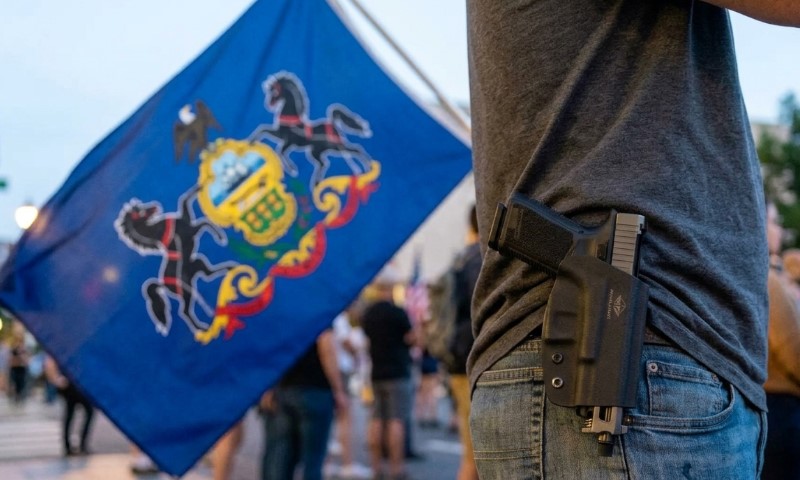

Philadelphia’s special open-carry rule came from Pennsylvania state law, not a city ordinance. Section 6108 of the Pennsylvania Crimes Code says a person may not carry a firearm, rifle, or shotgun on public streets or public property in a “city of the first class” without a carry license or statutory exemption.
Philadelphia is Pennsylvania’s only city in that class. Elsewhere in the Commonwealth, licensing law generally covers concealed carry and vehicle carry, while visible carry on foot has usually required no license for an adult legally allowed to possess the weapon.
A major 2025 ruling changed the practical picture. In Commonwealth v. Sumpter, the Pennsylvania Superior Court held Section 6108 unconstitutional as applied to unlicensed open carry in Philadelphia.
The provision remains printed in the code, complete with an official note about the ruling. A June 2026 appellate opinion reported that further Pennsylvania Supreme Court review remained pending.
The Philadelphia Rule Came From Harrisburg

Pennsylvania’s General Assembly created the geographic distinction through Section 6108. The provision applies to public streets and public property in a first-class city and permits carry when the person has a license or qualifies for an exemption listed in Section 6106(b).
Calling the requirement a “Philadelphia gun law” can therefore be misleading. Pennsylvania’s firearms-preemption statute, Section 6120, generally prevents municipalities from regulating lawful firearm ownership, possession, transfer, or transportation. Philadelphia administers local residents’ applications, but state lawmakers wrote the underlying carry rule.
Pennsylvania’s permit is formally called a License to Carry Firearms, commonly shortened to LTCF. Applicants must be at least 21.
Philadelphia residents apply through the Philadelphia Police Department rather than a county sheriff. State law allows up to 45 days for review, and an issued license normally remains valid for five years under Pennsylvania’s licensing statute.
Why Did Pennsylvania Treat Philadelphia Differently?
The legal mechanism was Philadelphia’s classification as a first-class city. Since no other Pennsylvania municipality falls in that class, wording that appears general has operated only in Philadelphia.
Earlier court decisions described the policy rationale as urban public safety. In Commonwealth v. Scarborough, the Superior Court accepted an argument that visible firearms in Pennsylvania’s largest city could alarm the public and lead to dangerous police encounters. Judges also viewed the license rule as a law-enforcement tool for a densely populated area with substantial gun violence.
Philadelphia still lacked independent authority to create any carry restriction it preferred. Section 6108 was unusual because the General Assembly itself placed the added licensing condition inside state law.
Open Carry Rules Compared
Pennsylvania statutes and recent appellate decisions produce the following comparison.
| Carry Situation | Most of Pennsylvania | Philadelphia Public Streets and Property | 2026 Legal Note |
| Visible handgun carried on foot | Generally no LTCF for a lawful possessor age 18 or older | Section 6108’s text requires an LTCF or exemption | Sumpter held the restriction unconstitutional as applied to open carry |
| Concealed handgun | LTCF generally required outside a home or fixed business | LTCF generally required | Sumpter did not invalidate concealed-carry licensing |
| Firearm carried in a vehicle | LTCF generally required unless an exception applies | Same statewide rule | Open display does not make vehicle carry permitless |
| License application | County sheriff for most residents | Philadelphia Police Department | Applicants must be 21 or older |
Carry method matters as much as geography. A handgun visible in a belt holster while walking presents a different legal question from a handgun hidden under clothing or placed in a car.
Someone may begin a trip where open carry is generally unlicensed, then enter a vehicle and face Section 6106.
What Did Commonwealth v. Sumpter Change?
View this post on Instagram
Riyaadh Sumpter was convicted after police saw a handgun visibly protruding from his waistband on a Philadelphia street.
A concealed-carry charge had been dismissed, leaving an open-carry prosecution under Section 6108. On June 23, 2025, a precedential Superior Court panel vacated his sentence in the Sumpter decision.
The court focused on equal protection. Eligible adults elsewhere in Pennsylvania could openly carry without a license, while people in Philadelphia faced criminal liability for the same conduct.
Judges treated the right to carry arms outside the home as fundamental, applied strict scrutiny, and found that the Commonwealth had not supplied a compelling justification for unequal geographic treatment.
The ruling had clear limits. It did not invalidate Pennsylvania’s statewide LTCF system or decide whether a statewide open-carry license could be constitutional. Concealed carry was outside the holding, as was a broader challenge to Section 6109.
A June 2026 Superior Court decision, Commonwealth v. Caruso, reinforced the boundary by distinguishing Sumpter from a case involving a concealed firearm.
The opinion also reported that the Pennsylvania Supreme Court had held the Commonwealth’s request to appeal Sumpter pending while Commonwealth v. Livingston addressed a related equal-protection question. The procedural status appears in the Caruso opinion.
Does Philadelphia Still Require a License in 2026?
The accurate answer needs a legal qualification. Section 6108 remains in Pennsylvania’s code, but the official statutory page now notes that Sumpter declared it unconstitutional as applied. Philadelphia’s licensing guidance still directs people who want to carry outside the home to obtain an LTCF.
For open carry alone, Sumpter provides a strong precedential basis to challenge a Section 6108 prosecution. Pending appellate review and factual disputes over whether a firearm was genuinely visible still create risk.
Current advice from a Pennsylvania firearms lawyer is prudent before relying on the ruling in a real situation.
An LTCF remains clearly important for concealed carry and ordinary vehicle carry. A person openly carrying on foot can enter a vehicle and immediately face Section 6106 unless a license or narrow statutory exception covers the transportation.
Section 6106 can classify unlicensed concealed or vehicle carry as a misdemeanor or felony, depending on eligibility and other alleged violations.
Common Errors That Cause Legal Trouble
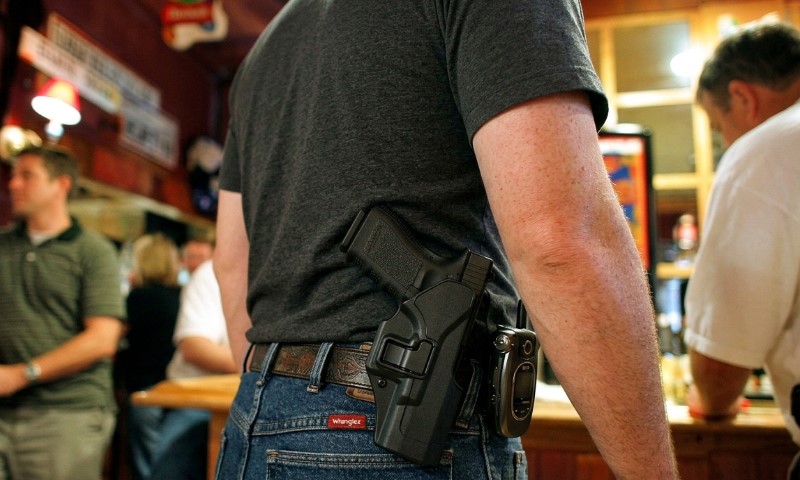
Several assumptions can turn a basic carry question into a criminal case:
- A visible holster does not make vehicle carry permitless.
- An LTCF is not a firearm purchase license or a substitute for a required dealer background check.
- Sumpter addressed open carry, not every use of Section 6108.
- A Section 6106(b) exemption depends on the precise activity and transportation circumstances.
The Pennsylvania State Police expressly notes that an LTCF is separate from authorization to purchase a firearm.
Carry licensing is also separate from safe home storage, and redactedarmsllc.com explains how locked storage can reduce unauthorized access, theft, accidental handling, and environmental damage.
The agency also lists numerous licensing exceptions, including limited transportation connected with target shooting, repair, hunting, or moving between residences. More information appears in the state’s firearm-carry guidance.
Pennsylvania’s Supreme Court has also held that firearm possession alone, where lawful, does not automatically create reasonable suspicion for a police detention. Added facts can change the analysis, so behavior and concealment may still affect an encounter. The court explained the standard in a Pennsylvania Supreme Court opinion.
Final Takeaway
Philadelphia historically required an LTCF because Pennsylvania lawmakers singled out first-class cities in Section 6108, and Philadelphia was the only municipality covered.
Most of Pennsylvania had no matching restriction on visible carry by a lawful adult because statewide licensing law centered on concealed carry and vehicles.
By 2026, Sumpter had made the Philadelphia-only restriction constitutionally unstable. The statutory language and city guidance remain visible, while a precedential ruling says Section 6108 cannot support the kind of open-carry conviction imposed in Sumpter. Concealed carry and vehicle rules remain separate.