
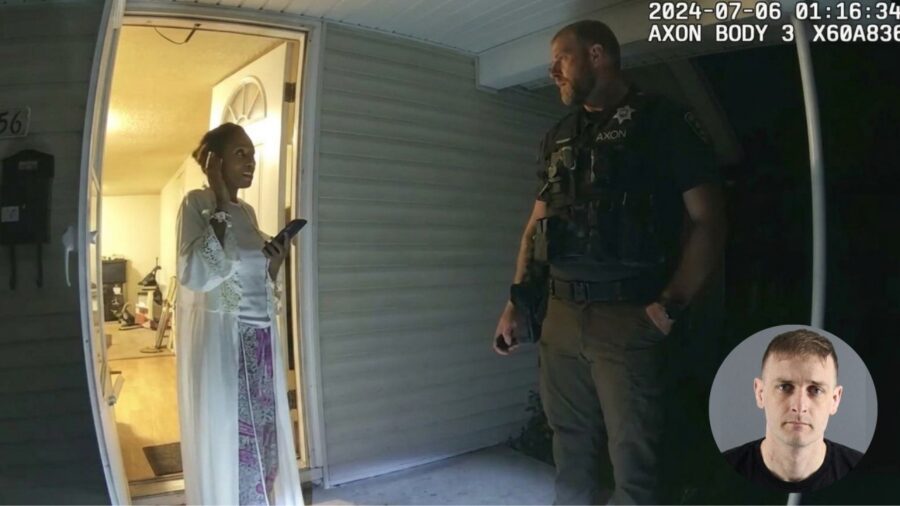

Sean Grayson, a former Sangamon County sheriff’s deputy convicted of second-degree murder in the fatal shooting of Sonya Massey, died Sunday, Aug. 23, while serving a 20-year prison sentence.
His attorney, Daniel Fultz, confirmed the death. Grayson was 32. Associated Press reporting said his death came less than seven months after he received the maximum sentence in the case.
No official cause of death or exact location had been publicly confirmed as of early Aug. 24. Grayson had advanced colon cancer that his defense said had spread to his liver and lungs. He sought medical release from prison in May, but the Illinois Prisoner Review Board unanimously rejected the request on July 31, according to NPR Illinois.
Table of Contents
ToggleKey Facts About Grayson’s Conviction and Sentence
A Peoria County jury convicted Grayson in October 2025 of second-degree murder, a lesser offense than the first-degree murder charge originally brought against him.
As AP reported after the verdict, Grayson argued that he believed Massey might throw hot water at him. Jurors did not accept a complete self-defense argument and returned the second-degree murder verdict.
On Jan. 29, 2026, Seventh Judicial Circuit Judge Ryan Cadagin imposed the maximum 20-year prison sentence. Grayson was also expected to serve two years of mandatory supervised release after completing the prison term. Reuters reported that prosecutors had sought the maximum punishment available for the conviction.
Latest Verified Update on Grayson’s Death
Fultz confirmed that Grayson died Sunday but did not publicly provide additional details about the circumstances. Lawyers for Massey’s family, Ben Crump and Antonio Romanucci, described his death as being from cancer in a statement. A formal cause of death had not yet been publicly confirmed by corrections authorities in the reporting available early Monday.
The death occurred only 23 days after the Illinois Prisoner Review Board denied Grayson’s medical-release request. The three-member board voted unanimously against release after considering his advanced cancer.
Sangamon County State’s Attorney John Milhiser opposed the request and argued that Grayson’s illness had already been considered during sentencing. Details of the July decision were reported by The Washington Post.
How the Sonya Massey Shooting Led to the Case
Massey, 36, called 911 early on July 6, 2024, to report a possible prowler outside her home near Springfield, Illinois. Grayson and fellow Sangamon County deputy Dawson Farley responded. Body-camera footage from Farley showed the deputies inside Massey’s home and recorded the confrontation that developed after she went to move a pot of hot water from the stove.
The footage showed Grayson drawing his handgun and threatening to shoot Massey. She apologized and lowered herself behind a kitchen counter before Grayson fired three shots. Farley later testified that he had not considered Massey a threat before Grayson drew his firearm.
Grayson was fired from the Sangamon County Sheriff’s Office and charged with first-degree murder. Extensive publicity surrounding the case led to the trial being held in Peoria County. The procedural history and legal issues surrounding the prosecution were addressed in an Illinois court opinion.
Why the Sonya Massey Case Still Matters
Massey’s killing produced consequences extending beyond Grayson’s criminal prosecution. Sangamon County approved a $10 million settlement with her family, while Illinois Gov. JB Pritzker signed the Sonya Massey Act on Aug. 12, 2025.
The legislation strengthened requirements for law enforcement agencies to review an applicant’s previous employment and disciplinary history before making final hiring decisions.
The case also prompted federal scrutiny of policing practices in Sangamon County. On Jan. 16, 2025, the U.S. Department of Justice announced an agreement with Sangamon County, the sheriff’s office and the county emergency dispatch system following a civil rights investigation.
Under the Justice Department agreement, authorities committed to policy reviews, additional training for interactions involving behavioral health disabilities, a mobile crisis response program and two years of monitoring.
The Justice Department said the agreement did not constitute an admission of liability or an official finding that the agencies had engaged in unlawful discrimination.
What Happens Next
The immediate unresolved questions concern the official cause of Grayson’s death and where he died. As of early Aug. 24, public reporting had not included confirmation of those details from the Illinois Department of Corrections.
Grayson’s death does not end the broader institutional changes that followed Massey’s killing. The state hiring reforms and federal policing agreement remain in effect independently of his criminal sentence, while Massey’s case continues to shape scrutiny of law enforcement hiring, supervision and crisis response in Illinois.
Related Posts:
- Sean Grayson Sentenced for Sonya Massey’s Death -…
- How Many People Die Every Day in US in 2025
- 17 Worst Prisons in the US in 2026 - America's…
- 25 Most Dangerous Cities in US - Updated Statistics for 2026
- Safest Cities in California in 2026: An Honest,…
- America’s Murder Capitals - Updated 2026 Rankings of…