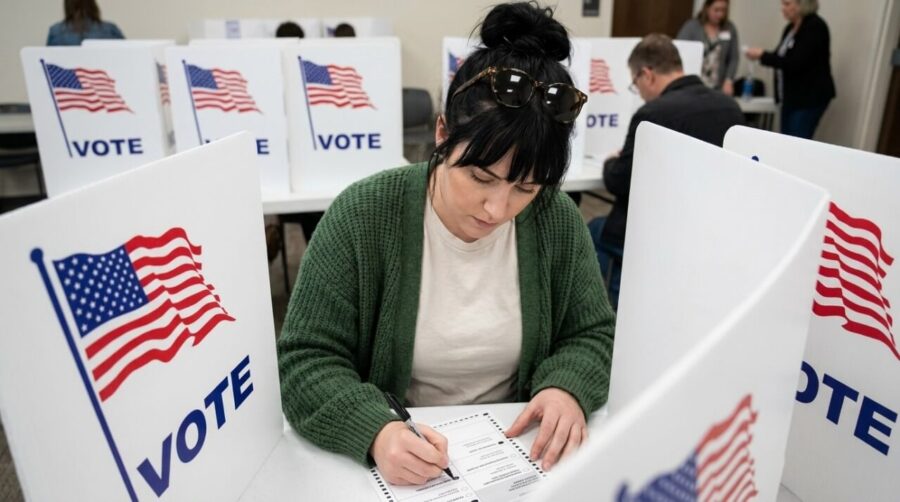

Michigan’s August 4 primary produced clear nominees for governor and several competitive U.S. House seats, but the state’s most closely watched contest remained unresolved Wednesday morning.
Progressive former public health official Abdul El-Sayed held a narrow lead over U.S. Representative Haley Stevens in the Democratic primary for an open U.S. Senate seat, with outstanding ballots preventing major news organizations from declaring a winner.
The eventual Democratic nominee will face former Republican Representative Mike Rogers on November 3. The contest matters nationally because retiring Democratic Senator Gary Peters’ seat is expected to be central to the fight for Senate control.
Table of Contents
ToggleKey Michigan Primary Results
Abdul El-Sayed and Haley Stevens are head to head in the Michigan US Senate Primary Election results with a race too close to call, but El-Sayed is projected to win.
Al Jazeera’s @KSaloomey explains what this race means for the midterm elections. pic.twitter.com/tV46z81CHX
— Al Jazeera English (@AJEnglish) August 5, 2026
Most statewide races were settled within hours of the polls closing, while the Senate count continued through Wednesday morning.
El-Sayed Leads Stevens in Senate Primary
At approximately 8:13 a.m. Eastern time on August 5, unofficial results showed El-Sayed with 735,625 votes, or 48.6 percent. Stevens had 716,222 votes, or 47.4 percent, with roughly 95 percent of the estimated vote counted. The margin was fewer than 20,000 votes, according to the reported statewide results.
El-Sayed performed strongly in Washtenaw County, home to Ann Arbor, and Kent County, which includes Grand Rapids. Stevens narrowed the gap as additional returns arrived from Wayne County, the state’s most populous county and home to Detroit. Wayne County has historically reported some results later than other parts of Michigan.
Neither candidate declared victory during election-night speeches. El-Sayed and Stevens instead emphasized the need for Democrats to unite against Rogers once the count is complete, according to Associated Press reporting.
Benson and James Advance for Governor
Michigan Secretary of State Jocelyn Benson won the Democratic nomination for governor, defeating Genesee County Sheriff Chris Swanson. U.S. Representative John James secured the Republican nomination after defeating businessman Perry Johnson and two other candidates. The governor primary results established the major-party matchup for November.
Benson and James will compete to succeed Democratic Governor Gretchen Whitmer, who cannot seek another consecutive term. James received President Donald Trump’s endorsement, while Benson entered the primary with broad support from Democratic officials and organizations.
William Lawrence Wins Competitive House Primary
Progressive climate activist William Lawrence won the Democratic nomination in Michigan’s 7th Congressional District, defeating former U.S. Ambassador to Ukraine Bridget Brink and former Navy SEAL Matt Maasdam. Lawrence will challenge Republican Representative Tom Barrett in November, Reuters reported Wednesday.
The district, which includes Lansing, is considered one of Michigan’s most competitive. Barrett captured it for Republicans in 2024 with 50.3 percent of the vote, making the November contest important in the struggle for control of the House.
Latest Verified Update
The Democratic Senate primary had not been called as of Wednesday morning. El-Sayed remained ahead, but uncounted votes from Wayne County and other heavily Democratic communities left Stevens with a possible path to closing the margin.
Reports describing El-Sayed as the winner would be premature without a formal race call or completed county canvasses. The latest count remained unresolved.
Michigan’s published election-night figures are unofficial. County canvassing boards must review local returns before the Board of State Canvassers certifies statewide results.
Why the Senate Race Matters
Two Different Democratic Strategies
The primary presented Michigan Democrats with two distinct political approaches. El-Sayed campaigned as an economic populist backed by Senator Bernie Sanders and Representative Alexandria Ocasio-Cortez. Stevens emphasized her congressional experience, manufacturing policy and ability to attract moderate voters. The candidates’ contrasting coalitions shaped the closely divided primary.
Israel Policy and Outside Spending
The contest also became a national test of Democratic views on Israel and campaign spending. Stevens received substantial support from pro-Israel political groups, while El-Sayed criticized U.S. military aid to Israel and the influence of outside money. Groups supporting Stevens spent far more than organizations backing El-Sayed, according to campaign-spending analyses.
What Happens Next
Remaining absentee and Election Day ballots will continue to be added to county totals. A major news organization may project a winner before certification when its election analysts determine that the trailing candidate no longer has a realistic route to victory.
The nominees chosen in Michigan’s primary will advance to the November 3, 2026, general election. Michigan’s Senate, governor and competitive House races will make the state one of the country’s most closely watched political battlegrounds through the fall. Official information about Michigan voting and elections is available from the secretary of state.
Related Posts:
- Trump Calls Democratic Nominee 'Communist' and…
- Texas Governor Election 2026: Abbott vs Hinojosa Guide
- The 100 Most Dangerous Cities in America (2026):…
- How Is Each State Represented in the Electoral College?
- Social Issues in America: 45 Real Examples, 2026…
- Safest Cities in California in 2026: An Honest,…