
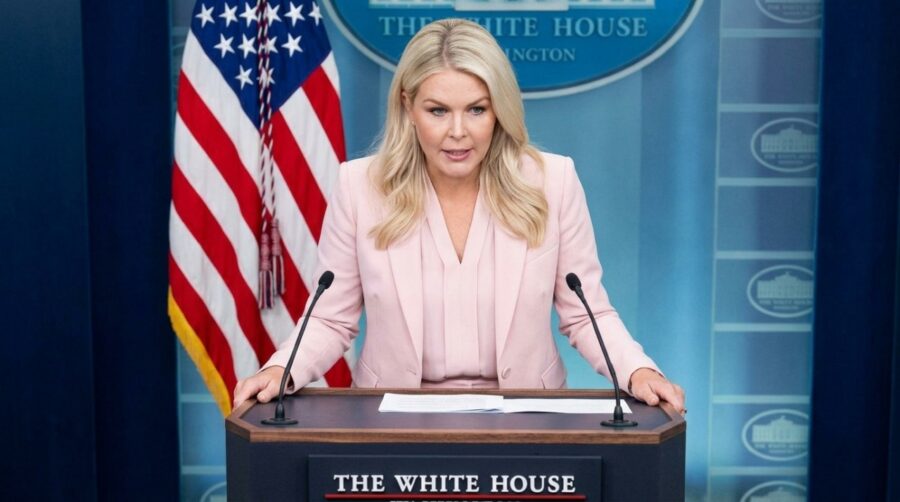

White House press secretary Karoline Leavitt will leave the Trump administration at the end of August 2026, President Donald Trump announced on August 12. Leavitt, 28, said she is stepping away after concluding that the demands of the job were incompatible with the time and attention she wants to give her two young children.
Trump said she will remain a top outside adviser and an influential Republican voice ahead of the November midterm elections, according to his Truth Social announcement.
Table of Contents
ToggleKey Facts Behind Karoline Leavitt’s Departure
Trump described Leavitt as one of his most trusted aides and said he understood her decision to spend more time with her family. His statement did not give an exact final day beyond the end of August.
Leavitt later confirmed the decision in her own social-media statement. She said returning to the White House after the birth of her daughter had made clear that she could not meet the demands of the press secretary’s role while also being the mother she wanted to be. She gave birth to her second child, a daughter, in May and recently returned from maternity leave, ABC News reported.
Leavitt became the youngest White House press secretary in U.S. history when she took the job at age 27 at the start of Trump’s second term in January 2025. Before that, she served as a spokesperson for Trump’s 2024 campaign and transition operation and had previously worked in the White House press office during Trump’s first administration, according to Reuters.
Latest Verified Update: No Successor Has Been Announced
As of August 13, neither Trump nor the White House had publicly named Leavitt’s successor. The Associated Press reported that Trump had not outlined plans for a replacement, while the president’s announcement identified no successor.
Trump has already outlined Leavitt’s next role in broad terms. He said she would become one of his top outside advisers and remain an influential figure in the Republican Party as the GOP prepares for the November 2026 midterm elections. She is expected to work outside the White House as a communications adviser while remaining politically active.
Leavitt Helped Reshape the White House Media Operation
Leavitt’s tenure was closely tied to a broader change in how the second Trump administration dealt with the press. Working alongside White House communications director Steven Cheung, she was part of an operation that elevated podcasts, newsletters and other nontraditional outlets, including through a special “new media” seat in the briefing room.
The administration also took greater control over which journalists could participate in the presidential press pool, replacing a system long administered by the independent White House Correspondents’ Association.
Supporters viewed the changes as a way to broaden access beyond established news organizations, while press advocates raised concerns about giving the administration greater control over which reporters could closely cover the president. The broader shift was also documented in The Guardian’s report on Leavitt’s departure.
Leavitt remained one of Trump’s most visible public defenders throughout that period, appearing at formal briefings as well as on television. White House briefing records show that after her maternity leave she briefed reporters on July 16 and again on July 23.
What Happens Next
The immediate question is who Trump will choose to speak for the administration from the White House podium. No timetable for naming a successor has been disclosed, and the August 12 announcement did not identify either a permanent replacement or an interim press secretary.
Leavitt’s move outside the administration means she is leaving a formal White House position without severing her political relationship with Trump. With the midterm elections less than three months away, the role described by Trump would keep her involved in Republican communications and political strategy after she leaves the West Wing.
Her departure will close a tenure of roughly 19 months in one of the administration’s most public-facing jobs. The choice of her successor will show whether the White House intends to preserve the media strategy developed during Leavitt’s tenure or shift its approach as the administration enters the final stretch before the 2026 midterms.