
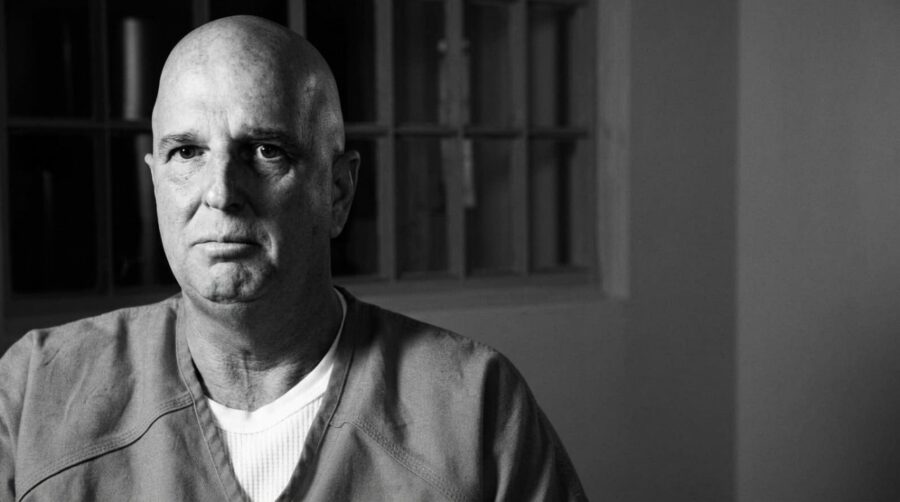

Florida executed James Aren Duckett and Dominick Anthony Occhicone on July 28, 2026, using lethal injection at Florida State Prison near Starke.
Duckett, 68, was pronounced dead at 1:19 p.m. for the 1987 sexual battery and murder of 11-year-old Teresa Mae McAbee. Occhicone, 80, was pronounced dead at 6:13 p.m. for killing his former girlfriend’s parents in 1986.
The same-day executions were Florida’s first since May 12, 1964, according to local reporting on Duckett’s execution. They were also the first conducted by one U.S. state since Arkansas executed two prisoners in April 2017.
Table of Contents
ToggleKey Facts From the Executions
Duckett was a Mascotte police officer when Teresa disappeared after walking to a convenience store in May 1987. Her body was found in a lake less than a mile away. Prosecutors said witnesses placed her near Duckett’s patrol car, her prints were found on the vehicle and tyre tracks near the recovery site matched its tyres.
A jury convicted Duckett in May 1988 of first-degree murder and sexual battery. In a statement following the execution, the Fifth Judicial Circuit State Attorney outlined the evidence presented against him and described the execution as the conclusion of a case that had lasted almost four decades.
Duckett declined to make a final statement before the lethal injection. Several hours later, Occhicone became the oldest person executed in Florida since capital punishment resumed in the modern era.
The executions brought Florida’s 2026 total to 12, more than all other U.S. states combined at that point in the year, according to an Associated Press account of the two executions.
Latest Verified Update
The U.S. Supreme Court rejected Duckett’s final efforts to stop the execution on July 28. In one order, the justices denied his individual application for a stay and petition for review. The Court also denied a request filed jointly by Duckett and Occhicone challenging Florida’s decision to conduct both executions on the same day.
The decisions appear in the Supreme Court’s July 28 orders, which allowed the state to proceed with both lethal injections.
The joint lawsuit argued that scheduling two executions hours apart could interfere with access to lawyers and the courts during last-minute litigation. It also raised concerns about potential risks in carrying out Florida’s lethal-injection protocol.
According to the prisoners’ Supreme Court filing, the schedule could strain the legal and institutional resources needed to respond to complications. Lower federal courts rejected the challenge after finding that the prisoners had not established a sufficiently concrete constitutional risk.
DNA Testing Shaped Duckett’s Final Appeals
Governor Ron DeSantis first scheduled Duckett’s execution for March 31, 2026. Five days before that date, the Florida Supreme Court issued a stay so DNA testing could proceed on a small biological sample collected from Teresa’s underwear.
The test consumed the deteriorated sample and produced an inconclusive result. A later statistical analysis also failed to determine whether Duckett was a contributor to the DNA mixture.
Duckett’s lawyers sought testing of other evidence and argued that the state’s choice of laboratory had prevented a more definitive result. In its July 24 ruling, the Florida Supreme Court found that the additional request was procedurally barred and that the listed items contained no identifiable, testable genetic material.
The court also found no bad faith in the state’s handling of the consumed sample. A published version of the Florida Supreme Court decision shows that the justices treated the DNA evidence as inconclusive rather than exculpatory.
Duckett maintained his innocence throughout nearly four decades of litigation. The DNA result did not overturn the 1988 conviction or death sentence. Teresa’s family said after the execution that the day represented justice for her and the end of a case that had remained active for 39 years.
Why the Double Execution Matters
Florida’s decision to conduct two executions in one day marked another expansion of capital punishment under DeSantis. The state carried out a record 19 executions in 2025 and led the country again in 2026.
Duckett and Occhicone had both received death recommendations from divided juries. The vote was 8-4 in Duckett’s case and 7-5 in Occhicone’s case, reflecting Florida’s earlier capital sentencing system, under which a unanimous jury recommendation was not required.
What Happens Next
The immediate legal proceedings in the Duckett and Occhicone cases ended when the executions were completed and the U.S. Supreme Court denied their final requests for intervention.
Florida’s execution calendar remains active. State court records list William Frances Silvia Jr. for execution on August 18, 2026. Further litigation could change that date, although the Florida court docket showed no reported stay as of July 29.
With both executions completed, July 28 became a defining date in Florida’s renewed use of capital punishment and a rare instance of one state carrying out two death sentences within hours.
Related Posts:
- 17 Worst Prisons in the US in 2026 - America's…
- CPSC Proposes New Federal Safety Standard for…
- The 100 Most Dangerous Cities in America (2026):…
- America’s Murder Capitals - Updated 2026 Rankings of…
- 25 Most Dangerous Cities in US - Updated Statistics for 2026
- Assault vs Battery - Why the Distinction Matters