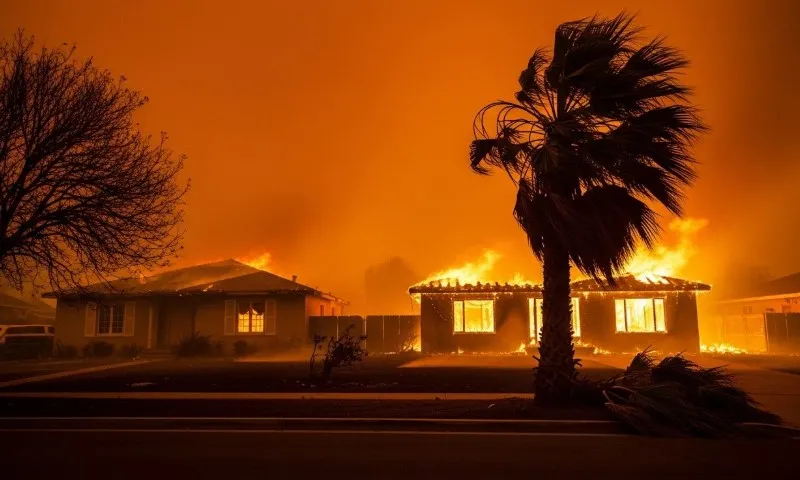

When a wildfire destroys a home, most people assume insurance becomes the safety net that keeps recovery moving. In Los Angeles County after the January 2025 fires, many survivors found the opposite.
A year later, large numbers were still displaced, still arguing with carriers, and still trying to turn policy language into actual money for rent, repairs, cleanup, and rebuilding.
Survey data now shows that nearly 8 in 10 insured survivors reported serious claim problems, a finding that says a lot about how disaster recovery breaks down in practice.
The number matters because it shifts the conversation away from wildfire damage alone and toward a second crisis that arrives after the flames are gone.
For many households, the hardest part was no longer evacuation or debris, but months of paperwork, delays, repeated requests, disputed estimates, and shrinking patience from companies that were supposed to help them recover.
Why the 80% Figure Deserves Attention
A January 2026 recovery report commissioned by the Department of Angels and based on a survey of 2,443 adults in fire-impacted communities found that nearly 8 in 10 people who had insurance at the time of the fires had serious challenges with their insurers.
A Los Angeles Times summary of the same survey put the figure at 80%. Among insured respondents, the most common problem was the itemization process for damaged property, which 51% said had been difficult.
Communication problems affected 38%, and 36% said they had been bounced between multiple adjusters.
Numbers from United Policyholders, drawn from a separate 6-month survey of 453 households, point in the same direction.
In that report, 51% reported communication delays, 50% said they received a lowball settlement offer, 49% reported payment delays, and 48% said 3 or more adjusters had been assigned to their claim.
When multiple independent surveys start describing the same pattern, it becomes hard to dismiss the problem as a handful of bad experiences.
A Disaster on Top of a Disaster
The January 2025 Eaton and Palisades fires were catastrophic by any measure. AP reported 31 deaths across the two fires one year later.
Reuters reported insured losses were estimated in the tens of billions, with one estimate putting the total near $28 billion and another range as high as $28 billion to $35 billion for the Eaton and Palisades fires alone.
California’s Department of Insurance later reported 42,121 claims filed and $22.4 billion paid as of November 17, 2025.
One year after the fires, the Department of Angels survey found 7 in 10 survivors still had not returned home. That is partly a housing story, partly a rebuilding story, and very much an insurance story.
What “Serious Insurance Claim Issues” Actually Looks Like
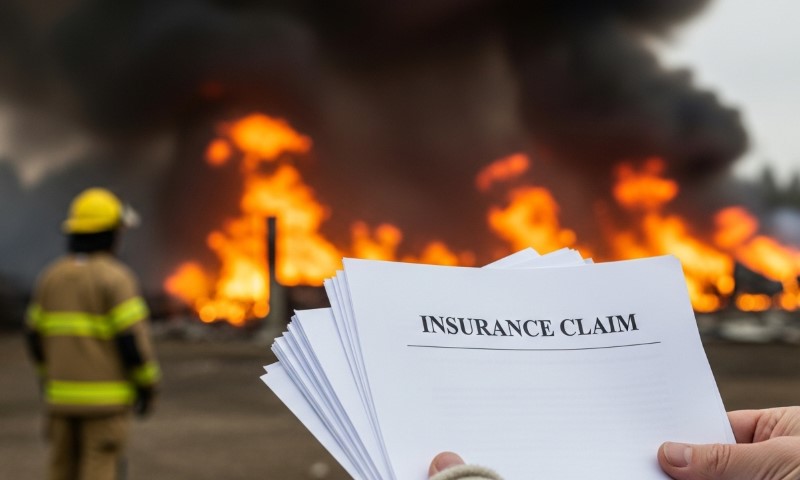
The phrase can sound abstract until you break it down. In real life, claim trouble after a wildfire often means:
- weeks or months waiting for callbacks
- being asked to recreate years of belongings line by line
- getting one estimate from one adjuster and a different one from the next
- being offered settlement amounts that do not match contractor bids or remediation needs
- fighting over smoke damage in homes that are still standing
- worrying that temporary housing benefits will run out before repairs are approved
That list is not speculation. It lines up closely with the reported experiences in the surveys.
The Department of Angels report said itemization lists were the biggest challenge, and survivors with homes still standing were especially likely to report poor communication, lowball estimates, multiple adjusters, conflicting information, and claim denials. United Policyholders found a very similar pattern months earlier.
Standing Homes Often Faced the Worst Battles
One of the most revealing details in the data is that people with partial losses or smoke-damaged homes often had worse claim experiences than people whose homes were total losses.
At first glance, that sounds backwards. A total loss seems like it should be harder to resolve. In practice, a destroyed house can produce a clearer claim path than a damaged house that still needs testing, remediation, and argument over what counts as covered damage.
The Department of Angels report found that survivors whose homes had both structural and smoke or ash damage were especially likely to report communication problems, lowball estimates, multiple adjusters, conflicting information, and denials.
United Policyholders found that only 3% of standing-home survivors said they had no claim problems at all, compared with 27% of total-loss survivors. Standing-home survivors were also much more likely to say insurer-retained experts were not trustworthy.
That gap helps explain why smoke damage became such a flash point in California after the fires.
A standing home may look salvageable from the curb while still carrying ash, toxins, odor, corrosion risk, and indoor air problems that make it unsafe or unlivable.
When carriers resist paying for full testing or remediation, owners can end up trapped between a mortgage, an unusable house, and an insurer demanding more proof.
The Inventory Problem That Keeps Showing Up
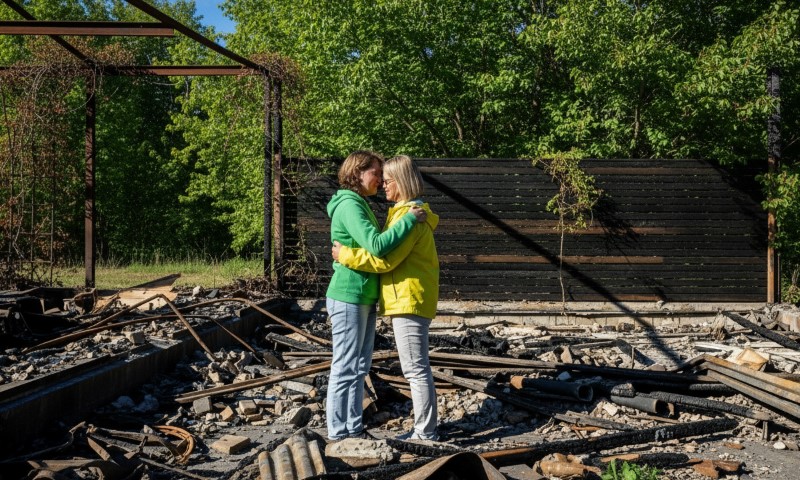
Property inventories sound reasonable in theory. Insurers need to know what was lost. After a fire, though, asking people to reconstruct years of possessions line by line can become a punishing exercise, especially for older homeowners, large families, or anyone who lost records along with the house.
United Policyholders found that 57% of respondents said their insurer required them to list and describe every damaged or destroyed item.
Some also had to note when or where each item had been obtained. Only a minority said their insurer allowed a less specific grouped inventory.
State regulators clearly saw the burden as serious enough to address. In February 2025, Insurance Commissioner Ricardo Lara urged companies to provide full contents coverage without demanding detailed itemized inventories from wildfire survivors, following earlier orders meant to speed advance payments.
That official push is telling. Regulators do not generally issue emergency bulletins unless a pattern has become widespread enough to threaten recovery for large numbers of people.
Advance Payments Helped, but They Did Not Solve the Core Problem
California did activate consumer protections after the fires.
The Department of Insurance says insured households were entitled to certain advance payments after a covered total loss, including up to 30% of the dwelling limit for contents, capped at $250,000, without an itemized claim, and no less than 4 months of living expenses.
The one-year moratorium on cancellations and non-renewals also applied in designated wildfire areas.
Such measures matter. They give families immediate cash when they need it most. But advance-payment laws do not erase disputes over the full value of damage, the cost of rebuilding, code upgrades, contamination, or how long temporary housing should continue.
A household can receive an early payment and still spend months or years fighting over the rest of the claim.
That is one reason large payment totals do not automatically mean claim handling is going well. California’s claims tracker shows billions paid, but survivor surveys still show deep dissatisfaction.
Underinsurance Made Everything Harder
View this post on Instagram
Another major issue was underinsurance. United Policyholders found that 62% of total-loss respondents reported they did not have enough insurance to rebuild or replace their home, while another 33% said they still did not know whether they were underinsured.
A year after the fires, many households were still trying to figure out whether policy limits, extended replacement-cost provisions, and code-upgrade coverage would come close to real-world rebuilding costs in Southern California.
Underinsurance changes the emotional and financial tone of the whole recovery. A claim becomes more than a coverage dispute. It becomes a math problem with no easy answer.
Families start dipping into savings, taking on debt, delaying decisions, or giving up on rebuilding in place. In the Department of Angels survey, nearly half of survivors had exhausted savings and 43% had taken on debt.
A Year Later, Many Were Still Far From Home
Recovery delays are easier to tolerate when people can go home at night. Many Los Angeles fire survivors could not.
The Department of Angels survey found that 70% were still not home near the one-year mark. CalMatters reported that displacement remained widespread and linked part of the problem to claim delays and insurance friction.
Housing displacement also interacts with insurance limits in ugly ways. Additional living expense coverage can run out before a claim is fully resolved or before a rebuild has meaningfully started.
The survey found many survivors were nearing the end of that support, while others had already run out. Once temporary housing help starts expiring, claim delays become more than an administrative nuisance. They become a direct threat to financial stability.
Why State Farm and the FAIR Plan Keep Appearing in the Story
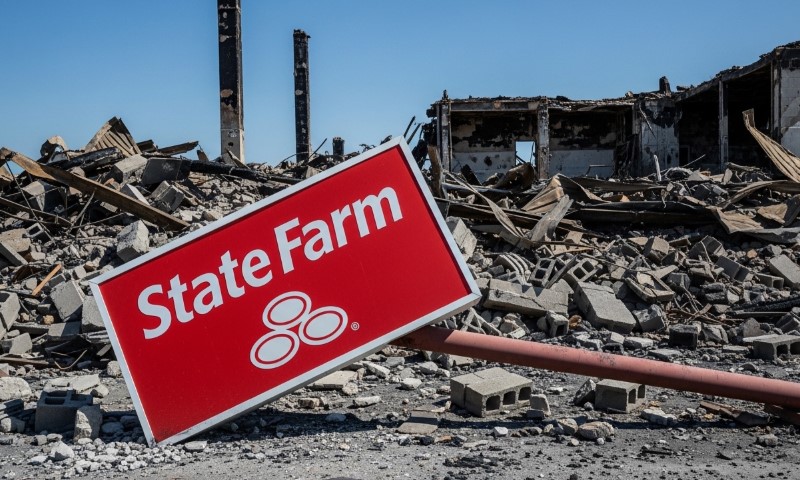
The Department of Angels report found especially high dissatisfaction among customers of State Farm and the California FAIR Plan. State Farm covered 19% of surveyed survivors, and the FAIR Plan covered 12%, more than any other carrier groups named in the report. The report also said majorities of customers of both were dissatisfied.
Later in 2025, Los Angeles County opened an investigation into State Farm’s handling of wildfire claims, citing complaints about delays, underpayments, and denials.
None of that means every claim with either insurer was mishandled. It does mean public frustration became serious enough to trigger official scrutiny and sustained media attention.
Smoke Damage Became a Defining Test Case
Wildfire insurance disputes often center on a simple question with a messy real-world answer: what counts as damage? Burned walls and collapsed roofs are obvious. Smoke intrusion, soot, ash, and toxic residue are harder.
They may require lab work, industrial hygiene testing, HVAC inspection, and expert opinions, all while the homeowner is living elsewhere and paying ongoing bills.
California officials and courts spent much of 2025 grappling with that issue. Commissioner Lara took legal action against the FAIR Plan over smoke claim practices, and reporting later in the year showed the fight was still unresolved in practical terms. For survivors with standing homes, smoke damage was often the reason a claim turned into a long argument instead of a straightforward payment.
The Human Cost of a Slow Claims System
Insurance stories can easily become procedural, but the real harm is cumulative. Every missed callback means another day without clarity.
Every new adjuster means another round of retelling a traumatic story. Every low estimate can freeze contractor hiring, contamination cleanup, or rebuilding permits. Over time, delay becomes its own form of damage.
The Department of Angels survey found 83% of survivors said their mental health had worsened since the fires. That number cannot be pinned on insurance alone, of course. Wildfire loss affects nearly every part of daily life.
Still, when a recovery system meant to reduce harm starts adding confusion, debt, and uncertainty, insurance ceases to feel like protection and starts feeling like another obstacle.
Summary
The Los Angeles wildfire story did not end when the fires were contained. For many survivors, the next phase was a long fight with the insurance system, and survey data shows that struggle was widespread.
A year later, the headline number still carries force because it captures something larger than customer dissatisfaction. It shows how fragile recovery becomes when families need insurance most and the process still fails to feel reliable.