
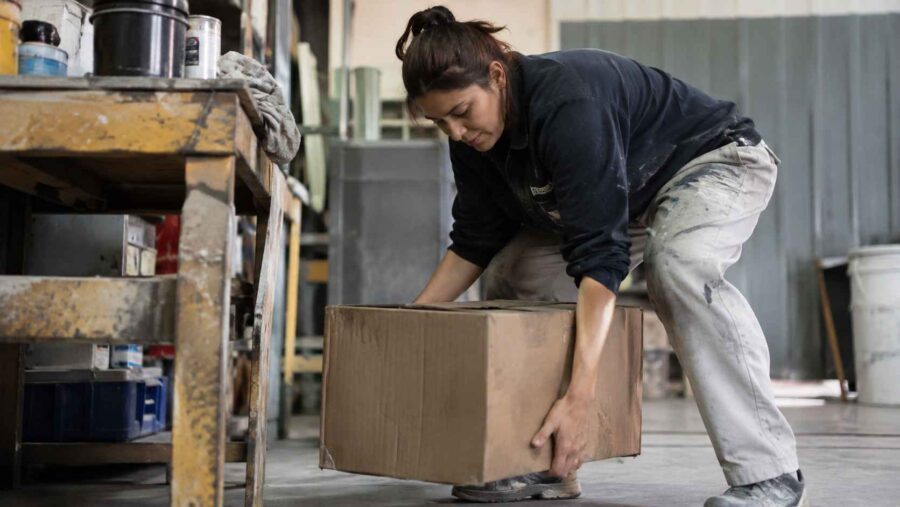

A Colorado company required an employee to repeatedly lift and carry 100 pounds before allowing her to return to work after medical leave. Federal officials say the test did not accurately reflect what her job required.
The worker, a painter employed by Wagner Equipment in the Grand Junction area, had a knee condition that made heavy lifting difficult. According to the Equal Employment Opportunity Commission (EEOC), she requested an adjustment to the lifting requirements but was prevented from returning to work.
The EEOC filed a disability discrimination lawsuit against Wagner Equipment on September 29, 2026. Just two weeks later, the agency announced that the company had agreed to pay $200,000 to settle the case.
The dispute raises an important question for American workers. Can an employer require someone recovering from a medical condition to pass a physical test that goes further than the actual demands of the job?
Worker Was Required to Repeatedly Lift 100 Pounds
Wagner Equipment is a heavy machinery company headquartered in Aurora, Colorado. It sells and rents industrial equipment in Colorado, New Mexico and Texas.
The employee at the center of the lawsuit worked as a painter near Grand Junction. After taking medical leave, she attempted to return to her position.
However, the company required her to pass a physical fitness test involving repeatedly lifting and carrying 100 pounds.
According to the EEOC lawsuit announcement, the employee had difficulty lifting heavy objects because of a knee condition.
The federal agency argued that the test placed an unnecessary obstacle in her way because the lifting requirements did not accurately represent the essential physical tasks of her position.
The EEOC also alleged that Wagner Equipment failed to provide reasonable accommodations for her condition.
After she requested an adjustment, the company refused to allow her to return to work in December 2021. The lawsuit also accused Wagner Equipment of retaliating against the employee by terminating her employment.
The agency brought the case under the Americans with Disabilities Act, which protects qualified workers with disabilities against discrimination.
View this post on Instagram
Why Did the EEOC Challenge the Physical Fitness Test?
Employers can require workers to meet physical standards when those standards are genuinely necessary for the job.
For example, some positions involve moving heavy equipment or carrying materials throughout the working day. An employer may need to establish that an employee can perform those tasks safely.
However, the requirements must relate to the actual position.
In the Wagner Equipment case, the EEOC questioned why a painter needed to repeatedly lift and carry 100 pounds to qualify for returning to work.
The agency argued that the test excluded an employee with a disability without accurately measuring the work she needed to perform.
The difference is significant. A job may require occasional lifting, but that does not automatically justify requiring every employee to repeatedly lift an unusually heavy object during a physical assessment.
The EEOC guidance on employment qualification standards explains that physical requirements that exclude workers because of disabilities must be related to the job and consistent with business necessity.
Employers may also need to consider reasonable accommodations that allow a qualified worker to perform the essential duties of the position.
What Counts as a Reasonable Accommodation?
Under the Americans with Disabilities Act, employers generally must provide reasonable accommodations for qualified employees with disabilities unless doing so would cause undue hardship.
Accommodations can include changes to equipment, work schedules or the way certain duties are performed.
For someone with a knee condition, an employer might consider using lifting equipment or arranging assistance with tasks involving heavy objects.
In its announcement of the Wagner lawsuit, the EEOC specifically mentioned lifting devices and assistance as examples of accommodations that employers may need to consider.
However, the law does not require employers to remove essential job duties. An employee must still be able to perform the fundamental requirements of the position, with or without reasonable accommodation.
The dispute at Wagner Equipment concerned the difference between those necessary duties and a physical test that the EEOC alleged went further than the job required.
Another important detail concerns how employees request assistance.
Workers generally do not need to use formal legal language when asking for an accommodation. Telling an employer that a medical condition makes a particular task difficult can be enough to begin a discussion about possible adjustments.
Wagner Equipment Agreed to Pay $200,000 to Settle the Lawsuit
On October 13, 2026, the EEOC announced that Wagner Equipment had agreed to settle the case for $200,000.
The agreement came just 14 days after the agency publicly announced its lawsuit.
According to the official EEOC settlement announcement, the company also agreed to additional measures intended to prevent similar disputes.
Under a two-year consent decree, Wagner Equipment must review its existing policies concerning disability accommodations.
The company must also provide training to employees and managers in Colorado on disability discrimination and reasonable accommodations.
The $200,000 payment provides monetary relief to the affected employee.
The agency has pursued other employment discrimination cases, including an EEOC case involving a trucking company accused of refusing to hire women drivers, which resulted in a $5.5 million resolution in 2026.
The settlement resolves the federal lawsuit. It should not be described as a court verdict finding Wagner Equipment liable for the alleged discrimination.
The EEOC welcomed the early resolution and emphasized that employers should assess people returning from medical leave according to the actual requirements of their jobs.
Can an Employer Refuse to Let Someone Return After Medical Leave?
Employers are allowed to consider if an employee can safely perform the essential duties of a position.
However, returning workers cannot automatically be excluded simply because they have a medical condition or need an adjustment to their working arrangements. Similar legal protections can apply when an employer attempts to fire someone during medical leave, although the circumstances of the termination matter.
For example, a warehouse worker recovering from an injury may temporarily have difficulty lifting heavy packages. The employer would need to consider the actual requirements of the job and any reasonable accommodations available under the ADA.
The employee could potentially return with suitable equipment or changes to certain duties, depending on the circumstances.
There are limits. An employer generally does not have to eliminate an essential job function or provide an accommodation that would cause undue hardship.
But requiring an employee to meet an unnecessary physical standard can create a legal problem when it excludes someone because of a disability.
The Wagner Equipment lawsuit shows why the details of a job description and the purpose of a physical test are important when workers return after illness or injury.

What Should Workers Do if Their Employer Refuses to Let Them Return?
Employees dealing with a disputed return to work can benefit from keeping clear records of their medical restrictions and communications with the employer.
Written documentation may help establish what the employer requested, what the employee could perform and which adjustments were discussed.
Useful records include medical recommendations, job descriptions, physical testing requirements, accommodation requests and written responses from supervisors or human resources.
Workers who believe they have experienced disability discrimination can also contact the EEOC.
According to the agency’s filing deadline guidance, employees generally have 180 days to file a discrimination charge. The period can extend to 300 days when qualifying state or local laws also apply.
Federal employees have different procedures and deadlines.
Seeking legal guidance early can help workers identify the rules that apply to their situation, especially when a dispute involves several possible claims.
When an injury is connected to the job, workers may also need assistance with medical expenses and lost wages through a separate workers’ compensation claim. For employees in North Carolina, information about Workers’ Compensation in Greensboro can help explain the available benefits and what happens when an insurer disputes a claim. Workers’ compensation and federal disability discrimination claims involve different legal protections, so the facts of each case need to be considered separately.

The Case Raises Questions About Return-to-Work Requirements
For Wagner Equipment, the lawsuit ended with a $200,000 settlement and an agreement to review its policies and train employees.
For other employers, the case offers a clear example of how a physical test can become a discrimination issue if it does not accurately represent the work an employee is expected to perform.
A company may have legitimate reasons to assess the physical abilities of someone returning after medical leave. But it must also consider the rights of employees with disabilities and the possibility of reasonable accommodations.
The employee in Colorado was required to repeatedly lift and carry 100 pounds before returning to her painting job. The EEOC argued that the requirement did not match her essential duties, and the company ultimately agreed to settle the federal case.
The result is a reminder that workers recovering from medical conditions must be evaluated according to the work they actually need to do, rather than physical demands that may have little connection to their jobs.