
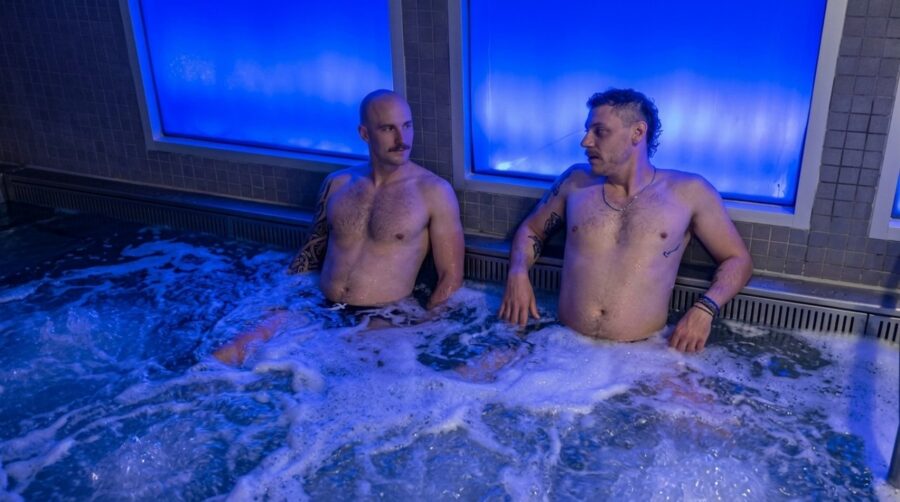

For roughly four decades, New York has kept an AIDS-era rule on the books that effectively prevents traditional gay bathhouses and other commercial sex-on-premises venues from operating legally. A new proposal could finally change that.
State Senator Erik Bottcher and Assemblymember Tony Simone have introduced the Public Health Modernization Act, legislation that would repeal the old prohibition and require New York State to develop licensing, health, and safety rules for adult saunas.
As of August 2026, reopening is still hypothetical. Both versions of the bill remain in committee, so no Manhattan bathhouse is about to throw open its doors tomorrow.
Still, a serious legislative effort marks a striking shift for a city where bathhouses once occupied an unusual place at the intersection of gay social life, nightlife, sexual freedom, and public health.
What Would the New York Bathhouse Bill Actually Change?
View this post on Instagram
New York’s rule is unusually direct. Under current state regulations, an establishment cannot provide facilities for sexual activity involving anal intercourse, vaginal intercourse, or fellatio. A venue doing so is classified as a threat to public health.
Saunas themselves are legal, of course. A Russian bath, Korean spa, hotel sauna, or neighborhood wellness club is unaffected.
Commercial adult-oriented businesses operate under very different models, including online directories such as Target Escorts, which sit outside the traditional bathhouse category.
Senate Bill S10673 and its Assembly counterpart, A11663, would take a different approach. Rather than maintaining a blanket prohibition, the Public Health Modernization Act directs the New York State Department of Health to repeal Subpart 24-2 and create regulations governing licensed adult saunas. Minimum standards would cover patron and employee health and safety, wellness education, and harm reduction.
If enacted, the law would take effect 180 days after becoming law. State regulators would then have to build the system that allows businesses to operate.
In other words, repeal would open a legal door. A fully operating bathhouse industry would still require licensing rules, suitable properties, local approvals, investment, inspections, and operators willing to enter a fairly unusual corner of New York nightlife.
Why Did New York Close Gay Bathhouses?
The answer lies in the frightening uncertainty of the early AIDS epidemic.
By 1985, New York City was one of the American cities hit hardest by AIDS. Effective antiretroviral treatment did not exist. PrEP was decades away.
Political leaders and health officials were under immense pressure to reduce HIV transmission while researchers were still building a clearer picture of the epidemic.
In October 1985, the New York State Public Health Council adopted emergency sanitary rules targeting establishments where designated sexual activities occurred.
New York City subsequently used the regulations to close adult bathhouses. The rules eventually became the state regulation that remains in place today, according to the bill’s legislative history.
Bathhouses already had a long history by then.
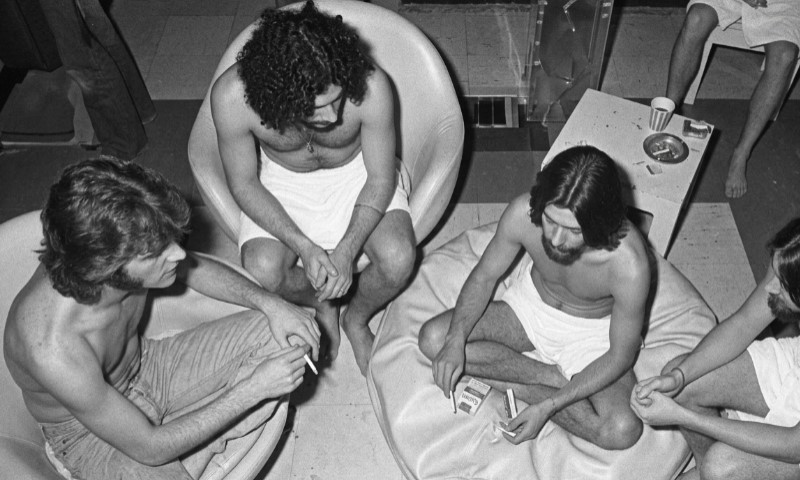
The famous Everard Baths on West 28th Street, for example, opened as a Turkish bath in 1888 and eventually became a major gay gathering place. Other establishments offered lockers, private rooms, steam facilities, pools, lounges, bars, and entertainment.
New York’s bathhouse culture could occasionally look closer to a nightclub than a conventional spa. The Continental Baths, opened inside the Ansonia Hotel in 1968, featured a disco, cabaret stage, pool, sauna rooms, restaurant, gym, and hundreds of private rooms.
A young Bette Midler famously performed there with Barry Manilow accompanying her on piano, according to an Associated Press history.
Sex was part of the attraction, but the venues also provided places where gay men could meet relatively openly during periods when discrimination and police harassment shaped daily life.
Public Health Looks Very Different Now
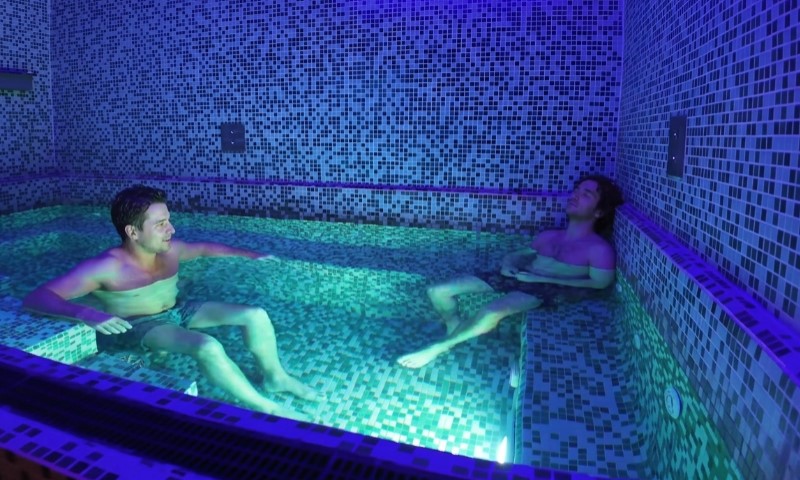
The strongest argument for changing the rule comes from four decades of medical progress.
PrEP can greatly reduce a person’s chance of acquiring HIV. When taken as prescribed, it reduces the risk from sex by about 99%, according to CDC guidance on PrEP.
Modern HIV treatment can also suppress the virus to undetectable levels, at which point HIV cannot be transmitted sexually.
Testing has improved dramatically, PEP can be used following possible exposure, and sexual-health organizations now have far better tools for reaching communities at elevated risk.
None of that makes HIV or other sexually transmitted infections irrelevant.
New York City recorded 1,791 new HIV diagnoses in 2024, 5.4% more than in 2023. City health officials said progress had stalled after years of earlier declines.
Men who have sex with men remain disproportionately represented among new diagnoses, according to city HIV surveillance data, making continued prevention work particularly important.
Supporters of legalization argue that licensed venues could become places for prevention rather than obstacles to it. Condom availability, PrEP information, HIV and STI testing partnerships, educational materials, trained staff, and connections to clinics could potentially be incorporated into operating standards.
Dr. Demetre Daskalakis, chief medical officer at LGBTQ-focused health provider Callen-Lorde and a former senior CDC official, has backed the proposal.
He argues that bringing people into visible venues can create opportunities for health outreach that disappear when sexual activity moves into less accessible settings.
A Modern Bathhouse Would Face Very Different Expectations
Anyone imagining a simple recreation of 1970s Manhattan is probably picturing the wrong future.
A newly licensed venue would operate in an era of smartphones, dating apps, digital identity, modern fire codes, contemporary consent standards, stronger workplace protections, and far greater public awareness of infectious disease.
Regulators would also have questions to answer. How should cleaning and sanitation work? What training should employees receive? Which sexual-health resources should be available? How much privacy should patrons expect? What rules should govern security, drugs, harassment, age verification, and emergency response?
The bill deliberately leaves many details to the Department of Health. Such flexibility gives public-health specialists room to write modern standards, but it also means nobody yet knows exactly what a legal New York bathhouse would look like.
Cost could become another hurdle. Manhattan commercial rents, insurance, construction requirements, fire-safety systems, licensing expenses, and extensive plumbing make a large sauna complex an expensive proposition.
Even after legalization, economics may determine whether New York gets several bathhouses, one ambitious flagship, or very little at all.
New York Would Be Joining a Broader Reconsideration
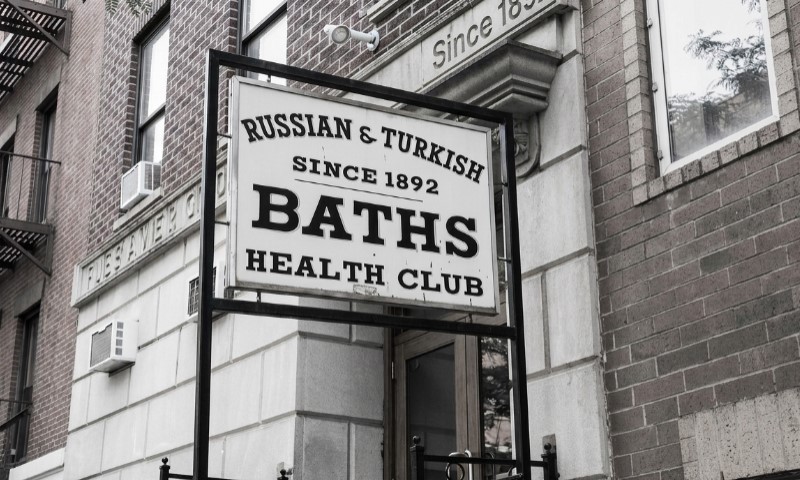
New York is hardly alone in revisiting rules written during the AIDS crisis.
The state bill’s sponsor memo points to other American cities that permit adult saunas under regulated frameworks. Minneapolis recently moved to repeal a 38-year prohibition, while San Francisco has spent years revising restrictions governing commercial adult sex venues.
New York’s debate therefore fits a larger policy question: whether governments should continue treating particular venues as inherently dangerous or regulate the behavior, sanitation, safety, and health services associated with them.
Opposition will remain. Some critics worry that legal venues could facilitate risky sexual behavior or create neighborhood concerns. Public-health advocates supporting repeal respond that sexual activity already occurs and that regulation provides authorities with greater visibility and access.
Actual outcomes would depend heavily on whatever rules eventually replace the prohibition.
Will Gay Bathhouses Really Return to New York?
Possibly, but legislation still has a considerable distance to travel.
As of August 12, 2026, S10673 is in the New York Senate Rules Committee, while A11663 is in the Assembly Health Committee. Neither chamber has passed the measure. Governor approval would also be required before the proposed repeal could become law.
The significance of the proposal therefore lies partly in the debate itself. A policy created amid one of the darkest periods in New York’s LGBTQ+ history is being reconsidered through the medical knowledge and social attitudes of another generation.
Should the bill succeed, New York’s next bathhouse may share little with the establishments shuttered during the 1980s. Steam rooms and lockers might look familiar. The regulatory philosophy surrounding them could be entirely new.