
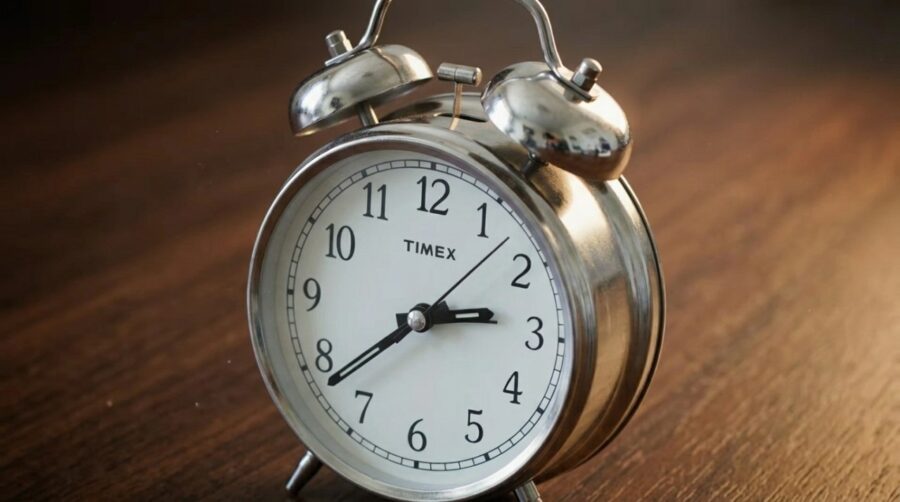

Most Americans are still scheduled to turn their clocks back one hour on Sunday, Nov. 1, 2026, even after the U.S. House approved legislation that would make daylight saving time permanent.
Under current federal rules, daylight saving time ends at 2 a.m. local time on the first Sunday in November, when clocks return to 1 a.m. standard time, according to the National Institute of Standards and Technology.
The political picture changed in July. The House passed H.R. 139, the Sunshine Protection Act of 2025, by a 308-117 vote on July 14. The bill would end the twice-yearly clock change for most of the country by making daylight saving time permanent. It is now before the Senate, where no final vote has occurred, according to the House roll-call record.
What the Nov. 1 Clock Change Means
Daylight saving time in 2026 runs from March 8 at 2 a.m. local time through Nov. 1 at 2 a.m. local time. Unless federal law changes before then, clocks in participating states will move back one hour at the November transition.
Hawaii and most of Arizona do not observe daylight saving time. The same is true in American Samoa, Guam, the Northern Mariana Islands, Puerto Rico and the U.S. Virgin Islands. The Navajo Nation in Arizona does observe the seasonal change, according to the U.S. Department of Transportation.
Federal law allows states to exempt themselves from daylight saving time and remain on standard time. States cannot, however, choose permanent daylight saving time on their own under current law. Such a change requires federal action, as outlined under the federal Uniform Time Act rules.
Latest Verified Update on Permanent Daylight Saving Time
H.R. 139 passed the House on July 14 and was received in the Senate the following day. The Senate Commerce, Science and Transportation Committee lists the measure as referred to the committee, with no later legislative action posted as of Aug. 10. The official bill text records its transmission from the House.
The Senate also entered an extended summer break after Aug. 8. Its published August schedule calls for pro forma sessions until regular business resumes on Sept. 14, leaving roughly seven weeks between the chamber’s return and the scheduled Nov. 1 time change.
The Trump administration has formally endorsed H.R. 139. In a July 14 statement of administration policy, the White House Office of Management and Budget said President Donald Trump’s advisers would recommend that he sign the bill if it reaches his desk in its current form.
Why the Debate Remains Unsettled
 You will find more infographics at Statista
Supporters of permanent daylight saving time argue that keeping clocks an hour ahead would eliminate the disruption of changing time twice a year and preserve more usable evening light in winter. The White House has also cited potential safety, economic and lifestyle benefits in backing the House bill.
The medical debate points in a different direction. The American Academy of Sleep Medicine supports ending seasonal clock changes but favors permanent standard time, saying standard time aligns more closely with human circadian biology. Its updated position statement concluded that year-round standard time is the preferable option for health and safety.
The disagreement matters because ending clock changes and deciding which time standard should become permanent are separate policy questions. The 308-117 House vote showed substantial bipartisan support for the Sunshine Protection Act, but Senate Majority Leader John Thune said in July that it was unclear whether the proposal could secure the votes needed to advance in the Senate.
What Happens Next
The Senate must approve H.R. 139, or Congress must pass equivalent legislation, before permanent daylight saving time can become federal law. If lawmakers enact the House proposal before Nov. 1, the scheduled return to standard time could be avoided. If they do not, most Americans will still set clocks back one hour at 2 a.m. local time on Nov. 1.
For now, the federal clock-change schedule remains unchanged. The next significant opportunity for legislative action comes after the Senate returns to regular business on Sept. 14.