
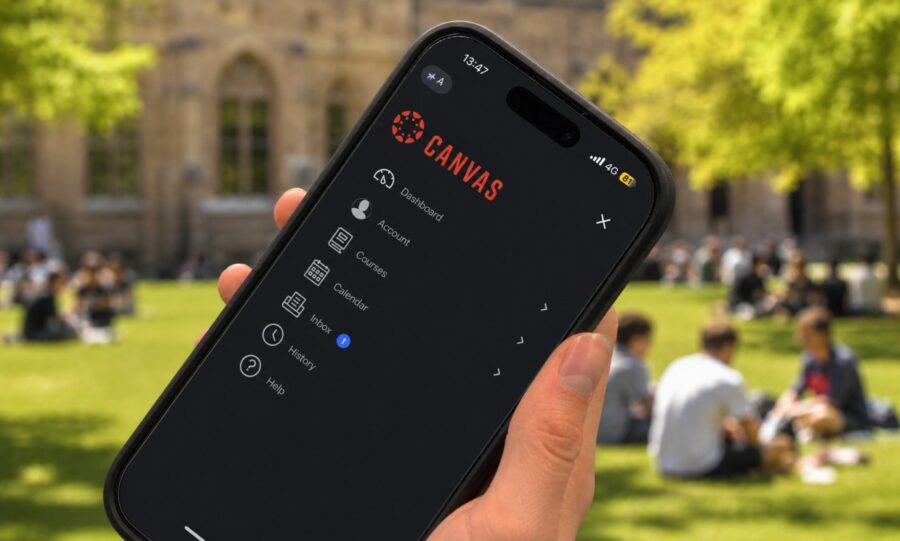

A cyberattack on Canvas, one of the most widely used learning management systems in education, has become a live test of how fragile modern school infrastructure can be when a single vendor is hit.
Instructure, the company behind Canvas, placed Canvas, Canvas Beta and Canvas Test into maintenance mode on May 7 after users at schools and universities reported login failures and suspicious messages linked to the hacking group ShinyHunters.
The disruption landed at one of the worst possible moments: finals season. Students at thousands of schools rely on Canvas for grades, assignments, lecture videos, course notes and exam materials.
The Associated Press reported that some students were cut off from readings and final-grade access, while schools, including the University of Texas at San Antonio, moved Friday exams in response to the outage.
Table of Contents
ToggleWhat Instructure Says Was Exposed
Instructure disclosed on May 1 that it had experienced a cybersecurity incident involving a criminal threat actor. In a later update, chief information security officer Steve Proud said the company believed the incident had been contained and had revoked privileged credentials, access tokens, deployed patches, rotated certain keys and increased monitoring across platforms.
The company said the data involved appeared to include names, email addresses, student ID numbers and messages among users at affected institutions. It said it had found no evidence that passwords, dates of birth, government identifiers or financial information were involved.
That distinction matters, but it does not make the breach harmless. Student IDs, email addresses and internal messages can still be used for phishing, impersonation, harassment or targeted scams. The University of Texas at Austin, in its own notice, told users to watch for phishing messages and to access Canvas only through official links.
ShinyHunters Raises The Pressure
ShinyHunters claimed responsibility for the breach, according to multiple reports. Wired reported that the hackers had advertised the breach and attempted to pressure Instructure since May 1, while later defacing some Canvas login pages and directing schools to negotiate before a stated May 12 deadline. Wired also noted that the hackers claimed more than 8,800 schools were affected, though the exact scope remained unclear.
Reuters reported that student newspapers at Harvard, Penn, Duke, UCLA and Nebraska described students being blocked from Canvas or redirected to messages attributed to ShinyHunters.
The Daily Pennsylvanian reported that schools named by the hackers were told to make contact before May 12 if they wanted to avoid their data being released.
Security researchers have cautioned that claims from extortion groups should be treated carefully.
Wired cited Allison Nixon of Unit 221b, who warned that groups using well-known criminal brands have sometimes exaggerated breaches with old or recycled data. Still, the outage, institutional alerts and Instructure’s own breach confirmation show that the operational impact was real.
Education’s Single-Platform Risk
The Canvas incident shows how ransomware has evolved. The old model was simple: encrypt a victim’s systems and demand payment. The newer model leans harder on stolen data, public pressure, defacement, deadlines and institutional panic.
Canvas sits at the center of daily academic life. When it goes down, classrooms lose assignment portals, grades, lecture slides, quizzes, messages and course calendars at once.
That makes a vendor-level education breach different from a narrow IT outage. It can disrupt instruction across schools that did not choose, manage or secure the compromised vendor environment directly.
The impact also crossed borders. Australia’s ABC News reported that universities, vocational providers and public schools in at least two states were affected, with the federal National Office of Cyber Security coordinating a response. The outlet said names, places of study, email addresses and user messages were among the details believed to have been compromised.
The Bigger Lesson
The clearest lesson is not that schools should abandon digital learning platforms. That is unrealistic. The lesson is that education systems need stronger vendor-risk planning, faster contingency workflows and clearer breach communication before the next disruption lands during exams.
For students and staff, the immediate risk is likely to come through phishing and impersonation. For institutions, the longer-term question is sharper: how much of school life should depend on one platform, and how quickly can teaching continue when that platform becomes the crime scene?
Related Posts:
- Should Schools Replace Homework With Supervised Practice?
- Safest Cities in California in 2026: An Honest,…
- The Ongoing Battle in Higher Education Over Using…
- The 100 Most Dangerous Cities in America (2026):…
- 2026 Bar Exam Changes In The United States: NextGen…
- NextGen Bar Exam Guide: Key Changes Foreign…