
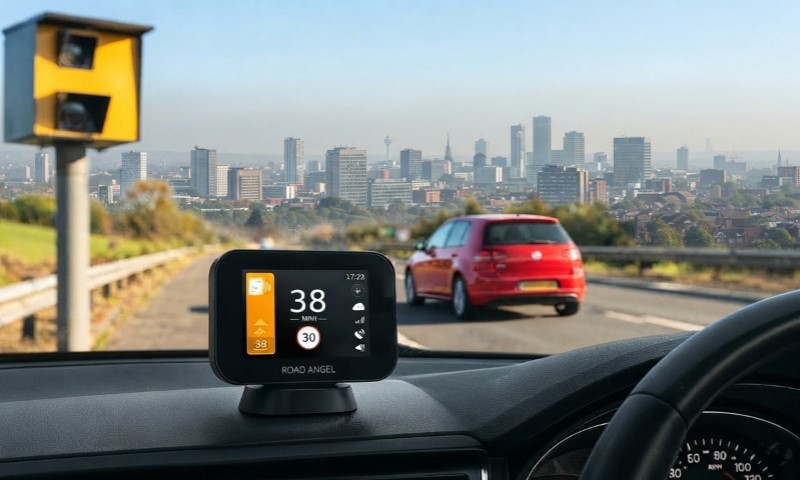

Speeding penalties have traditionally relied on fines, points, court orders, and license suspensions. Growing concern about repeat and extreme speeding, however, is pushing several states toward technology that can directly restrict or discourage how fast certain motorists drive.
Intelligent Speed Assistance, commonly called ISA, is becoming one option for dealing with drivers who repeatedly commit serious speeding violations.
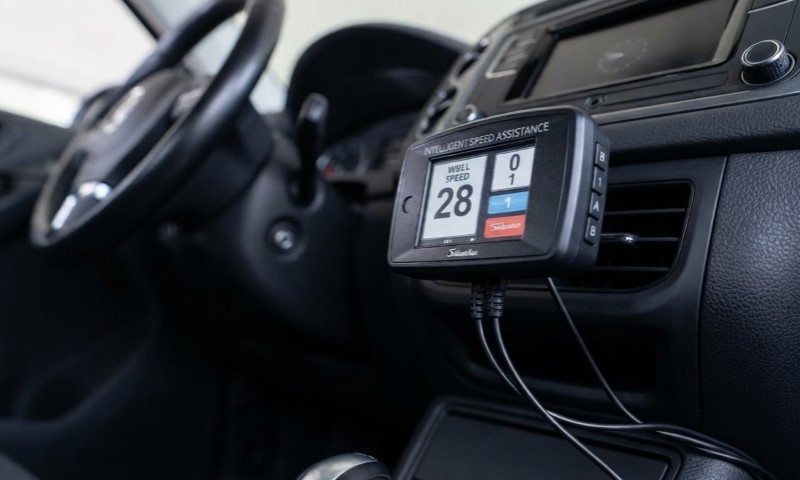
Active ISA systems can limit a vehicle’s speed based on the posted speed limit, while passive ISA systems warn the driver without physically preventing additional acceleration. That distinction is important because states are taking different approaches to the technology.
License suspension also does not necessarily prevent every suspended motorist from continuing to drive. Washington lawmakers cited national data indicating that more than 70% of people with suspended licenses continue driving during the suspension period.
Supporters of active ISA programs view the technology as a way to reduce dangerous speeding while allowing qualifying drivers to retain limited access to transportation.
Why Supporters Favor Speed Limiters
Speed continues to play a major role in serious and fatal crashes.
Washington lawmakers noted that more than 30% of fatal crashes in the state involved speeding in 2023. The state’s 2025 legislation established an ISA framework that will take effect on January 1, 2029.
Rather than relying exclusively on punishment after an offense, active ISA can directly restrict the behavior that led to the penalty.
Supporters see several practical advantages in these programs:
- Excessive speeding can be restricted before another violation occurs.
- Qualifying drivers can retain transportation for employment, education, medical appointments, and family responsibilities.
- Restrictions target speeding directly rather than relying only on fines or license penalties.
- Technology can provide an alternative in some cases where a complete license suspension would otherwise apply.
Traditional enforcement often depends on a driver deciding to comply after receiving a ticket or losing driving privileges.
Active ISA changes that relationship by adding an electronic restriction that can prevent the equipped vehicle from exceeding a programmed speed threshold.
Supporters also argue that controlled driving can reduce some of the practical consequences associated with suspension. Losing access to a vehicle can create difficulties for people who need transportation for work and essential daily responsibilities, particularly in areas with limited public transit.
ISA programs attempt to preserve some mobility while restricting dangerous speeding behavior.
How Speed-Limiting Devices Work
Active Intelligent Speed Assistance systems can combine GPS location data, digital speed-limit information, and vehicle electronics to determine the applicable speed limit and restrict the vehicle accordingly.
The exact design depends on the state and program.
Washington law, for example, requires its approved ISA devices to use GPS technology and to be programmed to limit a vehicle to the posted speed limit. The system must also include an override function, but the driver may use it on no more than three occasions in a calendar month.
Virginia defines an intelligent speed assistance system as one that limits the speed a motor vehicle is capable of traveling based on the applicable speed limit where the vehicle is being operated.
Passive ISA works differently. Instead of preventing the vehicle from exceeding a threshold, it alerts the driver.
California’s SB 961 illustrates this distinction. The proposed system would have provided visual and audible warnings when a driver exceeded the speed limit by more than 10 mph, but it would not have physically prevented the driver from accelerating further.
Similar technological restrictions are already familiar in other areas of traffic enforcement. Ignition-interlock devices, for example, can place conditions on vehicle operation for motorists convicted of certain alcohol-related driving offenses.
ISA applies a related technological approach to speeding.
States Adopting or Considering Speed-Limiting Technology
| State | Approach | Key Rules or Status |
| California | Passive ISA proposed for new vehicles | SB 961 would have required warnings in most new vehicles beginning with the 2030 model year; Governor Gavin Newsom vetoed the bill in 2024 |
| New York | Active ISA proposed for repeat offenders | Pending legislation would require speed limiters for qualifying drivers with repeated violations |
| Washington | Active ISA enacted | Requirements take effect January 1, 2029, for qualifying drivers |
| Virginia | Active ISA enacted | Courts can order or offer ISA in specified reckless-driving and other cases |
| Illinois | Active ISA program | Applies to drivers who commit two qualifying offenses within 12 months |
| Maryland | Active ISA pilot enacted | Pilot program must be established by October 1, 2027 for qualifying drivers |
Eligibility rules, installation periods, enforcement methods, and the type of ISA technology differ considerably from state to state.
California
View this post on Instagram
California came close to adopting a much broader approach to Intelligent Speed Assistance than the offender-focused programs being introduced in other states.
SB 961 would have required passive speed-warning technology in new passenger vehicles, trucks, and buses sold or leased in California beginning with the 2030 model year. Unlike active ISA systems that can physically restrict vehicle speed, California’s proposal would have alerted drivers when they exceeded the speed limit by more than 10 mph rather than preventing further acceleration.
The bill passed both chambers of the California Legislature before Governor Gavin Newsom vetoed it. According to Senator Scott Wiener’s response to the veto, the proposal was supported by organizations including AAA, Mothers Against Drunk Driving, the National Safety Council, and the National Transportation Safety Board.
Newsom cited federal vehicle-safety rulemaking as a key reason for the veto, raising concerns about creating a patchwork of state-level vehicle regulations while the National Highway Traffic Safety Administration was considering related federal requirements. Coverage of the veto provides additional details on the governor’s reasoning.
The stakes in California are significant. According to figures from the California Office of Traffic Safety cited by supporters of SB 961, approximately one-third of all traffic fatalities in the state between 2017 and 2021 were speeding-related.
Speed can be particularly consequential when pedestrians are involved. Court House Lawyers, a Glendale personal injury firm, notes that speed is frequently contested in pedestrian injury claims — not whether a driver was speeding, but by how much, because the difference between a survivable impact and a fatal one can fall within a narrow band of speed.
Although SB 961 did not become law, California’s proposal provides an important contrast with the active ISA programs covered in other states. Rather than targeting only motorists with repeated or extreme speeding violations, it would have introduced passive speed-warning technology across most new vehicles sold or leased in the state.
New York
New York lawmakers have considered legislation that would require active ISA devices for certain repeat speeding offenders, but the proposal should be distinguished from programs that have already become law in other states.
Under current versions of the proposed legislation, an intelligent speed assistance device would cap vehicle speed at five miles per hour above the applicable speed limit while allowing limited additional acceleration when necessary for traffic conditions.
The legislation has targeted drivers who accumulate specified numbers of license points or repeated automated traffic-camera violations.
Because the New York proposal has been amended during the legislative process, exact thresholds have changed between versions. The current legislative status and final text should therefore be checked before describing the program as an enacted statewide requirement.
Washington
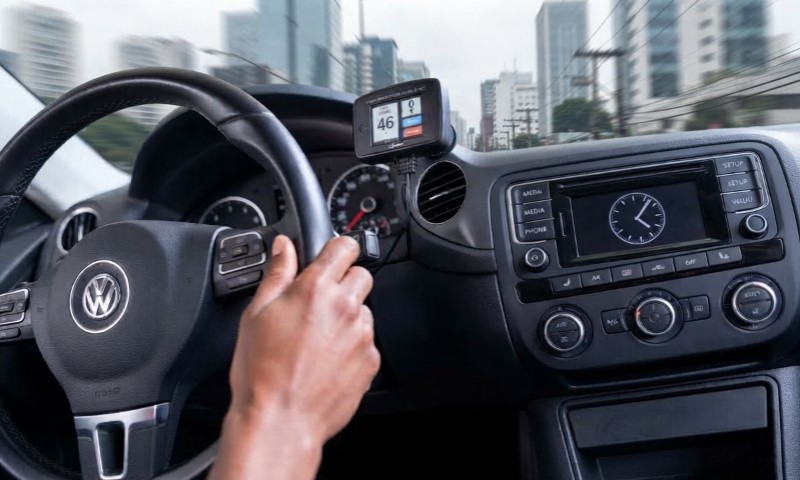
Washington enacted a comprehensive active ISA framework in 2025, with the relevant requirements scheduled to take effect on January 1, 2029.
Under Washington law, qualifying drivers may be restricted to vehicles equipped with functioning intelligent speed assistance devices.
The legislation defines an ISA device as technology designed to actively monitor and prevent a driver from exceeding a preset limit.
For qualifying offenses involving excessive speeding, courts can require an ISA-equipped vehicle for at least six months. The law also incorporates ISA requirements into certain probation and restricted-license situations.
Washington’s approved systems must use GPS technology and be programmed to limit the vehicle to the posted speed limit. Drivers are allowed to override the restriction no more than three times during each calendar month.
The law also prohibits tampering with or circumventing the device.
Virginia
Virginia has established an Intelligent Speed Assistance Program that can serve as an alternative to license suspension in specified cases.
Courts may require enrollment for certain reckless-driving convictions for a period ranging from 60 days to six months.
The rules become particularly strict at extreme speeds. When a person is convicted of reckless driving and was found to have been traveling faster than 100 mph, the court must order enrollment in the ISA program unless it instead suspends the person’s driver’s license.
Virginia also allows ISA to be used in some cases involving accumulated demerit points and certain repeat driving offenses.
Participants must generally install a certified ISA system on each vehicle they own or that is registered to them and may not operate a vehicle without a functioning certified system while enrolled in the program.
Illinois
Illinois has also established an Intelligent Speed Assistance Program for qualifying repeat offenders.
The program applies when a driver commits two qualifying offenses within a 12-month period.
Under the Illinois framework, participating drivers receive an Intelligent Speed Assistance Permit that restricts them to operating vehicles equipped with an active ISA device.
The length of the restriction depends on the driver’s history and compliance with the program. The law also establishes administrative requirements for approved devices, service providers, installation, monitoring, and program participation.
The approach combines traditional license consequences with technology designed to directly restrict repeated speeding.
Maryland
Maryland enacted legislation in 2026 establishing an Intelligent Speed Assistance System Pilot Program.
The law requires the program to be established by October 1, 2027.
Qualifying individuals whose licenses would otherwise be subject to certain suspensions or revocations can be required to participate in the program and receive restricted licenses during the applicable period.
Maryland’s approach therefore creates an alternative to completely removing driving privileges in qualifying cases while using technology to restrict dangerous speeding.
The pilot structure will also give the state an opportunity to evaluate how ISA works in practice before determining whether the approach should be expanded or modified.
FAQs
Summary
Intelligent Speed Assistance is becoming part of the broader debate over how states should respond to repeated and extreme speeding.
Washington, Virginia, Illinois, and Maryland have adopted active ISA approaches for qualifying drivers, although their eligibility requirements and implementation dates differ. New York lawmakers have considered similar restrictions, while California took a substantially different approach with SB 961.
California’s proposal would have placed passive speed warnings in most new vehicles beginning with the 2030 model year rather than physically restricting the speed of repeat offenders. The measure passed the Legislature but was vetoed by Governor Newsom in 2024.
The different approaches will provide policymakers with information about costs, driver compliance, technological reliability, privacy, and the potential effect of ISA systems on dangerous speeding.