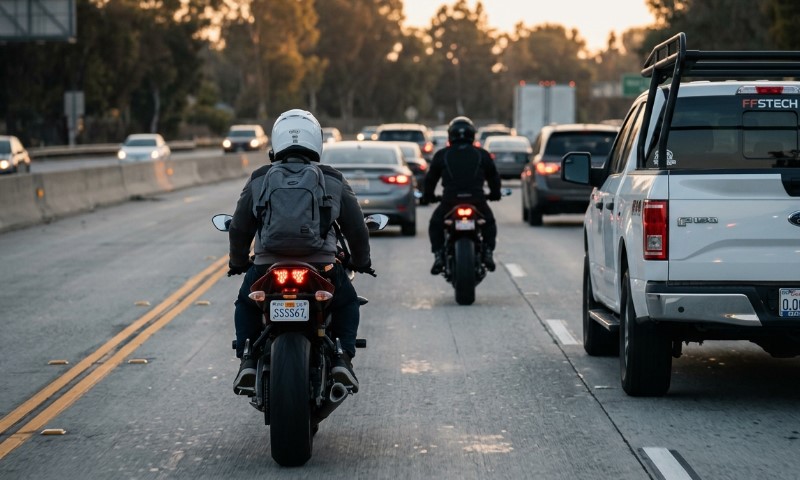

Motorcycle lane-splitting laws matter because rules change by state.
In 2026, California and Minnesota will allow lane splitting. Arizona, Colorado, Montana, and Utah allow limited lane filtering. Most other states prohibit it or do not clearly authorize it.
Lane splitting usually means riding between lanes of stopped or moving traffic.
Lane filtering usually means riding slowly between stopped vehicles, often at an intersection or in traffic backup.
Riders should check current state statutes before riding between lanes.
A practice allowed in one state may lead to a ticket in another.
2026 Lane Splitting Laws By State
| State | 2026 Status | Lane Splitting Legal? | Lane Filtering Legal? | Key Restrictions | Notes |
| Alabama | Illegal or not clearly authorized | No | No | No clear permission | Broader traffic laws may apply |
| Alaska | Illegal or not clearly authorized | No | No | No clear permission | Rider may face improper passing arguments |
| Arizona | Limited filtering allowed | No | Yes | Stopped traffic, 45 mph or lower road, 15 mph max | Filtering only |
| Arkansas | Gray area | No clear permission | No clear permission | No specific authorization | Unsafe passing rules may apply |
| California | Legal lane splitting | Yes | Yes | Must be safe and prudent | Full lane splitting model |
| Colorado | Limited filtering allowed | No | Yes | Stopped traffic, 15 mph max, pass left, safe space | Moving-traffic splitting restricted |
| Connecticut | Illegal or not clearly authorized | No | No | No clear permission | Check current code before riding |
| Delaware | Illegal or not clearly authorized | No | No | No clear permission | Broader lane rules may apply |
| Florida | Illegal or not clearly authorized | No | No | No clear permission | Passing within same lane may create risk |
| Georgia | Illegal or not clearly authorized | No | No | No clear permission | Lane-use rules may apply |
| Hawaii | Limited shoulder-related allowance | No | Limited | Certain shoulder use has been allowed in specific settings | Not full lane splitting |
| Idaho | Illegal or not clearly authorized | No | No | No clear permission | Check current enforcement |
| Illinois | Commonly considered illegal | No | No | Lane-use and passing rules create risk | Often cited as not allowing lane splitting |
| Indiana | Commonly considered illegal | No | No | No clear permission | Passing rules may apply |
| Iowa | Commonly considered illegal | No | No | No clear permission | Lane-use rules may apply |
| Kansas | Illegal or not clearly authorized | No | No | No clear permission | State law does not clearly allow it |
| Kentucky | Gray area | No clear permission | No clear permission | No specific authorization | Broader traffic laws may apply |
| Louisiana | Illegal or not clearly authorized | No | No | No clear permission | Risk of citation |
| Maine | Illegal or not clearly authorized | No | No | No clear permission | Check current code |
| Maryland | Commonly considered illegal | No | No | No clear permission | Motorcycle lane-use rules may apply |
| Massachusetts | Commonly considered illegal | No | No | No clear permission | Riders risk tickets |
| Michigan | Commonly considered illegal | No | No | No clear permission | Lane-use rules may apply |
| Minnesota | Legal lane splitting and filtering | Yes | Yes | Effective July 1, 2025, speed and location limits apply | Newer law with restrictions |
| Mississippi | Illegal or not clearly authorized | No | No | No clear permission | Unsafe passing rules may apply |
| Missouri | Gray area | No clear permission | No clear permission | No specific authorization | Ticket risk can still exist |
| Montana | Limited filtering allowed | No | Yes | 20 mph max, stopped or slow traffic, safe space | Filtering only |
| Nebraska | Illegal or not clearly authorized | No | No | No clear permission | Check local enforcement |
| Nevada | Commonly considered illegal | No | No | No clear permission | Often treated as not allowed |
| New Hampshire | Illegal or not clearly authorized | No | No | No clear permission | Passing rules may apply |
| New Jersey | Illegal or not clearly authorized | No | No | No clear permission | Ticket risk is high |
| New Mexico | Illegal or not clearly authorized | No | No | No clear permission | Check current statute |
| New York | Illegal or not clearly authorized | No | No | No clear permission | Often enforced through lane-use rules |
| North Carolina | Gray area | No clear permission | No clear permission | No specific authorization | Unsafe passing arguments may apply |
| North Dakota | Illegal or not clearly authorized | No | No | No clear permission | Check current code |
| Ohio | Gray area | No clear permission | No clear permission | No specific authorization | Broader lane laws may apply |
| Oklahoma | Commonly considered illegal | No | No | No clear permission | Motorcycle lane-use rules may apply |
| Oregon | Commonly considered illegal | No | No | No clear permission | Prior proposals have not created full permission |
| Pennsylvania | Illegal or not clearly authorized | No | No | No clear permission | Passing rules may apply |
| Rhode Island | Illegal or not clearly authorized | No | No | No clear permission | Check current statute |
| South Carolina | Illegal or not clearly authorized | No | No | No clear permission | No full permission |
| South Dakota | Illegal or not clearly authorized | No | No | No clear permission | Ticket risk may exist |
| Tennessee | Illegal or not clearly authorized | No | No | No clear permission | Lane-use rules may apply |
| Texas | Commonly considered illegal | No | No | No clear permission | Proposed bills have not made it broadly legal |
| Utah | Limited filtering allowed | No | Yes | 45 mph or lower road, stopped traffic, 15 mph max | Filtering only |
| Vermont | Illegal or not clearly authorized | No | No | No clear permission | Check current enforcement |
| Virginia | Commonly considered illegal | No | No | No clear permission | Lane-use rules may apply |
| Washington | Commonly considered illegal | No | No | No clear permission | No broad authorization |
| West Virginia | Illegal or not clearly authorized | No | No | No clear permission | Broader traffic laws may apply |
| Wisconsin | Commonly considered illegal | No | No | No clear permission | Lane-use rules may apply |
| Wyoming | Illegal or not clearly authorized | No | No | No clear permission | Check current statute |
State laws differ sharply across the country. Some states define lane splitting or filtering directly, while others leave riders to deal with broader traffic rules that may still make riding between lanes risky.
California Lane Splitting Law
California is the best-known lane splitting state.
California Vehicle Code 21658.1 defines lane splitting as operating a two-wheeled motorcycle between rows of stopped or moving vehicles in the same lane.
California formally legalized lane splitting on January 1, 2017.
California allows lane splitting on roads with two or more lanes moving in the same direction. Riders must split safely.
Safety guidance includes:
- Avoid large speed differences.
- Avoid riding near trucks, buses, and large vehicles.
- Use extra caution in rain, darkness, glare, debris, narrow lanes, and heavy congestion.
- Do not split lanes at unsafe speeds.
California uses comparative negligence. Unsafe lane splitting can reduce a rider’s recovery after a crash.
Minnesota Lane Splitting And Filtering Law
Minnesota legalized lane splitting and filtering effective July 1, 2025.
Minnesota allows lane splitting between lanes of moving traffic, but speed restrictions apply. A rider may not travel more than 15 mph faster than nearby traffic.
Minnesota also allows lane filtering when traffic is stopped.
Restrictions apply in school zones, work zones, roundabouts, ramps, and turn lanes. Riders should verify the current statute before riding between lanes.
Arizona Lane Filtering Law
Arizona allows lane filtering, not full lane splitting.
A two-wheeled motorcycle may pass stopped vehicles between lanes when:
- Traffic is stopped.
- Road speed limit is 45 mph or less.
- Motorcycle speed is 15 mph or less.
- Conditions allow safe passing.
What Riders Should Know
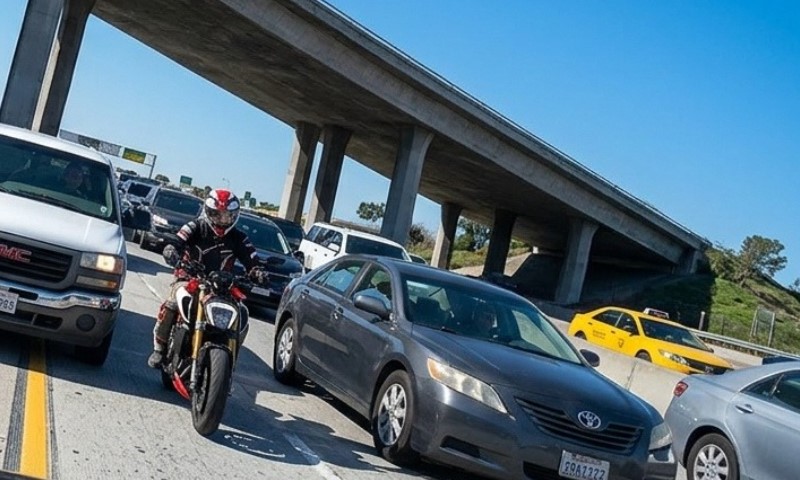
Arizona riders should filter only when vehicles are stopped. Passing moving traffic between lanes can lead to a citation or fault dispute after a crash.
Colorado Lane Filtering Law
Colorado allows limited lane filtering.
A motorcycle may pass stopped traffic when:
- Vehicles are stopped.
- Traffic is moving in the same direction.
- Lane space is safe.
- Motorcycle speed is 15 mph or less.
- Rider passes on the left side of the vehicle being passed.
Colorado does not allow lane splitting through moving traffic. Riders must merge back once traffic starts moving.
Montana Lane Filtering Law
Montana allows lane filtering under speed and safety limits.
A two-wheeled motorcycle may filter when:
- Traffic is stopped or slow-moving.
- Lanes are wide enough.
- Motorcycle speed is 20 mph or less.
- Conditions allow safe passing.
Montana’s law allows low-speed filtering, not aggressive lane splitting.
Utah Lane Filtering Law
Utah allows lane filtering only under specific conditions.
Filtering is allowed when:
- Road speed limit is 45 mph or less.
- Traffic is stopped.
- Motorcycle speed is 15 mph or less.
- Road has two or more lanes in the same direction.
Utah does not allow unrestricted lane splitting.
Who Is At Fault If A Crash Happens While Lane Splitting?
View this post on Instagram
Fault depends on state law and conduct.
In legal states, a rider can still be partly or fully liable for unsafe lane splitting.
In illegal or unclear states, insurers may argue that lane splitting itself created the risk.
California Liability Example
California uses comparative negligence.
Example: A driver changes lanes without signaling. A rider is splitting lanes too fast. Fault may be divided between both parties.
Riders injured in a California lane-splitting crash may benefit from speaking with California motorcycle accident injury attorneys who handle motorcycle crash claims, fault disputes, insurance issues, and injury compensation.
A rider’s compensation can be reduced by the rider’s share of fault.
Evidence That Matters After A Lane Splitting Crash
Useful evidence includes:
- Photos of vehicle positions
- Lane markings
- Dashcam video
- Helmet camera video
- Witness statements
- Police report
- Traffic speed
- Motorcycle speed
- Weather and visibility
- Point of impact
- Vehicle damage
- Skid marks
- Road debris
- Turn signal use
States Where Lane Splitting Is Commonly Considered Illegal
Of course, we need to address the states where lane splitting is commonly considered illegal.
| State | Lane Splitting Status | Key Note |
| Illinois | Not clearly authorized | Lane-use and passing rules can support a ticket. |
| Indiana | Commonly treated as illegal | Indiana is generally treated as a no lane splitting state. |
| Iowa | Not clearly authorized | Iowa does not clearly allow motorcycles to pass between lanes. |
| Maryland | Commonly treated as illegal | Maryland is commonly listed as a state that does not allow lane splitting. |
| Massachusetts | Not clearly authorized | Massachusetts does not clearly authorize lane splitting. |
| Michigan | Not clearly authorized | Michigan riders should not assume lane splitting is allowed. |
| Nevada | Commonly treated as illegal | Nevada is generally treated as a state where lane splitting is not allowed. |
| Oklahoma | Not clearly authorized | Oklahoma does not clearly permit lane splitting. |
| Oregon | Not broadly legal | Lane sharing proposals have been considered, but broad permission is not in effect for 2026. |
| Texas | Not broadly legal | Lane splitting proposals have been considered, but broad statewide permission is not in effect for 2026. |
| Virginia | Not clearly authorized | Virginia does not clearly authorize lane splitting. |
| Washington | Not broadly legal | Lane sharing measures have been discussed, but broad lane splitting is not legal in 2026. |
| Wisconsin | Commonly treated as illegal | Wisconsin is generally treated as a state that does not allow lane splitting. |
States With No Clear Lane Splitting Law
Several states are commonly treated as places where lane splitting is not allowed. Riders in these states may face tickets, fault arguments, or insurance disputes after riding between lanes.
What “No Specific Law” Really Means
No specific lane splitting statute does not mean riders are free to split lanes.
Other laws may apply, including:
- Unsafe passing
- Improper lane change
- Reckless driving
- Failure to maintain lane
- Passing within the same lane
- Careless driving
Police and insurers may use those laws after a stop or crash.
Examples Of Gray-Area States
Arkansas, Kentucky, Missouri, North Carolina, and Ohio are often treated as gray-area states.
These states may not name lane splitting directly, but broader lane-use rules can still create ticket risk and liability risk.
Why Do Some States Allow Lane Splitting Or Lane Filtering?
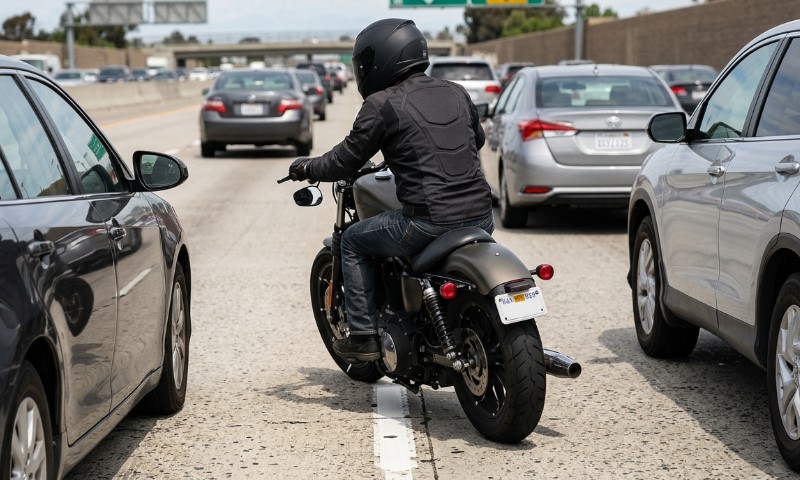
States that allow lane splitting or filtering usually focus on rider safety and traffic flow. Supporters argue that controlled lane sharing can help riders avoid rear-end crashes in stopped traffic.
Potential Safety Benefits
Legal lane splitting or filtering may:
- Reduce rear-end crash risk in stopped traffic.
- Give riders an escape route.
- Improve traffic flow.
- Reduce idling in traffic backups.
Motorcycle groups support legalization when rules are clear and riders use safe speeds. California crash research is often cited because lane splitting can be safer when speed differences are reasonable.
Common Safety Concerns
Main concerns include:
- Drivers may not expect motorcycles between lanes.
- Sideswipe crashes can happen.
- Sudden lane changes can injure riders.
- Enforcement can be difficult.
- Some drivers see the practice as unsafe or unfair.
Is Lane Splitting Safe?
Lane splitting safety depends on speed, conditions, and rider judgment. Low-speed filtering in stopped traffic carries different risks than high-speed splitting through moving vehicles.
What Studies And Motorcycle Groups Say
Lane splitting safety depends on speed, traffic density, lane width, rider skill, driver awareness, weather, and visibility.
Low-speed lane splitting or filtering in stopped or slow traffic is safer than high-speed splitting. Risk increases when a rider travels much faster than nearby vehicles.
When Lane Splitting Becomes Dangerous
Lane splitting becomes dangerous during:
- High-speed traffic
- Poor visibility
- Rain, glare, fog, or darkness
- Narrow lanes
- Heavy truck or bus traffic
- Road debris
- Aggressive driving
- Large speed differences
- Lane Splitting Accident Liability
FAQs
Summary
Lane splitting laws are changing quickly. California allows full lane splitting. Minnesota allows lane splitting and filtering with limits as of July 1, 2025.
Arizona, Colorado, Montana, and Utah allow limited lane filtering. Most states still prohibit lane splitting or do not clearly authorize it.
Riders should check current state statutes before crossing state lines. A legal maneuver in one state may be ticketable in another.