
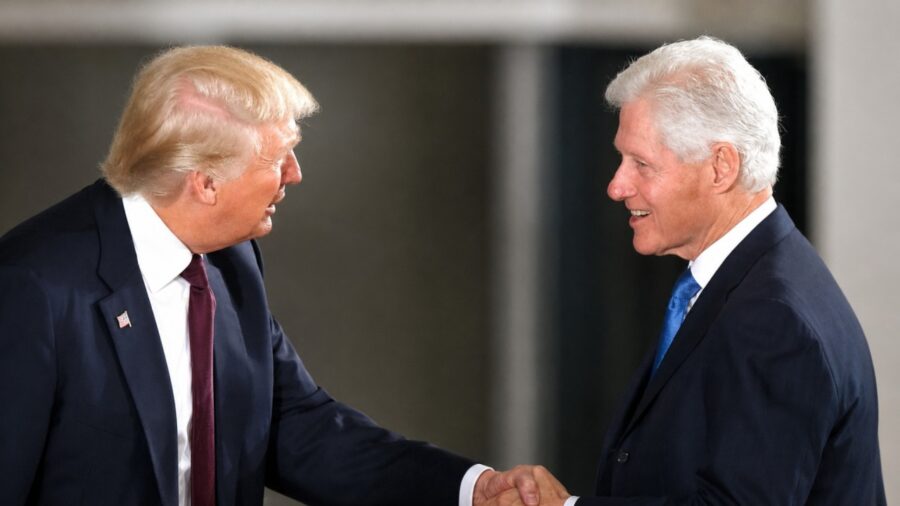

Former President Bill Clinton used America’s 250th Independence Day to deliver a pointed warning about the country’s political direction, criticizing “the people in charge” without naming President Donald Trump directly.
In his July 4, 2026, statement, Clinton framed the anniversary not only as a celebration of the Declaration of Independence, but also as a test of democratic institutions, immigration policy, executive power and national unity. Clinton published the message through his official X account.
Table of Contents
ToggleKey Facts
Clinton’s message, titled “America at 250 and the State of the Country,” said the United States was marking the milestone during “deep division” and “serious threats” to institutions and democracy. ABC News reported that Clinton’s criticism referenced the current administration, while the remarks were widely interpreted as a challenge to Trump during the America250 anniversary weekend.
The former president’s strongest language focused on three areas: immigration enforcement, the war with Iran and what he described as the use of federal power for political ends.
Clinton accused current leaders of sending “masked agents” into communities, starting what he called an “unconstitutional war,” and using government to target enemies and suppress dissent, according to Fox News. The claims were presented by Clinton as political accusations, not as findings by a court or independent investigative body.
Clinton also returned to a familiar theme from his presidency, arguing that America’s strength lies in its ability to correct itself. He said the country’s first 250 years show the United States can continue working toward “a more perfect union,” while repeating his view that the nation’s best qualities remain the cure for its deepest problems.
Latest Verified Update
My statement on America at 250 and the state of the country: pic.twitter.com/WyIzBFxfBq
— Bill Clinton (@BillClinton) July 4, 2026
As of July 6, 2026, the controversy sits within a broader split over how the United States marked its semiquincentennial. Trump delivered his main Independence Day address on the National Mall after a storm-related delay, mixing patriotic themes with political arguments about voting rules, communism and his administration’s record, according to Reuters.
The White House posted video of Trump’s Salute to America remarks on July 5. Reuters reported separately that storms forced an evacuation, crowds faced 103-degree Fahrenheit heat and the speech lasted under 40 minutes. The outlet also reported that polling showed many Americans believed the anniversary events had become too political.
Background and Context
The anniversary marked 250 years since the signing of the Declaration of Independence. A January 29, 2025, White House order created the America’s 250th Birthday task force, with Trump as chair and Vice President JD Vance as vice chair, to coordinate federal commemoration efforts through December 31, 2026, unless extended.
The White House’s Freedom 250 page described a year of events that began on Memorial Day 2025 and continue through the end of 2026. The official Freedom 250 program listed July 4 events on the National Mall, including flyovers, live programming, a 9:45 p.m. Trump address and an 850,000-shell fireworks display scheduled for about 10:30 p.m.
Other former presidents also weighed in on the anniversary. Barack Obama emphasized checks and balances, an independent judiciary, a free press and peaceful transfers of power, while George W. Bush said the next 250 years require Americans to be “citizens, not spectators.”
What Happens Next
Clinton’s statement is unlikely to change policy on its own, but it adds a prominent Democratic voice to the argument that the 250th anniversary has become a referendum on democratic norms under Trump’s second administration. With the 2026 midterm elections approaching, the anniversary rhetoric is already overlapping with disputes over immigration, foreign policy, voting rules and the proper use of federal authority.
The practical next step is political rather than procedural: Clinton and other former presidents are using the anniversary to define patriotism through institutional restraint and civic participation, while Trump and his allies are using it to promote a more combative vision of national revival. The contrast gives the semiquincentennial a sharper role in American politics than a ceremonial birthday alone would normally carry.