
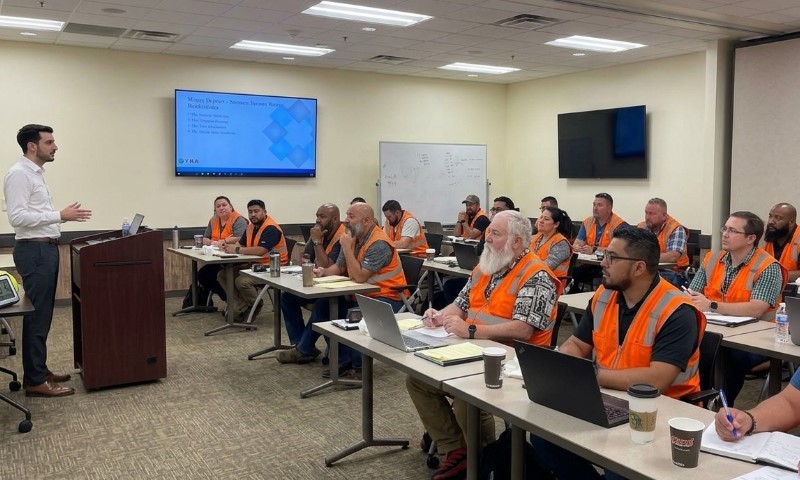

The U.S. Department of Labor has opened $12.787 million in FY 2026 Susan Harwood Training Grants for workplace safety and health education.
Administered by OSHA, the funding supports instructor-led training and classroom-ready materials that help workers and small-business employers identify hazards, avoid injuries, control risk, know worker rights, and meet employer duties under the Occupational Safety and Health Act.
Applications must reach Grants.gov by 11:59 p.m. ET on July 31, 2026. For unions, nonprofits, employer associations, colleges, tribal organizations, OSHA consultation programs, and OSHA Training Institute Education Centers, the grant round offers a federal route to fund practical hazard training in high-risk industries.
Key Facts At A Glance
| Item | 2026 Grant Detail |
| Program | Susan Harwood Training Grant Program |
| Agency | U.S. Department of Labor, OSHA |
| Total funding | $12,787,000 |
| Deadline | July 31, 2026, 11:59 p.m. ET |
| Main categories | Targeted Topic Training and Training and Educational Materials Development |
| Main audience | Small-business employers and workers |
| Apply through | Grants.gov, with SAM.gov registration needed |
OSHA says the program supports training for employers and workers on preventing workplace hazards, while the Federal Register confirms two FY 2026 notices: SHTG-FY-26-01 for Targeted Topic Training and SHTG-FY-26-02 for Training and Educational Materials Development.
What Are Susan Harwood Training Grants?
Susan Harwood Training Grants are OSHA-funded awards for eligible organizations that teach workers and employers how to recognize and prevent job hazards.
The program dates to 1978 and was renamed in 1997 for Dr. Susan Harwood, a former OSHA risk-assessment leader.
In the current round, the practical purpose is narrower than general workforce development: OSHA wants training tied to occupational safety and health, such as chemical exposure, falls, machine guarding, heat, confined spaces, or injury-reporting rights.
A useful proposal needs clear learning goals, job-specific hazard examples, and a way to verify that trainees can apply the lesson.
How The Two Grant Categories Differ
The FY 2026 round has two lanes. One funds delivery of targeted training. The other funds development and validation of classroom-ready materials.
| Grant Category | Best Fit | Award Cap | Performance Period | Core Requirement |
| Targeted Topic Training | Groups ready to train workers and employers directly | $215,000 | Sept. 30, 2026 to Sept. 30, 2027 | Instructor-led training on no more than two OSHA-specified topics |
| Training and Educational Materials Development | Groups building new safety curricula or training tools | $95,000 | Sept. 30, 2026 to Sept. 30, 2027 | New materials on one OSHA-specified topic, validated in class |
Grants.gov lists the Targeted Topic Training cap at $215,000 and the materials-development cap at $95,000, both with a 12-month performance period starting September 30, 2026.
OSHA also limits organizations to one Susan Harwood award per fiscal year, and if multiple applications are submitted, OSHA reviews the last viable package.
Who Can Apply?

Eligible applicants include nonprofit organizations, many public or state colleges and universities, labor unions, employer associations, joint labor-management associations, Indian tribes, OSHA On-Site Consultation entities, and OSHA Training Institute Education Centers.
DOL’s announcement also names community-based, faith-based, and grassroots organizations among eligible nonprofit applicants. Grants.gov lists individuals, for-profit organizations, federal agencies, local governments, non-OSHA-approved state agencies, and 501(c)(4) nonprofits as ineligible for the materials-development opportunity.
Eligibility is only the starting point. OSHA’s release points to small businesses and industries with high injury, illness, and fatality rates, so a focused plan for a defined workforce will likely read better than a generic safety seminar.
Why Hazard Training Still Matters In 2026
Worker-safety data show progress, yet risk remains large enough to justify federal training money. Private industry employers reported 2.488 million nonfatal workplace injuries and illnesses in 2024, down 3.1 percent from 2023; the total recordable case rate fell to 2.3 per 100 full-time equivalent workers, the lowest rate in the series going back to 2003.
Fatal risk remains harder to dismiss. BLS recorded 5,070 fatal work injuries in the United States in 2024, equal to one worker death every 104 minutes. The fatal injury rate was 3.3 deaths per 100,000 full-time equivalent workers, down from 3.5 in 2023, but still a national toll measured in thousands of families each year.
Training alone cannot replace engineering controls, maintenance, enforcement, or management accountability. Still, training can close gaps that appear in everyday failures: a new worker not knowing lockout steps, a roofing crew missing fall-protection mistakes, a warehouse team ignoring heat-stress signs, or an employee assuming retaliation is allowed after a safety complaint.
Why Employee Rights Are Part Of The Grant Focus

Employee rights matter because hazard knowledge loses value when workers cannot speak up.
Workers who believe they were punished for raising safety concerns may need legal guidance beyond workplace training, and employees in Southern California can visit website for information from San Diego employment lawyers.
OSHA says federal law gives employees the right to a safe workplace, safety and health training in a usable language, an OSHA inspection request, injury or illness reporting, injury-log access, exposure-test results, and protection from retaliation. OSHA also gives a 30-day window for whistleblower complaints after retaliation.
Rights training can be practical rather than legalistic. A good course might explain how to read a safety data sheet, who pays for required personal protective equipment, how to report a dangerous machine guard, and what to document after a heat-related incident.
For a small employer, the same class can clarify duties: maintain safe tools, use labels and signs for hazards, train in clear language, post the OSHA notice, keep required records, and report a fatality within 8 hours or an in-patient hospitalization, amputation, or eye loss within 24 hours.
What A Strong Application Should Show
A grant proposal should make OSHA’s risk logic easy to see. Strong applicants will answer four practical questions:
- Which hazard will the training address, and why does the audience face it?
- Who will receive training, in which language, and through which trusted channels?
- What skills should trainees demonstrate by the end?
- How will the applicant prove the training reached workers and improved hazard recognition?
Examples could include fall-prevention training for construction workers, machine-guarding lessons for small manufacturers, or heat-stress training for landscaping crews. In each case, the rights component should be built into the training rather than added as a token slide.
Deadline And Filing Notes

Applicants must submit electronically through Grants.gov by July 31, 2026, at 11:59 p.m. ET. DOL says applicants must register with both Grants.gov and the System for Award Management before applying, so waiting until the final week can create avoidable administrative risk.
The Federal Register notice says the full funding announcements and application information are available through Grants.gov. Near the deadline, the notice also makes a useful distinction: OSHA program questions and Grants.gov technical support are separate.
Bottom Line
The Labor Department’s $12.787 million FY 2026 Susan Harwood grant round is a targeted safety-training opportunity, not a broad workplace grant. The main value sits in hazard awareness, hazard control, worker rights, and employer responsibilities under OSHA law.
Groups that already serve high-risk workers or small employers may have a strong opening, provided they can link training content to real workplace hazards, deliver it in accessible formats, and document results before the September 2027 performance period ends.