
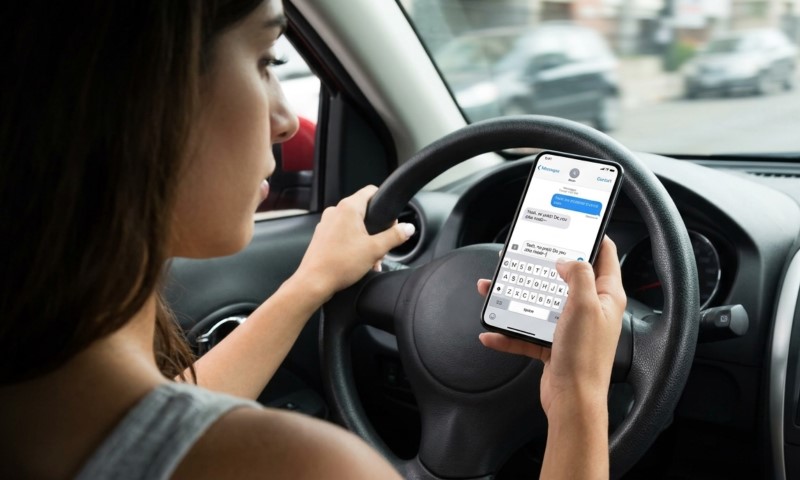

Effective June 2026, Arizona has implemented a more rigorous framework for repeat distracted driving offenses following the enactment of House Bill 2109. While the statutory minimum for a primary violation remains between $75 and $149, the legislative update increases the maximum civil penalty for subsequent infractions from $250 to $400.
Notably, the policy introduces a targeted $150 surcharge for any distracted-driving violation that results in a collision with a motorcycle.
This fiscal adjustment reinforces Arizona’s existing hands-free mandate, which prohibits operators from physically supporting or holding mobile devices, tablets, or stand-alone electronic hardware while a vehicle is in motion.
In the contemporary driving environment, the scope of cognitive distraction extends well beyond conventional text messaging.
Integrative dashboard interfaces, complex navigation systems, and voice-activated assistants present significant attentional demands that can degrade situational awareness on Arizona roadways, as delineated in the HB2109 text.
What Changed In Arizona In 2026?
The 2026 update does not replace the foundational distracted-driving statutes but rather recalibrates the penalty schedule within A.R.S. 28-914. These amendments are designed to increase the deterrent effect for habitual offenders utilizing portable wireless communication devices.
HB2109 reached final executive approval on June 4, 2026. Sponsored by Representative Teresa Martinez, the bill received robust bipartisan support, achieving a 46-10 margin in the House and a 22-6 vote in the Senate, according to the Arizona bill record.
| Rule Area | Before HB2109 | After HB2109 |
| First violation | $75 to $149 | $75 to $149 |
| Second or later violation | $150 to $250 | $150 to $400 |
| Motorcycle crash add-on | No specific add-on | Extra $150 |
| Core hands-free rule | No holding or supporting covered devices | Same core rule |
The escalation of fines is highly surgical. By maintaining the initial fine range while raising the ceiling for recidivism, lawmakers are targeting chronic behavioral issues.
By maintaining the initial fine range while raising the ceiling for recidivism, lawmakers are targeting chronic behavioral issues. However, traffic law experts at Elmm Law Group note that receiving a civil traffic citation is only the beginning of potential legal complications if an accident occurs.
Furthermore, the specific motorcycle-related surcharge reflects a policy priority to mitigate the disproportionate physical risks faced by vulnerable road users when motor vehicle operators engage in high-risk technological distractions.
What Arizona Drivers Can And Cannot Do
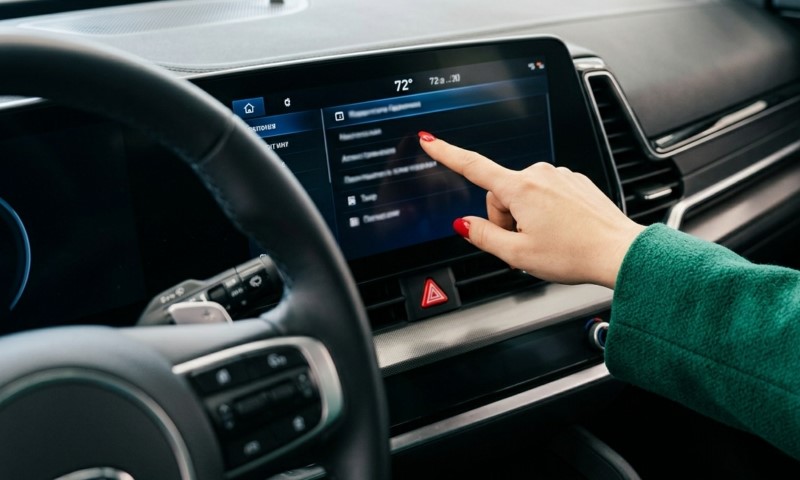
Current regulations permit the use of mobile devices via hands-free interfaces, provided there is no physical support by the operator. Guidance from the Arizona Department of Public Safety clarifies that this prohibition encompasses cell phones, tablets, and gaming or music devices under the hands-free law.
Operators are permitted a single digital action to initiate or terminate communication or navigation functions. However, transportation safety experts emphasize that the legal allowance for a single tap does not mitigate the cognitive distraction inherent in navigating complex digital menus while driving.
The statute preserves exemptions for emergency scenarios, allowing device use to report criminal activity or request urgent assistance. To protect motorist privacy, law enforcement officers are restricted from seizing or inspecting devices during a traffic stop unless authorized by independent legal standards.
Why Dashboard Screens Matter Now
The HB2109 framework acknowledges the ubiquity of factory-installed systems, permitting the use of embedded vehicle interfaces that facilitate hands-free communication. This distinction is critical for the integration of platforms such as Apple CarPlay and Android Auto, as well as native manufacturer infotainment systems.
However, regulatory compliance does not eliminate safety risks. The NHTSA classifies any activity that diverts attention from the driving task as a distraction.
Federal guidelines advocate for limiting visual engagement with in-car tech to two-second intervals, discouraged for complex tasks unless the vehicle is in a parked state, per NHTSA distracted driving protocols.
Research from the AAA Foundation corroborates these concerns, finding that navigation programming and messaging generate high cognitive and visual workloads.
Longitudinal studies suggest that older demographics experience significantly longer task completion times, with some navigation entries requiring up to 40 seconds of diverted attention, according to AAA Foundation research.
Why Phone Distraction Remains The Core Problem
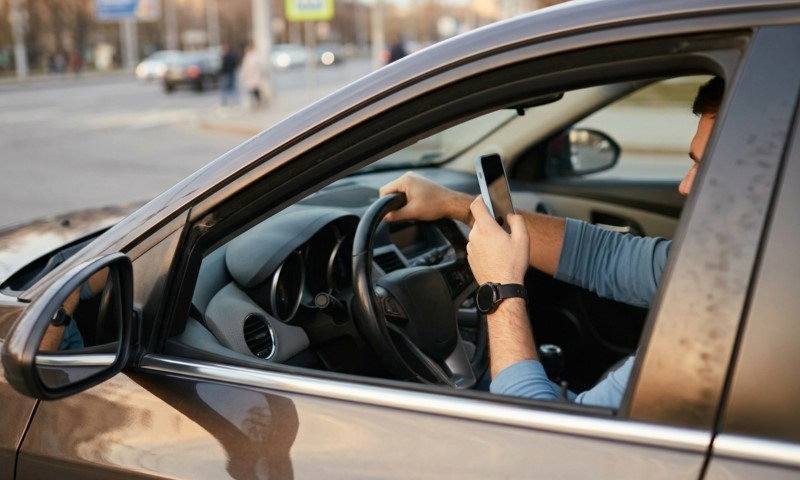
Mobile devices remain the primary source of preventable distraction. In 2024, NHTSA data attributed 3,208 fatalities and over 315,000 injuries to distracted driving incidents across the United States.
Analysts highlight that a five-second visual diversion to a phone at 55 mph results in a vehicle traveling the length of a football field without effective driver oversight.
This suggests that while “phone-to-ear” behaviors are declining, the frequency of tapping and swiping is increasing, as detailed by NSC Injury Facts.
The IIHS further notes that device manipulation is strongly correlated with elevated crash risks, with some naturalistic studies estimating the risk at two to six times higher than undistracted driving, based on IIHS distracted driving data.
Why The Motorcycle Add-On Is Important
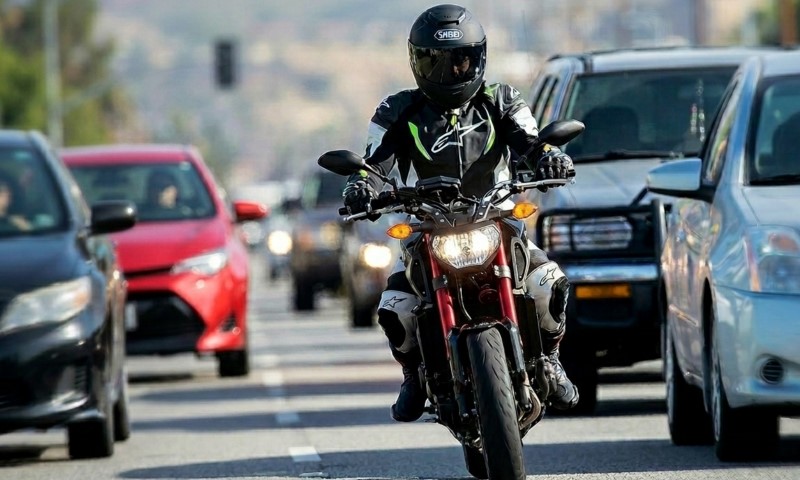
The $150 surcharge for motorcycle-involved collisions serves as a critical policy signal, acknowledging the severe safety disparities inherent in multi-modal traffic environments.
Motorcyclists possess less passive safety protection and lower visual profiles, leaving them uniquely vulnerable to driver errors such as lane deviations or delayed braking caused by technological distraction.
Fatalities among motorcyclists accounted for 16% of total U.S. traffic deaths in 2024, according to NHTSA. This overrepresentation underscores the need for targeted interventions.
In Arizona, where climate and geography support year-round riding, the protection of motorcyclists is a central component of statewide traffic safety, as evidenced in the NHTSA motorcycle data.
Practical Takeaways For Arizona Drivers
The 2026 penalty adjustments should be viewed as a catalyst for behavioral modification and the adoption of safer technological habits.
- Secure mobile devices in a fixed mount before starting the engine.
- Configure all navigation and route parameters prior to vehicle operation.
- Limit voice-activated tool use to essential, low-complexity tasks.
- Eliminate non-essential digital engagement, including video and social media, from the driving environment.
- Utilize safe parking areas for any activities requiring sustained visual or manual attention.
- Practice enhanced visual scanning for motorcyclists before executing lane changes or turns.
From a corporate governance perspective, employers should implement comprehensive mobile-use policies.
Effective safety programs should not only prohibit handheld use but also establish protocols for safe dispatch communication and eliminate organizational pressure for immediate response while in transit.
The Bottom Line
Arizona’s 2026 legislative update increases the maximum penalty for repeat distracted driving to $400 and establishes a specific $150 surcharge for violations involving motorcycle collisions.
The broader objective is to mitigate the rising risks associated with technological temptation in the cabin, which increasingly contributes to preventable traffic incidents.
Sustainable road safety relies on prioritizing the driving task over digital convenience. By managing technology before a trip, motorists can significantly reduce their risk profile and contribute to a safer transportation network.