
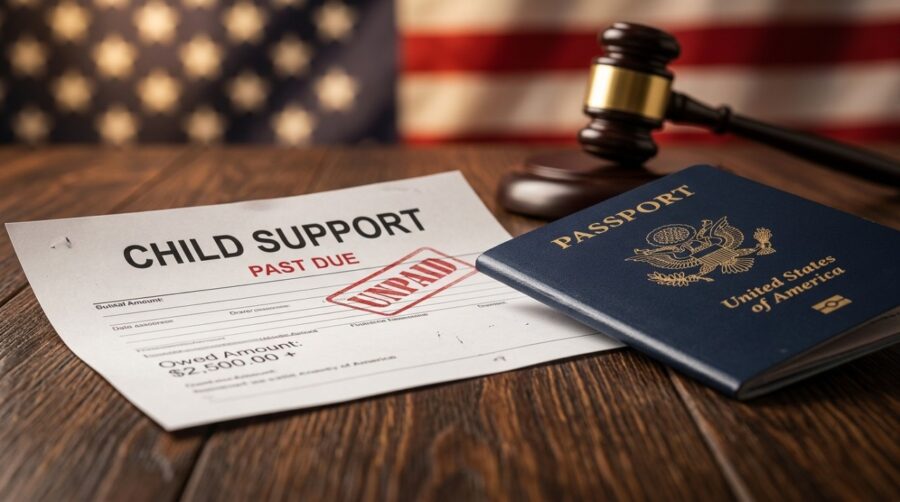

The U.S. State Department has begun revoking valid passports from parents with large unpaid child support debt, marking a sharper use of a federal enforcement tool that had mostly affected people when they applied for or renewed passports.
Table of Contents
ToggleKey Facts
The first phase began May 8, 2026, targeting noncustodial parents who owe more than $100,000 in past-due child support. The initial group covered about 2,700 American passport holders, based on figures supplied to the State Department by the U.S. Department of Health and Human Services, the Associated Press reported.
Federal guidance says Americans who owe more than $2,500 in child support are not eligible for a U.S. passport, and the State Department may revoke a valid passport in those cases. The department says notices are sent by email or to the mailing address from the most recent passport application, according to its official child support passport guidance.
The legal basis is not new. Federal regulations allow passport action when an applicant has been certified by the secretary of Health and Human Services as owing child support arrears under 42 U.S.C. 652(k), as outlined in 22 CFR 51.60.
Latest Verified Update
The clearest recent implementation update came from the Idaho Department of Health and Welfare on May 21, 2026. The agency said the State Department announced on May 8 that passport revocations would begin for parents owing more than $100,000, and that starting June 1, revocations would be implemented for those owing more than $75,000. Idaho officials said the new policy was effective nationwide on May 8, according to the agency’s public notice on the national passport policy.
AFAR, which covered the issue for travel readers, also reported that the June 1 phase would lower the enforcement level to parents owing $75,000 or more, while the broader federal passport ineligibility threshold remains set at $2,500.
Background and Context
The Passport Denial Program has existed for decades as part of child support enforcement. Before the 2026 expansion, the program had helped states collect about $657 million in arrears since it began in earnest in 1998, including more than $156 million in over 24,000 lump-sum payments over the past 5 years, according to Associated Press figures from federal officials.
The change is the move from passive enforcement to proactive revocation. Previously, the penalty mainly applied when someone sought a passport renewal or another consular service. Under the new approach, HHS will provide the State Department with past-due child support records, allowing valid passports to be revoked without waiting for the holder to apply for a new document, according to the AP’s account of the policy shift.
What Happens Next
A revoked passport cannot be used for travel even after the debt is paid. The passport holder must work with the state child support agency, wait for HHS to remove the person from its records, and then apply for a new passport. The State Department says that process may take at least 2 to 3 weeks, according to its passport rules for child support arrears.
Americans abroad whose passports are revoked may contact the nearest U.S. embassy or consulate, but they are eligible only for a limited-validity passport for direct return to the United States until HHS verifies repayment, according to State Department guidance for affected passport holders.
The practical effect is clear: unpaid child support can now affect current international travel rights more directly than before. The broader policy question is how aggressively states and federal agencies will apply the $2,500 threshold after the initial high-debt phases.
Related Posts:
- How Many International Airports Are There In The US in 2026?
- 25 Most Dangerous Cities in US - Updated Statistics for 2026
- America’s Murder Capitals - Updated 2026 Rankings of…
- Social Issues in America: 45 Real Examples, 2026…
- The 100 Most Dangerous Cities in America (2026):…
- Best Places to Retire Abroad in 2026: An Honest…