


Medicare has changed several rules that inpatient rehabilitation facilities must follow in fiscal year 2027, including when therapy has to begin and how quickly the first interdisciplinary care meeting must take place.
The Centers for Medicare & Medicaid Services finalized the changes in July 2026. They apply to patients admitted to an inpatient rehabilitation facility on or after October 1, 2026.
The update is especially relevant for patients recovering from strokes, spinal cord injuries, brain injuries, major orthopedic conditions and other illnesses or injuries that require intensive inpatient rehabilitation.
All Required Therapies Must Now Start Within 36 Hours
The largest clinical change concerns a Medicare requirement that already existed but had caused confusion among rehabilitation facilities.
Under the FY 2027 rule, every therapy treatment or evaluation ordered at admission must begin within 36 hours from midnight on the day of admission. Starting one of several ordered therapies is not enough.
The rule covers applicable physical therapy, occupational therapy, speech-language pathology and prosthetic or orthotic services ordered when the patient enters the facility.
CMS explains the revised requirement in its FY 2027 rehabilitation guidance. If a patient enters an IRF at 2 p.m. Tuesday, for example, the clock begins at midnight Tuesday night. The required therapies would need to start by noon Thursday.
View this post on Instagram
| Admission Example | 36-Hour Clock Begins | Therapy Deadline |
| Tuesday at 2 p.m. | Midnight after Tuesday admission | Thursday at noon |
| Friday at 10 a.m. | Midnight after Friday admission | Sunday at noon |
Weekends and holidays do not pause the clock. Rehabilitation facilities therefore need enough therapy coverage to meet the deadline regardless of the day a patient arrives.
The Rule Applies to Every Therapy Ordered at Admission
The wording is significant because CMS wanted to remove uncertainty over what counted as satisfying the 36-hour rule.
A patient may arrive with orders for physical therapy and occupational therapy, for example. Beginning physical therapy inside the deadline would not satisfy the rule if the ordered occupational therapy had not also started.
A therapy evaluation generally counts as the beginning of that therapy service. The medical record must show when the evaluation or treatment began and which discipline provided it.
The 36-hour requirement applies only to therapies ordered at admission. A new therapy ordered later during the rehabilitation stay does not become subject to the original admission deadline.
Spinal Cord Injury Patients Can Need Several Rehabilitation Services at Once
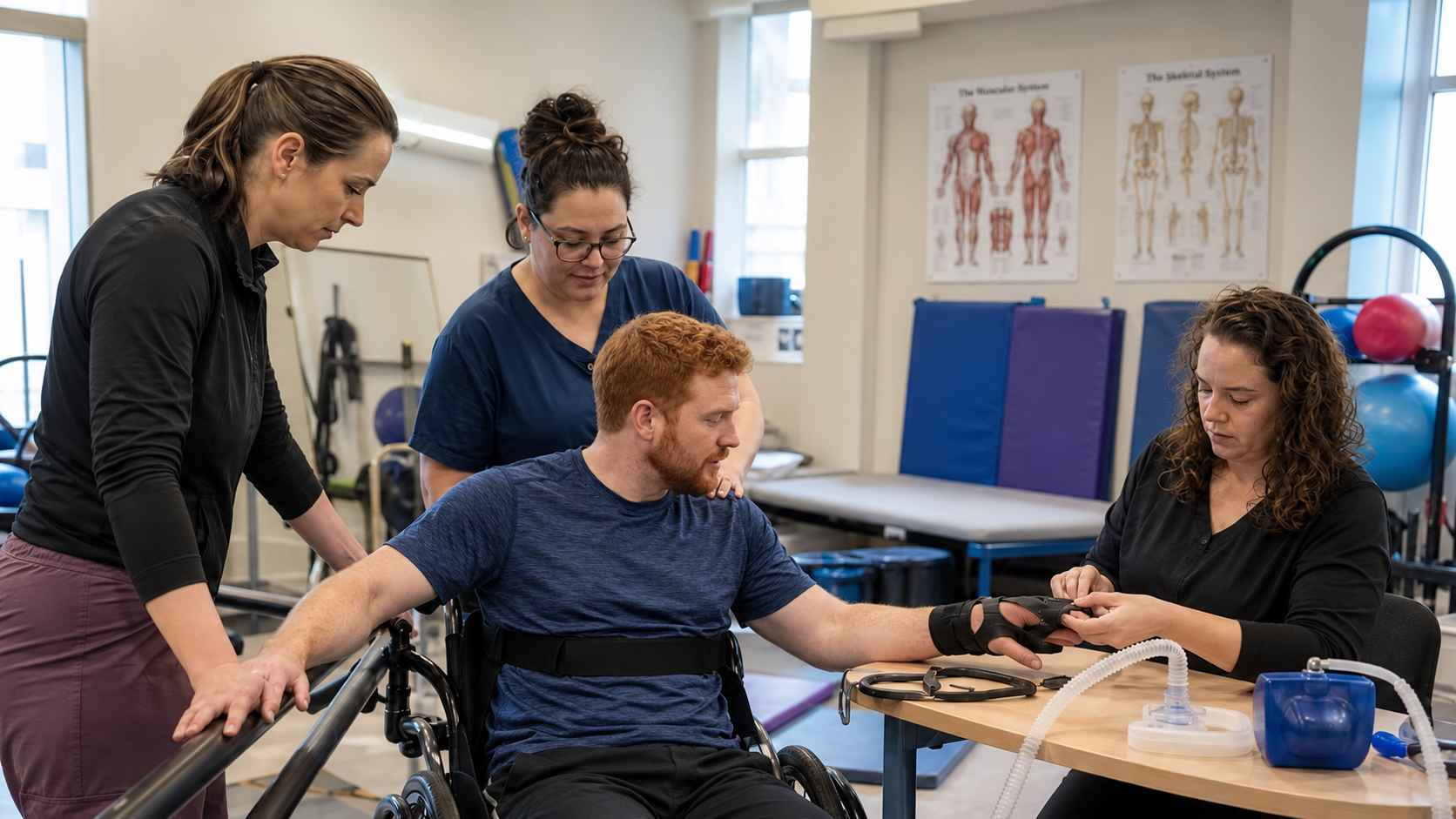
The timing requirement has particular relevance for patients whose conditions call for several types of rehabilitation from the beginning of the stay.
A person with a spinal cord injury may enter inpatient rehabilitation with orders for physical therapy to work on mobility, occupational therapy for daily activities and other services based on individual medical needs. Under the revised rule, all applicable therapies ordered at admission must begin inside the 36-hour period.
Medicare coverage deals with rehabilitation services, but a patient injured because of a vehicle crash, unsafe property or another potentially negligent act can also face a separate legal process involving medical expenses and long-term care needs.
Finding legal help locally can be useful when state law and local court procedures affect an injury claim. For example, someone injured in Missouri should look for local legal help, such as a Kansas City spinal cord injury lawyer about the claim.
The First Rehabilitation Team Meeting Must Happen by Day Four
CMS also changed the timing for the first interdisciplinary team meeting.
Beginning with admissions covered by the FY 2027 rule, the first meeting must take place on or before the fourth day of the inpatient rehabilitation stay.
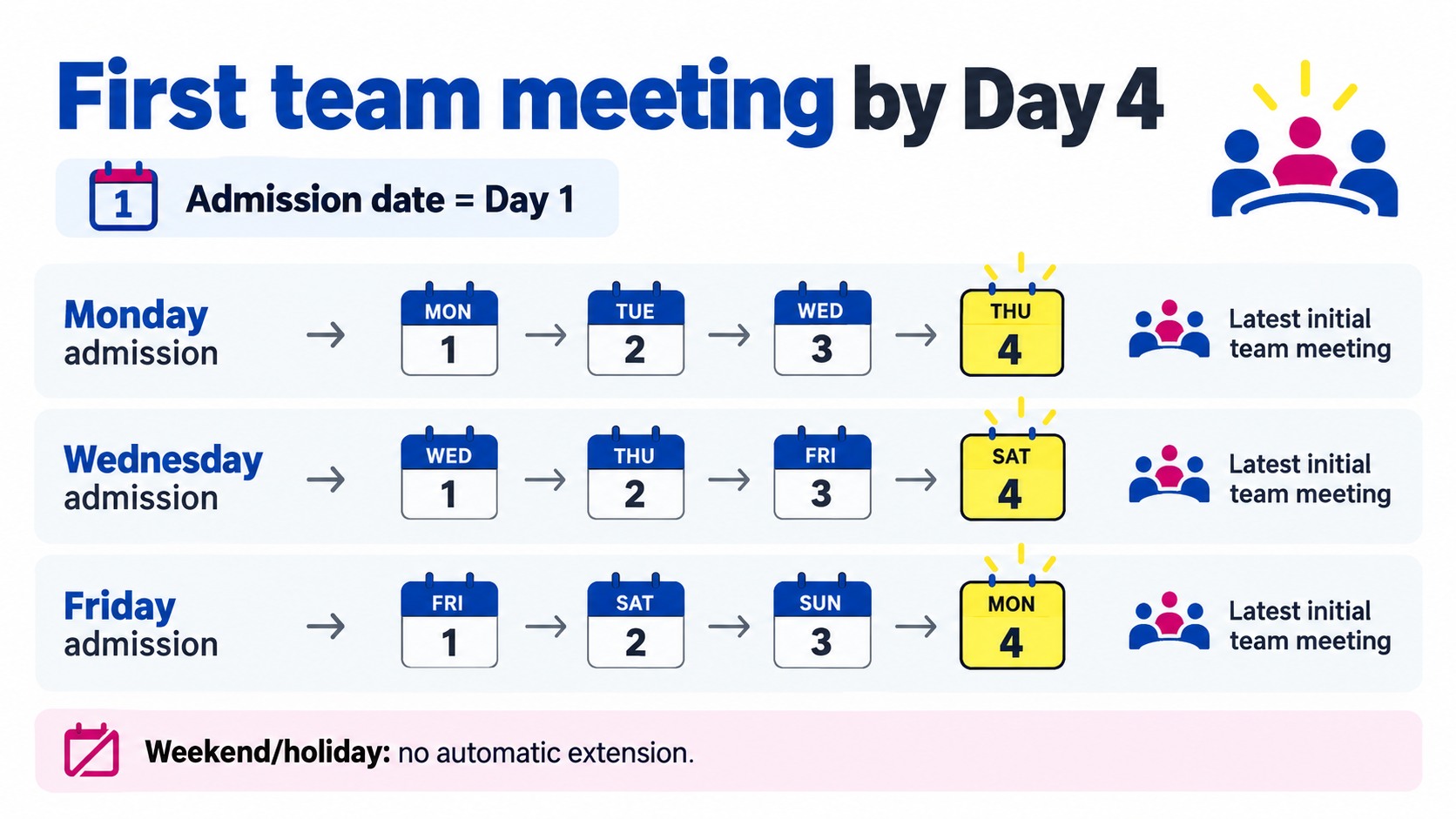
The admission date counts as Day 1.
| Admission Date | Day 1 | Latest Initial Meeting |
| Monday | Monday | Thursday |
| Wednesday | Wednesday | Saturday |
| Friday | Friday | Monday |
A weekend or federal holiday does not create an automatic extension. CMS says inpatient rehabilitation facilities are hospital settings expected to operate seven days a week.
If Day 4 falls on a weekend and the full team cannot meet then, the facility can schedule the meeting earlier rather than miss the Medicare deadline.
The Initial Meeting Has Specific Work to Complete
The interdisciplinary meeting is not simply an administrative check-in.
Under the revised rules, the team must address the therapy services identified before admission and ordered when the patient enters rehabilitation. The team also reviews or establishes rehabilitation goals and identifies problems that could interfere with achieving them.
The meeting record must remain separate from the patient plan of care documentation. Both documents are required even though Medicare now aligns their early timing more closely.
CMS expects the initial meeting and plan of care to be documented by Day 4.
Later Team Meetings Must Occur Every Seven Consecutive Days
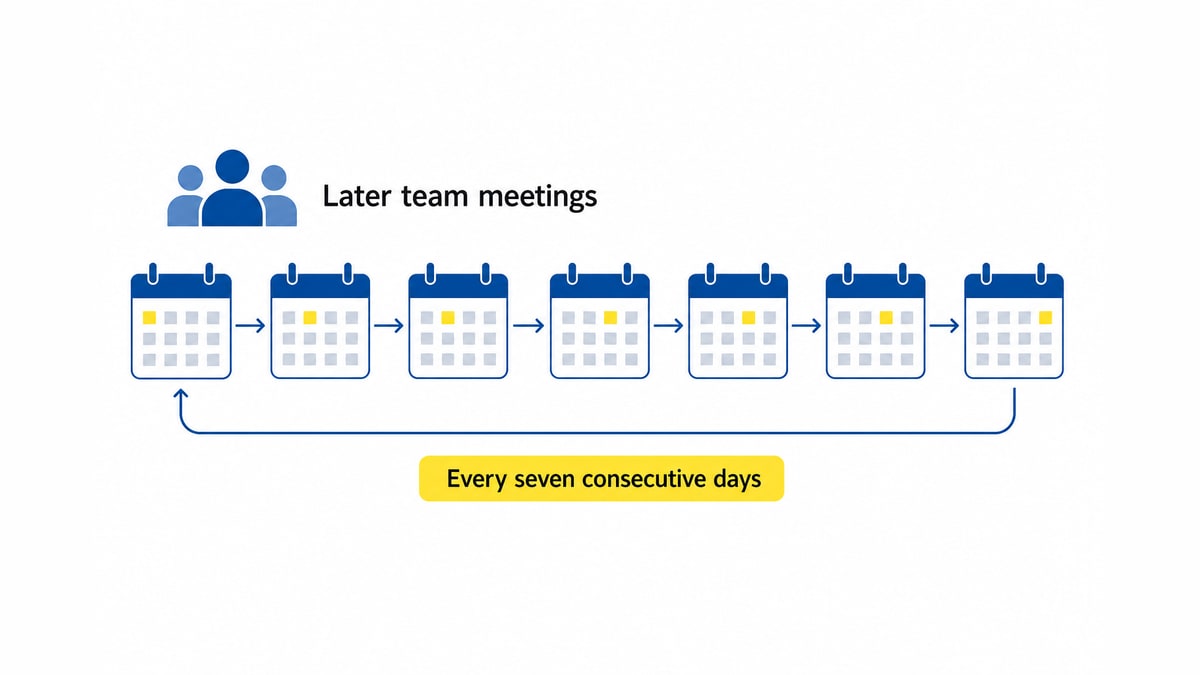
CMS also clarified what “weekly” means for later interdisciplinary meetings.
After the initial meeting, the next one must occur no later than seven consecutive calendar days after the previous meeting. Facilities cannot interpret a week simply as Monday through Sunday if that schedule produces more than seven days between meetings.
If the first meeting occurs on a Tuesday, the next one must happen no later than the following Tuesday.
The seven-day count then starts again from the date of that meeting.
Not Every Team Member Can Join Remotely
The 2027 rule did not turn the interdisciplinary meeting into an entirely virtual process.
CMS says only the rehabilitation physician can participate remotely under the current policy. Other required team members must attend in person.
A physician assistant also cannot replace the rehabilitation physician as the leader of the meeting. CMS did not add a new exception allowing that arrangement in the FY 2027 rule.
Facilities therefore have to manage scheduling around both the four-day deadline and the required participants.

Small Rehabilitation Facilities Do Not Receive a Longer Deadline
CMS did not create a separate timetable for smaller inpatient rehabilitation facilities or hospitals dealing with staffing shortages.
The same 36-hour therapy requirement applies regardless of facility size.
Weekend staffing can therefore become an operational issue. A patient admitted late in the week may reach the therapy deadline during Saturday or Sunday, but the facility still needs to begin every required admission therapy within the specified period.
The same principle applies to the initial interdisciplinary meeting. Staffing difficulty does not automatically move the Day 4 deadline.
The Existing Brief Exception Does Not Extend the 36-Hour Rule
Medicare already has a limited exception related to the intensity of inpatient rehabilitation therapy when an unexpected clinical event or medical procedure interrupts treatment.
CMS specifically states that this policy does not excuse a facility from the new 36-hour requirement.
The two rules deal with different stages of care. The 36-hour provision controls the initiation of therapies ordered at admission. The brief exception applies to the separate therapy-intensity requirement during the rehabilitation stay.
Medicare Still Requires a Preadmission Screening

The FY 2027 changes do not remove the existing preadmission screening process.
Before a Medicare patient enters an inpatient rehabilitation facility, the screening identifies the medical and rehabilitation needs expected during the stay. A rehabilitation physician must review the findings and agree with them before admission.
Those findings then help determine which therapies are ordered when the patient enters the facility.
The connection is important because therapies ordered through the physician concurrence with the preadmission screening can fall under the new 36-hour requirement.
The Rules Affect Medicare Coverage and Facility Documentation
The timing changes are not simply recommendations for how facilities should organize patient care.
CMS says Medicare Administrative Contractors and other medical review contractors can examine compliance through the medical record.
Facilities need documentation showing the admission date and time, which therapies were ordered at admission and when each treatment or evaluation began.
The initial interdisciplinary meeting must also be documented. Later meetings need clear dates so reviewers can determine if the seven-day requirement was met.
Documentation failures can create payment and compliance problems even if the facility believes the patient received appropriate clinical care.
Medicare Raised Inpatient Rehabilitation Payment Rates by 2.3%
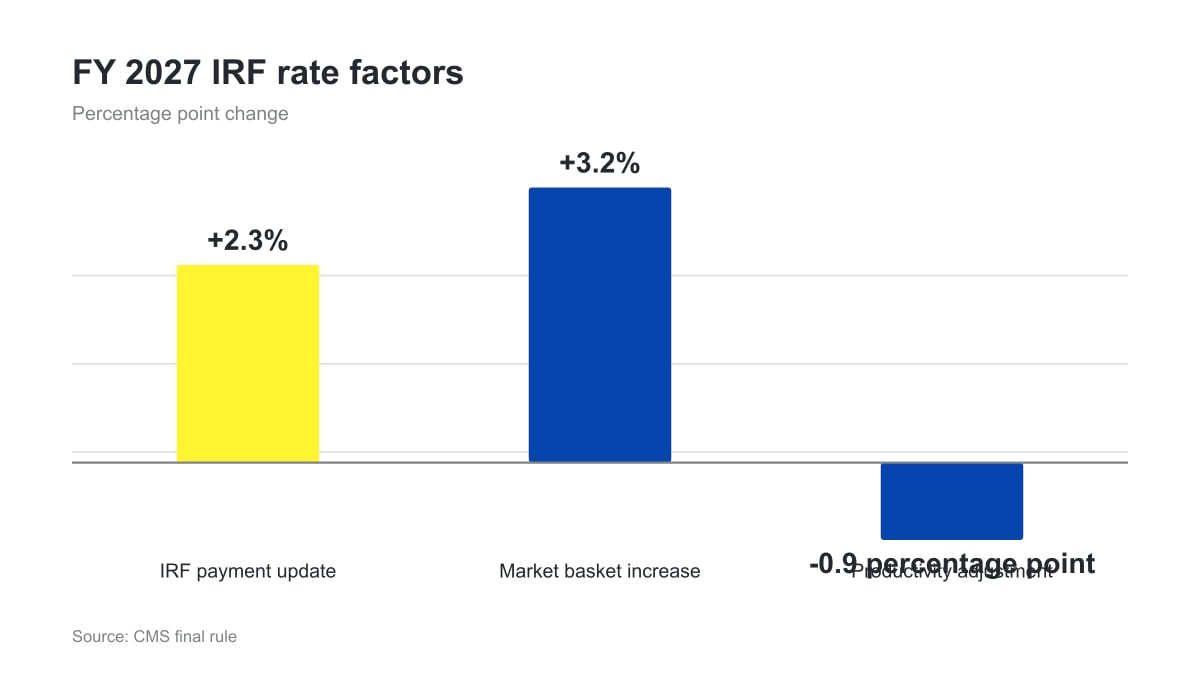
The coverage changes are part of a larger FY 2027 Medicare payment rule.
CMS finalized a 2.3% increase in inpatient rehabilitation facility payment rates. The increase is based on a 3.2% market basket update reduced by a 0.9 percentage point productivity adjustment.
The agency estimates that the technical payment changes will increase Medicare payments to inpatient rehabilitation facilities by about $340 million in FY 2027.
The CMS final rule also includes updated case-mix weights, average lengths of stay, wage indexes and the outlier threshold.
| FY 2027 IRF Change | Final Policy |
| IRF payment update | +2.3% |
| Market basket increase | +3.2% |
| Productivity adjustment | -0.9 percentage point |
| Estimated Medicare payment increase | About $340 million |
| New rules apply | Admissions on or after October 1, 2026 |
Medicare Pays Inpatient Rehabilitation Facilities Per Discharge
Inpatient rehabilitation hospitals and qualifying rehabilitation units operate under a Medicare prospective payment system rather than receiving separate payment for every individual service.
CMS classifies patients using clinical information, demographic information and expected resource needs. Those classifications help determine the Medicare payment for the rehabilitation stay.
The system is different from an ordinary outpatient physical therapy visit. An inpatient rehabilitation patient is admitted to a hospital-level rehabilitation setting because the condition requires intensive treatment and medical supervision.
The distinction also explains why Medicare places detailed requirements around admission screening, therapy intensity, physician involvement and interdisciplinary care.

Facilities Still Have to Meet the Medicare 60% Rule
The FY 2027 timing changes do not replace the rules that determine which facilities qualify for Medicare inpatient rehabilitation payment.
At least 60% of the inpatient population at an IRF must require treatment for one or more of 13 qualifying conditions listed in federal regulations.
Those conditions include spinal cord injury, stroke, brain injury, neurological disorders and several other diagnoses defined by Medicare.
Medicare Administrative Contractors review compliance with the 60% requirement annually for each facility cost-reporting period.
The Quality Reporting Deadline Will Become Much Shorter
CMS also finalized a major change to the Inpatient Rehabilitation Facility Quality Reporting Program.
Facilities currently have about 4.5 months to submit required quality data. CMS will shorten that period to roughly 45 days beginning with the FY 2029 quality reporting program.
The agency says the shorter deadline can reduce the delay between data collection and public reporting by as much as three months.
Facilities that fail to satisfy IRF Quality Reporting Program requirements face a two-percentage-point reduction to their annual payment increase factor.
Medicare Beneficiaries Are Also Facing Other 2027 Changes

The inpatient rehabilitation rule is one part of a much larger set of Medicare changes taking effect or being prepared for 2027.
Premiums, payment rules and eligibility-related programs can affect beneficiaries separately from what happens during an IRF stay. We recently reported on the Medicare $90 payment in 2026, including who qualifies and why the payment is separate from regular Social Security benefits.
Medicare costs can also affect the amount retirees actually receive after Social Security deductions. Our coverage of the 2027 Social Security COLA explains how Medicare Part B premiums can reduce part of an annual benefit increase for people whose premium is deducted directly from Social Security.
The New Requirements Are Already in Effect for FY 2027 Admissions
The rule is no longer a proposal.
CMS issued the final regulation on July 30, 2026, and the main inpatient rehabilitation changes apply to patients admitted on or after October 1, 2026.
For facilities, the immediate operational changes involve therapy scheduling, weekend coverage, interdisciplinary meetings and documentation.
For patients, the rule establishes clearer deadlines during the first days of an inpatient rehabilitation stay. Every required admission therapy now has to begin within the 36-hour window, and the interdisciplinary team must meet by Day 4 to review services, rehabilitation goals and barriers that could affect recovery.