
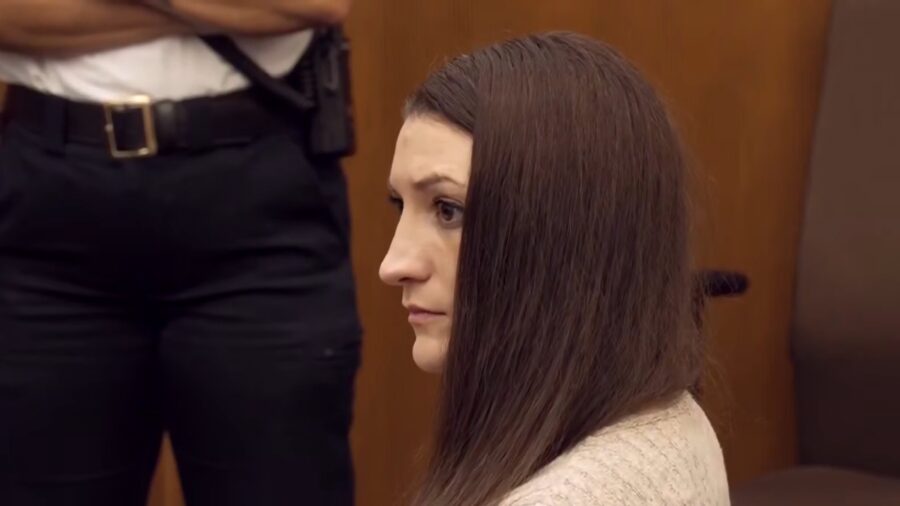

The disputed ending of Karen Read’s first Massachusetts murder trial is again being invoked in another closely watched state case after a juror in Lindsay Clancy’s trial said a lone holdout could not identify evidence supporting his position.
Clancy’s murder trial ended in a mistrial on September 4, 2026, in Plymouth Superior Court after jurors failed to reach a unanimous verdict. Jurors who have since spoken publicly say the final split was 11-1 in favor of finding Clancy not guilty by reason of lack of criminal responsibility. Prosecutors have not announced whether they will retry her.
Table of Contents
ToggleJuror Says Holdout Could Not Point to Evidence
Nick Dargie, 25, one of the jurors, told ABC News that he repeatedly asked the lone dissenting juror to identify evidence or witness testimony supporting his position.
According to Dargie, the juror could not do so. Dargie said that absence of an evidentiary explanation contributed to the panel sending another note to Superior Court Judge William Sullivan saying it remained deadlocked, according to his account of deliberations.
The account reflects Dargie’s description of private jury deliberations. The holdout juror has not publicly provided his own account, and deliberations themselves were not independently observable.
Jury foreperson Roni Carlson separately said the holdout acknowledged having reasonable doubt, yet still would not vote for a finding that Clancy lacked criminal responsibility. Other jurors have offered similar accounts since the trial ended.
Judge Sullivan had previously reminded the panel that prosecutors were required to prove their case beyond a reasonable doubt. He declined a defense request to remove the disputed juror, with Associated Press reporting that the judge emphasized the need for particular caution when removing a juror after deliberations have begun.
Karen Read Case Became Part of the Mistrial Fight
Clancy attorney Kevin Reddington raised the Karen Read case as he argued against ending the trial without further examination of the jury’s position.
Read’s first prosecution over the 2022 death of Boston police officer John O’Keefe ended in a mistrial in July 2024 after jurors reported that they were deadlocked. She was tried again and, on June 18, 2025, was acquitted of second-degree murder and manslaughter. The second jury convicted her of operating under the influence of alcohol, according to the June 2025 verdict.
Reddington cited that history when seeking individual polling or additional inquiry before Sullivan declared the Clancy mistrial. The defense argued that more information about the jury’s actual positions could matter before the court concluded that no verdict was possible. The Karen Read comparison became part of the defense’s argument against immediately ending the case.
The two cases involve different evidence, charges and defenses. Their procedural similarity centers on highly publicized Massachusetts trials ending when jurors reported an impasse.
Defense Plans New Challenge After Jurors Speak
The latest development came after several Clancy jurors began describing the deliberations publicly.
Reddington now intends to seek dismissal of the case based in part on accounts that the lone holdout acknowledged reasonable doubt yet declined to apply it to his verdict. The Times reported the planned challenge on September 10. Whether that argument can produce a dismissal remains uncertain and would require a court ruling.
Clancy is charged with three counts of first-degree murder in the deaths of 5-year-old Cora, 3-year-old Dawson and 8-month-old Callan Clancy in the basement of the family’s home in Duxbury, Massachusetts.
More: https://t.co/XubfMawKaE https://t.co/r18PtPms0I
— WGN TV News (@WGNNews) August 28, 2026
Clancy, 36, faces murder charges stemming from the January 24, 2023 deaths of her children, Cora, 5, Dawson, 3, and Callan, 8 months, at the family’s Duxbury, Massachusetts, home.
The defense does not dispute that Clancy killed the children. Its case centered on whether postpartum psychosis left her legally unable to appreciate the wrongfulness of her actions. Prosecutors argued that her conduct was deliberate and that she remained criminally responsible, as detailed in reporting from the trial.
Clancy remains in state custody at a psychiatric hospital. A suicide attempt after the killings left her paralyzed.
September 29 Hearing Could Define the Case
@cbsmornings Kevin Reddington, the lawyer for Lindsay Clancy, said on Wednesday that he will ask for the case against his client to be thrown out after hearing from several jurors in the case. Reddington told CBS Mornings he will present a motion to dismiss on Sept. 29 at a previously scheduled status hearing. The highly publicized murder trial ended in a mistrial on Sept. 4 after the jurors could not reach a unanimous verdict after more than seven days of deliberation. #kevinreddington #lindsayclancy #crime #crimetok ♬ original sound – CBS Mornings
Plymouth County District Attorney Timothy Cruz’s office has said no decision has been made on another trial. Because the mistrial produced no acquittal or conviction, prosecutors retain the option of trying the case again. The prosecution’s position remains unresolved.
The parties are scheduled to return to court on September 29, 2026. The hearing could address the defense’s effort to end the prosecution and provide the first clear indication of whether prosecutors intend to pursue a second trial, according to the scheduled court timeline.
The jurors’ public comments have added a new procedural dispute to a case already centered on the difficult legal boundary between severe mental illness and criminal responsibility. For now, the mistrial leaves that question unresolved.
Related Posts:
- Lindsay Clancy Trial Begins with Testimony from…
- America’s Murder Capitals - Updated 2026 Rankings of…
- Most Expensive States to Live in the US in 2026…
- Social Issues in America: 45 Real Examples, 2026…
- The 100 Most Dangerous Cities in America (2026):…
- Texas Governor Election 2026: Abbott vs Hinojosa Guide