Skip to content
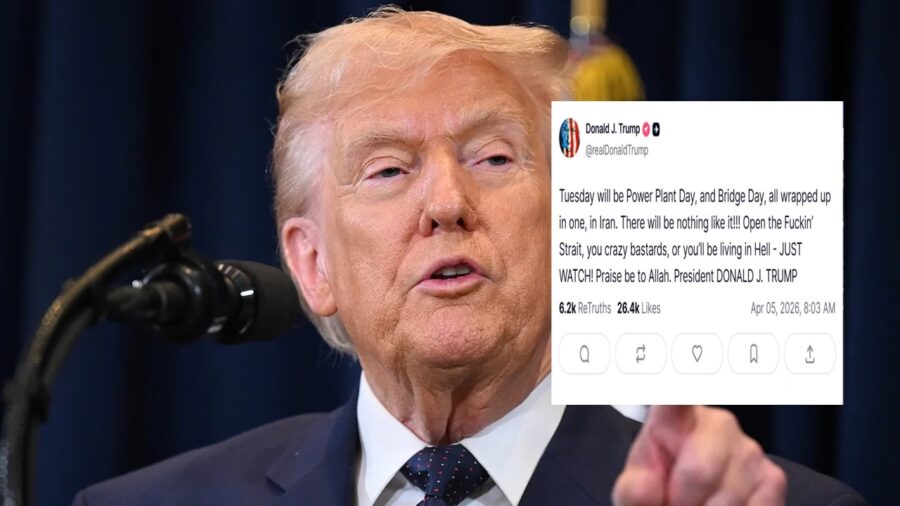

Investors are watching the U.S.-Iran crisis with unusual intensity because the White House is sending two messages at once: President Donald Trump is threatening severe retaliation if Iran does not reopen the Strait of Hormuz, while also suggesting that a deal could still emerge.
That combination, military pressure on one side and late-stage diplomacy on the other, is feeding volatility across oil-sensitive sectors and broader global markets.
The Strait of Hormuz is not a symbolic flashpoint. It is one of the world’s most important energy chokepoints, and any prolonged disruption there can rattle crude prices, shipping costs, airline margins, inflation expectations, and broader risk sentiment.
Reuters reported that the UAE has already insisted guaranteed passage through Hormuz must be part of any eventual U.S.-Iran arrangement, a sign that Gulf states see the issue as central, not secondary.
Table of Contents
ToggleA Threat With a Clock Attached
“Open the Fuckin’ Strait, you crazy bastards, or you’ll be living in Hell” — Jake Tapper reads Trump’s Truth Social post on air
— Aaron Rupar (@atrupar.com) April 5, 2026 at 3:06 PM
Trump’s latest posture has sharpened the market’s focus because it comes with a deadline.
Reuters reported that he warned Iran it had until Tuesday evening to reopen the strait or face what he described as “hell,” while the Associated Press reported he threatened to target Iranian power and infrastructure if the waterway remained blocked.
Even when such warnings are meant as leverage, markets still price them as real risk, especially in an active war zone.
That matters because the broader conflict is already far beyond rhetorical brinkmanship. Reuters and AP both describe weeks of U.S.-Israeli strikes on Iranian nuclear and military targets, followed by Iranian retaliation across the Gulf.
Why Investors Are So Nervous
For markets, the real problem is uncertainty. If the White House were clearly moving toward war, traders could at least price that scenario. If a negotiated settlement looked solid, they could price that instead. What they have now is a compressed window in which both outcomes remain plausible.
Reuters, citing Axios, reported a last-ditch push involving the U.S., Iran, and regional mediators for a possible 45-day ceasefire, though Reuters said it could not independently verify all of that reporting.
That leaves investors trying to assess three possible paths. One is de-escalation, where Iran reopens Hormuz or accepts a temporary framework, easing pressure on oil and calming markets.
Another is drawn-out uncertainty, where threats continue, talks drag on, and volatility remains elevated. The third is outright escalation, where the deadline expires without movement and the U.S. follows through militarily, creating the risk of a sharper oil shock and wider global market stress.
The Core Issue Behind the Market Reaction
At its core, the market story is not just about Trump’s rhetoric. It is about the collision between military escalation and diplomatic ambiguity at one of the most economically sensitive points in the world.
Investors are reacting to the possibility that a single decision around the Strait of Hormuz could alter oil flows, regional security, and inflation expectations almost overnight. Until there is clarity on whether the deadline produces a deal or a deeper conflict, markets are likely to remain on edge.
Related Posts:
- Safest Countries in the World in 2025 - GPI…
- 25 Most Dangerous Cities in US - Updated Statistics for 2026
- Capital Cities in Europe: Top Destinations For You…
- What Is the Most Dangerous Country in the World in 2025
- Why Are All Markets Crashing Right Now? Will This…
- What Is the Current Inflation Rate in the U.S.? -…