
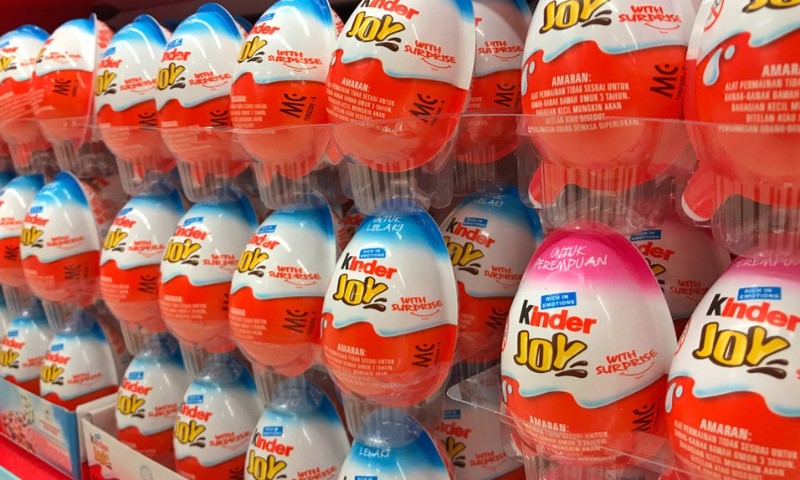

Ferrero had brand recognition in America long before Kinder Joy arrived. Tic Tac had been in the country for decades. Nutella had built a loyal following. Ferrero Rocher had a polished, giftable image.
Even so, Ferrero still lacked one thing that mattered most in the American candy aisle: a breakout mass-market product under the Kinder name. Kinder Joy changed that by giving Ferrero a legal, culturally adaptable, and highly marketable way to introduce one of its strongest global franchises to U.S. shoppers.
What made the move especially important was timing. Ferrero was expanding aggressively in North America, using acquisitions and internal investment to build scale.
In 2018, Ferrero announced a $2.8 billion deal for Nestlé’s U.S. confectionery business, a transaction that pushed it into the top tier of American candy companies.
Kinder Joy entered that market at almost the same moment, giving Ferrero more than a bigger footprint. It gave the company a product built for visibility, repeat purchases, and family appeal.
Key Points
- Kinder Joy gave Ferrero a legal way to launch Kinder in the U.S.
- Its split design fit American safety rules and retail needs.
- The product stood out by combining candy with a toy surprise.
- Ferrero backed the launch with major U.S. investment and distribution.
- Kinder Joy helped open the door for wider Kinder brand growth in America.
Ferrero Needed More Than Prestige in America
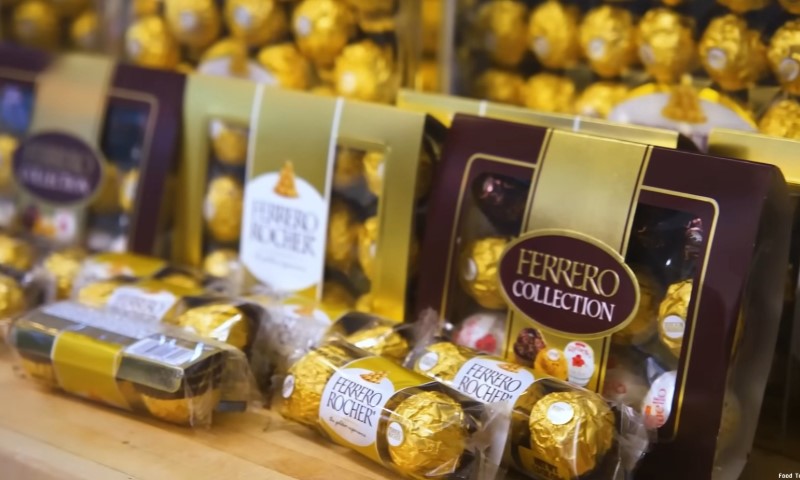
Ferrero has long been strong in premium sweets and globally recognized packaged treats, but the U.S. market has always been unusually hard to crack.
American candy shelves are crowded, brand loyalties are old, and distribution power matters almost as much as taste. Mars and Hershey built broad dominance through scale, habit, and constant retail presence.
Ferrero, by contrast, entered with famous products but a narrower everyday footprint.
Kinder was a major global brand already, yet one of its most famous formats, Kinder Surprise, faced a legal problem in the United States.
Federal law treats confectionery with a nonnutritive object embedded inside it as adulterated food, unless a narrow exception applies.
That rule blocked the classic Kinder Surprise format from regular U.S. sale for years. Ferrero needed a workaround that preserved the surprise element without violating U.S. law.
Federal food oversight can be confusing in practice, especially once broader FDA and USDA regulatory differences enter the discussion around how products are classified and sold in the U.S.
Why Kinder Surprise Could Not Simply Be Imported
The barrier was not weak demand or lack of curiosity. American shoppers had heard of Kinder eggs for years, often through travel, social media, or imported novelty channels.
The core issue was product architecture. Traditional Kinder Surprise places the toy inside the chocolate egg. U.S. law sharply limits that kind of arrangement because the embedded object can create safety concerns.
That distinction sounds small, but commercially it was enormous. Ferrero did not have to abandon the surprise concept that made Kinder famous. It only had to redesign how the experience reached the child.
Trade reporting in 2017 described Kinder Joy as the company’s solution for the U.S. market, and Ferrero’s own launch materials highlighted the separated design.
A Packaging Fix Became a Market Entry Strategy
Kinder Joy was originally developed for warmer climates, where the classic hollow chocolate egg was less practical. In America, that same format became a legal and commercial advantage.
Ferrero could pitch Kinder Joy as familiar enough to benefit from global Kinder mystique, while also presenting it as a fresh product tailored for American retail realities.
That matters because packaging is often treated as secondary in candy analysis. In Kinder Joy’s case, packaging was the strategy. Ferrero solved regulation, shelf handling, seasonality, and product differentiation in one move.
The spoon, the split shell, the toy reveal, and the cream-and-wafer texture created a routine that felt different from a standard candy bar or chocolate egg. Parents saw a contained treat. Kids saw a small event. Retailers saw something visually distinct.
Timing Helped Ferrero Turn Kinder Joy Into Momentum
@theurbanherald Ferrero is making a bold play to crack the US market with Kinder Bueno’s (@kinderbuenous) first Super Bowl commercial. While the chocolate bar pulls in $600 million globally, it remains relatively unknown to American consumers compared to household names like Snickers and Reese’s. The creative angle? A clever linguistic bridge. Americans already say “no bueno” when things go wrong. Now Ferrero wants them to make the connection with “Kinder Bueno” (@kinderusa) when they’re looking for a sweet treat. The space-themed commercial aims to launch the brand into the American consciousness during one of advertising’s biggest stages. With its distinctive layers of chocolate, wafer, and hazelnut cream, Kinder Bueno is banking on Super Bowl’s massive reach to finally establish itself as a go-to chocolate bar in the world’s largest confectionery market. It’s a fascinating case study in how global brands approach market penetration in territories where they lack name recognition. Stay connected! ? Follow us for more urban stories: @theurbanherald Don’t forget to LIKE ?, SHARE ⤴️, and SUBSCRIBE ▶️ for more in-depth analyses and critical perspectives on trending topics! #BrandStrategy #ChocolateLovers #MarketingGenius
Ferrero announced in 2017 that Kinder Joy would come to the U.S., and the product made its American debut in November of that year, ahead of broader momentum in 2018.
That launch did not happen in isolation. Ferrero was already spending heavily to expand U.S. manufacturing and distribution. By October 2018, the company said it had invested $12 million in its Somerset, New Jersey, facility to support Kinder Joy’s launch.
Early sales showed why the company leaned in. Ferrero said Kinder Joy surpassed internal and industry targets after launch, with more than 90 million eggs sold by late 2018.
Trade coverage later noted that the product became a 2018 IRI New Product Pacesetter and a 2019 Product of the Year winner, signs that Kinder Joy was doing more than generating novelty buzz. It was earning durable retail traction.
Kinder Joy Gave Ferrero a Better Fit With American Shopping Habits
One reason Kinder Joy worked is simple: it fit several U.S. buying occasions at once.
| Factor | Why It Mattered in the U.S. |
| Surprise toy | Added play value in a crowded candy category |
| Portion size | Felt manageable for parents buying small treats |
| Distinct format | Stood out on shelf beside bars, bags, and seasonal chocolate |
| Seasonal appeal | Worked naturally for Easter baskets, party favors, and checkout purchases |
| Brand entry point | Introduced the Kinder name to shoppers unfamiliar with the wider line |
Ferrero kept building around those habits. Seasonal packaging, licensed toys, holiday tie-ins, and party-focused bundles helped Kinder Joy stay visible after the initial launch window.
By 2021, industry reporting pointed to licensing, seasonal offerings, and advertising as major drivers of Kinder’s U.S. growth.
Ferrero later said the broader Kinder brand had passed $500 million in U.S. retail sales since arriving in America, and called Kinder Joy the leading mainstream chocolate innovation of the prior five years.
Ferrero Sold an Experience, Not Only a Sweet
American candy buying often rewards convenience and habit, yet novelty still matters when a product can earn repeat use. Kinder Joy had a built-in ritual. Open one side. Scoop the cream. Open the other side. Reveal the toy. That sequence sounds minor, but it gave Ferrero a way to sell participation, not only flavor.
For a company trying to establish Kinder in the U.S., that was a smart route. Ferrero was not trying to out-Hershey Hershey with a plain chocolate bar.
It was offering a treat that sat between confectionery, collectible, and small gift. Such positioning also helped it land in moments beyond ordinary snacking, especially Easter, birthdays, and seasonal family shopping. Ferrero’s later U.S. campaigns kept returning to that family-and-surprise formula.
Kinder Joy Worked Because Ferrero Backed It With Scale
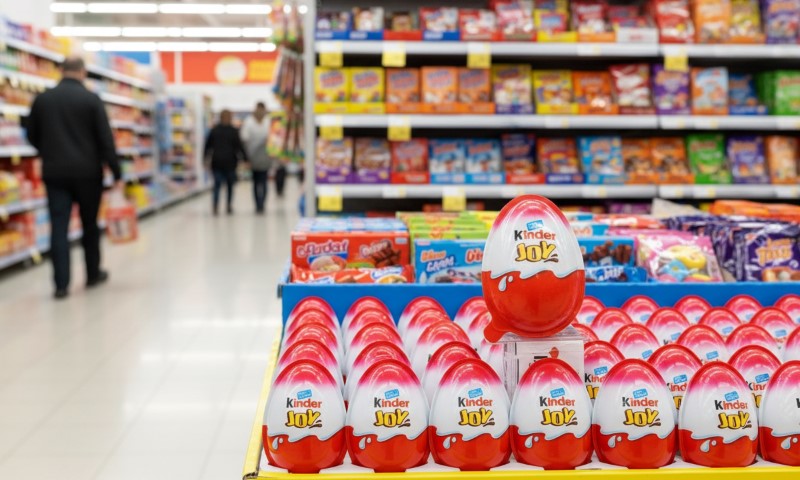
A good product alone would not have been enough. Ferrero’s broader U.S. expansion gave Kinder Joy a stronger launchpad. The company had already entered America with Tic Tac in 1969, then added Nutella, Ferrero Rocher, and other brands over time.
Acquisitions accelerated its reach. Ferrero bought Fannie May in 2017, Ferrara Candy in 2017 through an affiliated company, Nestlé’s U.S. confectionery business in 2018, and Kellogg’s cookie and fruit snack assets in 2019.
Reuters later described Ferrero’s approach as one built around long-term investment in packaging, product quality, and marketing for acquired American brands.
Kinder Joy benefited from that infrastructure. Wider retailer relationships, manufacturing capacity, and distribution muscle gave Ferrero a better chance of turning curiosity into repeat purchase. A novel product can win attention once.
Real national presence depends on supply chain execution, merchandising support, and enough marketing confidence to keep the product visible after the first wave of headlines fades. Ferrero had all three by the late 2010s.
Why Kinder Joy Mattered Beyond Its Own Sales
Kinder Joy’s role in Ferrero’s U.S. story goes beyond unit numbers. It served as proof that Kinder could succeed in America in a meaningful way. Once Kinder Joy established the brand name, Ferrero had room to broaden the U.S. Kinder portfolio.
In 2023, Ferrero launched Kinder Chocolate in the U.S. market and described it as the next step for a growing Kinder brand. Such expansion is easier after consumers already recognize the brand and associate it with a positive household purchase.
For a company seeking deeper American roots, that kind of bridge matters. It creates room for future products, broader shelf placement, and stronger negotiating power with retailers.
A Rare Case Where Constraint Created Opportunity
Companies often treat regulation as a barrier that blocks growth. Ferrero turned regulation into a design brief. Because it could not sell the classic Kinder Surprise format in the U.S., it built a version that fit the law and still preserved the emotional core of the brand. In practice, that redesign may have helped more than it hurt.
Kinder Joy gave Ferrero a product that was easier to merchandise, easier to promote seasonally, and easier to explain to parents wary of giving children a large novelty confection.
Success was not automatic. Ferrero still needed distribution, timing, advertising, and patience. Yet Kinder Joy offered something rare in a mature category: a product with a clear point of difference that was rooted in both law and consumer behavior.
Ferrero did not enter the American market by forcing a European formula into U.S. shelves. It adjusted the formula, then built a larger strategy around it.
Summary
Kinder Joy helped Ferrero break into the U.S. market because it solved several problems at once. It gave Ferrero a legal way to bring Kinder into America, a fresh format that stood out in stores, and a family-focused product that could grow across seasons and occasions.
More importantly, it showed how Ferrero operates when entry barriers are real: redesign the product, support it with investment, and use one smart launch to open the door for a much bigger brand presence.