
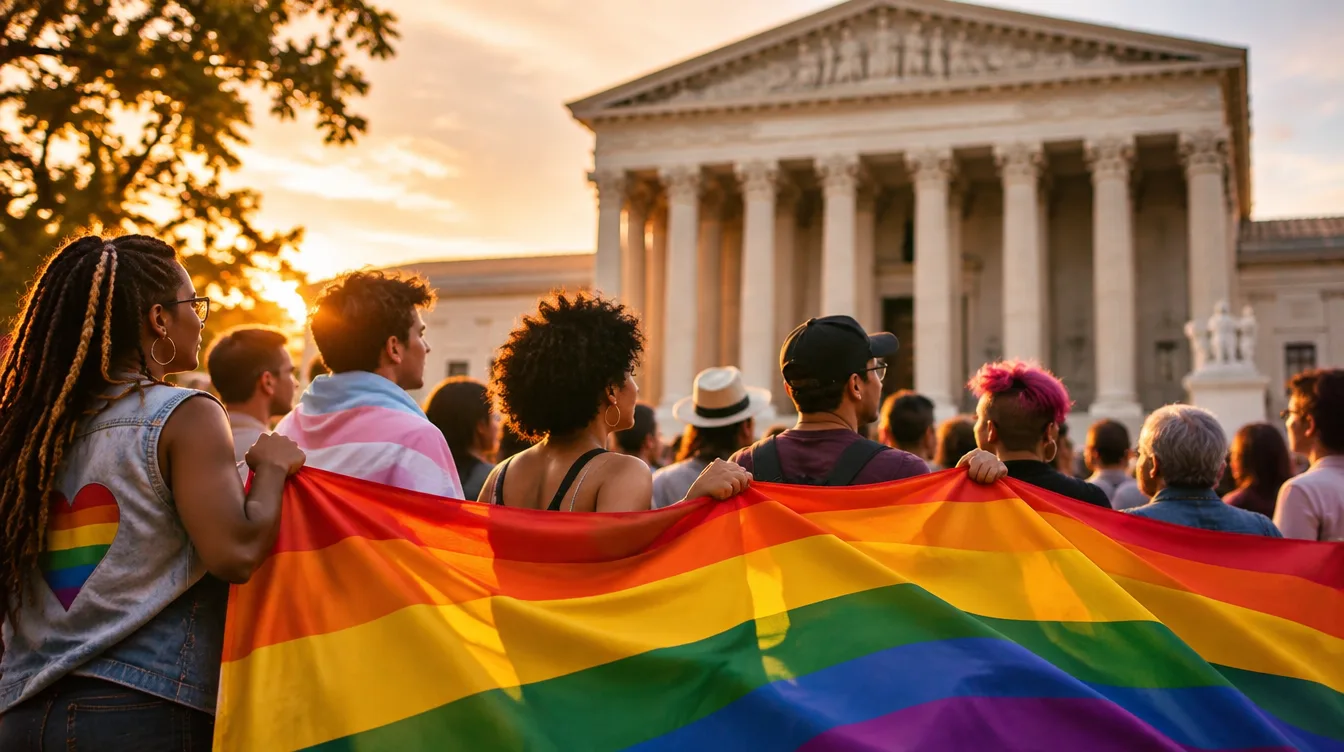
Freedom for All Americans began as a campaign for LGBTQ+ nondiscrimination protections, and LGBTQ+ rights remain at the heart of what we cover. This hub brings together our explainers on federal and state law, legislative trackers, data on the LGBTQ+ population, community and culture guides, and resources for anyone who needs support.
Key facts
- About 9% of U.S. adults identify as LGBTQ+, and the share is much higher among younger adults (Gallup, 2026).
- Same-sex marriage is legal nationwide (Obergefell, 2015) and protected by the Respect for Marriage Act (2022).
- There is still no federal law explicitly banning LGBTQ+ discrimination in housing, public accommodations and credit. The Equality Act would add those protections.
- Most current legislative fights focus on transgender people: health care, sports, IDs and schools.
Start here
Where LGBTQ+ Americans have equal protection, and where they still don’t.
What the Equality Act would change and where it stands in 2026.
The latest data on how many Americans identify as LGBTQ+.
The history of LGBTQ+ freedom, from Stonewall to today.
Track anti-transgender bills moving through the states.
What the latest hate-crime numbers show.
Key moments in LGBTQ+ rights: an interactive timeline
Tap a year to expand it.
1969Stonewall uprising
Police raid the Stonewall Inn in New York; days of protest launch the modern LGBTQ+ rights movement. Read the full history.
2003Lawrence v. Texas
The Supreme Court strikes down state sodomy laws.
2009Matthew Shepard and James Byrd Jr. Hate Crimes Prevention Act
Federal hate-crime law is expanded to cover sexual orientation and gender identity. See the latest hate-crime data.
2011“Don’t Ask, Don’t Tell” repealed
Gay, lesbian and bisexual service members can serve openly.
2015Obergefell v. Hodges
Same-sex marriage becomes legal nationwide.
2020Bostock v. Clayton County
The Supreme Court rules that firing someone for being gay or transgender is sex discrimination under Title VII.
2022Respect for Marriage Act
Congress requires federal and interstate recognition of same-sex marriages. What couples need to know.
2025United States v. Skrmetti
The Supreme Court upholds Tennessee’s ban on gender-affirming care for minors. Track state care bans.
Laws and legislative trackers
- Legislative Tracker: All Anti-LGBTQ Bills
- Legislative Tracker: Anti-Transgender
- Legislative Tracker: Pro-LGBTQ Nondiscrimination Legislation
- Marriage Act Support in 2025 – What Couples Need to Know
- Building an Inclusive America – A Framework for LGBTQ+ Rights
- What Does Trump’s Return to the White House Mean for LGBT Rights in 2025?
- Oklahoma House Moves to Block Birth Certificate Changes and Ban Pride Flags
- Democrats Strip Anti-Trans Riders From Must-Pass Funding Bills, Forcing a Rare Retreat in Congress’s Culture-War Budget Fight
- House Republicans Push National “Don’t Say Trans” and Book Ban Bill After Trump’s SOTU Broadside
- How KOSA Could Harm Trans Youth, and Why Elizabeth Warren’s Support Is Raising Alarms
- Federal Judge Again Strikes Down Texas Drag Performance Law
Transgender health, sports and the military
- How Long Does It Take To See Physical Changes From Hormones During a Gender Transition?
- How Many Transgender Athletes Are There – Numbers for 2026
- A Legal Battle in California May Decide the Future of Transgender Youth Healthcare
- Utah Republicans Commissioned a Study on Trans Youth Care – The Findings Didn’t Match Their Expectations
- Court Shields Transgender Troops From Removal – but Keeps Door Closed to New Recruits
- Congress Eyes Long-Overdue Review of Anti-LGBTQ+ Military Policies – Plus an Official Apology
Safety, data and discrimination
- Vehicle Incidents at LGBTQ+ Events: An Alarming Pattern?
- Grindr Remains the Safest Way for LGBTQ People to Meet and Date
- Are Stadiums Getting Safer for LGBTQ+ Fans or Just Louder?
- Lesbian Divorce Rate 2026 – Why Is It Higher Than for Gay Men?
- Trump Administration Prepares to Deport Gay Men to a Country Where Homosexuality Is Punishable by Death
Community, culture and travel
- 12 Best LGBTQ+ Bars In New York In 2026 – Safe, Fun, And Social
- New York City’s Drag Scene Is Saving Lives, But Attendance Could Decide Its Fate
- After 40 Years, New York’s Gay Bathhouses May Be Back
- LGBTQ Travel Market Growth Is Opening New Business Opportunities
- How the ‘Everywhere Is Queer’ App Is Helping LGBTQ+ People Find Queer-Owned Businesses
- Top 15 LGBTQ+ Podcasts Discussing Politics, Culture, and Human Rights
- How LGBTQ+ Rights Are Influencing the Fitness Industry
- Dolly Parton Dies at 80, Leaving a Decades-Long Record of LGBTQ Support
Take a quiz
Our self-reflection quizzes are not diagnoses, but many readers find them a helpful starting point.
Where to find support
Questioning your gender is common, and it isn’t a problem to fix. Still, it can feel heavy, especially without support. If you’d like to talk to someone, these free and confidential services are available in the U.S.:
- The Trevor Project (LGBTQ+ young people under 25): call 1-866-488-7386, text START to 678-678, or chat at thetrevorproject.org. Available 24/7.
- Trans Lifeline (peer support run by and for trans people): call 1-877-565-8860 or visit translifeline.org.
- 988 Suicide & Crisis Lifeline: call or text 988 any time if you are in crisis or thinking about harming yourself.
- LGBT National Help Center: peer support lines for youth, adults and seniors at lgbthotline.org.
If you want professional support, the World Professional Association for Transgender Health (WPATH) and directories of gender-affirming therapists can help you find someone experienced with gender identity questions.
Frequently asked questions
Are LGBTQ+ people protected from job discrimination?
Yes. Since Bostock v. Clayton County (2020), federal law treats firing or refusing to hire someone for being gay or transgender as sex discrimination. Protections in housing and public places depend on state law.
Is same-sex marriage still legal?
Yes. It has been legal nationwide since 2015, and the Respect for Marriage Act of 2022 requires recognition of same-sex marriages across states and by the federal government.
Where can I get support right now?
LGBTQ+ young people can reach The Trevor Project 24/7 at 1-866-488-7386 or by texting START to 678-678. Anyone in crisis can call or text 988.
Explore more topic hubs
This hub is updated as we publish new reporting. Last updated: November 2026.