


A criminal record can affect your ability to cross the U.S.-Canada border even when an offense happened years ago, a sentence has already been completed, or a case appears to be closed.
Border admissibility is governed by immigration law rather than criminal law.
Officers can reassess a traveler each time entry is requested, so several successful trips do not guarantee that a later crossing will go smoothly.
Factors such as the offense involved, its classification under the destination country’s law, the maximum possible penalty, the number of convictions, and the time that has passed can all affect the result.
Rules also differ considerably depending on which side of the border you plan to enter.
Can You Enter Canada With a Criminal Record?
Canada may find a foreign national inadmissible because of criminality or serious criminality.
Anyone facing an impaired-driving charge in Ontario may also want to consult MassTsang DUI lawyers before the case is resolved, since the eventual charge, disposition, and conviction record can later affect cross-border travel.
Several offenses commonly create problems during Canadian admissibility reviews:
- DUI
- assault
- theft and fraud
- drug-related offenses
- weapons offenses
Canadian immigration authorities generally compare an offense committed abroad with its closest equivalent under Canadian law.
A conviction treated as a misdemeanor in a U.S. state may correspond to an indictable offense in Canada.
Hybrid offenses create another potential issue. Canadian law allows certain crimes to be prosecuted either summarily or by indictment, but immigration authorities generally treat hybrid offenses as indictable when assessing criminal inadmissibility.
Serious criminality can apply when the equivalent Canadian offense carries a maximum possible prison sentence of at least 10 years.
Actual punishment received by the traveler does not necessarily control that determination.
Someone who received probation, a fine, or a short jail sentence could still face serious criminality concerns if Canadian law authorizes a much higher maximum sentence for the comparable offense.
Options for Entering Canada

Several legal mechanisms may allow a person with a criminal history to enter Canada, but they address different situations.
Deemed rehabilitation can apply automatically in limited circumstances after enough time has passed. Eligibility depends on the offense involved, the number of offenses, applicable sentencing rules, and the date all sentences were completed.
Individual criminal rehabilitation requires an application and approval.
Once granted for the relevant offense, rehabilitation can provide a permanent solution to criminal inadmissibility, eliminating the need to seek special permission for every future visit based on that offense.
A Temporary Resident Permit, or TRP, can authorize temporary entry when a person’s need to enter Canada outweighs potential risks associated with admitting that traveler.
Reasons that may carry more weight include:
- a family emergency requiring immediate travel
- attendance at an important business conference
- another specific need that justifies temporary admission despite inadmissibility
Ordinary vacation travel generally carries less weight. A TRP currently has a C$200 processing fee, although certain exceptions may apply.
Pardons and record suspensions can also affect Canadian admissibility in qualifying situations. Exact consequences depend on where the offense occurred and how Canadian immigration authorities recognize the relief granted.
Can You Enter the U.S. With a Criminal Record?
Not every Canadian conviction makes a traveler inadmissible to the United States.
U.S. immigration law identifies several criminal grounds that can prevent entry. Important categories include:
- crimes involving moral turpitude, which can include certain theft and fraud offenses
- controlled-substance violations
- multiple convictions meeting applicable statutory requirements
- certain serious violent offenses
Exact treatment depends on the legal elements of an offense, not simply the name printed on a criminal record.
Canadian summary convictions can cause admissibility problems just as indictable offenses can.
Labels used in Canada’s criminal system do not automatically decide how U.S. immigration authorities will classify a case.
Drug offenses deserve particular attention.
Even an old conviction involving simple possession can create significant problems at a U.S. port of entry.
Canadian legalization of marijuana does not erase those risks. U.S. border officers apply federal law, and marijuana continues to be treated as a controlled substance at the federal level.
A standard alcohol-related DUI, by contrast, generally does not make a Canadian traveler criminally inadmissible to the United States by itself.
Additional circumstances, related offenses, drug involvement, or other criminal history can change the analysis. Travelers should therefore confirm that a waiver is actually required before spending money and time on an application.
U.S. Entry Waivers
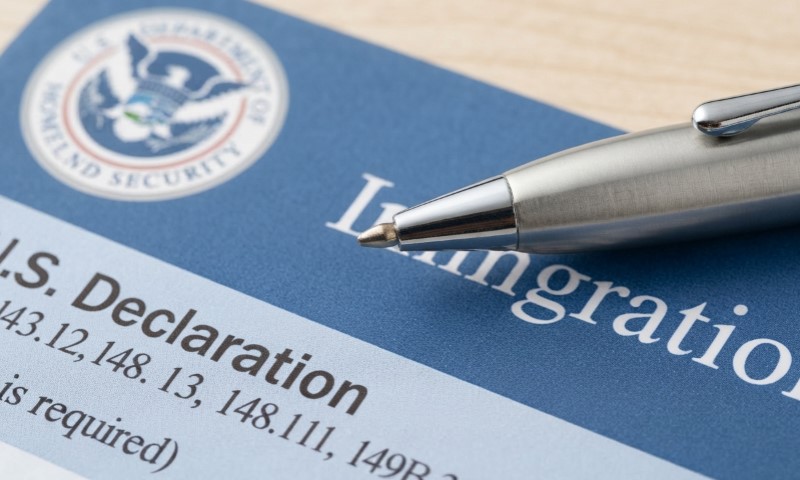
Canadians who are criminally inadmissible may be able to request permission to travel through a U.S. Entry Waiver.
Approval can permit repeated trips while the waiver is valid. Unlike Canadian criminal rehabilitation, however, a U.S. waiver normally does not permanently eliminate the underlying inadmissibility. Renewal is commonly required after the authorized period expires.
Approval is discretionary, and a strong application may require several types of evidence:
- court records showing the exact charge, disposition, and sentence
- an RCMP fingerprint-based criminal record check
- evidence showing rehabilitation and responsible conduct
- an explanation describing the purpose of planned U.S. travel
- documents addressing any earlier refusal at a U.S. port of entry
Processing can take several months. Early preparation is important when travel is connected to work obligations, family matters, scheduled events, or other fixed dates.
Does a Pardon or Record Suspension Guarantee Entry?
No. A pardon or Canadian Record Suspension does not automatically guarantee admission to another country.
U.S. immigration authorities do not automatically treat a Canadian Record Suspension as eliminating the conviction that created inadmissibility.
Someone who receives a record suspension in Canada may therefore still need a U.S. Entry Waiver.
Even so, a record suspension can support a waiver application by documenting factors such as rehabilitation, lawful conduct, and a lower risk of reoffending.
Canadian rules differ. A pardon or record suspension is one recognized way a person may become admissible again in certain circumstances.
Eligibility and effect depend on the offense, the jurisdiction involved, and the type of relief granted.
Can Border Officers See Your Criminal Record?

U.S. Customs and Border Protection can access Canadian criminal-history information through law-enforcement databases connected with RCMP records.
Charges and convictions can therefore become visible during border screening even when a traveler does not expect them to appear.
Other records can also create complications during inspection, including:
- pending criminal charges
- arrest records without a clearly recorded final disposition
- older convictions that have not appeared during earlier crossings
- cases later dismissed, sealed, or expunged when border databases still contain earlier information
Travelers with dismissed or withdrawn charges should carry official documents showing the final outcome. Relying only on a verbal explanation at the inspection booth can create unnecessary risk.
Age alone does not necessarily eliminate a problem. Convictions that are 20 years old or older can still affect U.S. admissibility.
Past successful crossings are not proof that future admission will be granted. Updated databases, secondary inspection, new information sharing, or closer review can bring an older record to an officer’s attention during a later trip.
What Should You Do Before Traveling?
@marisathelawyer If you’re planning to travel to Canada with a DUI or criminal record, understanding your options before you travel can save a lot of stress. Book a free consultation today to explore your options: lawyer@fwcanada.com #CanadaTravel #LawTok #DUItoCanada #PostConvictionTravelLawyer #MarisaFeil ♬ On a Mission – Duomo
Preparation should start with accurate records rather than assumptions about what immigration authorities can see.
A useful pre-travel file should contain documentation that allows an officer or immigration professional to identify exactly what happened in the criminal case:
- official court documents
- criminal-history records
- records showing the charge and final disposition
- proof of the sentence imposed and the date it was completed
- documentation showing dismissal, withdrawal, sealing, or expungement when applicable
Next, determine how the destination country classifies the offense. Terms such as misdemeanor, felony, summary conviction, and indictable offense can be misleading when used across two different immigration systems.
Travelers heading to Canada should determine if deemed rehabilitation may apply or if individual rehabilitation, a record suspension, or a Temporary Resident Permit is needed.
Travelers heading to the United States should first establish if criminal inadmissibility actually applies. Applying for a waiver without confirming that requirement can create unnecessary cost and paperwork.
Anyone with dismissed or withdrawn charges should carry certified documentation showing the result. Similar preparation can help when records have been sealed, expunged, or affected by another court order.
Applicants who do need rehabilitation, a permit, or a waiver should start early. Processing periods can be substantial, and waiting until shortly before departure can leave few workable options.
FAQs
Summary
A criminal record does not automatically block travel between Canada and the United States, but it can create serious complications at either border.
Canada and the U.S. use different standards for criminal inadmissibility. Someone permitted to enter one country can still face restrictions when entering the other.
Specific facts matter most. Offense classification, maximum possible punishment, number of convictions, age of the record, case outcome, and available rehabilitation or waiver procedures can all affect entry.
Careful preparation before travel can prevent an old case, incomplete database record, or misunderstood conviction classification from turning into a refusal at the border.