
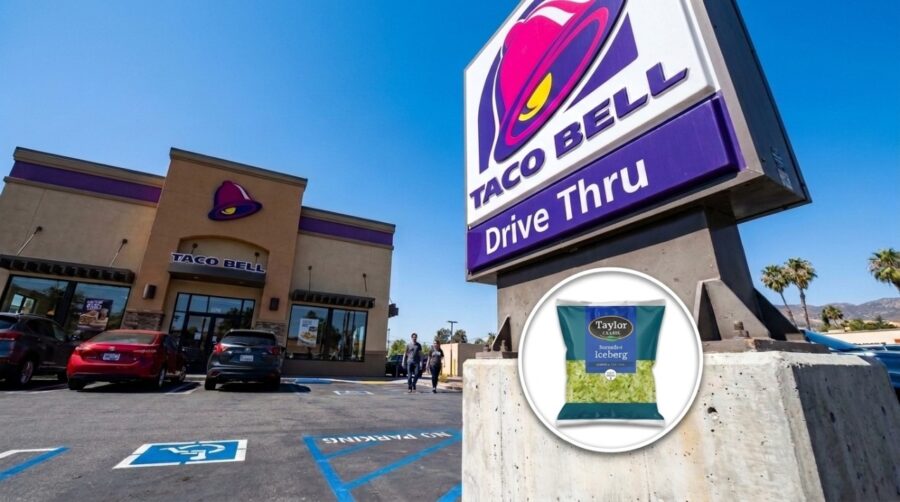

Shredded iceberg lettuce supplied to Taco Bell restaurants has been linked by federal investigators to a five-state outbreak of cyclosporiasis that has sickened at least 1,644 people and hospitalized 94.
The FDA investigation connected the illnesses to lettuce from a single Mexican supplier used at Taco Bell locations in Indiana, Kentucky, Michigan, Ohio and West Virginia.
The U.S. Food and Drug Administration and Centers for Disease Control and Prevention have not publicly named the supplier, but several news organizations reported that investigators identified California-based Taylor Farms, citing people familiar with the inquiry.
No deaths have been reported. The investigation remains open, and officials have warned that other restaurants, products or distribution channels could still be identified.
Table of Contents
ToggleKey Facts About the Outbreak
The 1,644 patients included in the investigation reported eating at Taco Bell restaurants in the five affected states. Their illnesses began between May 13 and July 13, 2026, according to federal health officials.
Michigan investigators reviewed detailed food histories from 190 patients who had eaten at Taco Bell. About 90 percent reported consuming iceberg lettuce, according to the New York Times report. Traceback work found that the restaurants where patients ate had received lettuce from the same Mexican supplier.
Federal officials advised consumers not to eat shredded iceberg lettuce served at Taco Bell locations in the five states. The warning does not apply to every Taco Bell restaurant because not all locations received the implicated product.
Latest Verified Update
Taco Bell said it had voluntarily removed potentially affected lettuce from selected restaurants and was indefinitely removing the supplier’s ingredient from its nationwide supply chain. Reuters reported that replacement lettuce would reach locations in certain states within 24 hours.
The FDA has begun collecting product samples and increased screening at the U.S. border for produce associated with the investigation. The agency is also examining whether lettuce from the supplier was distributed to other restaurants, retailers or food-service businesses.
As of July 17, neither the FDA nor the CDC had issued a formal recall. The CDC outbreak notice continued to describe the investigation as active. Taylor Farms’ public recall page also listed no active recalls, and the company had not publicly confirmed that it supplied the lettuce under investigation.
The distinction matters because Taylor Farms’ involvement has been reported through unnamed sources, while federal agencies have publicly described the company only as a single unidentified supplier.
A Larger National Surge
The Taco Bell cluster is part of an unusually active Cyclospora season, but officials have cautioned that not every reported infection is connected to the restaurant chain or the lettuce supplier.
During CDC’s July 14 briefing, the agency said it had received at least 1,645 laboratory-confirmed reports of domestically acquired cyclosporiasis since May 1, along with more than 5,100 additional reports requiring further review. Cases had been recorded in 34 states.
Michigan has been especially affected. The state outbreak data showed 4,312 cases and 102 hospitalizations as of July 16. Those figures cover Michigan’s broader investigation and should not be interpreted as confirmed Taylor Farms or Taco Bell cases.
Cyclospora cayetanensis is a microscopic parasite that can contaminate food or water. Symptoms commonly begin about one week after exposure and can include frequent watery diarrhea, stomach cramps, nausea, fatigue, reduced appetite and weight loss. According to a CDC health advisory, untreated illness may continue for weeks or temporarily improve before returning.
What Happens Next
Investigators will continue testing samples and tracing the lettuce through farms, processors and distribution networks. Testing may help determine where contamination occurred, although foodborne Cyclospora investigations can be difficult because symptoms are delayed and routine laboratory tests may not automatically check for the parasite.
Consumers who ate shredded lettuce at an affected Taco Bell and later developed prolonged diarrhea should contact a healthcare provider and mention possible Cyclospora exposure. The infection can be treated with trimethoprim-sulfamethoxazole, although diagnosis generally requires specific testing, as explained in the CDC clinical guidance.
Washing produce can reduce some food-safety risks but may not reliably remove the parasite. The FDA’s Cyclospora safety guidance supports avoiding implicated food rather than attempting to clean and consume it.
The next federal update may clarify whether the supplier’s lettuce reached additional businesses and whether laboratory evidence supports the epidemiological findings. Until then, Taylor Farms’ reported role has not been formally confirmed by the FDA or CDC.