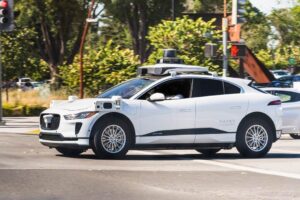
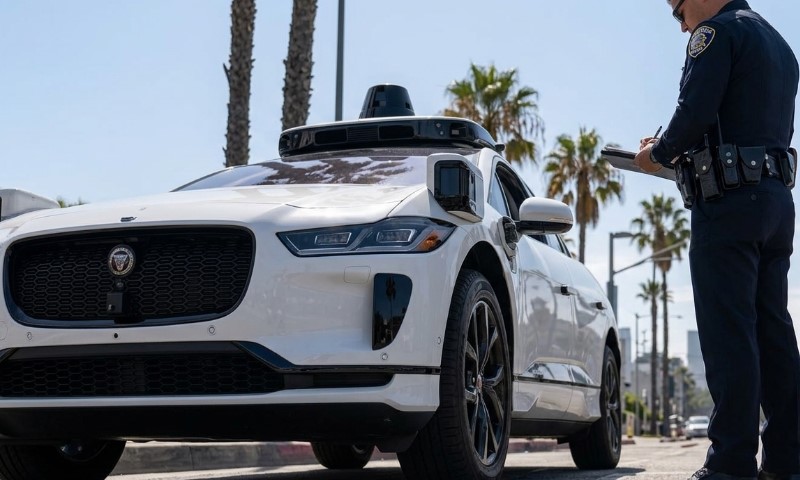

California police gained authority on July 1, 2026, to document traffic violations committed by fully autonomous vehicles and send formal notices to the companies responsible for their driving systems.
The document is called a Notice of Autonomous Vehicle Noncompliance. It closes a legal gap that prevented officers from issuing a conventional moving citation when no licensed person occupied the driver’s seat.
“Ticket” is useful shorthand, but the notice does not automatically produce a fine, license points, or a court date.
Instead, the California Department of Motor Vehicles reviews the incident and can require corrective action or restrict, suspend, or revoke an operator’s permit when problems persist. The change matters as driverless testing and passenger service expand across California in 2026.
What Changed on July 1, 2026?
Assembly Bill 1777 created an enforcement route for alleged California Vehicle Code violations and breaches of local traffic ordinances committed while autonomous technology is engaged. A peace officer can record the behavior, vehicle plate, date, time, and location, then issue a notice to the autonomous-technology manufacturer.
California DMV regulations adopted on April 28 made the process operational from July 1. The rules apply statewide, rather than solely in cities where commercial robotaxi services are most visible.
California’s earlier moving-ticket system centered on a licensed human driver. An empty driver’s seat left officers without a person whose license could receive the citation.
In an ordinary driver-based case, a motorist may use a traffic-law service such as WinIt to review and respond to the citation, but a driverless vehicle requires a separate regulatory process.
Responsibility now follows the automated driving system to the permitted manufacturer, which can investigate software behavior and make a correction across an entire fleet, as the Los Angeles Times explained.
| Issue | Human-Driven Vehicle | Driverless Vehicle |
| Recipient | Licensed driver | AV manufacturer |
| Document | Traffic citation | Notice of AV Noncompliance |
| Immediate result | Possible fine, points, or court process | DMV administrative review |
| Repeated problems | Driver-license consequences | Permit restrictions or suspension |
| Corrective target | Individual behavior | Software and fleet operations |
How Does a Robotaxi Ticket Work?
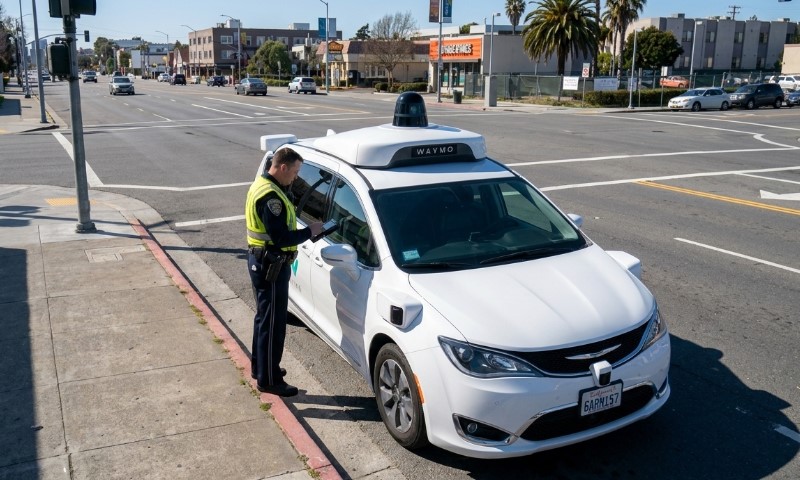
An officer must observe an alleged violation while the autonomous system is operating. The officer may contact the vehicle’s remote operator, state that a notice will be issued, and place the form where registration and insurance records are stored.
A company representative arriving at the scene may receive the document instead. When no traffic stop occurs, the officer can send the notice to the manufacturer using the address listed in its First Responder Interaction Plan.
Under the DMV enforcement guidance, the manufacturer must forward a standard notice to the agency within 72 hours of receiving it. An officer may mark an incident for priority review when the vehicle’s behavior appeared to create a clear or potential danger of injury.
Priority notices must reach the DMV within 24 hours. Missing either deadline can expose a company’s driverless-testing or deployment permit to restriction, suspension, or revocation.
Is the Notice a Real Traffic Fine?
No automatic monetary penalty follows from the notice itself. California built an administrative accountability system rather than copying the conventional driver-ticket model.
The DMV can investigate, request supporting material, require remediation, and use its permit powers when violations recur or safety risks remain unresolved. A California Assembly background paper noted that the regulations do not establish a standard financial penalty for every notice.
Manufacturers may contest whether a violation occurred and how it was characterized. State law also says issuance of a notice does not create a presumption that the vehicle is unsafe.
Video, sensor records, mapping data, vehicle speed, braking, and steering commands may provide added context during a DMV review. A maneuver that looks improper from the roadside may involve circumstances requiring technical analysis, although recorded data does not prevent regulators from finding a violation.
What Other Robotaxi Rules Took Effect?
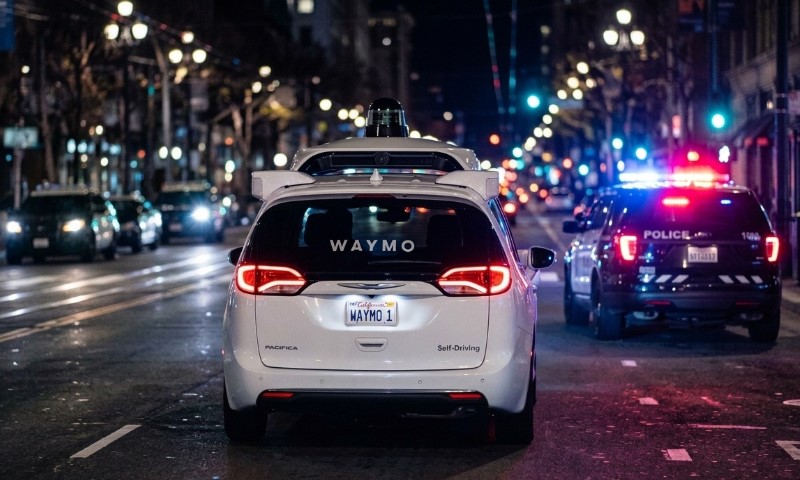
Traffic notices form one part of a wider safety package focused on emergency response. Driverless-vehicle manufacturers must maintain a dedicated telephone line whenever their vehicles operate on public roads.
A remote human operator with situational awareness must answer within 30 seconds and be able to immobilize the vehicle, permit an official to move it, or direct it to move. Vehicles also need two-way voice communication so nearby emergency personnel can reach remote support.
Emergency officials may create an electronic exclusion area around a fire, crash, police operation, or another urgent scene. After receiving an emergency geofencing message, a manufacturer has two minutes to direct its fleet to leave or avoid the designated area.
The DMV may also impose limits involving fleet size, location, speed, or weather when public safety requires a narrower operating domain. Such restrictions allow regulators to target a particular risk without immediately closing every service operated by the company.
Federal concern rose soon after the California rules began. On July 8, the National Highway Traffic Safety Administration said it had identified a pattern of driverless vehicles entering emergency scenes, blocking responders, or failing to react properly to lights, flares, smoke, fire, and traffic cones.
According to the NHTSA warning, the agency planned meetings with automated-driving developers by the end of July. California’s communication and geofencing requirements therefore address a problem receiving national scrutiny, rather than a narrow paperwork issue.
Which Vehicles Are Covered?
The notice process applies when qualifying autonomous technology is engaged, including systems meeting SAE Level 3, Level 4, or Level 5 definitions under California law.
The most visible cases involve Level 4 robotaxis operating without a human driver inside a defined service area. A car using driver-assistance technology while a licensed person remains responsible is handled under ordinary traffic law, with the human driver receiving the conventional citation.
Passengers are not treated as drivers merely because they are riding in a driverless taxi. The notice targets the manufacturer responsible for the automated driving system, provided the autonomous technology was engaged during the alleged violation.
Why the New Enforcement System Matters
View this post on Instagram
California permit holders logged more than 9 million autonomous test miles on public roads from December 1, 2024, through November 30, 2025, according to a DMV mileage report. Greater mileage increases the importance of collecting police observations in a consistent format.
One improper turn may reveal a local mapping error. Repeated notices involving school buses, construction control, blocked intersections, or emergency scenes may expose a wider software or fleet-operations problem.
A human ticket aims to influence one driver. An AV notice can prompt a software update affecting hundreds or thousands of vehicles. DMV restrictions can also be targeted, allowing regulators to reduce fleet size, limit operating areas, lower speeds, or bar operation in certain weather without immediately closing every permitted service.
The agency’s regulatory announcement describes a broader oversight framework that also covers enforcement powers and operating restrictions.
The notices will create a new regulatory data source. Collision reports show what happened after contact occurred, while noncompliance notices can document risky or unlawful behavior that did not end in a crash.
Early limits remain. Officers must identify when autonomous mode is active, agencies need familiarity with company-specific interaction plans, and manufacturers are responsible for forwarding notices to the DMV. Enforcement data from the opening days are too limited to show how frequently notices will be issued or how aggressively regulators will respond.
What Should Road Users Do After an AV Incident?
Anyone facing immediate danger should call emergency services and provide the vehicle’s plate number, location, direction of travel, and a concise description of its behavior.
- Capture photos or video only when safe.
- Record the time and exact location.
- Use the robotaxi support system when riding inside.
- Follow instructions from police or emergency personnel.
- Do not enter, move, block, or disable the vehicle.
Final Takeaway
California can now hold a driverless-car company formally accountable when its automated system allegedly violates traffic law. The mechanism is more accurately described as a regulatory notice than a conventional ticket.
Its force comes from the DMV’s ability to demand corrections and alter operating permits, while emergency rules add rapid human contact and fleet-level geofencing. The key measure for 2026 will be whether notices produce consistent investigations, effective remedies, and safer behavior across autonomous fleets.