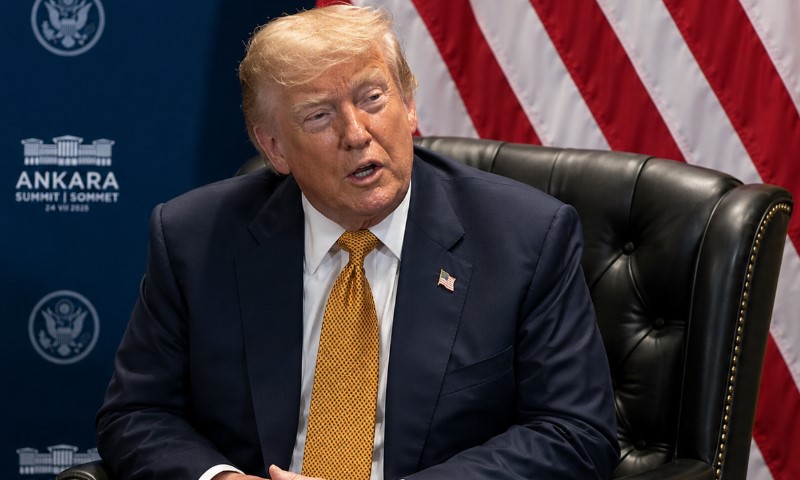

U.S. President Donald Trump mistakenly referred to the “Islamic Republic of Japan” while discussing Iran during a press appearance at the NATO summit in Ankara, Turkey, on July 8.
The remark came as Trump described what he said was a missile attack against a U.S. aircraft carrier, but he appeared to confuse Iran with Japan before continuing his remarks without correcting the statement. The comment quickly spread across news outlets and social media because Japan is a close U.S. ally and is not an Islamic republic, People reported.
The verbal slip occurred during a broader news conference focused on NATO, Iran, Ukraine and U.S. defense policy. It was one of several moments in which Trump’s wording drew attention during the summit, although the White House had not issued a clarification immediately afterward.
Table of Contents
ToggleWhat Happened
Standing alongside Ukrainian President Volodymyr Zelenskyy, Trump discussed the effectiveness of U.S. missile defenses and claimed that “111 missiles” had been fired at the USS Abraham Lincoln.
While describing the incident, he said the missiles came from the “Islamic Republic of Japan,” a phrase widely understood to be an unintended reference to the Islamic Republic of Iran.
Trump did not pause to correct the wording before continuing his discussion about Patriot air defense systems and U.S. military capabilities.
Latest Verified Developments
During the closing stages of the NATO summit, Trump also emphasized that the United States intends to remain committed to the alliance despite earlier disagreements with several European members.
Reuters reported that Trump privately reassured NATO leaders that the United States wanted to remain within the alliance, signaling a more conciliatory tone than some of his earlier public comments.
During the same day, Trump also discussed Iran, saying the recent ceasefire arrangement had effectively ended and indicating that additional U.S. military action against Iran remained possible following renewed regional tensions, according to a separate Reuters report.
Multiple news organizations also noted other verbal slips during Trump’s public appearances in Ankara, including briefly referring to Ukrainian President Volodymyr Zelenskyy as “President Putin” before correcting himself.
Why the Comment Attracted Attention
The phrase “Islamic Republic of Japan” quickly became one of the most discussed moments from Trump’s NATO appearance because it combined two countries with fundamentally different political systems and international relationships.
Japan is a longstanding U.S. ally and hosts tens of thousands of American military personnel under a bilateral security alliance. Iran, meanwhile, has remained a central focus of U.S. foreign policy because of longstanding disputes over its nuclear program, regional military activity and sanctions.
Political leaders frequently receive scrutiny for verbal errors during high-profile international events because such appearances are closely watched by allies, adversaries and financial markets. In this case, coverage focused primarily on whether Trump had simply misspoken rather than suggesting any change in U.S. policy.
What Comes Next
As of July 9, neither the White House nor Japanese officials had publicly issued a formal statement addressing Trump’s wording. No change in U.S. policy toward Japan or Iran has been announced, and official discussions at the NATO summit continued to focus on alliance defense spending, Ukraine and security cooperation.
The incident is likely to remain part of broader coverage of the Ankara summit, but the substantive policy outcomes from the meeting, including NATO’s discussions on collective defense, military production and support for Ukraine, are expected to carry greater long-term significance than the president’s verbal mistake.
Related Posts:
- What Is the Most Dangerous Country in the World in 2025
- Iran Launches Missiles at US Forces as Trump Meets Netanyahu
- Legislative Tracker: Pro-LGBTQ Nondiscrimination Legislation
- Social Issues in America: 45 Real Examples, 2026…
- Trump’s Preferred Air Force One Paint Back on Track…
- America’s Murder Capitals - Updated 2026 Rankings of…