Skip to content
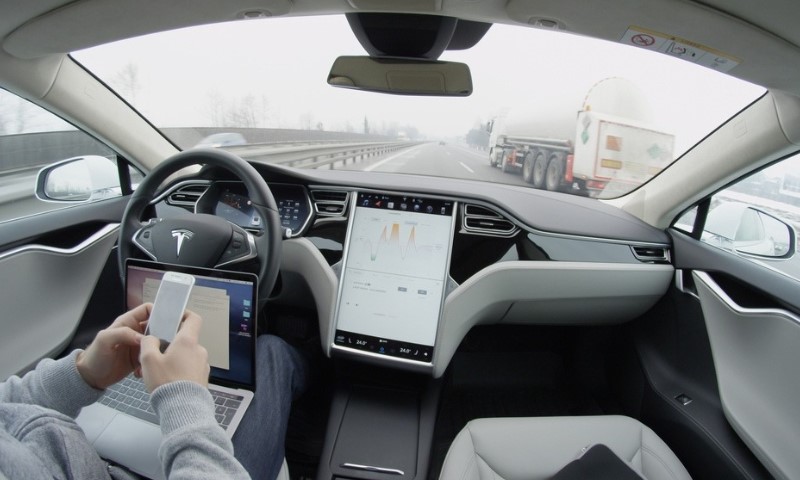

The federal automated vehicle policy in the United States is tightening for a simple reason: Deployment keeps moving forward while injury and fatality numbers remain high enough to demand proof, structure, and accountability. The SELF DRIVE Act of 2026, introduced as H.R. 7390, is a House proposal built to answer that gap.
Lawmakers are not offering a finished rulebook. Instead, they are sketching a federal spine that forces automated driving systems to justify safety claims with evidence, feed national crash data, and align vehicle technology decisions with national security supply chain rules already in force.
Early February 2026 committee materials describe the bill as a framework measure. The bill would direct federal agencies, particularly the safety regulator, to initiate rulemakings that transform statutory directives into legally binding requirements.
For manufacturers, fleet operators, and compliance teams, preparation means shifting from aspirational safety narratives toward auditable documentation that survives scrutiny from regulators, courts, insurers, and the public.
Why Federal AV Policy Is Sharpening in 2026
View this post on Instagram
Roadway harm remains the political driver behind tougher federal action. The safety regulator continues to publish estimated fatality projections that show improvement but fail to offer comfort.
For the first half of 2025, the safety regulator projected 17,140 roadway deaths, an 8.2% drop from the first half of 2024.
Behind those numbers are individual injury cases, including rideshare collisions, where legal guidance, such as that offered by Arash Law, often becomes part of the aftermath.
A later projection covering the first 9 months of 2025 estimated 27,365 deaths for January through September 2025. That same table showed a projected 39,345 fatalities for 2024, down about 3.8% from 40,901 in 2023.
Numbers at that scale shape debates over automated vehicle policy. Claims that automated driving systems outperform human drivers eventually meet a demand for proof that regulators can review and challenge.
H.R. 7390 tries to convert those arguments into something repeatable: a formal safety case backed by evidence.
What The SELF DRIVE Act Of 2026 Is Designed To Build
Committee summaries describe H.R. 7390 as a federal framework for automated driving systems and automated driving system-equipped vehicles, often called autonomous vehicles in everyday language. Core direction focuses on several linked moves.
- A mandate that manufacturers establish and maintain a safety case demonstrating safety using evidence.
- Reporting requirements designed to track crashes involving automated driving system-equipped vehicles.
- Explicit permission pathways for vehicles without traditional human controls, such as steering wheels or pedals.
- Authorization for limited commercial testing and evaluation of automated driving system-equipped vehicles.
- Direction to the Secretary of Commerce to review the connected vehicles supply chain rule that already treats some automated driving system software as a national security issue.
Read together, the structure becomes clear. Prove safety up front. Monitor outcomes after deployment. Create a lawful path for nontraditional vehicle designs. Align vehicle automation policy with existing supply chain security law.
Definitions That Shape Compliance Obligations
Compliance starts with definitions. Coverage depends on how automation levels, engagement, and system scope are framed.
Federal materials lean on SAE J3016 automation levels. Crash reporting orders already rely on that vocabulary, describing Level 1 and Level 2 systems in driver assistance terms. Level 2 systems are defined as those that control steering, braking, or acceleration in certain situations while the human driver remains fully engaged.
The SELF DRIVE Act focuses on automated driving system-equipped vehicles, generally understood as Level 3 and above. At those levels, the system performs the dynamic driving task within an operational design domain, and the human role changes substantially.
Committee language reflects that reality, including references to manual controls becoming generally inapplicable for Level 4 and Level 5 designs.
Once rulemakings begin, definitions will decide which manufacturers must produce safety cases, which fleets must report crashes, and which vehicles can legally operate without human controls.
The Safety Case As The Core Compliance Artifact
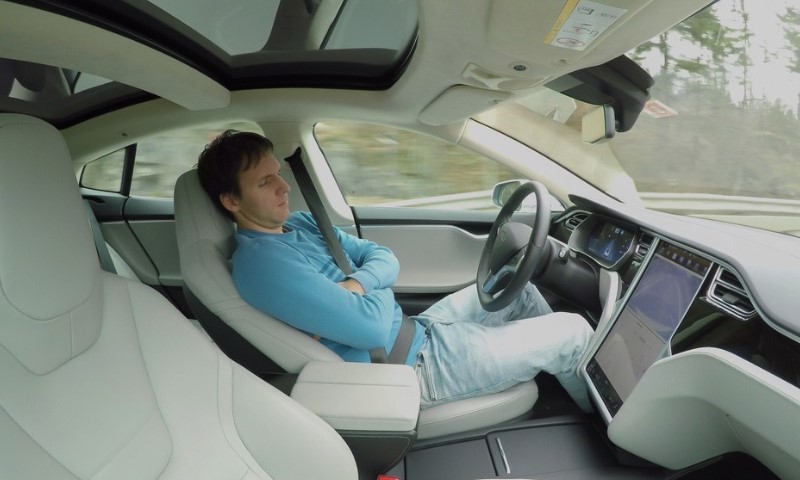
The safety case sits at the center of the proposal.
High-Level Statutory Direction
Committee materials describe the safety case as a manufacturer-maintained document outlining how safety is demonstrated using evidence.
The bill directs the safety regulator to conduct a rulemaking that requires manufacturers to establish and maintain such a document.
H.R. 7390 does not spell out a checklist. Authority flows to the regulator to define structure, review mechanisms, and enforcement hooks through rulemaking.
Required Safety Competencies
The committee summary names several competency areas that the safety case must address.
- Safe driving performance
- Detection of and response to emergency vehicles
- Detection of and response to school buses
- Compliance with local traffic laws
- Cybersecurity
Competencies signal scope rather than individual tests. Evidence portfolios would likely include scenario-based testing, operational design domain definitions, fallback behavior strategies, cybersecurity controls, and post-deployment monitoring.
Practical Meaning In Real Deployments
Safety cases are familiar in other safety-critical fields. Claims are linked to evidence and reasoning, and updates occur as systems evolve.
Academic work in 2025 highlighted uncertainty around what regulators will accept as sufficient proof that residual risk falls within acceptable bounds.
Under a federal mandate, safety cases would need to withstand regulatory review, litigation discovery, insurance audits, and public transparency demands. H.R. 7390 pushes toward that model by making the safety case a maintained compliance artifact rather than a voluntary report.
Vehicles Without Steering Wheels Or Pedals
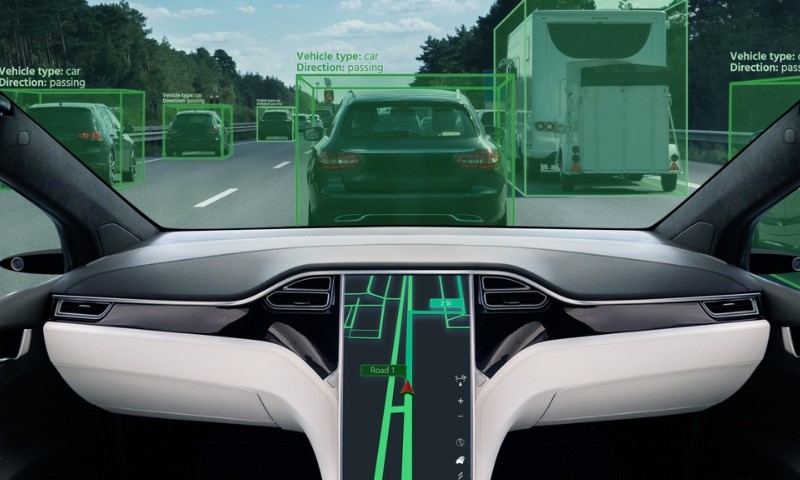
High automation concepts often remove traditional human controls. Federal vehicle safety standards historically assumed a human driver interface, creating friction for Level 4 and Level 5 designs.
Committee summaries state that the bill allows safe removal of manual controls, such as steering wheels and brakes, and authorizes manufacturers to disable certain driving controls related to automated driving system performance.
Interaction With Existing Exemption Pathways
Federal law already allows exemptions from certain Federal Motor Vehicle Safety Standards under 49 U.S.C. § 30113 and 49 CFR Part 555 when public interest and safety conditions are met.
The Department of Transportation also expanded the Automated Vehicle Exemption Program in 2025 and proposed a voluntary ADS Equipped Vehicle Safety, Transparency, and Evaluation Program with separate tracks for vehicles requiring exemptions and vehicles operating under existing rules.
The SELF DRIVE Act appears designed to reduce reliance on bespoke exemptions by creating a clearer statutory basis for removing manual controls, paired with safety demonstration requirements.
Exemptions would not disappear, but the gap between modern automated designs and legacy assumptions would narrow.
Crash Reporting And A National ADS Safety Picture
The bill establishes reporting requirements for crashes involving vehicles equipped with automated driving systems.
Existing Standing General Order Baseline
The federal crash reporting Standing General Order defines a crash broadly as a physical impact resulting in alleged or actual property damage, injury, or death.
Engagement captures attempts to activate automated systems within 30 seconds before impact through the conclusion of the crash.
In April 2025, updates retained reporting while adjusting timelines and narrowing which less serious crashes require submission.
What The Bill Adds
H.R. 7390 signals a shift from case-by-case oversight toward a durable national data architecture for automated driving system safety.
Manufacturers and operators should expect standardized definitions, reporting timelines aligned with existing orders, and data fields that capture system state and operational context.
Late or incomplete reporting would carry enforcement risk. Data would feed federal analysis of safety performance across deployment types.
Commercial Testing And Evaluation Authority
The bill authorizes limited testing and evaluation of automated driving system-equipped vehicles for commercial purposes.
That language matters because commercial activity triggers consumer protection, labor, and liability concerns. Testing often blurs into service once passengers or goods move at scale.
Implementation would likely define boundaries around payment, disclosure, geography, and operational oversight.
The safety case would become the gateway artifact for entry into commercial testing lanes, while crash reporting and data submission would monitor performance.
Cybersecurity And Supply Chain Security Move To Center Stage
One of the most consequential provisions directs the Secretary of Commerce to review the connected vehicles supply chain rule.
Connected Vehicles Final Rule Overview
The Bureau of Industry and Security published a final rule in January 2025 titled “Securing the Information and Communications Technology and Services Supply Chain: Connected Vehicles,” effective March 2025.
Key elements include:
- Prohibition of certain imports and sales involving connected vehicles, vehicle connectivity system hardware and software, and automated driving system software with sufficient nexus to China or Russia.
- Coverage of connected vehicles under 10,001 pounds manufactured primarily for public road use.
- Definition of covered software as software directly enabling vehicle connectivity system or automated driving system functions.
- Nexus criteria based on ownership, control, jurisdiction, or direction tied to China or Russia.
Compliance timelines are specific.
- Model Year 2027: restrictions on selling completed connected vehicles by Chinese or Russian connected vehicle manufacturers and on importing or selling vehicles incorporating a covered vehicle connectivity system or automated driving system software from Chinese or Russian companies.
- Model Year 2030, or January 1, 2029, for components without a model year: import restrictions for vehicle connectivity system hardware components from Chinese or Russian companies.
Regulated parties must file annual Declarations of Conformity, perform supply chain due diligence, and may seek specific authorizations for otherwise prohibited transactions.
Why Commerce Matters For Automated Vehicles
Cybersecurity already appears as a named safety competency in the safety case. The Commerce rule turns cybersecurity and software provenance into legal gates for market access.
Automated vehicle programs already face dual compliance tracks. Safety regulators oversee operation, defects, and crash reporting. Commerce regulates whether certain hardware and software can enter the market at all.
The SELF DRIVE Act attempts to align those tracks so federal automated vehicle compliance does not fracture into conflicting documentation demands.
Preemption And The Patchwork Problem
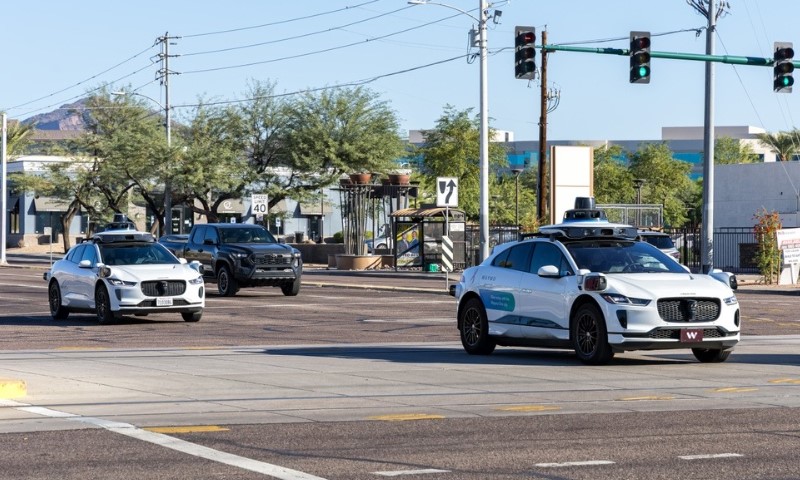
Automated vehicle policy repeatedly confronts tension between federal authority over vehicle safety and state authority over road rules and licensing.
The bill positions itself as a federal framework. The practical effect will depend on the statutory language and subsequent rulemakings.
Federal preemption would likely focus on preventing states from creating separate vehicle performance certification regimes for automated driving systems while leaving ordinary traffic laws and enforcement intact.
What Compliance Would Look Like In Practice
Under the framework proposed by H.R. 7390, compliance becomes a lifecycle program rather than a single submission.
Core Compliance Artifacts
A Practical Readiness Plan
- Map system scope and automation level. Level classification affects reporting duties and supply chain exposure.
- Draft a safety case outline early using named competencies as section anchors.
- Inventory evidence sources, linking each claim to test data, simulations, scenario libraries, and operational limits.
- Harden crash reporting workflows aligned with existing Standing General Order definitions.
- Treat removal of manual controls as a regulated safety decision supported by explicit mitigations.
- Run Commerce supply chain compliance in parallel with safety compliance, preparing for Model Year 2027 and 2030 milestones.
Deployment Scenarios Under The Framework
Robotaxi Fleets
Robotaxi operators would face overlapping obligations. Safety case adequacy would gate deployment. Crash reporting would remain mandatory and scrutinized.
Commerce compliance would apply to vehicle connectivity and automated driving software sourcing.
Commercial Delivery Vehicles
Delivery operations blur testing and service. Commercial testing authorization would likely impose limits on scale and geography.
Safety cases would define operational domains, and reporting would capture incidents involving goods transport rather than passengers.
The Compliance Bottom Line
The SELF DRIVE Act of 2026 represents a shift toward evidence as the default currency in automated vehicle regulation. Safety claims would require structured proof. Real-world outcomes would feed national data systems.
Nontraditional vehicle designs would gain a clearer legal path paired with accountability. Supply chain security would sit alongside safety as a core compliance pillar.
For organizations building or operating automated driving systems, preparation means treating compliance as an ongoing program that connects engineering validation, fleet operations reporting, and procurement due diligence under a single federal framework.