Skip to content
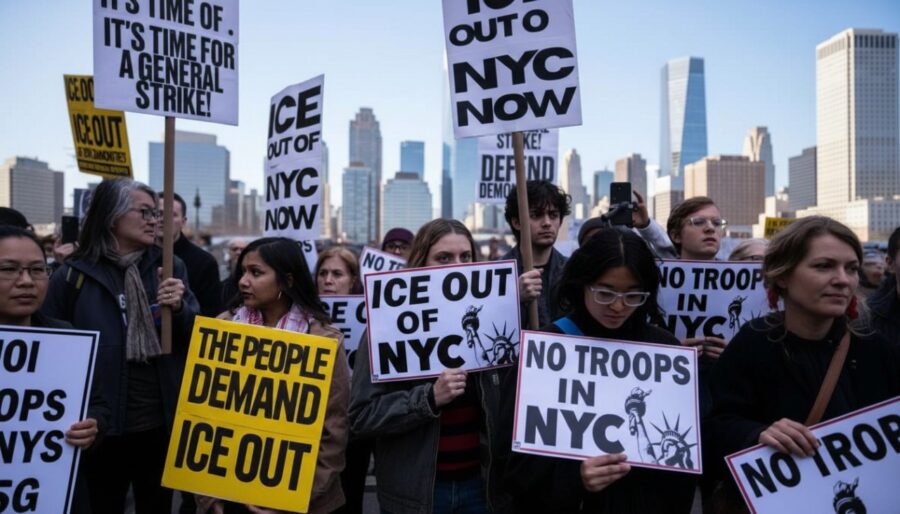

New York City is joining a one-day “National Shutdown” on Friday, January 30, 2026, with organizers urging people to skip work and school and avoid shopping as a protest against Immigration and Customs Enforcement and the administration’s broader immigration enforcement push.
According to Epicenter NYC, the campaign’s core demand is political leverage through economic pressure, paired with a call to oppose additional funding tied to ICE and the Department of Homeland Security.
In New York, participation is showing up less through formal labor actions and more through voluntary closures and visible signals from small businesses, especially in food and hospitality.
Eater New York reported that multiple restaurants, cafes, and bars planned to close for the day, while others said they would stay open but redirect proceeds to immigrant defense groups, offer free food during set hours, or treat their spaces as mutual aid hubs.
A public rally tied to the shutdown has been promoted for 4 p.m. at Foley Square, according to Codepink NYC, which framed the event as part of a national response to the enforcement surge and recent deaths tied to federal operations.
Table of Contents
ToggleMinnesota Is the Engine of the Moment
While the shutdown is pitched as national, the organizing energy is still anchored in Minnesota, where federal immigration operations have been unusually concentrated and highly contested.
PBS NewsHour reported that ICE said it sent 2,000 federal agents to the Minneapolis area for what the agency described as the “largest immigration operation ever.”
Reuters has reported that the Trump administration is now attempting to narrow the posture in Minnesota after intense backlash, including new internal guidance instructing ICE officers to avoid interacting with “agitators” and to focus on people with criminal charges or convictions.
Business Insider, describing the organizing model now being exported, reported that Minnesotans staged a large strike action on January 23 and that activists were urging the rest of the country to follow with a January 30.
The Deaths Driving the Protest Narrative
Organizers have tied the shutdown to deaths connected to federal immigration operations and ICE custody.
The Guardian has reported extensively on the Minneapolis case involving ICU nurse Alex Pretti, including family accounts and reporting on video evidence that undercut official claims about what happened in the moments before he was killed.
Al Jazeera has separately reported that the shootings of Pretti and Renee Nicole Good are among at least nine deaths linked to immigration law enforcement activity in 2026, framing the count through case-based reporting rather than a single government release.
Why New York Organizers Keep Citing Arrest Data
New York’s shutdown messaging is also being reinforced by local enforcement metrics. Documented, an immigration-focused newsroom, reported that ICE street arrests in the greater New York City area rose 212% when comparing the last six months of the Biden administration to the first six months of Trump’s second term, describing a shift toward broader street enforcement.
Nationally, FactCheck.org reported that as ICE arrests increased in Trump’s first months back in office, a higher share of people arrested had no U.S. criminal record, citing ICE arrest data obtained by the Deportation Data Project.
The administration’s public-facing message emphasizes public safety priorities. DHS has published enforcement communications spotlighting arrests of people it describes as serious offenders.
What the Shutdown Likely Proves, and What It Will Not
A one-day shutdown will not deliver a clean economic measurement because participation varies widely by job type, immigration status, and financial risk. Even among sympathetic business owners, Eater New York’s reporting captures how closures come with real cash-flow consequences in an industry already running on thin margins.
What January 30 will deliver is a clearer political signal. If closures spread beyond a limited set of sectors, organizers will claim momentum. If participation stays patchy, opponents will argue the movement is loud but narrow.
Either way, the shutdown is now a visible test of how far local outrage over federal immigration enforcement can be converted into sustained national pressure.
Related Posts:
- Safest Countries in the World in 2025 - GPI…
- 25 Most Dangerous Cities in US - Updated Statistics for 2026
- What ICE Does and Why It Matters - U.S. Immigration…
- America's Murder Capitals: A 2026 Ranking of the…
- Capital Cities in Europe: Top Destinations For You…
- 13 Richest Cities in the US 2025 - Luxury, Money,…