Skip to content
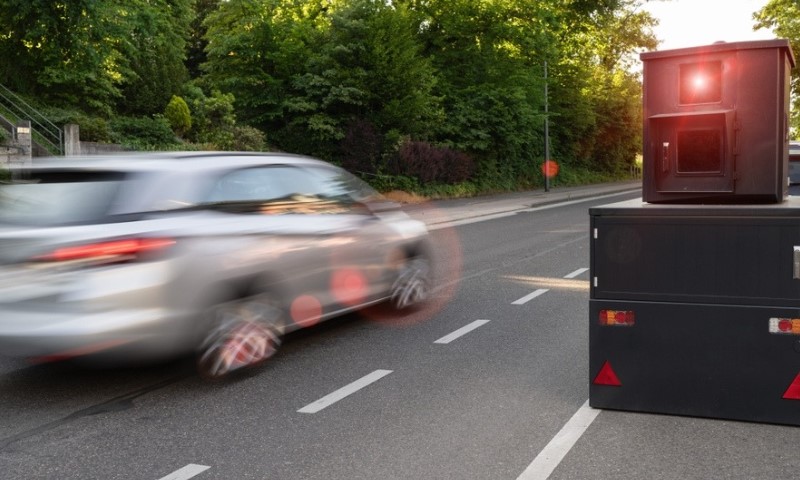

If you drive through Newark in 2026, camera enforcement is no longer a rumor or a policy idea.
It is a live traffic program with a real ordinance behind it, a state-law framework, posted warning requirements, mailing rules, appeal steps, and specific speed thresholds that decide when a notice goes out.
In practical terms, the key question for drivers is simple: what gets captured, when does a warning become a ticket, and what happens after the notice reaches your mailbox?
Newark’s 2026 program is active in Newark, Delaware. The city approved a local speed camera ordinance in 2025, then installed its first active camera on Hillside Road in March 2026.
Delaware law also created a broader framework for automated speed enforcement in work zones and certain residential areas, while a separate 2025 state authorization opened a narrower lane for Main Street in Newark’s business district.
Newark Camera Rules In a Nutshell
- Residential cameras usually ticket at 11+ mph over.
- Main Street can trigger tickets at 6+ mph over.
- Tickets are civil, with no points or insurance hit.
- Ignoring notices can lead to holds and judgments.
What Newark’s Camera Program Covers in 2026
In 2026, Newark has two different legal lanes that matter.
One lane covers residence districts under Newark’s own ordinance and Delaware Code §4170A. For that lane, the general trigger is 11 mph or more above the posted speed limit.
Hillside Road, where Newark installed its first live camera in March 2026, falls into that residential-style framework.
The second lane is narrower and more specific. Delaware’s 2025 bond bill, through Section 136, authorized electronic speed monitoring on Main Street in Newark’s business district, with citations allowed at 6 mph or more above the posted limit.
That matters because ordinary residence-district rules do not automatically reach a business district, and ordinary state law generally uses the higher 11 mph threshold.
Main Street, therefore, sits in a special category with a lower trigger and a temporary authorization that expires after 1 year unless lawmakers renew it, and never later than June 30, 2028.
A mailed civil notice is one outcome of speeding. A wreck with injuries is another, and in Newark, New Jersey, a car accident lawyer from O’Connor, Parsons, Lane & Noble focuses on helping crash victims pursue compensation.
Quick Breakdown of the Two Thresholds
| Newark camera setting | Legal basis | Area type | Trigger for citation |
| Hillside Road style enforcement | Newark ordinance and 21 Del. C. §4170A | Residence district | 11 mph or more over limit |
| Main Street special authorization | FY 2026 bond bill, Section 136 | Business district | 6 mph or more over limit |
How the Cameras Detect a Violation
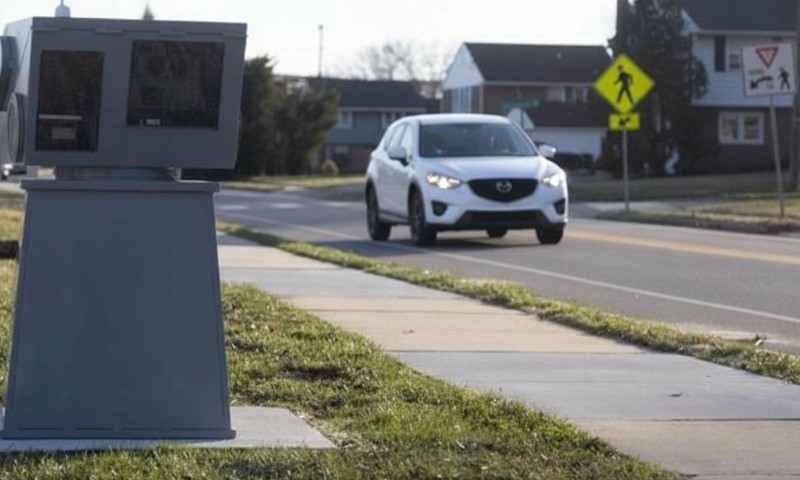
Delaware’s program materials describe the equipment as a camera-based speed enforcement system that detects the speed of passing vehicles.
When a vehicle passes the legal threshold, the system captures images of the rear of the vehicle and related information, including the posted speed limit, the vehicle’s speed, the location, the date, and the time. A citation is then generated and mailed to the registered owner.
That detail matters because many drivers picture a vague black box that “just sends tickets.” The state’s own explanation is more concrete. They measure speed, log event data, image the rear of the vehicle, and build the violation record around that package.
DelDOT’s FAQ also refers to LIDAR units in explaining why radar speed signs can show a different number from the enforcement device, which suggests the enforcement side relies on different measurement hardware than the courtesy signs drivers may see farther down the road.
Newark’s ordinance adds a second layer of procedure. The manufacturer must train and certify operators. They must complete and sign a daily setup log. The system must pass a manufacturer-specified self-test before producing recorded images.
Every camera in use must also undergo an annual calibration assessment by an independent calibration laboratory, with a signed certificate kept on file by Newark Police and available for court use.
Where Newark Can Put Cameras
Newark cannot simply place a speed camera anywhere officials feel like using one.
The ordinance says they can only use a residential-road location if a study, no more than 1 year old and approved by DelDOT, shows that the 85th percentile speed on that road is at least 5 mph above the posted speed limit.
Both the City Council and DelDOT must also approve the road segment that is eligible for monitoring.
Public notice is also necessary before launch. Newark Police must notify DelDOT at least 30 days before implementation, post a public notice on an accessible website at least 14 days before activation, and identify each approved location in that notice.
They must also install at least 1 sign to tell motorists that electronic speed monitoring is in use.
For drivers, that means Newark’s program must be visible in advance, not hidden as a trap. A valid rollout requires formal approvals, advance notice, and signage.
What Happened on Hillside Road in March 2026
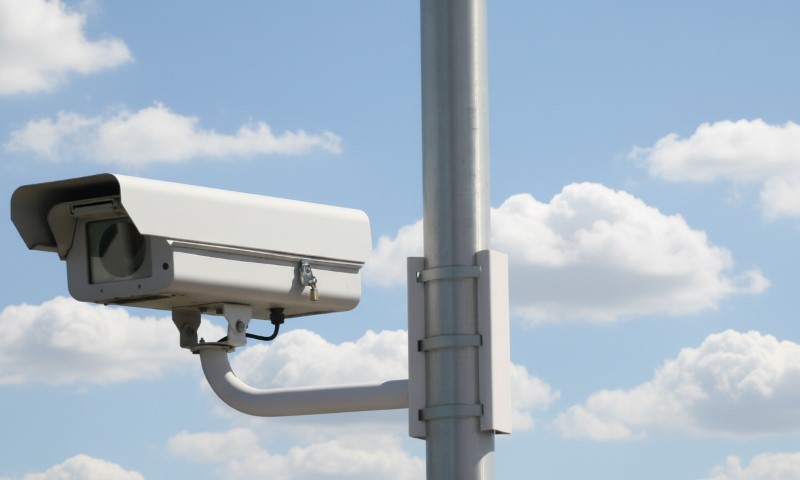
Newark’s first live camera went onto Hillside Road between Sypherd Drive and West Main Street. City announcements in March 2026 said the camera would begin tracking speed on March 24, 2026.
For the first 30 days, drivers going 11 mph or more above the limit would receive warning notices only. After that warning period, civil citations would begin going out by mail.
Local reporting confirmed the same schedule. Delaware Public Media reported that the speed monitoring system would go live March 24 and that a 30-day warning period would start first, followed by actual penalties.
For any driver trying to determine whether Newark cameras were already issuing payable notices in early spring 2026, timing matters. Late March brought warnings. After roughly 30 days, the same conduct could start carrying civil penalties.
What the Ticket Looks Like
Newark’s ordinance spells out what an initial mailed summons must include. A first mailing has to list the owner’s name and address, the vehicle registration number, the charge, the location, the date and time, copies of 2 or more photographs or other recorded images, the amount of the civil penalty, the deadline for payment, and instructions for contesting liability.
It also has to explain that failure to pay or contest in time can lead to a judgment and registration consequences.
DelDOT’s statewide FAQ adds one more timing point: notices of violation get mailed to the registered owner within 45 days of the violation, and often sooner.
So, if a Newark camera catches a qualifying speed event, drivers should expect a mailed civil notice, not an on-the-spot stop.
The paperwork must carry enough detail for a driver to see where it happened, when it happened, how much they owe, and what image record supports the allegation.
Is the Violation Against the Driver or the Owner?
In most cases, the first layer of liability lands on the registered owner. Delaware’s FAQ says the state does not have to identify the driver because the matter is civil and assessed against the owner of the vehicle.
Newark’s ordinance follows the same structure by making the owner prima facie responsible unless the owner can show the vehicle was in someone else’s care, custody, or control.
Owners do have a path to shift liability. Under the ordinance, an owner can submit an affidavit identifying another driver or provide proof that the vehicle had been stolen.
DelDOT’s FAQ says an Affidavit of Non-Responsibility must get postmarked no later than 30 days from the mail date of the first notice. If accepted, a driver notice can then go to the person identified. Even then, the registered owner can remain on the hook if the identified driver never pays.
Commercial vehicles get a slightly different process. Newark’s ordinance says a commercially licensed vehicle owner must receive notice with photos and then has 10 days to provide Newark Police with the driver’s name and address. If the company does not do that, the owner remains responsible.
How Much a Newark Camera Ticket Can Cost

For residence-district enforcement, DelDOT’s March 2026 FAQ states that the base violation is $20, plus $1 for each mile per hour over the posted speed limit, under 21 Del. C. §4169(c).
DelDOT gives a clear example: 39 mph in a 25 mph zone produces a $34 civil violation, made up of a $20 base amount plus $14 for the 14 mph above the limit.
Newark’s ordinance ties local civil penalties to the same state fine structure after any warning period expires.
Example Penalty Table for a Residential Newark Camera
| Posted speed | Recorded speed | Amount over limit | Civil amount |
| 25 mph | 36 mph | 11 mph | $31 |
| 25 mph | 39 mph | 14 mph | $34 |
| 25 mph | 45 mph | 20 mph | $40 |
This amount relies on DelDOT’s 2026 FAQ formula, which is $20 plus $1 for each mph over the posted limit.
Do Camera Tickets Add Points or Hit Insurance?
For most drivers, one of the biggest practical questions is whether a camera citation works like an ordinary speeding stop.
In Newark’s residential camera framework, the answer is no. Newark’s ordinance states that a violation carrying a civil penalty is not a criminal offense and remains off the person’s operating record.
It also states that the violation may not apply for insurance related to motor vehicles. DelDOT’s FAQ matches that language, stating that no points get assessed and the insurance company remains uninformed.
That does not make the ticket harmless. It still carries financial exposure, collection risk, registration problems, and possible court action. It simply sits in the civil lane rather than the criminal or ordinary moving-violation lane.
How To Fight a Newark Camera Ticket
@jamiesgarage I do NOT recommend doing this! I can only assume this person knew what they were doing. #speedcamera #carcommunity #florida
Newark’s ordinance says a person who gets a summons may request a hearing by notifying the designated entity in writing within 20 days of the date of the summons. The hearing can take place in the Justice of the Peace Court, Newark’s Alderman’s Court, or another court with proper jurisdiction. There is no right to transfer the matter to the Court of Common Pleas.
DelDOT’s FAQ adds a somewhat different practical instruction used in the statewide program materials: appeal requests must get postmarked no later than 30 days from the mail date of the first notice.
That is best read as a driver-facing administrative instruction layered on top of the formal legal framework. Anyone contesting a Newark notice would be wise to act quickly and follow the instructions printed on the notice itself rather than waiting to test the outer limit.
Appeals are also limited on the back end. Under Newark’s ordinance, a further right of appeal exists only when the civil penalty exceeds $100, and even then the person has 15 days from the court’s order to take that step.
What Happens If You Ignore It
Ignoring a Newark camera ticket can snowball. DelDOT’s FAQ says that if a fine goes unpaid for 120 days from the mailing date, the matter can be sent to a third-party collections agency. The FAQ also says a DMV registration hold may then get placed on the registered owner’s vehicle.
Newark’s ordinance goes further in describing court-backed consequences. If the owner or identified operator fails to pay, fails to request a hearing in time, or fails to submit a proper affidavit, the DMV can refuse to renew the vehicle registration tied to the summons. If a person loses at a hearing and still does not pay, or requests a hearing and then fails to appear, the DMV can suspend the owner’s or operator’s license. A court clerk may also enter a civil traffic judgment for the penalty, costs, and any added assessment.
So while no points attach, the program still has teeth.
Are Newark’s Cameras Running Only During the Day?
DelDOT’s 2026 FAQ says residential automated speed enforcement operates 24 hours per day, 7 days per week, 365 days per year. The same FAQ notes that nighttime crashes, including pedestrian crashes, remain a serious problem and says camera flashes are part of the system when a violation occurs.
For drivers, that means a quiet late-night run through town is not a safe window for ignoring the posted limit. If the camera is live and meets the threshold, the hour does not protect the driver.
Summary
Newark’s 2026 traffic cameras work through a civil, mail-based enforcement model grounded in local ordinance and Delaware law. Cameras measure speed, capture rear images and event data, and send notices to vehicle owners when they cross the threshold.
Residential locations generally start at 11 mph over the limit, while Main Street has a special 6 mph rule. No points attach, but unpaid notices can still create serious consequences.