Skip to content

A new House bill introduced within hours of President Donald Trump’s February 24 State of the Union address is quickly becoming a flashpoint in the national fight over transgender youth, school policy, and federal education funding.
The proposal, H.R. 7661, would amend the Elementary and Secondary Education Act to restrict the use of federal funds for school programs and materials for minors that include what the bill defines as “sexually oriented material,” a definition that explicitly includes material involving “gender dysphoria or transgenderism.”
The timing is central to why the bill is drawing so much attention. Trump used a section of his State of the Union address on Tuesday, February 24, 2026, to condemn school policies involving gender identity and to call for an immediate ban, saying, “We must ban it, and we must ban it immediately,” according to the Associated Press transcript.
By the same date, H.R. 7661 had been introduced in the House and referred to the Committee on Education and Workforce.
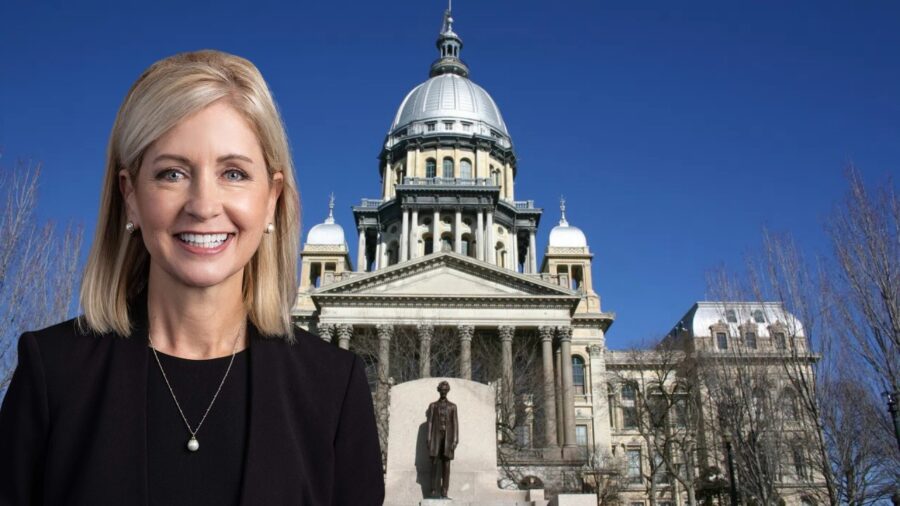
The official Government Publishing Office text lists February 24, 2026, as the introduction date and names Rep. Mary Miller of Illinois as the lead sponsor, along with 17 other Republican lawmakers.
Table of Contents
ToggleWhat the Bill Says, in Plain Terms
The bill’s formal title is the Stop the Sexualization of Children Act. In its introduced form, it would amend Section 8526 of the Elementary and Secondary Education Act of 1965 to bar federal funds under that law from being used to “develop, implement, facilitate, host, or promote” certain programs, activities, literature, or other materials for children under 18 if they include “sexually oriented material.”
The language is broad, and it covers more than classroom instruction. The text references programs, activities, and materials, and it includes a non-exhaustive example list involving exposure to nude adults, stripping, or “lewd or lascivious dancing.”
The section drawing the most scrutiny is the definition clause. The bill defines “sexually oriented material” as material that either includes certain depictions or simulations of sexually explicit conduct, or “involves gender dysphoria or transgenderism.” That phrase appears directly in the introduced bill text.
The bill also includes carveouts. It says the restriction should not be construed to interfere with teaching standard science coursework, major world religions, classic literature, or classic works of art, and then provides specific references for what counts as “classic” literature and art.
Why Critics Are Calling It a Major Escalation
The Substack publication Transitics, which focuses on transgender and LGBTQ policy, framed the measure as a nationwide school censorship bill and highlighted the same definitional language now under debate.
The article argues that the bill would function as a sweeping restriction on how schools can discuss transgender people in federally funded settings.
That framing is advocacy language, and it should be read as such. Still, the core factual basis for the criticism is visible in the bill text itself, especially the clause that places “gender dysphoria or transgenderism” inside the definition of prohibited “sexually oriented material.”
In practical terms, the legal and policy fight is likely to center on interpretation. Supporters are describing the bill as a guardrail against explicit content in schools, while opponents are expected to argue that the wording reaches far beyond explicit content and into identity, health, counseling, and student support materials.
The introduced text does not yet include explanatory committee report language that might narrow or clarify enforcement.
How Trump’s Speech Set the Stage
Tonight, President Trump made it unmistakably clear that the State of our Union is strong and growing stronger because we are once again putting America First.
Read my full statement:https://t.co/8nCtb5WUcJ
— Rep. Mary Miller (@RepMaryMiller) February 25, 2026
Trump’s State of the Union remarks gave the issue a national stage just before the bill surfaced. In the AP transcript, Trump recounted the story of a Virginia teenager and criticized school officials and state policies involving gender transition and parental notification.
He then said, “Who would believe that we’re even talking about it? We must ban it, and we must ban it immediately.”
The AP transcript also shows the sequence clearly, including Trump’s statement, reactions in the chamber, and his broader comments about schools and youth policy.
That matters because the Substack article’s headline ties the bill’s introduction directly to the speech, and the timeline now appears to support that connection as a matter of chronology, even if motive and coordination are separate questions.
What the Sponsor Says the Bill Is For
Rep. Mary Miller’s office says the bill is aimed at preventing exposure to sexually explicit content in schools.
In a February 24 press release, Miller said the legislation would amend the Elementary and Secondary Education Act to prohibit funds at schools that “promote any program or activity that includes sexually oriented material,” while preserving science, classic literature, art, and world religions instruction.
Her office also published a list of cosponsors and supporting organizations, including Family Research Council, Independent Women’s Forum, American Principles Project, Eagle Forum, Family Policy Alliance, Parental Rights Foundation, and Moms for America.
That message aligns with the bill’s stated exemptions and with Republican messaging around parental rights and school content over the last several years.
It does not resolve, however, the central legal controversy over whether the bill’s definition language treats discussion of transgender identity as inherently sexual content for federal funding purposes.
What Is Confirmed, and What Is Still Interpretation
Several points are now firmly established by primary and near-primary sources.
First, H.R. 7661 exists, was introduced on February 24, 2026, and was referred to the House Committee on Education and Workforce that same day. The official GPO text and multiple legislative trackers reflect that status.
Second, the bill text explicitly includes “gender dysphoria or transgenderism” in the definition of “sexually oriented material.” That is not a paraphrase or a partisan summary. It appears in the introduced bill text published by the Government Publishing Office.
Third, Trump made the “We must ban it, and we must ban it immediately” remark during the February 24 State of the Union address, as shown in the AP transcript.
What remains contested is scope. Whether the bill would operate, in practice, as a broad prohibition on mentions of transgender people in schools would depend on enforcement, agency interpretation, litigation, and any amendments that might follow in committee or on the House floor.
The introduced text is broad enough to trigger that argument, but courts and agencies often become the arena where phrases like “involves” are tested.
The Political Significance
Even before any committee movement, H.R. 7661 is a signal bill. It links a high-profile presidential messaging moment, a culture-war issue that has become central to Republican campaign politics, and federal education funding law in one package. The introduction date, sponsor lineup, and public messaging indicate that supporters want the measure read as part of a wider push on school content and youth gender policy.
For opponents, the concern is exactly that combination. A bill tied to federal funding, written in broad terms, and introduced immediately after a nationally televised presidential call to “ban it” creates a policy threat that goes beyond rhetoric. That is why advocacy outlets moved quickly, and why the wording of the definition is now the focal point.
The next phase will be procedural, unless House leadership accelerates it. As of the latest available bill status in the sources reviewed, H.R. 7661 had been introduced and referred, with no recorded votes yet.
If the bill advances, the fight will move from headlines to hearings, legal parsing, and testimony about what counts as curriculum, support services, counseling, and protected instruction under federal education law. The language is now public. The battle over its meaning is just beginning.
Related Posts:
- Legislative Tracker: Pro-LGBTQ Nondiscrimination Legislation
- Safest Countries in the World in 2025 - GPI…
- 25 Most Dangerous Cities in US - Updated Statistics for 2026
- Capital Cities in Europe: Top Destinations For You…
- What You Need To Know About the Equality Act in 2026
- What ICE Does and Why It Matters - U.S. Immigration…